Results by title
12 books match the query 'Mirrors'

Australian Post-War Documentary Film
An Arc of MirrorsDeane Williams
Intellect Books, 2008
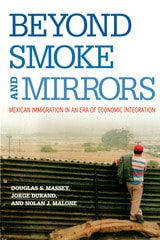
Beyond Smoke and Mirrors
Mexican Immigration in an Era of Economic IntegrationDouglas S. Massey
Russell Sage Foundation, 2002
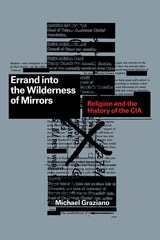
Errand into the Wilderness of Mirrors
Religion and the History of the CIAMichael Graziano
University of Chicago Press, 2021
Michael Graziano’s intriguing book fuses two landmark titles in American history: Perry Miller’s Errand into the Wilderness (1956), about the religious worldview of the early Massachusetts colonists, and David Martin’s Wilderness of Mirrors (1980), about the dangers and delusions inherent to the Central Intelligence Agency. Fittingly, Errand into the Wilderness of Mirrors investigates the dangers and delusions that ensued from the religious worldview of the early molders of the Central Intelligence Agency. Graziano argues that the religious approach to intelligence by key OSS and CIA figures like “Wild” Bill Donovan and Edward Lansdale was an essential, and overlooked, factor in establishing the agency’s concerns, methods, and understandings of the world. In a practical sense, this was because the Roman Catholic Church already had global networks of people and safe places that American agents could use to their advantage. But more tellingly, Graziano shows, American intelligence officers were overly inclined to view powerful religions and religious figures through the frameworks of Catholicism. As Graziano makes clear, these misconceptions often led to tragedy and disaster on an international scale. By braiding the development of the modern intelligence agency with the story of postwar American religion, Errand into the Wilderness of Mirrors delivers a provocative new look at a secret driver of one of the major engines of American power.
Hall of Mirrors
Power, Witchcraft, and Caste in Colonial MexicoLaura A. Lewis
Duke University Press, 2003
Using judicial records from a variety of colonial courts, Lewis highlights the ethnographic details of legal proceedings as she demonstrates how Indians, in particular, came to be the masters of witchcraft, a domain of power that drew on gendered and hegemonic caste distinctions to complicate the colonial hierarchy. She also reveals the ways in which blacks, mulattoes, and mestizos mediated between Spaniards and Indians, alternatively reinforcing Spanish authority and challenging it through alliances with Indians. Bringing to life colonial subjects as they testified about their experiences, Hall of Mirrors discloses a series of contradictions that complicate easy distinctions between subalterns and elites, resistance and power.
In the Land of Mirrors
Cuban Exile Politics in the United StatesMaria de los Angeles Torres
University of Michigan Press, 2001
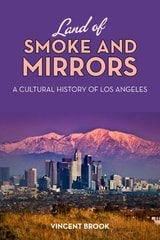
Land of Smoke and Mirrors
A Cultural History of Los AngelesBrook, Vincent
Rutgers University Press, 2013
Unlike the more forthrightly mythic origins of other urban centers—think Rome via Romulus and Remus or Mexico City via the god Huitzilopochtli—Los Angeles emerged from a smoke-and-mirrors process that is simultaneously literal and figurative, real and imagined, material and metaphorical, physical and textual. Through penetrating analysis and personal engagement, Vincent Brook uncovers the many portraits of this ever-enticing, ever-ambivalent, and increasingly multicultural megalopolis. Divided into sections that probe Los Angeles’s checkered history and reflect on Hollywood’s own self-reflections, the book shows how the city, despite considerable remaining challenges, is finally blowing away some of the smoke of its not always proud past and rhetorically adjusting its rear-view mirrors.
Part I is a review of the city’s history through the early 1900s, focusing on the seminal 1884 novel Ramona and its immediate effect, but also exploring its ongoing impact through interviews with present-day Tongva Indians, attendance at the 88th annual Ramona pageant, and analysis of its feature film adaptations.
Brook deals with Hollywood as geographical site, film production center, and frame of mind in Part II. He charts the events leading up to Hollywood’s emergence as the world’s movie capital and explores subsequent developments of the film industry from its golden age through the so-called New Hollywood, citing such self-reflexive films as Sunset Blvd.,Singin’ in the Rain, and The Truman Show.
Part III considers LA noir, a subset of film noir that emerged alongside the classical noir cycle in the 1940s and 1950s and continues today. The city’s status as a privileged noir site is analyzed in relation to its history and through discussions of such key LA noir novels and films as Double Indemnity, Chinatown, and Crash.
In Part IV, Brook examines multicultural Los Angeles. Using media texts as signposts, he maps the history and contemporary situation of the city’s major ethno-racial and other minority groups, looking at such films as Mi Familia (Latinos), Boyz N the Hood (African Americans), Charlotte Sometimes (Asians), Falling Down (Whites), and The Kids Are All Right (LGBT).
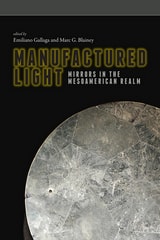
Manufactured Light
Mirrors in the Mesoamerican RealmEmiliano Gallaga
University Press of Colorado, 2015
Complex and time-consuming to produce, iron-ore mirrors stand out among Prehispanic artifacts for their aesthetic beauty, their symbolic implications, and the complexity and skill of their assembly. Manufactured Light presents the latest archaeological research on these items, focusing on the intersection of their significance and use and on the technological aspects of the manufacturing processes that created them.
The volume covers the production, meaning, and utilization of iron-ore mirrors in various Mesoamerican communities. Chapters focus on topics such as experimental archaeology projects and discussions of workshops in archaeological contexts in the Maya, Central Mexico, and northwest Mexico regions. Other chapters concentrate on the employment and ideological associations of these mirrors in Prehispanic times, especially as both sacred and luxury items. The final chapters address continuities in the use of mirrors from Prehispanic to modern times, especially in contemporary indigenous communities, with an emphasis on examining the relationship between ethnographic realities and archaeological interpretations.
While the symbolism of these artifacts and the intricacy of their construction have long been recognized in archaeological discussions, Manufactured Light is the first synthesis of this important yet under-studied class of material culture. It is a must-read for students and scholars of Mesoamerican archaeology, ethnography, religion, replicative experimentation, and lithic technology.
Contirbutors include: Marc G. Blainey, Thomas Calligaro, Carrie L. Dennett, Emiliano Gallaga, Julie Gazzola, Sergio Gómez Chávez, Olivia Kindl, Brigitte Kovacevich, Achim Lelgemann, José J. Lunazzi, John J. McGraw, Emiliano Melgar, Joseph Mountjoy, Reyna Solis, and Karl Taube.
Maps and Mirrors
Topologies of Art and PoliticsSteve Martinot
Northwestern University Press, 2001
Mirrors of Our Playing
Paradigms and Presences in Modern DramaThomas R. Whitaker
University of Michigan Press, 1999
Swan Hammer
An Instructor’s Guide to MirrorsMaggie Graber
Michigan State University Press, 2022
The Hall of Mirrors
Drafts & Fragments and the End of Ezra Pound's CantosPeter Stoicheff
University of Michigan Press, 1995
The Play of Mirrors
The Representation of Self Mirrored in the OtherBy Sylvia Caiuby Novaes
University of Texas Press, 1997
Focusing on the Bororo people of west-central Brazil, this book addresses the construction of self-identity through interethnic interaction. By presenting the images the Bororo have of themselves as well as the images of others who have interacted with them, Brazilian anthropologist Sylvia Caiuby Novaes argues convincingly that Bororo self-images are constructed with the aid of a peculiar looking-glass—it is in the images of others that they see themselves.
Incorporating contributions from psychology, psychoanalysis, linguistics, and semiotics, Play of Mirrors focuses on symbols, images, discourse, and meanings rather than solely on the problem of acculturation. It thus reflects the thinking of a new generation of Brazilian anthropologists who have shifted their focus from native communities as isolated entities to an examination of their embeddedness within broader national and international arenas.