Results by title
6 books match the query 'Missing children'

Concluding
Henry Green
University of Chicago Press, 1985
"[A] novel of projections, protractions, long shots, and shadows flying ahead, a slow fall. . . . The sinister world of Concluding is . . . beautiful, side-lit and colored like an undersea kingdom."—from the Foreword by Eudora Welty
Last Seen
Jacqueline Jones LaMon
University of Wisconsin Press, 2011
Inspired by actual case histories of long-term missing African American children, this provocative and heartrending collection of poems evokes the experience of what it means to be among the missing in contemporary America. This thought-provoking collection of persona poems looks at absence from the standpoint of the witnesses surrounding the void and offers an intimate depiction of those impossible moments of aftermath lived by those who remain accounted for and present. While enabling us to question our own sense of identity, this unique collection of poems reveals the blurred edges of separation between them and us and the impact that the missing have upon our present and future.
Finalist, NAACP Image Awards

Orphan Black
Performance, Gender, BiopoliticsEdited by Andrea Goulet and Robert A. Rushing
Intellect Books, 2018
Contributors come from a range of backgrounds and explore the digital innovations and technical interactions between human and machine that allow the show to challenge conventional notions of performance and identity, address family themes, and Orphan Black’s own textual genealogy within the contexts of science, reproductive technology, and the politics of gender, and extend their inquiry to the broader question of community in a "posthuman" world of biopolitical power. Mobilizing philosophy, history of science, and literary theory, scholars analyze the ways in which Orphan Black depicts resistance to the many forms of power that attempt to capture, monitor, and shape life today.
The Contortionists
Robert Hodgson Van Wagoner
Signature Books, 2020
In his second novel, his first in twenty years, Robert H. Van Wagoner explores a family in extremis tottering at the edge of faith: in God and church, in family, and in marriage, in the institutions that promise safety and meaning. Both lyrical and explosive, The Contortionists unfolds as a page-turning mystery. Van Wagoner’s wrenching narrative propels the reader forward, toward the novel’s harrowing climax, while deftly unpacking its major themes—mental illness, sexuality, and substance abuse in a culture that would rather not confront them. Does the truth ever set anyone ultimately free? The stakes for Joshua and his family could not be greater.
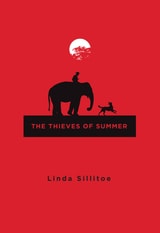
The Thieves of Summer
Linda Sillitoe
Signature Books, 2014
Prin-cess Al-ice in Liberty Park
Munch-es ba-nan-as ’til way after dark.
Princess Alice is an elephant the children of Utah purchased by donating nickels and dimes to a circus. The girls don’t know this, but her handler takes the mammoth princess out on late-night strolls around the park when the moon is out. What they do know is that the elephant sometimes escapes and goes on a rampage, crashing through front-yard fences and collecting collars of clothesline laundry around her neck, a persistent train of barking dogs following behind. The girls’ father is a police officer who is investigating a boy’s disappearance. As the case unfolds, the perception of the park, with its eighty acres of trees and grass, will change from the epitome of freedom to a place to be avoided, even as Princess Alice moves to a secure confinement at a new zoo at the mouth of Emigration Canyon. The story is loosely based on the exploits of a real live elephant that lived in Liberty Park a decade before Sillitoe’s childhood in the neighborhood.
Threatened Children
Rhetoric and Concern about Child-VictimsJoel Best
University of Chicago Press, 1990