Results by title
39 books match the query 'Mississippi River Valley'

A French Aristocrat in the American West
The Shattered Dreams of De Lassus De LuzièresCarl J. Ekberg & Foreword by Marie-Sol de La Tour d'Auvergne
University of Missouri Press, 2010

A Journey through the West
Thomas Rodney’s 1803 Journal from Delaware to the Mississippi TerritoryThomas Rodney
Ohio University Press, 1997
In A Journey through the West, Thomas Rodney writes vividly about flea-infested taverns, bad roads, drunken crew members, squatters, Indians sodden berths, food from the wild and treacherous waters. His is one of the most detailed early-nineteenth-century travel accounts.
Rodney, a Revolutionary War patriot and veteran, had been active in Delaware politics and had served in the Continental Congress. In 1803, President Thomas Jefferson appointed him as a land commissioner and a territorial judge in the newly formed Mississippi Territory. To assume his duties, Rodney and a small party traveled overland from Delaware across the length of southern Pennsylvania to Wheeling, (West) Virginia. From there, they boarded their newly constructed boat on the Ohio River and rowed, sailed, and drifted along the borders of (West) Virginia, Ohio, Indiana, Illinois, and Kentucky.
Finally they left the clear rapids of the Ohio and entered the muddy yet majestic Mississippi. They traveled southwesterly into a vast, exotic wilderness valley. The western shore of the Mississippi was still owned by Spain, and foreign soldiers were spotted. Under pressure to meet Rodney’s deadline for arrival in Mississippi Territory, the travelers were grateful for the Mississippi’s fast current. Yet in the journey’s last days they were faced with adventures and with near disaster when their boat struck a snag and partially sank.
Rodney kept a precise journal and sent letters to President Jefferson documenting his trek from the settled East through the barely chartered paths of the western wilderness. He hobnobbed with Meriwether Lewis, enjoyed the hospitality of Harman Blennerhassett, and received a tour of Cincinnati from Arthur St. Clair.
Dwight Smith and Ray Swick have compiled, edited and annotated Rodney’s story to present it in complete form for the first time. A Journey through the West is both a travel adventure and a colorful glimpse into the life of his day.
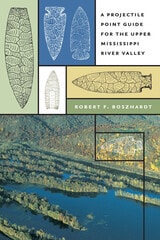
A Projectile Point Guide for the Upper Mississippi River Valley
Robert F. Boszhardt
University of Iowa Press, 2003
The most common relics of the 12,000-year occupancy of the Upper Mississippi River Valley may be the chipped stone projectile points that Native Americans fastened to the ends of their spears, darts, and arrow shafts. This useful guide provides a key to identifying the various styles of points found along the Upper Mississippi River in the Driftless region stretching roughly from Dubuque, Iowa, to Red Wing, Minnesota, but framed within a somewhat larger area extending from the Rock Island Rapids at the modern Moline-Rock Island area to the Falls of St. Anthony at Minneapolis-St. Paul.
Logging tens of thousands of miles and visiting private collectors from all walks of life since 1982, Robert Boszhardt has documented thousands of projectile points found in this region. In addition to drawings of each style, he provides other accepted names as well as names of related points, age, distribution, a description (including length and width), material, and references for each type. The guide is meant for the many avocational archaeologists who collect projectile points in the Upper Midwest and will be a useful reference tool for professional field archaeologists as well.
Emphasizing the preservation of sites as well as a mutual exchange of information between professional and avocational archaeologists, this guide will reveal projectile points as clues to the past, time markers which embody crucial information about the cultures of the Mississippi River Valley's early inhabitants.
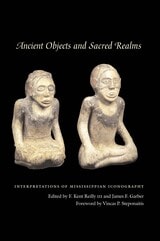
Ancient Objects and Sacred Realms
Interpretations of Mississippian IconographyEdited by F. Kent Reilly, III, and James F. Garber
University of Texas Press, 2006
Between AD 900-1600, the native peoples of the Mississippi River Valley and other areas of the Eastern Woodlands of the United States conceived and executed one of the greatest artistic traditions of the Precolumbian Americas. Created in the media of copper, shell, stone, clay, and wood, and incised or carved with a complex set of symbols and motifs, this seven-hundred-year-old artistic tradition functioned within a multiethnic landscape centered on communities dominated by earthen mounds and plazas. Previous researchers have referred to this material as the Southeastern Ceremonial Complex (SECC).
This groundbreaking volume brings together ten essays by leading anthropologists, archaeologists, and art historians, who analyze the iconography of Mississippian art in order to reconstruct the ritual activities, cosmological vision, and ideology of these ancient precursors to several groups of contemporary Native Americans. Significantly, the authors correlate archaeological, ethnographic, and art historical data that illustrate the stylistic differences within Mississippian art as well as the numerous changes that occur through time. The research also demonstrates the inadequacy of the SECC label, since Mississippian art is not limited to the Southeast and reflects stylistic changes over time among several linked but distinct religious traditions. The term Mississippian Iconographic Interaction Sphere (MIIS) more adequately describes the corpus of this Mississippian art. Most important, the authors illustrate the overarching nature of the ancient Native American religious system, as a creation unique to the native American cultures of the eastern United States.
Archaeological Survey in the Lower Mississippi Alluvial Valley, 1940–1947
Philip Phillips, James A. Ford, and James B. Griffin; edited and with a new introduction by Stephen Williams
University of Alabama Press, 2003
A Dan Josselyn Memorial Publication
The Lower Mississippi Survey was initiated in 1939 as a joint undertaking of three institutions: the School of Geology at Louisiana State University, the Museum of Anthropology at the University of Michigan, and the Peabody Museum at Harvard. Fieldwork began in 1940 but was halted during the war years. When fieldwork resumed in 1946, James Ford had joined the American Museum of Natural History, which assumed co-sponsorship from LSU. The purpose of the Lower Mississippi Survey (LMS)—a term used to identify both the fieldwork and the resultant volume—was to investigate the northern two-thirds of the alluvial valley of the lower Mississippi River, roughly from the mouth of the Ohio River to Vicksburg. This area covers about 350 miles and had been long regarded as one of the principal hot spots in eastern North American archaeology.
Phillips, Ford, and Griffin surveyed over 12,000 square miles, identified 382 archaeological sites, and analyzed over 350,000 potsherds in order to define ceramic typologies and establish a number of cultural periods. The commitment of these scholars to developing a coherent understanding of the archaeology of the area, as well as their mutual respect for one another, enabled the publication of what is now commonly considered the bible of southeastern archaeology. Originally published in 1951 as volume 25 of the Papers of the Peabody Museum of American Archaeology and Ethnology, this work has been long out of print.
Because Stephen Williams served for 35 years as director of the LMS at Harvard, succeeding Phillips, and was closely associated with the authors during their lifetimes, his new introduction offers a broad overview of the work’s influence and value, placing it in a contemporary context.
Archaeology and Ancient Religion in the American Midcontinent
Edited by Brad H. Koldehoff and Timothy R. Pauketat
University of Alabama Press, 2019
Across North America, huge data accumulations derived from decades of cultural resource management studies, combined with old museum collections, provide archaeologists with unparalleled opportunities to explore new questions about the lives of ancient native peoples. For many years the topics of technology, economy, and political organization have received the most research attention, while ritual, religion, and symbolic expression have largely been ignored. This was often the case because researchers considered such topics beyond reach of their methods and data.
In Archaeology and Ancient Religion in the American Midcontinent, editors Brad H. Koldehoff and Timothy R. Pauketat and their contributors demonstrate that this notion is outdated through their analyses of a series of large datasets from the midcontinent, ranging from tiny charred seeds to the cosmic alignments of mounds, they consider new questions about the religious practices and lives of native peoples. At the core of this volume are case studies that explore religious practices from the Cahokia area and surrounding Illinois uplands. Additional chapters explore these topics using data collected from sites and landscapes scattered along the Mississippi and Ohio River valleys.
This innovative work facilitates a greater appreciation for, and understanding of, ancient native religious practices, especially their seamless connections to everyday life and livelihood. The contributors do not advocate for a reduced emphasis on technology, economy, and political organization; rather, they recommend expanding the scope of such studies to include considerations of how religious practices shaped the locations of sites, the character of artifacts, and the content and arrangement of sites and features. They also highlight analytical approaches that are applicable to archaeological datasets from across the Americas and beyond.
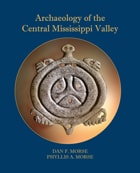
Archaeology of the Central Mississippi Valley
Dan F. Morse
University of Alabama Press, 2009
The earliest recorded description of the Central Mississippi Valley and its inhabitants is contained within the DeSoto chronicles written after the conquistadors passed through the area between 1539 and 1543. In 1882 a field agent for the Bureau of American Ethnology conducted the first systematic archaeological survey of the region, an area that extends from near the mouth of the Ohio River to the mouth of the Arkansas River, bounded on the east by the Mississippi River and on the west by the Ozark Highlands and Grand Prairie. One hundred years later, the authors produced this first comprehensive overview of all of the archaeological research conducted in the valley during the interim. It is a well-organized compendium, written with both the professional archaeologist and the layperson in mind, and is profusely illustrated with maps, charts, artifact photographs, and drawings. This volume was the first published history of the archaeology of the region and stands as the basic resource for that work today.
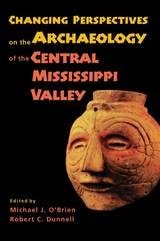
Changing Perspectives on the Archaeology of the Central Mississippi Valley
Michael J. O'Brien
University of Alabama Press, 1998
Fourteen experts examine the current state of Central Valley prehistoric research and provide an important touchstone for future archaeological study of the region
The Mississippi Valley region has long played a critical role in the development of American archaeology and continues to be widely known for the major research of the early 1950s. To bring the archaeological record up to date, fourteen Central Valley experts address diverse topics including the distribution of artifacts across the landscape, internal configurations of large fortified settlements, human-bone chemistry, and ceramic technology.
The authors demonstrate that much is to be learned from the rich and varied archaeological record of the region and that the methods and techniques used to study the record have changed dramatically over the past half century. Operating at the cutting edge of current research strategies, these archaeologists provide a fresh look at old problems in central Mississippi Valley research.

Deep'n as It Come
The 1927 Mississippi River FloodPete Daniel
University of Arkansas Press, 1998
Daniel weaves his narrative with newspaper and firsthand accounts, interviews and survivors, official reports, and over 140 contemporary photographs. The story of the common refugee who suffered most of the effects of the flood emerges alongside the details of the massive rescue and relief operation—one of the largest ever mounted in the United States. The title, Deep’n as It Come, is a phrase from Cora Lee Campbell’s early description of he approaching water, which, Daniel writes, “moved at a pace of some fourteen miles per day,” and in its movement and sound, “had the eeriness of a full eclipse of t he sun, unsettling, chilling.”
“The contradictions of sorrow and humor. . . death and salvation, despair and hope, calm and panic—all reveal the human dimension” in this compassionate and unforgettable portrait of common people confronting a great natural disaster.
Essays in French Colonial History
Proceedings of the 21st Annual Meeting of the French Colonial Historical SocietyA.J.B. Johnston
Michigan State University Press, 1997
On 31 May - 3 June 1995, more than 200 participants gathered in Sydney and at Fortress Louisbourg, Nova Scotia, for the 21st annual conference of the French Colonial Historical Society. Essays in French Colonial History contains seventeen of the best articles presented at this meeting. It is a wide-ranging collection that explores many new and innovative facets of the French experience outre mer. The contributors, a mix of established experts and younger scholars, examine French activity in North America, the West Indies, Africa, and South America and focus on issues military, social, cultural, native, and political history.
Among the subject areas explored are: the 16th century French colonies in Brazil and Florida; Victor Hugues and the Reign of Terror on Guadeloupe; commerce and the distinctiveness of Louisbourg; the importance of letter-writing and compagnonnage; unresolved territory of the Creek Nation; case studies in the area of transition patrimonial; French colonial interests and policies in Atlantic Canada, Africa, and South America; attitudes among African Americans in post-French St. Louis; and a research report on the Historical Atlas of Quebec.
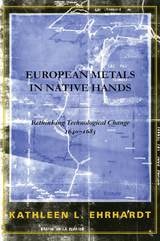
European Metals in Native Hands
Rethinking Technological Change 1640-1683Kathleen L. Ehrhardt
University of Alabama Press, 2005
The first detailed analysis of Native metalworking in the Protohistoric/Contact Period
From the time of their earliest encounters with European explorers and missionaries, Native peoples of eastern North America acquired metal trinkets and utilitarian items and traded them to other aboriginal communities. As Native consumption of European products increased, their material culture repertoires shifted from ones made up exclusively of items produced from their own craft industries to ones substantially reconstituted by active appropriation, manipulation, and use of foreign goods. These material transformations took place during the same time that escalating historical, political, economic, and demographic influences (such as epidemics, new types of living arrangements, intergroup hostilities, new political alliances, missionization and conversion, changes in subsistence modes, etc.) disrupted Native systems.
Ehrhardt's research addresses the early technological responses of one particular group, the Late Protohistoric Illinois Indians, to the availability of European-introduced metal objects. To do so, she applied a complementary suite of archaeometric methods to a sample of 806 copper-based metal artifacts excavated from securely dated domestic contexts at the Illiniwek Village Historic Site in Clark County, Missouri.
Ehrhardt's scientific findings are integrated with observations from historical, archaeological, and archival research to place metal use by this group in a broad social context and to critique the acculturation perspective at other Contact Period sites. In revealing actual Native practice, from material selection and procurement to ultimate discard, the author challenges technocentric explanations for Native material and cultural change at contact.

Francois Vallé and His World
Upper Louisiana before Lewis and ClarkCarl J. Ekberg
University of Missouri Press, 2002
Winner of the Kemper & Leila Williams Prize in Louisiana History for excellence in historical scholarship for the year 2002, awarded by The Historic New Orleans Collection, The Louisiana Historical Association.

French Roots in the Illinois Country
The Mississippi Frontier in Colonial TimesCarl J. Ekberg
University of Illinois Press, 1998
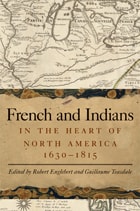
French and Indians in the Heart of North America, 1630-1815
Robert Englebert
Michigan State University Press, 2013

From Quarry to Cornfield
The Political Economy of Mississippian Hoe ProductionCharles Richard Cobb
University of Alabama Press, 2001
An innovative model for examining the technology of hoe production and its contribution to the agriculture of Mississippian communities.
Lithic specialist Charles Cobb examines the political economy in Mississippian communities through a case study of raw material procurement and hoe production and usage at the Mill Creek site on Dillow Ridge in southwest Illinois. Cobb outlines the day-to-day activities in a Mississippian chiefdom village that flourished from about A.D. 1250 to 1500. In so doing, he provides a fascinating window into the specialized tasks of a variety of "day laborers" whose contribution to the community rested on their production of stone hoes necessary in the task of feeding the village. Overlooked in most previous studies, the skills and creativity of the makers of the hoes used in village farming provide a basis for broader analysis of the technology of hoe use in Mississippian times.
Although Cobb's work focuses on Mill Creek, his findings at this site are representative of the agricultural practices of Mississippian communities throughout the eastern United States. The theoretical underpinnings of Cobb's study make a clear case for a reexamination of the accepted definition of chiefdom, the mobilization of surplus labor, and issues of power, history, and agency in Mississippian times. In a well-crafted piece of writing, Cobb distinguishes himself as one of the leaders in the study of lithic technology. From Quarry to Cornfield will find a well-deserved place in the ongoing discussions of power and production in the Mississippian political economy.
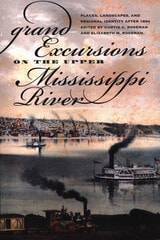
Grand Excursions on the Upper Mississippi River
Places, Landscapes, and Regional Identity after 1854Curtis C. & Elizabeth M. Roseman & Roseman
University of Iowa Press, 2004
One hundred and fifty years later, the thirteen essays in this volume examine the activities and environments of the 1854 Grand Excursion and place them in the context of an evolving regional identity for the Upper Mississippi River Valley based on the economy, culture, geography, and history of the area. In a series of “excursions,” the contributors explore the building of the Chicago and Rock Island Railroad, eastern newspaper accounts of the 1854 excursion, steamboating, the area’s pictorial landscape, passenger trains along the scenic river, the genesis and features of river towns, the control of the river for navigation, the development of preserves, parks, and recreation areas, the lumber industry, and commercial fishing. The book concludes by examining the resurgence of river-oriented development, as river towns are once again embracing the Mississippi.
Generously illustrated with maps, engravings, ephemera, and historic and present-day photographs, Grand Excursions on the Upper Mississippi River will be of interest to tourists and residents of the area, river aficionados, railroad and steamboat history buffs, as well as academics interested in the history, geography, and regional development of the area.
Iberville's Gulf Journals
Pierre Le Moyne d'Iberville, translated by Richebourg Gaillard McWilliams
University of Alabama Press, 1991
Europe's expansion into the New World during the 16th, 17th, and 18th centuries was a story of power alignment and cultural transmission as well as dramatic individual effort. Spain had her conquistadores, France her coureurs de bois, and England her sea dogs. Isolated from the authority of home governments, tempted by the abundance of gold, fur, and fish in the New World, these adventurers so vital to national policies of expansion developed their own personal creeds of conquest and colonization. Their individual exploits not only represent a humanistic theme essential in Europe's movement westward but heighten the analyses of cultural institutions of the era. It is within such a multidisciplinary light that one can experience the Gulf Coast adventures of Pierre LeMoyne d'Iberville.
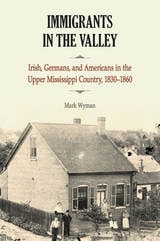
Immigrants in the Valley
Irish, Germans, and Americans in the Upper Mississippi Country, 1830-1860Mark Wyman
Southern Illinois University Press, 1984

Immortal River
The Upper Mississippi in Ancient and Modern TimesCalvin R. Fremling
University of Wisconsin Press, 2005
Like the Mississippi itself, Immortal River often leaves the main channel to explore the river's backwaters, floodplain, and drainage basin. The book's focus is the Upper Mississippi, from Minneapolis, Minnesota, to Cairo, Illinois. But it also includes information about the river's headwaters in northern Minnesota and about the Lower Mississippi from Cairo south to the river's mouth ninety miles below New Orleans. It offers an understanding of the basic geology underlying the river's landscapes, ecology, environmental problems, and grandeur.

Island No. 10
Struggle for the Mississippi ValleyLynn N. Bock
University of Alabama Press, 1996
A definitive study of strategy, river warfare, and Union triumph in the Mississippi Valley.
Island No. 10: Struggle for the Mississippi Valley is a deeply researched, narrative-driven history of the Civil War New Madrid–Island No. 10 campaign in 1862—an episode overshadowed by Fort Donelson and Shiloh yet vital to Union mastery of the Mississippi River. The authors argue that the campaign was far more consequential than its marginalization in traditional Civil War histories suggests, demonstrating that the fall of Island No. 10 consolidated Union control of the upper Mississippi, accelerated the collapse of Confederate fortunes in the West, and highlighted the transformative power of joint Army–Navy operations.
The book’s strengths lie in its rich use of diaries, letters, official military records, and contemporary press accounts, weaving together strategy, engineering, naval innovation, politics, and the lived experience of soldiers. Vivid descriptions of fortification design, the ironclad flotilla, the dramatic night battery runs, and the grueling canal‑cutting operation offer readers a ground‑level and command‑level view of the campaign. Larry J. Daniel, an acclaimed Civil War historian and award‑winning author of Cannoneers in Gray and Soldiering in the Army of Tennessee, together with Lynn N. Bock, a historian, attorney, and longtime steward of New Madrid’s local history, bring scholarly authority and regional expertise to the subject.
This book will captivate readers interested in Civil War military history, riverine warfare, engineering feats, and the Western theater. It is especially valuable for scholars, buffs seeking a fresh perspective on neglected campaigns, students of joint operations, and anyone exploring how geography, logistics, and technology shaped the course of the war.
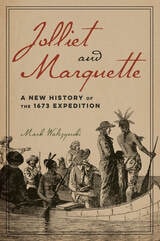
Jolliet and Marquette
A New History of the 1673 ExpeditionMark Walczynski
University of Illinois Press, 2023
A multifaceted voyage into the past, Jolliet and Marquette expands and updates the oft-told story of a pivotal event in American history.

Lincoln's Trident
The West Gulf Blockading Squadron during the Civil WarRobert M. Browning Jr.
University of Alabama Press, 2014
Lincoln’s Trident is the definitive account of the US Navy’s West Gulf Blockading Squadron’s quarantine of the Confederacy in the central and western Gulf of Mexico and adjacent river systems.
In Lincoln’s Trident, Coast Guard historian Robert M. Browning Jr. continues his magisterial series about the Union’s naval blockade of the Confederacy during the American Civil War. Established by the Navy Department in 1862, the West Gulf Blockading Squadron operated from St. Andrews Bay (Panama City), Florida to the Rio Grande River. As with the Navy’s blockade squadrons operating in the Atlantic, the mission of the West Gulf Blockading Squadron was to cripple the South’s economy by halting imports and disrupting cotton exports, the South’s main source of hard currency. The blockade also limited transportation within the South and participated in combined operations with Union land forces.
The history of the squadron comprises myriad parts and players, deployed in a variety of missions across the thousand-mile-wide Western Theater. From disorganized beginnings, the squadron’s leaders and sailors had to overcome setbacks, unfulfilled expectations, and lost opportunities. Browning masterfully captures the many variables that influenced the strategic choices of Navy commanders as they both doggedly pursued unchanging long-term goals as well as improvised and reacted to short-term opportunities.
Notable among its leaders was David Glasgow Farragut, believed by many to be America’s greatest naval hero, who led the squadron through most of the war and the climactic Battle of Mobile Bay. Under his legendary leadership, the squadron not only sealed Confederate sea ports, but also made feints and thrusts up the Mississippi River as far north as Vicksburg, Mississippi.
Knowing the Navy’s role in isolating the Confederate economy and preventing the movement of troops and supplies within the South is crucial to understanding of the outcomes of the Civil War, as well as the importance of naval power in military conflicts. With thirty-five maps and illustrations, Lincoln’s Trident expounds upon an essential part of the Civil War as well as naval and American history.
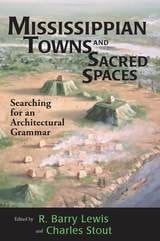
Mississippian Towns and Sacred Spaces
Searching for an Architectural GrammarEdited by R. Barry Lewis and Charles Stout
University of Alabama Press, 1998
Archaeologists and architects draw upon theoretical perspectives from their fields to provide valuable insights into the structure, development, and meaning of prehistoric communities.
Architecture is the most visible physical manifestation of human culture. The built environment envelops our lives and projects our distinctive regional and ethnic identities to the world around us. Archaeology and architecture find common theoretical ground in their perspectives of the homes, spaces, and communities that people create for themselves. Although archaeologists and architects may ask different questions and apply different methods, the results are the same—a deeper understanding of what it means to be human.
In this volume, prominent archaeologists examine the architectural design spaces of Mississippian towns and mound centers of the eastern United States. The diverse Mississippian societies, which existed between A.D. 900 and 1700, created some of the largest and most complex Native American archaeological sites in the United States. The dominant architectural feature shared by these communities was one or more large plazas, each of which was often flanked by buildings set on platform mounds. The authors describe the major dimensions of an architectural grammar, centered on the design of the plaza and mound complex that was shared by different societies across the Mississippian world. They then explore these shared architectural features as physical representations or metaphors for Mississippian world views and culture.
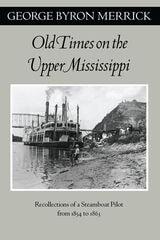
Old Times on the Upper Mississippi
Recollections of a Steamboat Pilot from 1854 to 1863George Byron Merrick
University of Minnesota Press, 2001
A long-awaited new edition of the steamboating classic.
George Byron Merrick chronicles the entire panorama of steamboat life he experienced in the mid-1800s, where he started as a cabin boy and worked up to cub pilot on the mighty Mississippi. Originally published in 1909, Merrick’s narrative matches lively stories about gamblers, shipwrecks, and steamboat races with rich descriptions of river life and steamboat operations.
Fesler-Lampert Minnesota Heritage Series
Prehistory of the Central Mississippi Valley
Edited by Charles H. McNutt
University of Alabama Press, 1996
The Central Mississippi Valley, defined as the region along the Mississippi River from where the Ohio River joins in the north to its confluence with the Arkansas River in the south, lies between the two most important archaeological areas of the Southeast: American Bottom/Cahokia and the Lower Yazoo Basin. The valley has been influenced by these major centers and has a complex history of its own. Contributions from experts throughout the region present current, if sometimes conflicting, views of the regional cultural sequences supported by data from recent surveys and excavations, as well as radiocarbon and chronometric determinations. By examining this new information and reevaluating earlier interpretations of local archaeological sequences, this volume provides a comprehensive overview of the valley and defines future research goals.
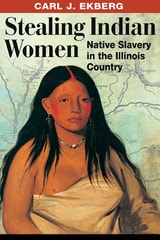
Stealing Indian Women
Native Slavery in the Illinois CountryCarl J. Ekberg
University of Illinois Press, 2009
The Commerce of Louisiana During the French Regime, 1699-1763
N. M. Miller Surrey, with an introduction by Gregory A. Waselkov
University of Alabama Press, 2006
By the time French colonists sought a portion of the New World’s riches, much of those resources had already been claimed by Spain and Portugal. Once settled in North America, however, they quickly turned their attentions to commerce, specifically to trade within the Louisiana region. For almost 65 years French explorers, soldiers, administrators, and accountants focused on establishing a string of forts and small villages at key points in the Mississippi and Illinois River valleys, eastward to the Mobile River drainage, and westward toward New Mexico. Despite a long and costly war at home, for a time it looked as though the French would be successful in controlling a vast swath of the middle of North America with routes stretching from Quebec City to New Orleans.
Under the guidance of leaders such as LaSalle, Joliet, Father Marquette, Frontenac, Hennepin, and Bienville, the French made a good start in the lucrative trading business and established working relationships with most of the Indians of the region. But by 1763, with war in Europe and a faltering economy at home, commerce in the New World eroded along with the ability of the French to control the region and to protect their investments from the encroachment of the Spanish and English.

The Lost History of the New Madrid Earthquakes
Conevery Bolton Valencius
University of Chicago Press, 2013
The Lower Mississippi Valley Expeditions of Clarence Bloomfield Moore
Clarence Bloomfield Moore
University of Alabama Press, 1998
A Dan Josselyn Memorial Publication
C. B. Moore's investigations of the Lower Mississippi Valley are here collected in a one-volume facsimile edition.
Like many other natural scientists from the Victorian era, Clarence Bloomfield Moore (1852-1917) lived several lives—adventurer, paper company executive, archaeologist; however, Moore is chiefly remembered for the twenty-five years he spent investigating and documenting archaeological sites along every navigable waterway in the southeastern United States.
Moore's surveys were and are impressive, and he earned lasting respect from archaeological researchers in the South by publishing, mostly at his own expense, all of the data he recovered. This volume includes works that describe data from Moore's expeditions that were key to the early recognition and preservation of major archaeological sites—Toltec, Parkin, Mound City, and Wicklife, among them—in the lower Mississippi River Valley. This and companion volumes stand today as the defining database for every area in which he worked.

The Making of a History
Walter Prescott Webb and The Great PlainsBy Gregory M. Tobin
University of Texas Press, 1976
Walter Prescott Webb became one of the best known interpreters of the American West following the publication of The Great Plains in 1931. That book remained one of the outstanding studies of the region for decades and attracted considerable attention over the years for its unusual emphasis on the impact of geographic factors on the process of settlement. Using manuscript sources, some of which had not previously been available, Gregory M. Tobin has traced the elements that went into the planning and writing of The Great Plains and that account for its distinctive approach to the writing of a regional history.
Tobin emphasizes two aspects of Webb's life that molded the historian's outlook: his early family life and community connections in West Texas and his admiration for the ideas of scholar Lindley Miller Keasbey. Webb reacted strongly against the assumption that the only cultural values of any real worth emanated from the urban and sophisticated East; he was determined to write the history of his own people in a way that would reveal the scale of their anonymous contribution to American civilization. By reverting to Keasbey's stress on the relationship between natural environment and social institutions, Webb broadened his study to take in what he believed to be a distinct geographic environment. The result was The Great Plains, an assertion of individual and regional identity by a man with a personal stake in establishing the image of a distinctive Plains civilization.
Although The Making of a History is not a full biography of Walter Prescott Webb, it is the first biographically oriented study of a man regarded as one of the twentieth century's major western historians. It places his development within the framework of his intellectual and social setting and, in a sense, subjects his career to the same type of scrutiny that he advocated as the basis of the study of evolving cultures.

The Mississippian Emergence
Bruce D. Smith
University of Alabama Press, 2007

The Outlaws of Cave-in-Rock
Otto A. Rothert. Foreword by Robert Clark
Southern Illinois University Press, 1996
Exceptionally rare and valued by book collectors, Otto A. Rothert’s riveting saga of the outlaws and scoundrels of Cave-in-Rock chronicles the adventures of an audacious cast of river pirates and highwaymen who operated in and around the famous Ohio River cavern from 1795 through 1820 (adventures featured in Disney’s Davy Crockett and the film How the West Was Won). Once sporting the enticing sign "Liquor Vault and House for Entertainment," this beautiful cavern location decoyed the unsuspecting by offering a venue for food, drink, and rest.
Compellingly lively, The Outlaws of Cave-in-Rock is nonetheless the work of a scholar, a historian who documents his findings and leaves a detailed bibliographical trail. Presenting many eyewitness accounts, Rothert supplies the lore and legend of the colorful villains of Cave-in-Rock. Always maintaining the difference between stories he tells with historical authority and those that are pure speculation, Rothert provides both a fascinating narrative and a valuable regional history.

The Thousand-Year Flood
The Ohio-Mississippi Disaster of 1937David Welky
University of Chicago Press, 2011
In the early days of 1937, the Ohio River, swollen by heavy winter rains, began rising. And rising. And rising. By the time the waters crested, the Ohio and Mississippi had climbed to record heights. Nearly four hundred people had died, while a million more had run from their homes. The deluge caused more than half a billion dollars of damage at a time when the Great Depression still battered the nation.
Timed to coincide with the flood's seventy-fifth anniversary, The Thousand-Year Flood is the first comprehensive history of one of the most destructive disasters in American history. David Welky first shows how decades of settlement put Ohio valley farms and towns at risk and how politicians and planners repeatedly ignored the dangers. Then he tells the gripping story of the river's inexorable rise: residents fled to refugee camps and higher ground, towns imposed martial law, prisoners rioted, Red Cross nurses endured terrifying conditions, and FDR dispatched thousands of relief workers. In a landscape fraught with dangers—from unmoored gas tanks that became floating bombs to powerful currents of filthy floodwaters that swept away whole towns—people hastily raised sandbag barricades, piled into overloaded rowboats, and marveled at water that stretched as far as the eye could see. In the flood's aftermath, Welky explains, New Deal reformers, utopian dreamers, and hard-pressed locals restructured not only the flood-stricken valleys, but also the nation's relationship with its waterways, changes that continue to affect life along the rivers to this day.
A striking narrative of danger and adventure—and the mix of heroism and generosity, greed and pettiness that always accompany disaster—The Thousand-Year Flood breathes new life into a fascinating yet little-remembered American story.

Time's River
Archaeological Syntheses from the Lower Mississippi ValleyEdited by Janet Rafferty and Evan Peacock
University of Alabama Press, 2008
An archaeologically rich region, in advance of impending disturbance
This volume stands as a key general resource for archaeologists working in the region extending from Louisiana through Mississippi north to Missouri and Kentucky, and it represents an opportunity to influence for decades a large part of the archaeological work to take place in the Southeast.
The book responds to a need for a comprehensive archaeological overview of the Lower Mississippi Valley that forms a portion of an interstate corridor spanning nine states that will run from southern Michigan to the Texas-Mexico border. The culturally sensitive Mississippi Delta is one of the richest archaeological areas in North America, and it is crucial that research designs be comprehensive, coordinated, and meet current preservation and future research needs. The authors are well-respected researchers from both within and outside the region with expertise in the full range of topics that comprise American archaeology. They examine matters of method and theory, the application of materials science, geophysics, and other high-tech tools in archaeology that provide for optimum data-recovery.
Towns and Temples Along the Mississippi
Edited by David H. Dye and Cheryl Anne Cox
University of Alabama Press, 1990
A Dan Josselyn Memorial Publication
Discover the stories, structures, and spirit that shaped life along America’s greatest river.
Specialists from archaeology, ethnohistory, physical anthropology, and cultural anthropology bring their varied points of view to this subject in an attempt to answer basic questions about the nature and extent of social change within the time period. The scholars' overriding concerns include presentation of a scientifically accurate depiction of the native cultures in the Central Mississippi Valley prior and immediately subsequent to European contact and the need to document the ensuing social and biological changes that eventually led to the widespread depopulation and cultural reorientation. Their findings lead to three basic hypotheses that will focus the scholarly research for decades to come.
Contributors include:
George J. Armelagos, Ian W. Brown, Chester B. DePratter, George F. Fielder, Jr., James B. Griffin, M. Cassandra Hill, Michael P. Hoffman, Charles Hudson, R. Barry Lewis, Dan F. Morse, Phyllis A. Morse, Mary Lucas Powell, Cynthia R. Price, James F. Price, Gerald P. Smith, Marvin T. Smith, and Stephen Williams
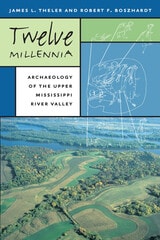
Twelve Millennia
Archaeology of the Upper Mississippi River ValleyJames L Theler
University of Iowa Press, 2003
The people of Taquile Island on the Peruvian side of beautiful Lake Titicaca, the highest navigable lake in the Americas, are renowned for the hand-woven textiles that they both wear and sell to outsiders. One thousand seven hundred Quechua-speaking peasant farmers, who depend on potatoes and the fish from the lake, host the forty thousand tourists who visit their island each year. Yet only twenty-five years ago, few tourists had even heard of Taquile. In Weaving a Future: Tourism, Cloth, and Culture on an Andean Island, Elayne Zorn documents the remarkable transformation of the isolated rocky island into a community-controlled enterprise that now provides a model for indigenous communities worldwide.
Over the course of three decades and nearly two years living on Taquile Island, Zorn, who is trained in both the arts and anthropology, learned to weave from Taquilean women. She also learned how gender structures both the traditional lifestyles and the changes that tourism and transnationalism have brought. In her comprehensive and accessible study, she reveals how Taquileans used their isolation, landownership, and communal organizations to negotiate the pitfalls of globalization and modernization and even to benefit from tourism. This multi-sited ethnography set in Peru, Washington, D.C., and New York City shows why and how cloth remains central to Andean society and how the marketing of textiles provided the experience and money for Taquilean initiatives in controlling tourism.
The first book about tourism in South America that centers on traditional arts as well as community control, Weaving a Future will be of great interest to anthropologists and scholars and practitioners of tourism, grassroots development, and the fiber arts.
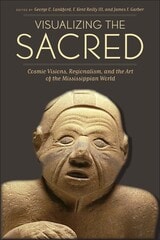
Visualizing the Sacred
Cosmic Visions, Regionalism, and the Art of the Mississippian WorldEdited by George E. Lankford, F. Kent Reilly III, and James F. Garber
University of Texas Press, 2011
The prehistoric native peoples of the Mississippi River Valley and other areas of the Eastern Woodlands of the United States shared a complex set of symbols and motifs that constituted one of the greatest artistic traditions of the pre-Columbian Americas. Traditionally known as the Southeastern Ceremonial Complex, these artifacts of copper, shell, stone, clay, and wood were the subject of the groundbreaking 2007 book Ancient Objects and Sacred Realms: Interpretations of Mississippian Iconography, which presented a major reconstruction of the rituals, cosmology, ideology, and political structures of the Mississippian peoples.
Visualizing the Sacred advances the study of Mississippian iconography by delving into the regional variations within what is now known as the Mississippian Iconographic Interaction Sphere (MIIS). Bringing archaeological, ethnographic, ethnohistoric, and iconographic perspectives to the analysis of Mississippian art, contributors from several disciplines discuss variations in symbols and motifs among major sites and regions across a wide span of time and also consider what visual symbols reveal about elite status in diverse political environments. These findings represent the first formal identification of style regions within the Mississippian Iconographic Interaction Sphere and call for a new understanding of the MIIS as a network of localized, yet interrelated religious systems that experienced both continuity and change over time.
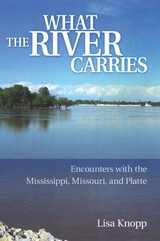
What the River Carries
Encounters with the Mississippi, Missouri, and PlatteLisa Knopp
University of Missouri Press, 2012
Because Knopp was born and raised just a few blocks away, she considers the Mississippi from the perspective of a native resident, a “dweller in the land.” She revisits places she has long known: Nauvoo, Illinois, the site of two nineteenth-century utopias, one Mormon, one Icarian; Muscatine, Iowa, once the world’s largest manufacturer of pearl (mussel shell) buttons; and the mysterious prehistoric bird- and bear-shaped effigy mounds of northeastern Iowa. On a downriver trip between the Twin Cities and St. Louis, she meditates on what can be found in Mississippi river water—state lines, dissolved oxygen, smallmouth bass, corpses, family history, wrecked steamboats, mayfly nymphs, toxic perfluorinated chemicals, philosophies.
Knopp first encountered the Missouri as a tourist and became acquainted with it through literary and historical documents, as well as stories told by longtime residents. Her journey includes stops at Fort Bellefontaine, where Lewis and Clark first slept on their sojourn to the Pacific; Little Dixie, Missouri’s slaveholding, hemp-growing region, as revealed through the life of Jesse James’s mother; Fort Randall Dam and Lake Francis Case, the construction of which destroyed White Swan on the Yankton Sioux Reservation; and places that produced unique musical responses to the river, including Native American courting flutes, indie rock, Missouri River valley fiddling, Prohibition-era jazz jam sessions, and German folk music.
Knopp’s relationship with the Platte is marked by intentionality: she settled nearby and chose to develop deep and lasting connections over twenty years’ residence. On this adventure, she ponders the half-million sandhill cranes that pass through Nebraska each spring, the ancient varieties of Pawnee corn growing at the Great Platte River Road Archway Monument, a never-broken tract of tallgrass prairie, the sugar beet industry, and the changes in the river brought about by the demands of irrigation.
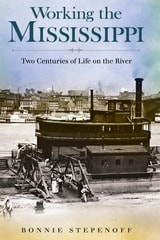
Working the Mississippi
Two Centuries of Life on the RiverBonnie Stepenoff
University of Missouri Press, 2015
The Mississippi River occupies a sacred place in American culture and mythology. Often called The Father of Rivers, it winds through American life in equal measure as a symbol and as a topographic feature. To the people who know it best, the river is life and a livelihood. River boatmen working the wide Mississippi are never far from land. Even in the dark, they can smell plants and animals and hear people on the banks and wharves.
Bonnie Stepenoff takes readers on a cruise through history, showing how workers from St. Louis to Memphis changed the river and were in turn changed by it. Each chapter of this fast-moving narrative focuses on representative workers: captains and pilots, gamblers and musicians, cooks and craftsmen. Readers will find workers who are themselves part of the country’s mythology from Mark Twain and anti-slavery crusader William Wells Brown to musicians Fate Marable and Louis Armstrong.