Results by title

7 books match the query 'Modern Drama'
cover of Edges of Loss: From Modern Drama to Postmodern Theory

Edges of Loss

From Modern Drama to Postmodern Theory

Mark Pizzato

University of Michigan Press, 1998
One of the curious characteristics of much postmodern theory is the attention it has paid to theater, an art form seemingly more in danger of extinction today than perhaps ever in its history. Mark Pizzato interrogates this curiosity, revealing it as an obsession with the destruction of social institutions and the "universal truths" of modernism. Edges of Loss explores the theatrics of loss in the minds of authors, performers, spectators, and the conflicting social orders of perversion, taboo, and the sacred. Theater as a marginal form reveals the unstable edges of community and the ways such community is imagined and staged. The author initiates his approach to the question of loss through an investigation of the psychohistory of modern and postmodern stages: the return to ritual chorus and the belief in poetry in Eliot's modern poetic drama, the nostalgia for a lost ritual "womb" in Nietzsche's proto-postmodern views of ancient tragedy. Building on this approach, Pizzato employs the techniques of psychobiography wth modern, avant-garde playwrights Antonin Artaud, Bertolt Brecht, and Jean Genet to diagnose the significance of their work in relation to various postmdern theorists. In doing so, he reveals a common concern among both modernists and postmodernists for the stage edge as a border, a gap, an ambiguous juncture between the artist as a self and the artist as a voice of the community. In the end, Edges of Loss establishes this concern as a concern for the lost mother and a lost symbiosis with something deeper and more true. Through its initial focus on literary theory, its subsequent investigation of theatre history and performance history, and its persistent use of various psychoanalytic views, especially regarding spectatorship and cultural studies, Edges of Loss becomes increasingly interdisciplinary. For the aesthetics of loss within modern drama reaches beyond New Critical wholeness toward theatrical elements in many disciplines and various epistemologies of loss. Such differing perspectives show the potential of theater today to display new relationships and to unearth forgotten horizons."An extraordinary and original study. . . a book that wrestles with many current issues in theater and theory without submitting to the common vagaries of those fields of study." --Anthony Kubiak
[more]
cover of Mirrors of Our Playing: Paradigms and Presences in Modern Drama

Mirrors of Our Playing

Paradigms and Presences in Modern Drama

Thomas R. Whitaker

University of Michigan Press, 1999
For centuries, theater has maintained a central role in the development and preservation of artistic, social, and political themes in society. Yet in recent decades, theater has taken an increasingly marginal role. In this book, Thomas R. Whitaker examines the reasons for the marginalization of this important and influential art form, considering not only histories of various dramatic forms, but also the individual histories of various playwrights and their times. In so doing, he explores the importance of perceiving drama in a different light: as a participatory tool, a mirror that reflects life as it unfolds and plays out before us. Whitaker's unique and comprehensive study of drama poses theater as a collaborative and interactive experience, an experience that involves not only the playwright, the text, and the artists, but the audience as well as the society and culture of that audience.Contrary to the common critical belief that drama can only be theorized as a “performed action,” Whitaker conceptualizes drama as an interaction between a “performed action” and an “action of performance.” The whole of Mirrors of Our Playing is founded on the understanding that a play is a manifold mirror of the “playing” that is our lives; therefore, the play is shaped by a complex interaction between the paradigms that make up our view of the world and the reflection of these paradigms in the “mirror” that is the play.Focusing on both scripts and performance, Mirrors of Our Playing takes a fresh look at modern English-speaking drama, from its Anglo-Irish beginnings to its contemporary cross-fertilizations and international dispersals. It shows how most important English-speaking theater has been shaped in accord with several major paradigms, while it examines four major presences in that theater: Lord Byron, Samuel Beckett, Wole Soyinka, and Peter Brook. Mirrors of Our Playing stands on the borderlands between text-oriented and performanceoriented criticism. It seeks to extend our knowledge of the history of modern drama in English as that drama has engaged certain paradigms of performance. It is therefore grounded in close textual analysis of a great many texts that are understood as scripts for performance. Its several chapters incorporate, as they proceed, a variety of subordinate strategies: the placing of theater in historical context, the comparison of closely related plays, the charting of historical sequences of development within a given genre or paradigm, examination of the influence of a historical figure or of contemporary works, and the tracing of the exploratory development of a major director.
[more]
cover of Staging Place: The Geography of Modern Drama

Staging Place

The Geography of Modern Drama

Una Chaudhuri

University of Michigan Press, 1997

Staging Place: The Geography of Modern Drama reimagines the content and continuities of theater history and exposes underlying dialogues between "home and homelessness, belonging and exile"--a century-long struggle with the meaning and power of place, which the author terms "geopathology." By reading canonical works in conjunction with contemporary ones, Chaudhuri charts the evolution of a dramatic paradigm with profound theatrical and thematic implications.
Chaudhuri starts with a discussion of a "poetics of exile" in early modern drama, where the figure of home is constructed as a locus of two conflicting impulses: the desire to find a stable site for individual identity and the desire to deterritorialize the self. By mid-century, she argues, a new discourse of "failed homecoming" begins to displace this geopathic model and replace the poetics of exile with a grim anti-poetics of immigration. She then employs postmodern and postcolonial theories of place and culture to define the emerging multiculturalism as a creative reworking of the figures of home, homecoming, homelessness, immigration and exile.
"This is a book of real originality. Its treatment of space in modern drama is elegant and powerful. . . ." --William B. Worthen, Northwestern University
"Staging Place is a powerfully written book, deft in its handling of familiar and unfamiliar plays alike and eclectic in its use of theatrical sources." --Essays in Theatre/ Études théâtrales
"This sophisticated and well-written study for graduate students and their teachers explores modern drama's preoccupation with the seemingly irreconcilable discontinuities between the notions of home and homelessness, belonging and exile. . . . The readings of individual plays are fresh and invigorating. . . ." --Choice
Una Chaudhuri is Associate Professor of English, New York University.
[more]
cover of The Birth of Theater from the Spirit of Philosophy: Nietzsche and the Modern Drama

The Birth of Theater from the Spirit of Philosophy

Nietzsche and the Modern Drama

David Kornhaber

Northwestern University Press, 2016
Nietzsche's love affair with the theater was among the most profound and prolonged intellectual engagements of his life, but his transformational role in the history of the modern stage has yet to be explored. In this pathbreaking account, David Kornhaber vividly shows how Nietzsche reimagined the theatrical event as a site of philosophical invention that is at once ancestor, antagonist, and handmaiden to the discipline of philosophy itself. August Strindberg, George Bernard Shaw, and Eugene O'Neill— seminal figures in the modern drama's evolution and avowed Nietzscheans all—came away from their encounters with Nietzsche's writings with an impassioned belief in the philosophical potential of the live theatrical event, coupled with a reestimation of the dramatist's power to shape that event in collaboration with the actor. In these playwrights' reactions to and adaptations of Nietzsche's radical rethinking of the stage lay the beginnings of a new direction in modern theater and dramatic literature.
[more]
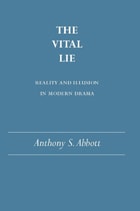
cover of The Vital Lie: Reality and Illusion in Modern Drama

The Vital Lie

Reality and Illusion in Modern Drama

Anthony S. Abbott

University of Alabama Press, 1988

The Vital Lie: Reality and Illusion in Modern Drama is a sweeping inquiry into the stories people tell themselves in order to endure, survive, and belong. Moving from Ibsen and Strindberg to Beckett, Pinter, and beyond, Anthony S. Abbott traces the uneasy traffic between actuality and self-invention that animates modern theater. Rather than offering a simple survey, he uncovers a recurring dramatic predicament: the cognitive dissonance that afflict people when the beliefs they hold about themselves collide with reality.

Anthony S. Abbott writes with the erudite observation of a critic and the curiosity of a participant. His book explores illusion, meaning, and human resilience, a perspective that lends unusual urgency to its readings of canonical playwrights. Abbott's scholarship is expansive without becoming academic in the pejorative sense; his arguments remain animated by large questions about purpose, dignity, and the imaginative structures that sustain ordinary lives. 

Ideal for theater devotees, literary historians, students of modernism, philosophy-minded readers, directors, dramaturgs, and anyone fascinated by self-deception, mythmaking, and identity. Admirers of intellectual biography, cultural criticism, existential inquiry, and ambitious cross-author interpretation will find this volume especially rewarding. Those who relish fresh angles on familiar classics will discover a study that is probing, elegant, and unexpectedly memorable.
[more]
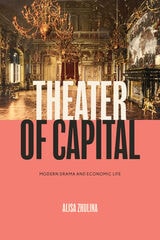
cover of Theater of Capital: Modern Drama and Economic Life

Theater of Capital

Modern Drama and Economic Life

Alisa Zhulina

Northwestern University Press, 2024

Reads canonical works of modern drama in relation to the economic ideas of their era

Emerging amid the turbulent rise of market finance and wider socioeconomic changes, modern drama enacted vital critiques of art and life under capitalism. Alisa Zhulina shows how fin-de-siècle playwrights such as Henrik Ibsen, August Strindberg, Anton Chekhov, George Bernard Shaw, and Gerhart Hauptmann interrogated the meaning of this newly coined economic concept. Acutely aware of their complicity in the system they sought to challenge, these playwrights staged economic questions as moral and political concerns, using their plays to explore the theories of Adam Smith, Karl Marx and Friedrich Engels, Max Weber, and others within the boundaries of bourgeois theater.

Theater of Capital: Modern Drama and Economic Life reveals the prescient and unsettling visions of life in a new financial and societal reality in now-canonical plays such as A Doll’s House, Miss Julie, and The Cherry Orchard, as well as in lesser-known and long-overlooked works. This wide-ranging study prompts us to reevaluate modern drama and its legacy for the urgent economic and political questions that haunt our present moment.

[more]
cover of Vladimir's Carrot: Modern Drama and the Modern Imagination

Vladimir's Carrot

Modern Drama and the Modern Imagination

John Peter

University of Chicago Press, 1987

What is modern in modern drama? What defines it, unmistakably, as being of our time? This quality if the subject of John Peter's inquiry.

For Peter, Beckett's Waiting for Godot makes such a radical break with dramatic tradition that it prompts the question: Is this play the single most important event in the theater since Aeschylus? Or is it the fulfillment of forces at work long before Beckett wrote it? Peter shows how Beckett's work represents a change in the very subject matter of drama, a fundamental revision of concepts of character, plot, and meaning, which in turn requires a new way of responding to drama. Where plays have traditionally engaged audiences in critical and moral dialogue, theater like Beckett's, according to Peter, is closed to questioning; it presents a vision of the world which can only be accepted or rejected. As such, it not only signals a new form of drama, but also posits a fundamentally changed audience.

Peter views this change—essentially, a change of mind—in its wider context. The times and the thought that contribute to the modern imagination are represented here by novels, paintings, and music—works by Wagner, Kafka, Proust, Picasso, and Braque—as well as plays. Peter shows how the depiction of the world by these artists echoes—and is echoed by—the work of modern thinkers such as Schopenhauer, Nietzsche, and Freud.

Vladimir's Carrot will provoke and stimulate readers who find themselves either lost or perfectly at home in "modern" culture.
[more]