Results by title
17 books match the query 'Mother and child'

A Spell on the Water
Marjorie Kowalski Cole
University of Michigan Press, 2011
"I couldn't put it down."
---Barbara Kingsolver
In 1955, Mary and Jim Leader have the American dream: careers in medicine; a young and healthy family; and even a vacation home---a shabby resort far from bustling Chicago. But one hot afternoon changes everything. Mary, now a widow, must find a path out of her grief into a future for herself and five small children.
In Michigan to sell the resort, Mary sees seven hawks riding the storm winds over the lake. This place, she thinks, can heal them with its wild beauty, so she moves her family to the northern lakeshore.
But Mary has forgotten what it's like to live in a tiny rural community, where almost everyone has a stake in maintaining the status quo. Secrets are kept at great cost as Mary's children often struggle to raise themselves. A coming-of-age story for each member of the family, this is a novel of quiet heroism and the power of personal freedom.
Praise for Marjorie Kowalski Cole and her previous novel, Correcting the Landscape:
". . . her writing is simple, vivid and gorgeous."
---Eugene Register-Guard
". . . a remarkable new talent. Critics have lined up to praise the book."
---Tucson Citizen
"Cole's style is subtle but engrossing . . . It is quite a debut."
---Booklist
Cover illustration: ©iStockphoto.com/ImagineGolf
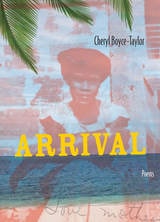
ARRIVAL
PoemsCheryl Boyce-Taylor
Northwestern University Press, 2017
ARRIVAL is a poetic love story between mother and daughter. The poems are road maps, intertwining generations with a narrative beginning in 1950 with a woman who is pregnant with twins. In her seventh month she delivers a stillborn boy and a baby girl weighing less than two pounds. From there, the evocation of a series of catastrophic family events brings forth Cheryl Boyce-Taylor’s power to strip her readers down to their most vulnerable. Boyce-Taylor is steeped in the narratives of Trinidad and New York City, colored with metaphorical stew-pot images. She revels in her lyrical range as she weaves these poetic retellings of family, place, and identity.
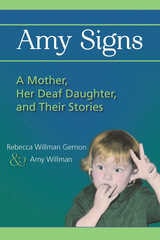
Amy Signs
A Mother, Her Deaf Daughter, and Their StoriesRebecca Willman Gernon
Gallaudet University Press, 2012
“Thirty-seven years ago, I vowed to write a truthful book about raising a deaf child.” Rebecca Willman Gernon followed through on her promise with her deaf daughter Amy Willman in this extraordinary new narrative. Many stories have been told about a parent’s struggle to help her deaf child succeed in a mostly hearing world. Amy Signs marks a signature departure in that both Rebecca and Amy relate their perspectives on their journey together.
When she learns of 11-month-old Amy’s deafness in 1969, Rebecca fully expresses her anguish, and traces all of the difficulties she endured in trying to find the right educational environment for Amy. The sacrifices of the rest of her family weighed heavily on her, also. Though she resolved to place four-year-old Amy in Nebraska’s residential school for deaf students, the emotional toll seemed too much to bear.
Amy’s view acts as the perfect counterpoint. Interwoven with her mother’s story, Amy’s account confirms that signing served her best. She summarizes life in boarding school as “laughter and homesickness.” She laughed with all of her deaf friends, though felt homesick at times. Amy thanks her mother for the gift of sign, asserting that a mainstream education would never have led her to earn a master’s degree and later teach American Sign Language at the University of Nebraska. Amy Signs is a positive albeit cautionary tale for parents of deaf children today whose only choice is a mainstreamed education.
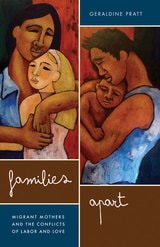
Families Apart
Migrant Mothers and the Conflicts of Labor and LoveGeraldine Pratt
University of Minnesota Press, 2012
In a developing nation like the Philippines, many mothers provide for their families by traveling to a foreign country to care for someone else’s. Families Apart focuses on Filipino overseas workers in Canada to reveal what such arrangements mean for families on both sides of the global divide.
The outcome of Geraldine Pratt’s collaboration with the Philippine Women Centre of British Columbia, this study documents the difficulties of family separation and the problems that children have when they reunite with their mothers in Vancouver. Aimed at those who have lived this experience, those who directly benefit from it, and those who simply stand by and watch, Families Apart shows how Filipino migrant domestic workers—often mothers themselves—are caught between competing neoliberal policies of sending and receiving countries and how, rather than paying rich returns, their ambitions as migrants often result in social and economic exclusion for themselves and for their children. This argument takes shape as an open-ended series of encounters, moving between a singular academic voice and the “we” of various research collaborations, between Vancouver and the Philippines, and between genres of “evidence-based” social scientific research, personal testimony, theatrical performance, and nonfictional narrative writing.
Through these experiments with different modes of storytelling, Pratt seeks to transform frameworks of perception, to create and collect sympathetic witnesses—in short, to promote a wide-ranging public discussion and debate about a massive worldwide shift in family (and nonfamily) relations of intimacy and care.
From Klein to Kristeva
Psychoanalytic Feminism and the Search for the "Good Enough" MotherJanice Doane and Devon Hodges
University of Michigan Press, 1993
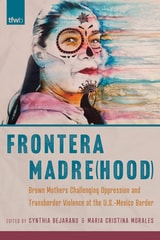
Frontera Madre(hood)
Brown Mothers Challenging Oppression and Transborder Violence at the U.S.-Mexico BorderEdited by Cynthia Bejarano and Maria Cristina Morales
University of Arizona Press, 2024
Borderlands Regional Library Association Southwest Book Award Winner
2025 International Latino Book Award Winner
The topic of mothers and mothering transcends all spaces, from popular culture to intellectual thought and critique. This collection of essays bridges both methodological and theoretical frameworks to explore forms of mothering that challenge hegemonic understandings of parenting and traditional notions of Latinx womxnhood. It articulates the collective experiences of Latinx, Black, and Indigenous mothering from both sides of the U.S.-Mexico border.
Thirty contributors discuss their lived experiences, research, or community work challenging multiple layers of oppression, including militarization of the border, border security propaganda, feminicides, drug war and colonial violence, grieving and loss of a child, challenges and forms of resistance by Indigenous mothers, working mothers in maquiladoras, queer mothering, academia and motherhood, and institutional barriers by government systems to access affordable health care and environmental justice. Also central to this collection are questions on how migration and detention restructure forms of mothering. Overall, this collection encapsulates how mothering is shaped by the geopolitics of border zones, which also transcends biological, sociological, or cultural and gendered tropes regarding ideas of motherhood, who can mother, and what mothering personifies.
Contributors
Elva M. Arredondo
Cynthia Bejarano
Bertha A. Bermúdez Tapia
Margaret Brown Vega
Macrina Cárdenas Montaño
Claudia Yolanda Casillas
Luz Estela (Lucha) Castro
Marisa Elena Duarte
Taide Elena
Sylvia Fernández Quintanilla
Paula Flores Bonilla
Judith Flores Carmona
Sandra Gutiérrez
Ma. Eugenia Hernández Sánchez
Irene Lara
Leticia López Manzano
Mariana Martinez
Maria Cristina Morales
Paola Isabel Nava Gonzales
Olga Odgers-Ortiz
Priscilla Pérez
Silvia Quintanilla Moreno
Cirila Quintero Ramírez
Felicia Rangel-Samponaro
Coda Rayo-Garza
Shamma Rayo-Gutierrez
Marisol Rodríguez Sosa
Brenda Rubio
Ariana Saludares
Victoria M. Telles
Michelle Téllez
Marisa S. Torres
Edith Treviño Espinosa
Mariela Vásquez Tobon
Hilda Villegas
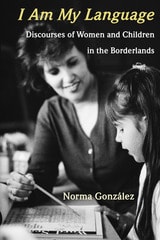
I Am My Language
Discourses of Women and Children in the BorderlandsNorma González
University of Arizona Press, 2001
“I am my language,” says the poet Gloria Anzaldúa, because language is at the heart of who we are. But what happens when a person has more than one language? Is there an overlay of language on identity, and do we shift identities as we shift languages? More important, what identities do children construct for themselves when they use different languages in particular ways?
In this book, Norma González uses language as a window on the multiple levels of identity construction in children—as well as on the complexities of life in the borderlands—to explore language practices and discourse patterns of Mexican-origin mothers and the language socialization of their children. She shows how the unique discourses that result from the interplay of two cultures shape perceptions of self and community, and how they influence the ways in which children learn and families engage with their children’s schools.
González demonstrates that the physical presence of the border profoundly affects the practices and ideologies of Mexican-origin women and children. She then argues that language and cultural background should be used as a basis for building academic competencies, and she demonstrates why the evocative/emotive dimension of language should play a major part in studies of discourse, language socialization, and language ideology.
Drawing on women’s own narratives of their experiences as both mothers and borderland residents, I Am My Language is firmly rooted in the words of common people in their everyday lives. It combines personal odyssey with cutting-edge ethnographic research, allowing us to hear voices that have been muted in the academic and public policy discussions of “what it means to be Latina/o” and showing us new ways to connect language to complex issues of education, political economy, and social identity.
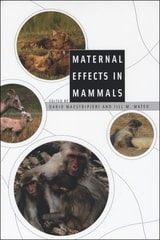
Maternal Effects in Mammals
Edited by Dario Maestripieri and Jill M. Mateo
University of Chicago Press, 2009
Evolutionary maternal effects occur whenever a mother’s phenotypic traits directly affect her offspring’s phenotype, independent of the offspring’s genotype. Some of the phenotypic traits that result in maternal effects have a genetic basis, whereas others are environmentally determined. For example, the size of a litter produced by a mammalian mother—a trait with a strong genetic basis—can affect the growth rate of her offspring, while a mother’s dominance rank—an environmentally determined trait—can affect the dominance rank of her offspring.
The first volume published on the subject in more than a decade, Maternal Effects in Mammals reflects advances in genomic, ecological, and behavioral research, as well new understandings of the evolutionary interplay between mothers and their offspring. Dario Maestripieri and Jill M. Mateo bring together a learned group of contributors to synthesize the vast literature on a range of species, highlight evolutionary processes that were previously overlooked, and propose new avenues of research. Maternal Effects in Mammals will serve as the most comprehensive compendium on and stimulus for interdisciplinary treatments of mammalian maternal effects.
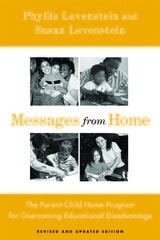
Messages From Home
The Parent-Child Home Program For Overcoming Educational DisadvantagePhyllis Levenstein and Susan Levenstein
Temple University Press, 2008
The Parent-Child Home Program, a pre-preschool home visiting program, has grown greatly since the first edition of Messages from Home was published in 1988. This expanded and updated edition shows the continued success of this program-spearheaded by the late Phyllis Levenstein-which prepares at-risk children for school success, overcoming educational disadvantage.
Since The Parent-Child Home Program was founded in the 1960s, it has enriched the cognitive, social, and emotional school readiness of tens of thousands of children. The Program's methods, its theoretical underpinnings, and its impressive results are presented in detail. The success stories of both parents and children make inspiring reading. The combination of lively writing and data-driven scientific rigor give it both broad appeal and academic relevance.
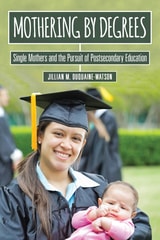
Mothering by Degrees
Single Mothers and the Pursuit of Postsecondary EducationDuquaine-Watson, Jillian M.
Rutgers University Press, 2017
In Mothering by Degrees, Jillian Duquaine-Watson shows how single mothers pursuing college degrees must navigate a difficult course as they attempt to reconcile their identities as single moms, college students, and in many cases, employees. They also negotiate a balance between what they think a good mother should be, and what society is telling them, and how that affects their choices to go to college, and whether to stay in college or not.
The first book length study to focus on the lives and experiences of single mothers who are college students, Mothering by Degrees points out how these women are influenced by dominant American ideologies of motherhood, and the institutional parameters of the schools they attend, and argues for increased attention to the specific ways in which the choices, challenges, and opportunities available to mothers are shaped within their specific environments, as well as the ways in which mothers help shape those environments...
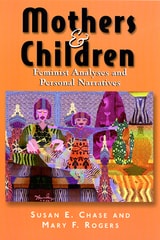
Mothers and Children
Feminist Analyses and Personal NarrativesEdited by Susan E Chase and Mary F. Rogers
Rutgers University Press, 2001
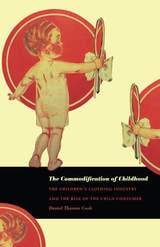
The Commodification of Childhood
The Children’s Clothing Industry and the Rise of the Child ConsumerDaniel Thomas Cook
Duke University Press, 2004
The Commodification of Childhood begins with the publication of the children’s wear industry’s first trade journal, The Infants’ Department, in 1917 and extends into the early 1960s, by which time the changes Cook chronicles were largely complete. Analyzing trade journals and other documentary sources, Cook shows how the industry created a market by developing and promulgating new understandings of the “nature,” needs, and motivations of the child consumer. He discusses various ways that discursive constructions of the consuming child were made material: in the creation of separate children’s clothing departments, in their segmentation and layout by age and gender gradations (such as infant, toddler, boys, girls, tweens, and teens), in merchants’ treatment of children as individuals on the retail floor, and in displays designed to appeal directly to children. Ultimately, The Commodification of Childhood provides a compelling argument that any consideration of “the child” must necessarily take into account how childhood came to be understood through, and structured by, a market idiom.
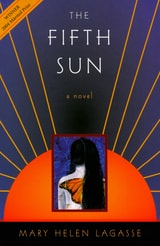
The Fifth Sun
Mary Helen Lagasse
Northwestern University Press, 2004
Winner of the 3rd Annual Miguel Mármol Prize from Curbstone Press, Mary Helen Lagasse's The Fifth Sun is an inspiring story of an immigrant who struggles valiantly for a better life for herself and her family. A young Mexican woman, Mercedes, leaves her village to work as a housemaid in New Orleans. This fast-paced novel takes us through her adventures in New Orleans, her marriage, her struggle to raise her children, her deportation, and her attempt to re-cross the river and be reunited with her children.
The Mother Knot
Jane Lazarre
Duke University Press, 1997
The Nature and Nurture of Love
From Imprinting to Attachment in Cold War AmericaMarga Vicedo
University of Chicago Press, 2013
Thinking about the Baby
Gender and Transitions into ParenthoodSusan Walzer
Temple University Press, 1998
How do new mothers and fathers think about babies, and what is the influence of parental consciousness in reproducing motherhood and fatherhood as different experiences? The reports of new parents in this book illustrate the power of gendered cultural imagery in how women and men think about their roles and negotiate their parenting arrangement.
New parents talk about what it means to them to be a "good" mother or father and how this plays out in their working arrangements and their everyday interactions over child care. The author carefully unravels the effects of social norms, personal relationships, and social institutions in channeling parents toward gender-differentiated approaches to parenting.
Viral Mothers
Breastfeeding in the Age of HIV/AIDSBernice L. Hausman
University of Michigan Press, 2010