Results by title
37 books match the query 'Mothers and daughters'
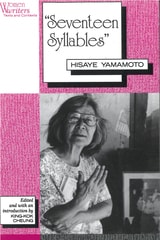
'Seventeen Syllables'
Hisaye YamamotoEdited by King-Kok Cheung
Rutgers University Press, 1994
Yamamoto's disarming style matches the verbal economy of haiku, in which all meaning is contained within seventeen syllables. Her deft characterizations and her delineations of sexuality create a haunting story of a young girl's transformation from innocence to adulthood.
This casebook includes an introduction and an essay by the editor, an interview with the author, a chronology, authoritative texts of "Seventeen Syllables" (1949) and "Yoneko's Earthquake" (1951), critical essays, and a bibliography. The contributors are Charles L. Crow, Donald C. Goellnicht, Elaine H. Kim, Dorothy Ritsuko McDonald, Zenobia Baxter Mistri, Katharine Newman, Robert M. Payne, Robert T. Rolf, and Stan Yogi.
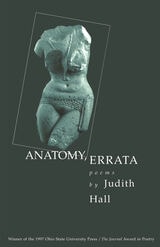
ANATOMY ERRATA
Judith Hall
The Ohio State University Press, 1998
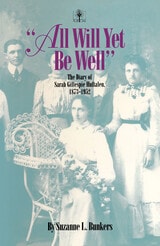
All Will Yet Be Well
The Diary of Sarah Gillespie Huftalen, 1873-1952Suzanne L. Bunkers
University of Iowa Press, 1993
Sarah Gillespie Huftalen led an unconventional life for a rural midwestern woman of her time. Born in 1865 near Manchester, Iowa, she was a farm girl who became a highly regarded country school and college teacher; she married a man older than either of her parents, received a college degree later in life, and was committed to both family and career. A gifted writer, she crafted essays, teacher-training guides, and poetry while continuing to write lengthy, introspective entries in her diary, which spans the years from 1873 to 1952. In addition, she gathered extensive information about the quietly tragic life of her mother, Emily, and worked to preserve Emily's own detailed diary.
In more than 3,500 pages, Sarah writes about her multiple roles as daughter, sister, wife, teacher, family historian, and public figure. Her diary reflects the process by which she was socialized into these roles and her growing consciousness of the ways in which these roles intersected. Not only does her diary embody the diverse strategies used by one woman to chart her life's course and to preserve her life's story for future generations, it also offers ample evidence of the diary as a primary form of private autobiography for individuals whose lives do not lend themselves to traditional definitions of autobiography.
Taken together, Emily's and Sarah's extraordinary diaries span nearly a century and thus form a unique mother/daughter chronicle of daily work and thoughts, interactions with neighbors and friends and colleagues, and the destructive family dynamics that dominated the Gillespies. Sarah's consciousness of the abusive relationship between her mother and father haunts her diary, and this dramatic relationship is duplicated in Sarah's relationship with her brother, Henry, Suzanne Bunkers' skillful editing and analysis of Sarah's diary reveal the legacy of a caring, loving mother reflected in her daughter's work as family member, teacher, and citizen.
The rich entries in Sarah Gillespie Huftalen's diary offer us brilliant insights into the importance of female kinship networks in American life, the valued status of many women as family chroniclers, and the fine art of selecting, piecing, stitching, and quilting that characterizes the many shapes of women's autobiographies. Read Sarah's dairy to discover why "all will yet be well."
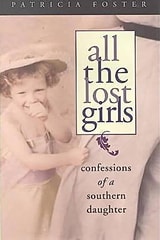
All the Lost Girls
Confessions of a Southern DaughterPatricia Foster
University of Alabama Press, 2002
Patricia Foster’s lyrical yet often painful memoir explores the life of a white middle-class girl who grew up in rural south Alabama in the 1950s and 1960s, a time and place that did not tolerate deviation from traditional gender roles. Her mother raised Foster and her sister as “honorary boys,” girls with the ambition of men but the temperament of women.
An unhappy, intelligent woman who kept a heartbreaking secret from everyone close to her, Foster's mother was driven by a repressed rage that fed her obsession for middle-class respectability. By the time Foster reached age fifteen, her efforts to reconcile the contradictory expectations that she be at once ambitious and restrained had left her nervous and needy inside even while she tried to cultivate the appearance of the model student, sister, and daughter. It was only a psychological and physical breakdown that helped her to realize that she couldn't save her driven, complicated mother and must struggle instead for both understanding and autonomy.
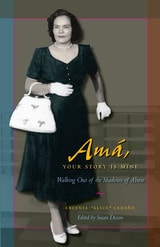
Amá, Your Story Is Mine
Walking Out of the Shadows of AbuseBy Ercenia "Alice" Cedeño
University of Texas Press, 2007
In the preface to her memoir, Ercenia "Alice" Cedeño recalls the secrecy and turmoil that marked her youth: "I spent most of my growing years mad at my mother and wanting her to change to fit in with the rest of the world," she writes. "When my sisters and I wanted her to visit our friends' mothers, she would say, 'Why do people need to know other peoples' lives?' Looking back, I wonder if she was really saying, 'I don't want them to know our business.' There was so much to hide."
Now bringing those hidden memories to light, Amá, Your Story Is Mine traces the hardship, violence, deceit, and defiance that shaped the identity of two generations of women in Alice's family. Born in the mountains of northern Mexico, Alice's mother married at age 14 into a family rife with passion that often turned to anger. After losing several infant children to disease, the young couple crossed into the United States seeking a better life.
Unfolding in a series of powerful vignettes, Amá, Your Story Is Mine describes in captivating detail a daring matriarch who found herself having to protect her children from their own father while facing the challenges of cultural discrimination. By turns wry and tender, Alice's recollections offer a rare memoir that fully encompasses the Latina experience in the United States.
Beautiful Mystery
Living in a Wordless WorldDanilyn Rutherford
Duke University Press, 2025
Now in her twenties, Millie has never been able to express herself verbally, but she has a thriving social environment rooted in the people around her and in things her companions and family can see, hear, smell, and feel. Life in Millie’s world is far richer than might be immediately evident to those who think and communicate in conventional ways.
Beautiful Mystery explores what it means to be a person in the spaces between what we can and cannot say, and how we can fight to care for those we love when they don’t have the language to fight for themselves. Through her unique lens as a mother and an anthropologist, Rutherford tells the story of arriving in Millie’s world, what she found there, and how Millie showed her that words aren’t always what makes us human. Enlightening and deeply felt, Beautiful Mystery proves that you don’t have to understand someone to love them—a lesson that, if we all learned it, might allow us to live together in a fractured world.
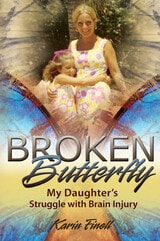
Broken Butterfly
My Daughter's Struggle with Brain InjuryKarin Finell
University of Missouri Press, 2012
“It all began with the bite of a mosquito. Yes, with a bite of this pesky, but seemingly so innocuous little insect that had been sucking her blood. Not just one, but hundreds had punctured her arms and legs with red marks which later swelled to small welts. Who would ever have thought that our family's life would become derailed, that its tightly woven fabric would eventually fray and break—all from the bite of a mosquito?”
Cauterized
Laura Apol
Michigan State University Press, 2024
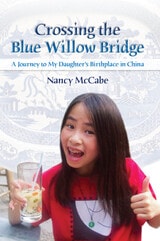
Crossing the Blue Willow Bridge
A Journey to My Daughter's Birthplace in ChinaNancy McCabe
University of Missouri Press, 2011
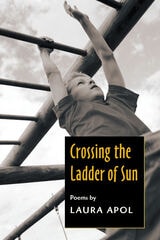
Crossing the Ladder of the Sun
Laura Apol
Michigan State University Press, 2004
In her new collection of poetry, Crossing the Ladder of Sun, Laura Apol explores the ordinary moments of life—watching her daughter, picking blueberries, sharing confidences with friends, arriving and leaving, and driving, always driving—and transforms them into the extraordinary. This book is rich with the lyrical found in what is considered the mundane as it portrays the multiple roles of a woman’s life—mother, daughter, lover, ex-wife, friend. Apol’s highly personal poems reflect a caring and compassion that transcends loneliness and heartache.
Doña Barbara
A NovelRómulo Gallegos
University of Chicago Press, 2012
Rómulo Gallegos is best known for being Venezuela’s first democratically elected president. But in his native land he is equally famous as a writer responsible for one of Venezuela’s literary treasures, the novel Doña Barbara. Published in 1929 and all but forgotten by Anglophone readers, Doña Barbara is one of the first examples of magical realism, laying the groundwork for later authors such as Gabriel García Márquez and Mario Vargas Llosa.
Following the epic struggle between two cousins for an estate in Venezuela, Doña Barbara is an examination of the conflict between town and country, violence and intellect, male and female. Doña Barbara is a beautiful and mysterious woman—rumored to be a witch—with a ferocious power over men. When her cousin Santos Luzardo returns to the plains in order to reclaim his land and cattle, he reluctantly faces off against Doña Barbara, and their battle becomes simultaneously one of violence and seduction. All of the action is set against the stunning backdrop of the Venezuelan prairie, described in loving detail. Gallegos’s plains are filled with dangerous ranchers, intrepid cowboys, and damsels in distress, all broadly and vividly drawn. A masterful novel with an important role in the inception of magical realism, Doña Barbara is a suspenseful tale that blends fantasy, adventure, and romance.
Hailed as “the Bovary of the llano” by Larry McMurtry in his new foreword to this book, Doña Barbarais a magnetic and memorable heroine, who has inspired numerous adaptations on the big and small screens, including a recent television show that aired on Telemundo.

Fanny Herself
Edna Ferber
University of Illinois Press, 1917
"You could not have lived a week in Winnebago without being aware of Mrs. Brandeis," Ferber begins, and likewise the story of Fanny Brandeis is inextricable from that of her vigorous, enterprising mother. Molly Brandeis is the owner and operator of Brandeis' Bazaar, a modest general store left to her by her idealistic, commercially inept late husband. As Fanny strives to carve out her own sense of herself, Molly becomes the standard by which she measures her intellectual and spiritual progress.
Fanny's ambivalent feelings about being Jewish, her self-deprecating attitude toward her gift for sketching and drawing, and her inspired success as a businesswoman all contribute to the flesh-and-blood complexity of Ferber's youthful, eminently believable protagonist. She is accompanied on her journey by impeccably drawn characters such as Father Fitzpatrick, the Catholic priest in Winnebago; Ella Monahan, buyer for the glove department of the Haynes-Cooper mail order house; Fanny's brother, Theodore, a gifted violinist for whose musical education Molly sacrifices Fanny's future; and Clarence Heyl, the scrappy columnist who never forgot how Fanny rescued him from the school bullies.
Ferber's only work of fiction with a strong autobiographical element, Fanny Herself showcases the author's enduring interest in the capacity of strong women to transcend the limitations of their environment and control their own circumstances. Through Fanny's honest struggle with conflicting values–financial security and corporate success versus altruism and artistic integrity–Ferber grapples with some of the most deeply embedded contradictions of the American spirit.
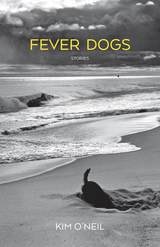
Fever Dogs
StoriesKim O'Neil
Northwestern University Press, 2017
Kim O’Neil’s debut collection, Fever Dogs, is a fictional biography of three generations of women. It begins at the turn of the twenty-first century with Jean, a young woman at an impasse. Romantically adrift, in a dying profession, she decides that to make herself a future, she must first make herself a past.
To deal with a violent history, Jean’s mother has violently erased it. Starting from a bare outline that includes an unspoken death, a predatory father, and a homeless stint, Jean reconstructs the life her mother, Jane, might have lived. But origin stories can never completely cover their tracks: like Jean’s story, Jane’s cannot be told apart from that of her own mother.
What follows is a set of stories spanning nearly a century in response to questions the narrator wishes she had asked her mother and to which she has disjointed answers at best. In the absence of answers, the narrator, in various points of view, invents them. As the stories progress backward in time, the footholds in fact grow fewer and the shift to fabulism greater. But in her attempt to unravel her mother's origin and her own, Jean finds that the stories she invents—like the dogs who run through them as witnesses, allies, and objects of desire—serve as well as any other in the makeshift task of authoring a life.
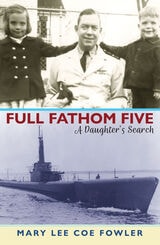
Full Fathom Five
A Daughter's SearchMary Lee Coe Fowler
University of Alabama Press, 2008
One woman’s quest for knowledge of her father lost at sea
Mary Lee Coe Fowler was a posthumous child, born after her father, a submarine skipper in the Pacific, was lost at sea in 1943. Her mother quickly remarried into a difficult and troubled relationship, and Mary Lee’s biological father was never mentioned. It was not until her mother died and Mary Lee was a middle-aged adult that she set out to learn not only who her father was, but what happened to him and his crew, and why—and also to confront why she had shied away from asking these questions until it was nearly too late.
Fowler searched through old ships’ logs, letters, and naval communiqués; visited submarine museums, the Naval Academy, and other pertinent sites; interviewed old friends and crew members who knew her dad and mom or served concurrently; and slowly reconstructed the world in which they lived. Beautifully written, Fowler’s memoir reveals what she eventually learned: of the perils and harships of submarine service in wartime, of the tragic irony of how her father’s sub was probably lost, and of the long-term damage experienced by the families of those who do not come home from war.
Giovanna's 86 Circles
And Other StoriesPaola Corso
University of Wisconsin Press, 2007
These ten magical stories are primarily set in Pittsburgh-area river towns, where Italian American women and girls draw from their culture and folklore to bring life and a sense of wonder to a seemingly barren region of the Rust Belt. Each story catapults the ordinary into something original and unpredictable.
A skeptical journalist scopes out the bar where the town mayor, in seemingly perfect health, is drinking with his buddies and celebrating what he claims is the last day of his life. A woman donates her dead mother’s clothes to a thrift shop but learns that their destiny is not what she expected. A ten-year-old girl wrestles with the facts of life as she watches her neighbor struggle to get pregnant while her teenage sister finds it all too easy. A high school girl hallucinates in a steamy hospital laundry room and discovers she can see her coworkers’ futures. A developer’s wrecking ball is no match for the legend of Giovanna’s green thumb in the title story “Giovanna’s 86 Circles.”
Quirky and profound, Corso’s magical leaps uncover the everyday poetry of these women’s lives.
Finalist for the John Gardner Fiction Book Award
Selected for “Best Short Stories of 2005” in Montserrat Review
Best Books for Regional Special Interests, selected by the American Association of School Librarians, and Best Books for General Audiences, selected by the Public Library Association
Sons of Italy National Book Club Selection
Holocaust Mothers and Daughters
Family, History, and TraumaFederica K. Clementi
Brandeis University Press, 2013
I Would Meet You Anywhere
A MemoirSusan Kiyo Ito
The Ohio State University Press, 2023
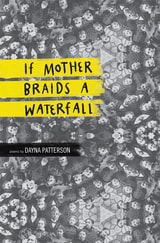
If Mother Braids a Waterfall
Dayna Patterson
Signature Books, 2020
Dayna Patterson has produced a book obsessed with motherhood and daughterhood, ancestry, and transition—of home, family, faith, and the narratives woven to uphold the Self. In her debut collection of poetry and lyric essay, Patterson grapples with a patriarchal and polygamous heritage. After learning about her mother’s bisexuality, Patterson befriends doubt while simultaneously feeling the urge to unearth a feminist theology, one that envisions God the Mother taking pride in her place at the banquet table.
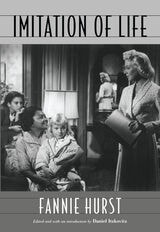
Imitation of Life
Fannie Hurst
Duke University Press, 2004
The author of numerous bestselling novels, a masterful short story writer, and an outspoken social activist, Fannie Hurst was a major celebrity in the first half of the twentieth century. Daniel Itzkovitz’s introduction situates Imitation of Life in its literary, biographical, and cultural contexts, addressing such topics as the debates over the novel and films, the role of Hurst’s one-time secretary and great friend Zora Neale Hurston in the novel’s development, and the response to the novel by Hurst’s friend Langston Hughes, whose one-act satire, “Limitations of Life” (which reverses the races of Bea and Delilah), played to a raucous Harlem crowd in the late 1930s. This edition brings a classic of popular American literature back into print.
Little Lost River
A NovelPamela Johnston
University of Nevada Press, 2008
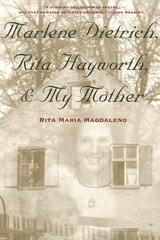
Marlene Dietrich, Rita Hayworth, & My Mother
Rita Maria Magdaleno
University of Arizona Press, 2003
Rita Magdaleno was born near Dachau shortly after World War II to a German mother and a Mexican American GI. Her family moved to Arizona in 1947, and Rita was raised with her father's traditions—but she remains at heart a child of two cultures.
This poetic memoir, recalling Magdaleno's return to the land of her birth, is an intertwining of personal and public history, bridging continents and cultures in search of family secrets. Her poems recall a mother "Marlene Dietrich pretty, / her smoky voice / & those wide Aryan / eyes that promised / never to lie," a war bride who named her child after a Hollywood movie star even before casting eyes on America. They also offer a new, intimate view of the war—and of today's reunified Germany—and show that the consequences of events played out half a century ago continue to resonate with the children of that era.
Magdaleno navigates currents of emotion that would drown less capable poets. With patience, courage, and abiding love, she draws on memories of mother and motherland to show us that healing can come in many forms.
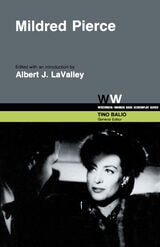
Mildred Pierce
Edited by Albert J. La Valley; Tino T. Balio, Series Editor
University of Wisconsin Press, 1980
Joan Crawford forged a new and successful screen image in this powerful women's noir film; winning her an Academy Award for best actress.
Albert J. LaValley's through and insightful guide to Mildred Pierce at once tells us much about the making of this complex film, the problems and process of transferring the story to the screen, the specific and important roles of the producer, director, and set designer, and how the film relates to broad trends within the industry. It is without a doubt the most thorough treatment of this important American motion picture.
Mother in Summer
Susan Hahn
Northwestern University Press, 2002
Motherhood Exaggerated
Judith Hannan
CavanKerry Press, 2012

My Ever Dear Daughter, My Own Dear Mother
The Correspondence of Julia Sonte Towne and Mary Julia Towne, 1868-1882Katherine R. Morgan
University of Iowa Press, 1996
My Mother's Lovers
(A Novel)Joy Passanante
University of Nevada Press, 2002
As a teenager, Lake joins her grandparents in Missouri and spends her youth seeking answers to her questions about the past, trying to understand the complex pattern of betrayals that shaped it. Only when she herself becomes party to a betrayal as devastating as any committed by her mother does Lake begin to understand.
Passanante writes with a keen eye for the details of behavior that reveal the yearnings and fears beneath the surface. She shows us that the path to understanding is never a smooth one, and that love is often far more complex than we can imagine. Western Literature Series.
My Mother’s Funeral
Adriana Páramo
CavanKerry Press, 2013
Night Burial
Kate Bolton Bonnici
University Press of Colorado, 2020
Process
A NovelKay Boyle. Edited and with an Introduction by Sandra Spanier
University of Illinois Press, 2006
Three quarters of a century after the manuscript of Kay Boyle’s first novel disappeared, a carbon copy of it was discovered by Sandra Spanier, the preeminent Boyle authority. Set off by Spanier’s substantial introduction, Process is published here for the first time in paperback.
A classic bildungsroman, Process tells the story of Kerith Day, who is in search of her own identity and place in the world. A keenly critical observer of the dreary industrial landscape and the beaten-down inhabitants of her native Cincinnati, Ohio, Kerith is determined to discover something better. She places her faith in art and politics and sets off for France, where workers and radicals are on the same side.
Radiant Daughter
A NovelPatricia Grossman
Northwestern University Press, 2010
In Radiant Daughter, award-winning novelist Patricia Grossman follows a Czech-American family for twenty-seven years, beginning in suburban Chicago in 1969 and ending in Brooklyn, in seaside “Little Odessa,” in 1996. Though the novel begins as a traditional assimilation story—immigrant parents, “native” children, and the conflicts one might expect—it evolves into a highly particular and harrowing tale surrounding the descent of Elise Blazek, the family’s brightest star. Radiant Daughter is also a story of translation—between generations, from the Czech of Irena and Stepan, to the “American” of the children, and finally to the Russian that is Elise’s academic specialty.
Radiant Daughter explores all that is human, from the most self-destructive behavior to the highest forms of commitment and self-sacrifice. Even at her lowest moments, Irena never loses her fierce love for the daughter who has traveled so utterly beyond her reach. For Elise, the future will always be complicated: a precarious balance between periods of insight, bursts of accomplishment, and the abyss of her illness.
Reminiscent, on the one hand, of the meticulously constructed mother-daughter dynamic in Carol Shields’s Unless and, on the other, of the anarchic real-life experience of Big and Little Edie Beale in Grey Gardens, Grossman’s moving narrative breaks new ground in exploring a dangerous turn in the complex bond between a mother and her adult child.

Singing Mother Home
A Psychologist's Journey through Anticipatory GriefDonna S. Davenport
University of North Texas Press, 2002
This intimate narrative forms the core of her book. It is emotionally wrenching, but it also provides hope for those going through similar experiences. Just as Davenport used her family's tradition of singing to comfort her mother, readers will be encouraged to find their own sources of comfort in family and legacy. The book concludes with two chapters describing psychological approaches to grief and recommending further reading.
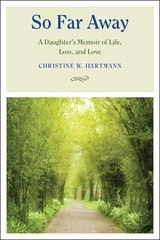
So Far Away
A Daughter's Memoir of Life, Loss, and LoveChristine W. Hartmann
Vanderbilt University Press, 2011
Christine's father, as it turned out, prepared too slowly for old age. Before he had made any decision, fate disabled him through a series of strokes. Confined to a nursing home, severely impaired by dementia and frustrated by his circumstances, his life epitomized the predicament her mother wanted to avoid.
So Far Away gives us an intimate view of a person interacting with and reacting to her parents at the ends of their lives. In a richly detailed, poignant story of family members' separate yet interwoven journeys, it underscores the complexities and opportunities that life presents each one of us.
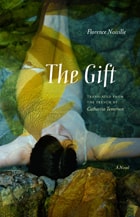
The Gift
A NovelFlorence Noiville
Northwestern University Press, 2012
The narrator’s mother looms large in her psyche. Labeled “eccentric” or “Italian,” her mother in fact suffered from what was later found to be manic depression. Without understanding the disease, the family treated the unpredictable ups and downs of her condition as they struck. During periods of paralyzing depression she was hospitalized, and the family felt abandoned. During periods of manic productivity and overdrive, she was a dedicated pharmacist, an exemplary homemaker, and an unusually knowledgeable gardener.
This sparse novel draws the portrait of a grand and unforgettable lady, loving and unable to love at once. Her bequest is as much a material one as it is an emotional one, and, the author surmises as she glances at her own daughters, a genetic one.
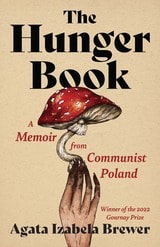
The Hunger Book
A Memoir from Communist PolandAgata Izabela Brewer
The Ohio State University Press, 2023
“A searing memoir about growing up behind the Iron Curtain, motherhood, addiction, and finding sustenance in the natural world.” —Kirkus
In The Hunger Book, Agata Izabela Brewer evokes her Polish childhood under Communism, where the warmth of her grandparents’ love and the scent of mushrooms drying in a tiny apartment are as potent as the deprivations and traumas of life with a terrifyingly unstable, alcoholic single mother. Brewer indelibly renders stories of foraging for food, homemade potato vodka (one of the Eastern Bloc’s more viable currencies), blood sausage, sparrows plucked and fried with linseed oil, and the respite of a country garden plot, all amid Stalinist-era apartment buildings, food shortages, martial law, and nuclear disaster in nearby Ukraine.
Brewer reflects on all of this from her immigrant’s vantage point, as she wryly tries to convince her children to enjoy the mushrooms she gathers from a roadside and grieves when they choose to go by Americanized versions of their Polish names. Hunting mushrooms, like her childhood, carried both reward and mortal peril. The Hunger Book, which includes recipes, is an unforgettable meditation on motherhood and addiction, resilience and love.
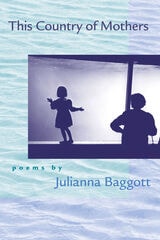
This Country of Mothers
Julianna Baggott
Southern Illinois University Press, 2001
A mosaic of memories, the poems of This Country of Mothers recollect Julianna Baggott’s experiences as both mother and daughter. With wit, compassion, aggression, and anxiety, Baggott examines her maternal history. She recalls moments of creation and destruction in her life, times of elation and of desperation that mold her as both a woman and a poet. This affecting study of motherhood is framed in issues of Catholicism and of poetry itself, challenging and espousing the roles of both. Throughout her poems, Baggott’s personal experiences embrace universal themes to birth poems in a language and style that is both powerfully feminine and accessibly human.
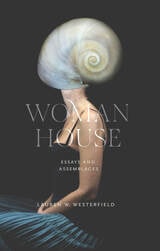
Woman House
Essays and AssemblagesLauren W. Westerfield
University of Massachusetts Press, 2026
Winner of the National Indie Excellence Award in Memoir and the National Indie Excellence Awards Juror's Choice Prize
A compelling and inventive memoir exploring how pain and pleasure are passed down through generations of women
For years, Lauren W. Westerfield looked back at her childhood as an imaginative playscape lovingly crafted by her artist mother. But in truth, theirs was always a fraught relationship, close yet turbulent. It wouldn’t be until her mid-twenties that Westerfield would learn that her mother was assaulted while living as a single woman in 1970s Los Angeles, or until her mid-thirties when caretaking for her now chronically ill mother during pandemic lockdown would reveal how that earlier incident and its ripple effects had shaped both their lives.
The essays and assemblages in this book plumb the depths of two women’s experiences, exploring the pain and pleasure they find in their bodies, in culture, and in their own art. Violence, beauty, and love reverberate and dissipate and shape the forms and psyches of these two profoundly connected family members. At once raw and refined, narrative and lyrical, nostalgic and blunt, the stories and images presented here explore Westerfield’s life—from childhood to adulthood—passing through innocence, self-discovery and familial tethers. In unpacking her mother’s history and the complexities of their relationship, Westerfield finds herself confronted with her own story: one grounded in a yearning for agency and individuation, of a body and mind groomed to be at odds with one another, of a feminist politics examining deeply rooted patriarchal understandings of beauty, control, and power.
Part memoir, part critical sense-making, part reckoning with family, identity, illness, addiction, art, and inheritance, Woman House draws on diverse inspirations in an attempt to recontextualize the female body—in danger, in pleasure, in portraiture, in proximity, in resistance—and challenge the structures that silence and restrict female expression.
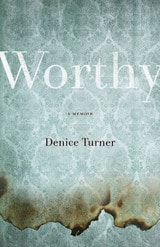
Worthy
A MemoirDenice Turner
University of Nevada Press, 2015
The story unfolds as Turner confronts a history that includes a Greek grandfather whose up-from-the-bootstraps legacy refuses to die, the ghosts of two suicidal uncles, and a Mormon shrink who claims to see her dead relatives. In the end, this is a memoir not just about loss, but about all of the fragile human bonds that are broken in pursuit of perfection.
Wry and extraordinarily candid, Worthy will appeal to readers interested in the dynamics of family heritage, Mormon doctrine, and the subtle corrosive costs of shame.