Results by title
49 books match the query 'Motion picture actors and actresses'
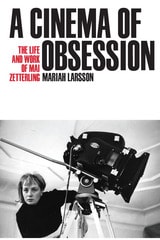
A Cinema of Obsession
The Life and Work of Mai ZetterlingMariah Larsson
University of Wisconsin Press, 2020
Critics have compared her work to that of Ingmar Bergman, Luis Buñuel, and Federico Fellini, but Zetterling had a distinct style—alternately radical and reactionary—that straddled the gendered divide between high art and mass culture. Tackling themes of sexuality, isolation, and creativity, her documentaries, short and feature films, and television works are visually striking. Her oeuvre provoked controversy and scandal through her sensational representations of reproduction and motherhood.
Mariah Larsson provides a lively and authoritative take on Zetterling's legacy and complicated position within film and women's history. A Cinema of Obsession provides necessary perspective on how the breadth of an artist's collected works keeps gatekeepers from recognizing their achievements, and questions why we still distinguish between national and global visual cultures and the big and small screens in the #MeToo era.
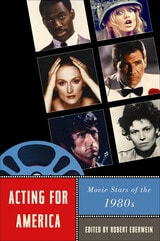
Acting for America
Movie Stars of the 1980sEberwein, Robert
Rutgers University Press, 2010
Scholars employing a variety of useful approaches explore how these movie stars' films speak to an increased audience awareness of advances in feminism, new ideas about masculinity, and the complex political atmosphere in the Age of Reagan. The essays demonstrate the range of these stars' contributions to such conversations in a variety of films, including blockbusters and major genres.
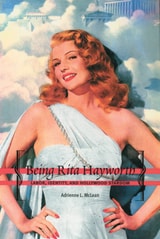
Being Rita Hayworth
Labor, Identity, and Hollywood StardomMcLean, Adrienne L
Rutgers University Press, 2004
Who was Rita Hayworth? Born Margarita Carmen Cansino, she spent her life subjected to others' definitions of her, no matter how hard she worked to claim her own identity. Although there have been many "revelations" about her life and career, Adrienne McLean's book is the first to show that such disclosures were part of a constructed image from the outset.
McLean explores Hayworth's participation in the creation of her star persona, particularly through her work as a dancer-a subject ignored by most film scholars. The passive love goddess, as it turns out, had a unique appeal to other women who, like her, found it extraordinarily difficult to negotiate the competing demands of family, domesticity, and professional work outside the home. Being Rita Hayworth also considers the ways in which the actress has been treated by film scholarship over the years to accomplish its own goals, sometimes at her expense. Several of Hayworth's best-known star vehicles-among them Gilda (1946), Down to Earth (1947), The Lady from Shanghai (1948), and Affair in Trinidad (1952)- are discussed in depth.
Below the Stars
How the Labor of Working Actors and Extras Shapes Media ProductionBy Kate Fortmueller
University of Texas Press, 2021
Longlisted for the 2022 Kraszna-Krausz Book Award, Moving Image Category
Despite their considerable presence in Hollywood, extras and working actors have received scant attention within film and media studies as significant contributors to the history of the industry. Looking not to the stars but to these supporting players in film, television, and, recently, streaming programming, Below the Stars highlights such actors as precarious laborers whose work as freelancers has critically shaped the entertainment industry throughout the twentieth and twenty-first centuries. By addressing ordinary actors as a labor force, Kate Fortmueller proposes a media industry history that positions underrepresented and quotidian experiences as the structural elements of the culture and business of Hollywood.
Resisting a top-down assessment, Fortmueller explores the wrangling of labor unions and guilds that advocated for collective action for everyday actors and helped shape professional norms. She pulls from archival research, in-person interviews, and firsthand observation to examine a history that cuts across industry boundaries and situates actors as a labor group at the center of industrial and technological upheavals, with lasting implications for race, gender, and labor relations in Hollywood.
Best Actress
The History of Oscar®-Winning WomenStephen Tapert
Rutgers University Press, 2020
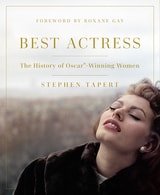
This lavishly illustrated coffee table book offers a vital examination of the first 75 women to have won the Best Actress Oscar over the span of 90 years. From inaugural recipient Janet Gaynor to Frances McDormand’s 2018 acceptance speech that assertively brought women to the forefront, Best Actress: The History of Oscar®-Winning Women serves to promote a new appreciation for the cinematic roles these women won for, as well as the real-life roles many of them played – and still play – in advancing women’s rights and equality. Stories range from Bette Davis’ groundbreaking battle against the studio system; to the cutting-edge wardrobes of Katharine Hepburn, Diane Keaton and Cher; to the historical significance of Halle Berry’s victory; to the awareness raised around sexual violence by the performances of Jodie Foster, Brie Larson, and others.
Showcasing a dazzling collection of 200 photographs, many of which have never before been seen or published, Best Actress honors the legacies of these revered and extraordinary women while scrutinizing the roadblocks that they continue to overcome.
Bette Davis Black and White
Julia A. Stern
University of Chicago Press, 2021
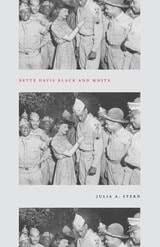
Bette Davis was not only one of Hollywood’s brightest stars, but also one of its most outspoken advocates on matters of race. In Bette Davis Black and White, Julia A. Stern explores this largely untold facet of Davis’s brilliant career.
Bette Davis Black and White analyzes four of Davis’s best-known pictures—Jezebel (1938), The Little Foxes (1941), In This Our Life (1942), and What Ever Happened to Baby Jane? (1962)—against the history of American race relations. Stern also weaves in memories of her own experiences as a young viewer, coming into racial consciousness watching Davis’s films on television in an all-white suburb of Chicago.
Davis’s egalitarian politics and unique collaborations with her Black costars offer Stern a window into midcentury American racial fantasy and the efforts of Black performers to disrupt it. This book incorporates testimony from Davis’s Black contemporaries, including James Baldwin and C. L. R. James, as well as the African American fans who penned letters to Warner Brothers praising Davis’s work. A unique combination of history, star study, and memoir, Bette Davis Black and White allows us to contemplate cross-racial spectatorship in new ways.
Cinematic Encounters 2
Portraits and PolemicsJonathan Rosenbaum
University of Illinois Press, 2019
Rosenbaum takes on filmmakers like Chantal Akerman, Richard Linklater, Manoel De Oliveira, Mark Rappaport, Elaine May, and Béla Tarr. He also engages, implicitly and explicitly, with other writers, arguing with Pauline Kael—and Wikipedia—over Jacques Demy, with the Hollywood Reporter and Variety reviewers of Jarmusch’s The Limits of Control, with David Thomson about James L. Brooks, and with many American and English film critics about misrepresented figures from Jerry Lewis to Yasujiro Ozu to Orson Welles. Throughout, Rosenbaum mines insights, pursues pet notions, and invites readers to join the fray.
Cinematic Encounters
Interviews and DialoguesJonathan Rosenbaum
University of Illinois Press, 2018
Cinematic Encounters collects more than forty years of interviews that embrace Rosenbaum's vision of film criticism as a collaboration involving multiple voices. Rosenbaum accompanies Orson Welles on a journey back to Heart of Darkness, the unmade film meant to be Welles's Hollywood debut. Jacques Tati addresses the primacy of décor and soundtrack in his comedic masterpiece PlayTime, while Jim Jarmusch explains the influence of real and Hollywoodized Native Americans in Dead Man. By arranging the chapters chronologically, Rosenbaum invites readers to pursue thematic threads as if the discussions were dialogues between separate interviews. The result is a rare gathering of filmmakers trading thoughts on art and process, on great works and false starts, and on actors and intimate moments.
Close Writing
Kathy Acker, Cookie Mueller, and Love-in-PiecesAlice Butler
Duke University Press, 2026
Colonial Tactics and Everyday Life
Workers of the Manchuria Film AssociationYuxin Ma
University of Wisconsin Press, 2023
By focusing on the daily challenges and experiences of the Chinese workers at the corporation, Ma examines how life was actually lived by people navigating between practical and ideological concerns. She illustrates how the inhabitants of Manchukuo navigated social opportunities, economic depression, educational reforms, fascist rule, commercial interests, practical daily needs, and more—and reveals ways in which these conflicting preoccupations sometimes manifested as tension and ambiguity on screen. In the battle between repression and expression, these Chinese actors, directors, writers, and technicians adopted defensive and opportunistic tactics. They did so in colonial spaces, often rejecting modernist representations of Manchukuo in favor of venerating traditional Chinese culture and values. The expertise, skills, and professional networks they developed extended well beyond the occupation into the postwar period, and may individuals reestablished themselves as cinema professionals in the socialist era.
Cupboards of Curiosity
Women, Recollection, and Film HistoryAmelie Hastie
Duke University Press, 2007
Hastie pays particular attention to the actresses Colleen Moore and Louise Brooks and Hollywood’s first female director, Alice Guy-Blaché. From the beginning of her career, Moore worked intently to preserve a lasting place for herself as a Hollywood star, amassing collections of photos, souvenirs, and clippings as well as a dollhouse so elaborate that it drew extensive public attention. Brooks’s short essays reveal how she participated in the creation of her image as Lulu and later emerged as a critic of film stardom. The recovery of Blaché’s role in film history by feminist critics in the 1970s and 1980s was made possible by the existence of the director’s own autobiographical history. Broadening her analytical framework to include contemporary celebrities, Hastie turns to how-to manuals authored by female stars, from Zasu Pitts’s cookbook Candy Hits to Christy Turlington’s Living Yoga. She discusses how these assertions of celebrity expertise in realms seemingly unrelated to film and visual culture allow fans to prolong their experience of stardom.
Damsels and Divas
European Stardom in Silent HollywoodAgata Frymus
Rutgers University Press, 2020
Damsels and Divas investigates the meanings of Europeanness in Hollywood during the 1920s by charting professional trajectories of three movie stars: Pola Negri, Vilma Bánky and Jetta Goudal. It combines the investigation of American fan magazines with the analysis of studio documents, and the examination of the narratives of their films, to develop a thorough understanding of the ways in which Negri, Bánky and Goudal were understood within the realm of their contemporary American culture. This discussion places their star personae in the context of whiteness, femininity and Americanization. Every age has its heroines, and they reveal a lot about prevailing attitudes towards women in their respective eras. In the United States, where the stories of rags-to-riches were especially potent, stars could offer models of successful cultural integration.
Empire's Mistress, Starring Isabel Rosario Cooper
Vernadette Vicuna Gonzalez
Duke University Press, 2021

Experts in Action
Transnational Hong Kong–Style Stunt Work and PerformanceLauren Steimer
Duke University Press, 2021
Filming Difference
Actors, Directors, Producers, and Writers on Gender, Race, and Sexuality in FilmEdited by Daniel Bernardi
University of Texas Press, 2009
Addressing representation and identity in a variety of production styles and genres, including experimental film and documentary, independent and mainstream film, and television drama, Filming Difference poses fundamental questions about the ways in which the art and craft of filmmaking force creative people to confront stereotypes and examine their own identities while representing the complexities of their subjects.
Selections range from C. A. Griffith's "Del Otro Lado: Border Crossings, Disappearing Souls, and Other Transgressions" and Celine Perreñas Shimizu's "Pain and Pleasure in the Flesh of Machiko Saito's Experimental Movies" to Christopher Bradley's "I Saw You Naked: 'Hard' Acting in 'Gay' Movies," along with Kevin Sandler's interview with Paris Barclay, Yuri Makino's interview with Chris Eyre, and many other perspectives on the implications of film production, writing, producing, and acting.
Technical aspects of the craft are considered as well, including how contributors to filmmaking plan and design films and episodic television that feature difference, and how the tools of cinema—such as cinematography and lighting—influence portrayals of gender, race, and sexuality. The struggle between economic pressures and the desire to produce thought-provoking, socially conscious stories forms another core issue raised in Filming Difference. Speaking with critical rigor and creative experience, the contributors to this collection communicate the power of their media.
Flickers of Desire
Movie Stars of the 1910sBean, Jennifer M
Rutgers University Press, 2011
Glamour in a Golden Age
Movie Stars of the 1930sMcLean, Adrienne L
Rutgers University Press, 2010
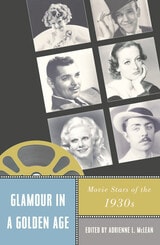
Stardom is approached as an effect of, and influence on, the particular historical and industrial contexts that enabled these actors and actresses to be discovered, featured in films, publicized, and to become recognized and admired-sometimes even notorious-parts of the cultural landscape. Using archival and popular material, including fan and mass market magazines, other promotional and publicity material, and of course films themselves, contributors also discuss other artists who were incredibly popular at the time, among them Ann Harding, Ruth Chatterton, Nancy Carroll, Kay Francis, and Constance Bennett.
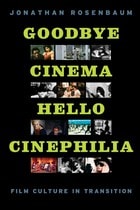
Goodbye Cinema, Hello Cinephilia
Film Culture in TransitionJonathan Rosenbaum
University of Chicago Press, 2010
The esteemed film critic Jonathan Rosenbaum has brought global cinema to American audiences for the last four decades. His incisive writings on individual filmmakers define film culture as a diverse and ever-evolving practice, unpredictable yet subject to analyses just as diversified as his own discriminating tastes. For Rosenbaum, there is no high or low cinema, only more interesting or less interesting films, and the pieces collected here, from an appreciation of Marilyn Monroe’s intelligence to a classic discussion on and with Jean-Luc Godard, amply testify to his broad intellect and multi-faceted talent. Goodbye Cinema, Hello Cinephilia gathers together over fifty examples of Rosenbaum’s criticism from the past four decades, each of which demonstrates his passion for the way we view movies, as well as how we write about them. Charting our changing concerns with the interconnected issues that surround video, DVDs, the Internet, and new media, the writings collected here also highlight Rosenbaum’s polemics concerning the digital age. From the rediscovery and recirculation of classic films, to the social and aesthetic impact of technological changes, Rosenbaum doesn’t disappoint in assembling a magisterial cast of little-known filmmakers as well as the familiar faces and iconic names that have helped to define our era.
As we move into this new decade of moviegoing—one in which Hollywood will continue to feel the shockwaves of the digital age—Jonathan Rosenbaum remains a valuable guide. Goodbye Cinema, Hello Cinephilia is a consummate collection of his work, not simply for fans of this seminal critic, but for all those open to the wide variety of films he embraces and helps us to elucidate.
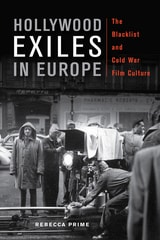
Hollywood Exiles in Europe
The Blacklist and Cold War Film CulturePrime, Rebecca
Rutgers University Press, 2014
Rebecca Prime documents the untold story of the American directors, screenwriters, and actors who exiled themselves to Europe as a result of the Hollywood blacklist. During the 1950s and 1960s, these Hollywood émigrés directed, wrote, or starred in almost one hundred European productions, their contributions ranging from crime film masterpieces like Du rififi chez les hommes (1955, Jules Dassin, director) to international blockbusters like The Bridge on the RiverKwai (1957, Carl Foreman and Michael Wilson, screenwriters) and acclaimed art films like The Servant (1963, Joseph Losey, director).
At once a lively portrait of a lesser-known American “lost generation” and an examination of an important transitional moment in European cinema, the book offers a compelling argument for the significance of the blacklisted émigrés to our understanding of postwar American and European cinema and Cold War relations. Prime provides detailed accounts of the production and reception of their European films that clarify the ambivalence with which Hollywood was regarded within postwar European culture. Drawing upon extensive archival research, including previously classified material, Hollywood Exiles in Europe suggests the need to rethink our understanding of the Hollywood blacklist as a purely domestic phenomenon. By shedding new light on European cinema’s changing relationship with Hollywood, the book illuminates the postwar shift from national to transnational cinema.
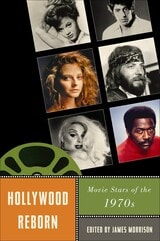
Hollywood Reborn
Movie Stars of the 1970sMorrison, James
Rutgers University Press, 2010
Hollywood Reborn examines this question, with contributors focusing on many of the era's key figures — noteworthy actors such as Jane Fonda, Al Pacino, Faye Dunaway, and Warren Beatty, and unexpected artists, among them Donald Sutherland, Shelley Winters, and Divine. Each essay offers new perspectives through the lens of an important star, illuminating in the process some of the most fascinating and provocative films of the decade.
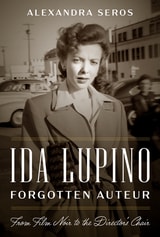
Ida Lupino, Forgotten Auteur
From Film Noir to the Director's ChairAlexandra Seros
University of Texas Press, 2024
An archival study of Ida Lupino’s work in film and television directing, writing, producing, and acting from the 1940s to the 1970s.
Though her acting career is well known, Ida Lupino was, until very recently, either unknown or overlooked as an influential director. One of the few female directors in Classical Hollywood, Lupino was the only woman with membership in the Directors Guild of America between 1948 and 1971. Her films were about women without power in society and engaged with highly controversial topics despite Hollywood’s strict production code. Working in a male-dominated field, Lupino was forced to manage her public persona carefully, resisting attempts by the press to paint her solely as a dutiful wife and mother—a continual feminization—just so that she could continue directing.
Filmmaker Alexandra Seros retells the story of Ida Lupino’s career, from actor to director, first in film, then in television, using archival materials from collections housed around the world. The result provides rich insights into three of Lupino’s independently directed films and a number of episodes from her vast television oeuvre. Seros contextualizes this analysis with discussions of gendered labor in the film industry, the rise of consumerism in the United States after World War II, and the expectations put on women in their family lives during the postwar era. Seros’s portrait of Lupino ultimately paints her life and career as an exemplar of collaborative auteurship.
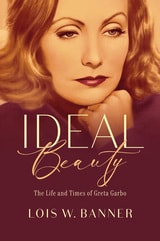
Ideal Beauty
The Life and Times of Greta GarboLois W. Banner
Rutgers University Press, 2023
Ideal Beauty reveals the woman behind the mystique, a woman who overcame an impoverished childhood to become a student at the Swedish Royal Dramatic Academy, an actress in European films, and ultimately a Hollywood star. Chronicling her tough negotiations with Louis B. Mayer at MGM, it shows how Garbo carved out enough power in Hollywood to craft a distinctly new feminist screen presence in films like Queen Christina. Banner draws on over ten years of in-depth archival research in Sweden, Germany, France, and the United States to demonstrate how, away from the camera’s glare, Garbo’s life was even more intriguing. Ideal Beauty takes a fresh look at an icon who helped to define female beauty in the twentieth century and provides answers to much-debated questions about Garbo’s childhood, sexuality, career, illnesses and breakdowns, and spiritual awakening.
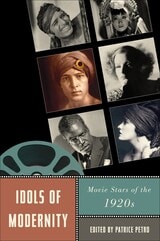
Idols of Modernity
Movie Stars of the 1920sPetro, Patrice
Rutgers University Press, 2010
Bringing together the best new work oncinemaand stardom in the 1920s, this illustrated collection showcases the range of complex social, institutional, and aesthetic issues at work in American cinema of this time. Attentive to stardom as an ensemble of texts, contexts, and social phenomena stretching beyond the cinema, major scholars provide careful analysis of the careers of both well-known and now forgotten stars of the silent and early sound era—Douglas Fairbanks, Buster Keaton, the Talmadge sisters, Rudolph Valentino, Gloria Swanson, Clara Bow, Colleen Moore, Greta Garbo, Anna May Wong, Emil Jannings, Al Jolson, Ernest Morrison, Noble Johnson, Evelyn Preer, Lincoln Perry, and Marie Dressler.
Imagining the Method
Reception, Identity, and American Screen PerformanceJustin Owen Rawlins
University of Texas Press, 2024
A revisionist history of Method acting that connects the popular reception of “methodness” to entrenched understandings of screen performance still dominating American film discourse today.
Only one performance style has dominated the lexicon of the casual moviegoer: “Method acting.” The first reception-based analysis of film acting, Imagining the Method investigates how popular understandings of the so-called Method—what its author Justin Rawlins calls "methodness"—created an exclusive brand for white, male actors while associating such actors with rebellion and marginalization. Drawing on extensive archival research, the book maps the forces giving shape to methodness and policing its boundaries.
Imagining the Method traces the primordial conditions under which the Method was conceived. It explores John Garfield's tenuous relationship with methodness due to his identity. It considers the links between John Wayne's reliance on "anti-Method" stardom and Marlon Brando and James Dean's ascribed embodiment of Method features. It dissects contemporary emphases on transformation and considers the implications of methodness in the encoding of AI performers. Altogether, Justin Rawlins offers a revisionist history of the Method that shines a light on the cultural politics of methodness and the still-dominant assumptions about race, gender, and screen actors and acting that inform how we talk about performance and performers.
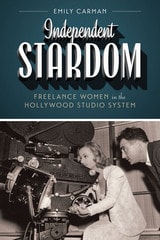
Independent Stardom
Freelance Women in the Hollywood Studio SystemBy Emily Carman
University of Texas Press, 2015
Bringing to light an often-ignored aspect of Hollywood studio system history, this book focuses on female stars who broke the mold of a male-dominated, often manipulative industry to dictate the path of their own careers through freelancing.
Runner-up, Richard Wall Memorial Award, Theatre Library Association, 2016
During the heyday of Hollywood’s studio system, stars were carefully cultivated and promoted, but at the price of their independence. This familiar narrative of Hollywood stardom receives a long-overdue shakeup in Emily Carman’s new book. Far from passive victims of coercive seven-year contracts, a number of classic Hollywood’s best-known actresses worked on a freelance basis within the restrictive studio system. In leveraging their stardom to play an active role in shaping their careers, female stars including Irene Dunne, Janet Gaynor, Miriam Hopkins, Carole Lombard, and Barbara Stanwyck challenged Hollywood’s patriarchal structure.
Through extensive, original archival research, Independent Stardom uncovers this hidden history of women’s labor and celebrity in studio-era Hollywood. Carman weaves a compelling narrative that reveals the risks these women took in deciding to work autonomously. Additionally, she looks at actresses of color, such as Anna May Wong and Lupe Vélez, whose careers suffered from the enforced independence that resulted from being denied long-term studio contracts. Tracing the freelance phenomenon among American motion picture talent in the 1930s, Independent Stardom rethinks standard histories of Hollywood to recognize female stars as creative artists, sophisticated businesswomen, and active players in the then (as now) male-dominated film industry.
Invention Of Dolores Del Rio
Joanne Hershfield
University of Minnesota Press, 2000
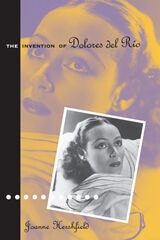
Dolores del Río first came to Hollywood from Mexico in 1925 and within a year had become an international star for her role in Raoul Walsh's 1926 film What Price Glory. She would go on to work with Hollywood’s top directors, including John Ford and King Vidor, and star opposite such leading men as Henry Fonda, Fred Astaire, Orson Welles (with whom she had a scandalous affair), and Elvis Presley. Voted by Photoplay magazine in 1933 as having "the most perfect feminine figure in Hollywood," del Río was billed as one of cinema’s most "exotic" and "aristocratic" beauties. This image-carefully crafted by her producers, her studio publicists, and by del Río herself-reveals many fascinating insights into Hollywood’s evolving attitudes toward race and femininity.
In The Invention of Dolores del Río, Joanne Hershfield explores the intersection of ethnicity, gender, and stardom in American popular culture through the lens of del Río’s successful and unusually lengthy career, which lasted until the 1960s. Hershfield offers close readings of del Río’s films—discussing in detail the roles she played, her costumes and makeup, the music and mise-en-scène, advertising, publicity, and reviews—that provide a nuanced understanding of how Hollywood constructed del Río as an exotic commodity and blunted the inherent challenge her sexual and ethnic image posed to both prevailing standards of white femininity and widespread injunctions against miscegenation. Throughout this astute and imaginative case study, Hershfield looks at del Río’s Hollywood films in relation to shifting ideologies about nationality, gender, and race between the 1920s and 1960s, offering an important contribution to the debate surrounding Hollywood’s ability to both reflect the nation’s racial and sexual obsessions and influence its perceptions about ethnic and gender identity.
Jane Fonda
There's a Great Deal to SayMarilyn S. Greenwald
Rutgers University Press, 0
Since the late 1960s, Jane Fonda has identified as an activist first and an actor second, using her celebrity as a vehicle to convey her views and her advocacy. Few stars of her stature have been as simultaneously acclaimed and vilified as Fonda. Even as she won two Academy Awards and was a major box office draw of the 1970s and 1980s, she received reams of hate mail for her political activism and antiwar stances. This book explores Fonda’s devotion to movement politics—sometimes at the expense of her career and her personal safety.
Digging deep into rare material from cinema archives and Fonda’s own personal papers, journalist Marilyn Greenwald tells the story of how Fonda came to view acting as a “side gig” that gives her a worldwide platform to convey her personal and political views. Charting the evolution of her activism and the merging of her acting and producing with her advocacy, Greenwald focuses on the years from 1968—when she was jarred out of complacency by the Vietnam War—to 1980, after the release of The China Syndrome and the advent of the Three Mile Island nuclear crisis, which brought to light the possible dangers of nuclear energy. Greenwald details how three of her films—Klute (1971), Coming Home (1978), and The China Syndrome (1979)—were designed to further her personal beliefs. She also considers how Fonda has weathered changes in the entertainment industry and public tastes to produce and star in decades' worth of socially conscious projects. Charting Fonda’s personal and professional growth while offering a candid account of her struggles, this book shows how Fonda viewed movies as an influential storytelling tool that can influence public opinion, change minds, and trigger social change.
Johnny Depp Starts Here
Pomerance, Murray
Rutgers University Press, 2005
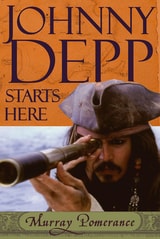
The actor's image is studied in terms of its ambiguities and its many strange nuances: Depp's ethnicity, his smoking, his tranquility, his unceasing motion, his links to the Gothic, the Beats, Simone de Beauvoir, the history of rationality, Impressionist painting, and more. In a series of treatments of his key roles, including Rafael in The Brave, Bon Bon in Before Night Falls, Jack Kerouac in The Source, and the long list of acclaimed performances from Gilbert Grape to Cap'n Jack Sparrow, we learn of Johnny onscreen in terms of male sexuality, space travel, optical experience, nineteenth-century American capitalism, Orientalism, the vulnerability of performance, the perils of sleep, comedy, the myth of the West, Scrooge McDuck, Frantois Truffaut, and more.
Johnny's face, Johnny's gaze, Johnny's aging, and Johnny's understatement are shown to be inextricably linked to our own desperate need to plumb performance, style, and screen for a grounding of reality in this ever-accelerating world of fragmentation and insecurity. Both deeply intriguing and perpetually elusive, Depp is revealed as the central screen performer of the contemporary age, the symbol of performance itself.
No thinker has meditated on Johnny Depp this way before-and surely not in a manner worthy of the object of scrutiny.
Juniper Blue
(A Novel)Susan Lang
University of Nevada Press, 2006
This engrossing new novel by acclaimed author Susan Lang continues the saga of Ruth Farley, the fiercely independent young woman who was the protagonist of Small Rocks Rising, published by the University of Nevada Press in 2002. Ruth is still on her homestead at the end of a rugged canyon in California’s Mojave Desert, still struggling to survive on her own and to recover from a brutal rape and the murder of her lover. Now she must also face the responsibility of motherhood. The ensuing story expands Ruth’s world to encompass the panorama of Depression-era Southern California—miners and ranchers hanging on until times are better; Indians trying to preserve their ancient culture and identity; Okies, vagrants, and breadlines; the wealth and glitter of the movie industry; and narrow-minded small-town gossips. Ruth’s life also expands as she adjusts to motherhood, trying to maintain her autonomy and isolation and trying to preserve the tenuous web that links her to the seductive ruthlessness of the desert and to its ancient people and their wisdom. Ruth is one of the most engaging characters in recent fiction, complex and contradictory, stubborn and vulnerable, passionately in love with her austere desert home. Lang tells her story, the saga of a fully modern woman seeking her own identity and destiny against the turbulent, colorful setting of the rapidly changing twentieth-century West.
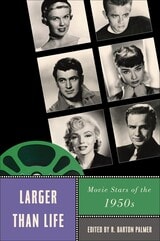
Larger Than Life
Movie Stars of the 1950sPalmer, R. Barton
Rutgers University Press, 2010
Larger Than Life offers a comprehensive view of the star system in 1950s Hollywood and also in-depth discussions of the decade's major stars, including Montgomery Clift, Judy Holliday, Jerry Lewis, James Mason, Marilyn Monroe, Kim Novak, Bing Crosby, Gene Kelly, Jayne Mansfield, and Audrey Hepburn.
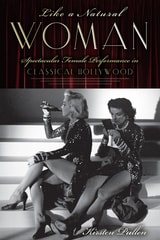
Like a Natural Woman
Spectacular Female Performance in Classical HollywoodPullen, Kirsten
Rutgers University Press, 2014
Bringing a fresh perspective to film history through the lens of performance studies, Kirsten Pullen explores the ways in which these actresses, who always appeared to be “playing themselves,” responded to the naturalist notion that actors should create authentic characters by drawing from their own lives. At the same time, she examines how Hollywood presented these female stars as sex objects, focusing on their spectacular bodies at the expense of believable characterization or narratives.
Pullen not only helps us appreciate what talented actresses these five women actually were, but also reveals how they sought to express themselves and maintain agency, even while meeting the demands of their directors, studios, families, and fans to perform certain feminine roles. Drawing from a rich collection of classic films, publicity materials, and studio archives, Like a Natural Woman lets us take a new look at both Hollywood acting techniques and the performance of femininity itself.
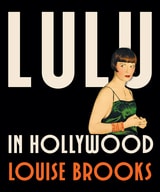
Lulu In Hollywood
Expanded EditionLouise Brooks
University of Minnesota Press, 2000
Essential writings by this icon of the silent era—rereleased in print and now available as an e-book 100 years after Louise Brooks arrived in Hollywood
Lulu in Hollywood is an intimate collection of eight autobiographical essays by Louise Brooks, silent film darling and icon of the flapper era. Ranging from her childhood in Kansas and her early days as a Denishawn and Ziegfeld Follies dancer to her friendships with Martha Graham, Charles Chaplin, W. C. Fields, Humphrey Bogart, William Paley, G. W. Pabst, and others, Brooks’s writing offers a rare glimpse into her extraordinary life. Including her revelatory “Why I Will Never Write My Memoirs,” Lulu in Hollywood also features Kenneth Tynan’s 1979 essay “The Girl in the Black Helmet,” which revived interest in Brooks’s work and was the best discussion of her film work to appear in her lifetime.
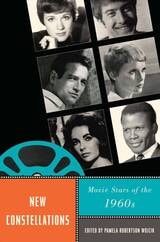
New Constellations
Movie Stars of the 1960sWojcik, Pamela Robertson
Rutgers University Press, 2012
American culture changed radically over the course of the 1960s, and the culture of Hollywood was no exception. The film industry began the decade confidently churning out epic spectacles and lavish musicals, but became flummoxed as new aesthetics and modes of production emerged, and low-budget youth pictures like Easy Rider became commercial hits.
New Constellations: Movie Stars of the 1960s tells the story of the final glory days of the studio system and changing conceptions of stardom, considering such Hollywood icons as Elizabeth Taylor and Paul Newman alongside such hallmarks of youth culture as Mia Farrow and Dustin Hoffman. Others, like Sidney Poitier and Peter Sellers, took advantage of the developing independent and international film markets to craft truly groundbreaking screen personae. And some were simply “famous for being famous,” with celebrities like Zsa Zsa Gabor and Edie Sedgwick paving the way for today’s reality stars.
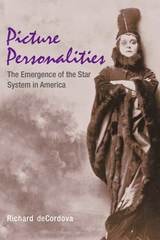
Picture Personalities
The Emergence of the Star System in AmericaRichard deCordova
University of Illinois Press, 1990
Conventional wisdom attributes the rise of the star system to the charisma of individual performers or to the public's desire to idolize an appealing star. In Picture Personalities, Richard deCordova argues that the fledgling movie industry and the press conspired to develop the star system, along with a system of discourse to support it.
How actors became stars and how they began to assume public identities distinct from their fictional roles was closely tied to the journalistic discourse of the period, produced by the trade press, newspapers, general periodicals, fan magazines, publicity stills, posters, and other material. DeCordova shows how the studios worked to fabricate moral images of the stars' marriages and personal lives and how a series of star scandals in the 1920s challenged those images and brought about changes in the conventions of representing stars. A new foreword by Corey K. Creekmur enhances this first paperback edition.
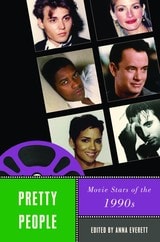
Pretty People
Movie Stars of the 1990sEverett, Anna
Rutgers University Press, 2012
In the 1990s, American civil society got upended and reordered as many social, cultural, political, and economic institutions were changed forever. Pretty People examines a wide range of Hollywood icons who reflect how stardom in that decade was transformed as the nation itself was signaling significant changes to familiar ideas about gender, race, ethnicity, age, class, sexuality, and nationality.
Such actors as Denzel Washington, Andy Garcia, Halle Berry, Angela Bassett, Will Smith, Jennifer Lopez, and Antonio Banderas became bona fide movie stars who carried major films to amazing box-office success. Five of the decade’s top ten films were opened by three women—Julia Roberts, Jodie Foster, and Whoopi Goldberg. “Chick flick” entered the lexicon as Leonardo DiCaprio became the “King of the World,” ushering in the cult of the mega celebrity. Tom Hanks and Tom Cruise defined screen masculinity as stark contrasts between “the regular guy” and “the intense guy” while the roles of Michael Douglas exemplified the endangered “Average White Male.” A fascinating composite portrait of 1990s Hollywood and its stars, this collection marks the changes to stardom and society at century’s end.
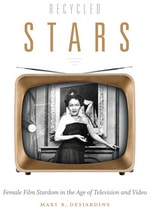
Recycled Stars
Female Film Stardom in the Age of Television and VideoMary R. Desjardins
Duke University Press, 2015
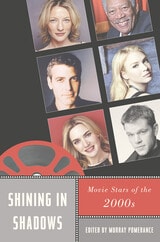
Shining in Shadows
Movie Stars of the 2000sPomerance, Murray
Rutgers University Press, 2012
In the 2000s, new technologies transformed the experiences of movie-going and movie-making, giving us the first generation of stars to be just as famous on the computer screen as on the silver screen.
Shining in Shadows examines a wide range of Hollywood icons from a turbulent decade for the film industry and for America itself. Perhaps reflecting our own cultural fragmentation and uncertainty, Hollywood’s star personas sent mixed messages about Americans’ identities and ideals. Disheveled men-children like Will Ferrell and Jack Black shared the multiplex with debonair old-Hollywood standbys like George Clooney and Morgan Freeman. Iconic roles for women ranged from Renee Zellweger’s dithering romantics to Tina Fey’s neurotic professionals to Hilary Swank’s vulnerable boyish characters. And in this age of reality TV and TMZ, stars like Jennifer Aniston and “Brangelina” became more famous for their real-life romantic dramas—at the same time that former tabloid fixtures like Johnny Depp and Robert Downey Jr. reinvented themselves as dependable leading men. With a multigenerational, international cast of stars, this collection presents a fascinating composite portrait of Hollywood stardom today.
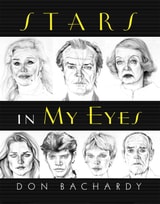
Stars in My Eyes
Don Bachardy
University of Wisconsin Press, 2011
Stars in My Eyes is a revealing and entertaining collection of celebrity portraits, rendered both in acute drawings and in finely observed prose. In the 1970s and 1980s, internationally known artist Don Bachardy made portraits from life, depicting the actors, writers, artists, composers, directors, and Hollywood elite that he and his partner Christopher Isherwood knew. He then made detailed notes about these portrait sittings in the journal he has kept for more than forty years. The result is a unique document: we enter the mind of the artist as he records the images and behavior of his celebrity subjects—from Ruby Keeler and Barbara Stanwyck to Jack Nicholson and Linda Ronstadt—during their often intense collaboration with him.
Finalist, Lambda Literary Foundation Book Award
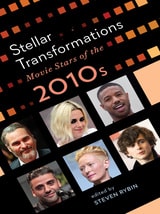
Stellar Transformations
Movie Stars of the 2010sSteven Rybin
Rutgers University Press, 2022
Steve McQueen
The Great EscapeWes D. Gehring
Indiana Historical Society Press, 2009
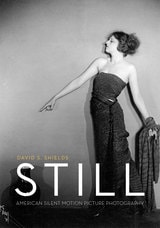
Still
American Silent Motion Picture PhotographyDavid S. Shields
University of Chicago Press, 2013

The Reel Thrilling Events of Bank Robber Henry Starr
From Gentleman Bandit to Movie Star and Back AgainMark Archuleta
University of North Texas Press, 2025
The Stars
Edgar Morin
University of Minnesota Press, 2005
Vulgar Beauty
Acting Chinese in the Global SensoriumMila Zuo
Duke University Press, 2022
Wanted Cultured Ladies Only!
Female Stardom and Cinema in India, 1930s-1950sNeepa Majumdar
University of Illinois Press, 2008
What Dreams Were Made Of
Movie Stars of the 1940sGriffin, Sean
Rutgers University Press, 2011
When Charlie Met Joan
The Tragedy of the Chaplin Trials and the Failings of American LawDiane Kiesel
University of Michigan Press, 2025
A 2026 PROSE Award Category Winner for Biography and Autobiography
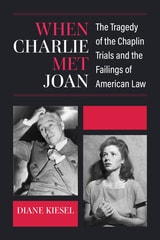
Charlie Chaplin, the silent screen’s “Little Tramp,” was beloved by millions of movie fans until he starred in a series of salacious, real-life federal courtroom dramas. The 1944 trial was described by ace New York Daily News reporter Florabel Muir as “the best show in town.” The leading lady was a woman under contract to his studio—red-haired ingénue Joan Barry, Chaplin’s protégée and former mistress. Although he beat the federal criminal trial, Chaplin lost a paternity case and had to pay child support despite blood type evidence that proved he was not the child’s father.
A decade later during the Cold War, the U.S. government used the Barry trials as an excuse to bar the left-leaning, sexually adventurous, British-born comic from the country he had called home for forty years. Not only did these trials have a lasting impact on law; they also raise concerns about the power of celebrity, Cold War politics, the media frenzy surrounding high-profile court proceedings, and the sorry history of the casting couch. When Charlie Met Joan examines these trials from the perspective of both parties, asking whether Chaplin was unfairly persecuted by the government because of his left-leaning political beliefs, or if he should have been held more accountable for his cavalier treatment of Barry and other women in his life.
Women in Hollywood's Dream Factory
Tales of Inequality, Abuse, and ResistanceEdited by Karen McNally
University of Illinois Press, 2026
The #MeToo revelations put a twenty-first-century stamp on the age-old story of women’s mistreatment in Hollywood. Karen McNally edits a collection focused on examining and revising film history in the aftermath of the women’s stories, past and present, that have come to light.
The collection begins with essays on the interplay between reality and imagination in narratives and representations of women’s experiences of unequal treatment. In Part 2, contributors discuss how the gendered attitudes of the media’s stories enable inequality in Hollywood and look at the forces that arise whenever women resist these media assaults. The next section addresses the structures that built the inequalities and mistreatment while Part 4 revisits established narratives to challenge, renew, and expand upon our understanding of film history through women’s stories. Essays in the final section address the combination of inequality and resistance that defines women’s experiences in Hollywood.
Piercing and astute, Women in Hollywood’s Dream Factory confronts our perception of Hollywood as a mythological land of dreams.
Contributors: Alicia Byrnes, Anna M. Dempsey, Harriet Fletcher, Amanda Konkle, Tamar Jeffers McDonald, Kerry McElroy, Adrienne L. McLean, Karen McNally, Donna Peberdy, Melanie Piper, Victoria K. Pistivsek, Sarah Polley, Ina C. Seethaler, Gabrielle Stecher, and Jennifer Voss
Women's Transborder Cinema
Authorship, Stardom, and Filmic Labor in South AsiaEsha Niyogi De
University of Illinois Press, 2024
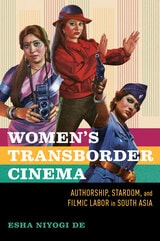
Can we write women’s authorial roles into the history of industrial cinema in South Asia? How can we understand women’s creative authority and access to the film business infrastructure in this postcolonial region? Esha Niyogi De draws on rare archival and oral sources to explore these questions from a uniquely comparative perspective, delving into examples of women holding influential positions as stars, directors, and producers across the film industries in India, Pakistan, and Bangladesh.
De uses film tropes to examine the ways women directors and film entrepreneurs claim creative control within the contexts of anti-colonial nationalism and global capitalism. The region’s fictional cinemas have become staging grounds for postcolonialism, with colonial and local hierarchies merged into new imperial formations. De’s analysis shows how the gendered intersections of inequity and opportunity shape women’s fiction filmmaking while illuminating the impact of state and market formations on the process.
Innovative and essential, Women’s Transborder Cinema examines the works of South Asia’s women filmmakers from a regional perspective.