Results by title
17 books match the query 'Mountain'
A Mountain of Paper
The Extraordinary Diary of Leonard James ArringtonCarl Arrington and Susan Arrington Madsen
Utah State University Press, 2012
The series, established by one of the twentieth-century West's most distinguished historians, Leonard Arrington, has become a leading forum for prominent historians to address topics related to Mormon history. The first lecturer was Arrington himself. He was followed by Richard Lyman Bushman, Richard E. Bennett, Howard R. Lamar, Claudia L. Bushman, Kenneth W. Godfrey, Jan Shipps, Donald Worster, Laurel Thatcher Ulrich, and F. Ross Peterson. Utah State University hosts the Leonard J. Arrington Mormon History Lecture Series. The University Libraries' Special Collections and Archives houses the Arrington collection. The state's land grant university began collecting records very early, and in the 1960s became a major depository for Utah and Mormon records. Leonard and his wife Grace joined the USU faculty and family in 1946, and the Arringtons and their colleagues worked to collect original diaries, journals, letters, and photographs.
Although trained as an economist at the University of North Carolina, Arrington became a Mormon historian of international repute. Working with numerous colleagues, the Twin Falls, Idaho, native produced the classic Great Basin Kingdom: An Economic History of the Latter-day Saints in 1958. Utilizing available collections at USU, Arrington embarked on a prolific publishing and editing career. He and his close ally, Dr. S. George Ellsworth helped organize the Western History Association, and they created the Western Historical Quarterly as the scholarly voice of the WHA. While serving with Ellsworth as editor of the new journal, Arr ington also helped both the Mormon History Association and the independent journal Dialogue get established.
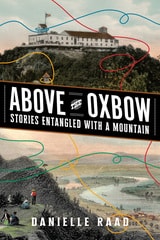
Above the Oxbow
Stories Entangled with a MountainDanielle R. Raad
West Virginia University Press, 2026
Above the Oxbow is a journey through the tangle of rich narratives surrounding Mount Holyoke, a locally cherished mountain in Western Massachusetts. It explores how visitors have forged connections with the mountain through various activities over the past two centuries. In an accessible blend of storytelling and scholarly analysis, Danielle Raad shows the significance of the landscape, historic sites, and material culture, revealing how cultural perspectives, community activism, collective memory, and personal experiences shape our understanding of a place. Situated at the intersection of public history and environmental history, this ethnography of place also discloses the curious stories of the Summit House, an erstwhile tramway, an airplane crash, and the local fight to conserve Mount Holyoke as a natural space and celebrates its myriad uses today.
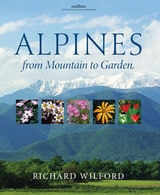
Alpines, from Mountain to Garden
Richard Wilford
Royal Botanic Gardens, Kew, 2010
Alpines, From mountain to garden is a refreshing new perspective on the many stunning plant species that make their home above the treeline. Where most guides to alpine plants have favored collecting and rare species, Richard Wilford offers a holistic approach that describes their discovery and introduction into cultivation and why these factors must be taken in to consideration when planting these mountain dwellers in your garden.
Organized geographically, Alpines, From mountain to garden covers the conditions—drainage, climate, light levels, temperature, and precipitation—and species native to each of nine regions, including the United States and Canada, South America, China, Europe, and Africa. In all, over three hundred plants are described and prolifically illustrated. Additional chapters cover cultivation, conservation, and the impact of indiscriminate collecting on the many species that are now on the verge of extinction. With its wealth of insight into where alpine plants come from and how this affects their cultivation, this new book from Kew’s Botanical Magazine Monograph series is sure to be a hit with gardeners, collectors, travelers, and photographers alike.
Between a River and a Mountain
The AFL-CIO and the Vietnam WarEdmund F. Wehrle
University of Michigan Press, 2010
"Stunning in its research and sophisticated in its analysis, Between a River and a Mountain is one of the best studies we have of labor and the Vietnam War."
--Robert K. Brigham, Shirley Ecker Boskey Professor of History and International Relations, Vassar College
"Skillfully blending diplomatic and labor history, Wehrle's book is a valuable contribution to the ever-widening literature on the Vietnam War."
--George Herring, University of Kentucky
"Wehrle has written a compelling and original study of the AFL-CIO, the South Vietnamese labor movement and the Vietnam War."
--Judith Stein, Professor of History, City College and Graduate School of the City University of New York
"With this important book, Edmund Wehrle gives us the first full-fledged scholarly examination of organized labor's relationship to the Vietnam War. Based on deep research in U.S. and foreign archives, and presented in clear and graceful prose, Between a River and a Mountain adds a great deal to our understanding of how the AFL-CIO approached the war and in turn was fundamentally altered by its staunch support for Americanization. Nor is it merely an American story that Wehrle tells, for he also presents fascinating information on the Vietnamese Confederation of Labor and its sometimes-strained relations with U.S. labor."
--Fredrik Logevall, Cornell University
Edmund F. Wehrle is Assistant Professor of History, Eastern Illinois University.
Hard Side of The Mountain
Paul Cohen
Carnegie Mellon University Press, 2027
Dark family secrets follow Coe as he drops out of college and attempts to start a new life with fellow outlaws in the mountains of Wyoming.
“Fleeing a mental illness diagnosis pushed by his family, Coe drops out of college and hits the road, ending up in Wyoming, where he falls in with a group living illegally on the mountain above a resort town. Here he works muscle jobs, climbs mountains, befriends a pair of brothers new to the sport, and slips under the spell of Benny, a Vietnam war vet who sleeps beneath a rocky overhang, ascends cliffs like a mountain goat, and seems to know things he shouldn't about Coe's French grandfather. At Benny's command, the group climbs routes well beyond the brothers' abilities and kicks off a dangerous vandalism war against the resort corporation. An old cook warns Coe away from Benny, suggesting the secret to his identity is encoded in a bible passage. Meanwhile, from letters sent by his great aunt, Coe receives contradictory accounts of his grandfather's past. As those close to Coe meet tragic ends, he is forced to confront the frightful notion that this Wyoming violence may connect to a crime committed a half century before. Is the old cook right about Benny and the biblical mystery? Is Coe slipping into mental illness? High on the mountain, alone with Benny, Coe must cast his lot.
Letter to Beaumont, Letters Written from the Mountain, and Related Writings
Jean-Jacques Rousseau
Dartmouth College Press, 2012
Mountain and Plain
From the Lycian Coast to the Phrygian Plateau in the Late Roman and Early Byzantine PeriodMartin Harrison
University of Michigan Press, 2001
The present study is the fruit of years of excavation and research by the author. The manuscript was largely sketched out when Martin Harrison unexpectedly passed away, and the volume has been finished and prepared for press by his long-time assistant Wendy Young, with further guidance from friends and colleagues with whom he had discussed the project.
The resulting volume explores Martin Harrison's belief that the coastal cities of Lycia declined after the fifth century C.E., and that smaller settlements (monasteries, villages, and towns) appeared in the mountains and further inland. In addition he considered that there was a demographic shift of masons and sculptors from the cities to serve these new settlements. This beautifully illustrated study provides convincing evidence from architecture, sculpture, and inscriptional sources to support this theory. It also contains a description of Amorium in Phrygia, as revealed in survey and excavation seasons from 1987 until the author's untimely death half a dozen years later. The volume includes a preface by Stephen Hill and an appendix by Michael Ballance and Charlotte Roueché on three special inscriptions from Ovacik.
The volume will be of interest to historians of the Near East and classical antiquity, to archaeologists, and to students of architectural history.
Martin Harrison was Professor of Archaeology, University of Oxford. Wendy Young was Research Assistant to the author until his death.

Moving the Mountain
The Women's Movement in America since 1960Flora Davis
University of Illinois Press, 1999
Murder on the Mountain
Crime, Passion, and Punishment in Gilded Age New JerseyPeter J. Wosh
Rutgers University Press, 2022
Was Margaret the calculating murderess and adulteress portrayed by the press? Or was she a battered wife pushed to the edge? Or was she, as she claimed to the end, innocent? Murder on the Mountain considers all sides of this fascinating and mysterious true crime story. In turn, it examines why this murder trial became front-page news, as it resonated with public discussions about capital punishment, mental health, anti-immigrant sentiment, domestic violence, and women’s independence. This is a gripping and thought-provoking study of a murder that shocked the nation.
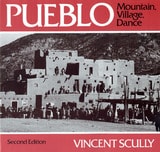
Pueblo
Mountain, Village, DanceVincent Scully
University of Chicago Press, 1989
Scully's observations, presented in lively prose and exciting photographs, are based on his own personal experiences of the Southwest; on his exploration of the region of the Rio Grande and the Hopi mesas; on his witnessing of the dances and ceremonies of the Pueblos and others; and on his research into their culture and history. He draws on the vast literature inspired by the Native Americans—from early exploration narratives to the writing of D. H. Lawrence to recent scholarship—to enrich and support his unique approach to the subject.
To this second edition Scully has added a new preface that raises issues of preservation and development. He has also written an extensive postscript that reassesses the relationship between nature and culture in Native American tradition and its relevance to contemporary architecture and landscape.
"Coming to Pueblo architecture as he does from a provocative study of sacred architecture in ancient Greece, Scully has much to say that is both striking and moving of the Pueblo attitudes toward sacred places, the arrangement of structures in space, the lives of men and beasts, and man's relation to rain, earth, vegetation."—Robert M. Adams, New York Review of Books
Silence on the Mountain
Stories of Terror, Betrayal, and Forgetting in GuatemalaDaniel Wilkinson
Duke University Press, 2004
Decades of terror-inspired fear have led the Guatemalans to adopt a survival strategy of silence so complete that it verges on collective amnesia. The author’s great triumph is that he finds a way for people to tell their stories, and it is through these stories—dramatic, intimate, heartbreaking—that we are shown the anatomy of a thwarted revolution that has relevance not only to Guatemala but also to countless places around the world where terror has been used as a political tool.
The Mountain
A Political History from the Enlightenment to the PresentBernard Debarbieux and Gilles Rudaz
University of Chicago Press, 2015
In The Mountain, geographers Bernard Debarbieux and Gilles Rudaz trace the origins of the very concept of a mountain, showing how it is not a mere geographic feature but ultimately an idea, one that has evolved over time, influenced by changes in political climates and cultural attitudes. To truly understand mountains, they argue, we must view them not only as material realities but as social constructs, ones that can mean radically different things to different people in different settings.
From the Enlightenment to the present day, and using a variety of case studies from all the continents, the authors show us how our ideas of and about mountains have changed with the times and how a wide range of policies, from border delineation to forestry as well as nature protection and social programs, have been shaped according to them. A rich hybrid analysis of geography, history, culture, and politics, the book promises to forever change the way we look at mountains.
The Mountain
Journeys in High PlacesRobin Patten
University of Utah Press, 2025
Since antiquity, mountains have captured the human imagination. The Mountain takes readers into higher realms, exploring the complex kinship between mountains and human thought, traditions, and ways of being. Told through the author’s own journeys, the narrative ranges across cultures and iconic naturalists to consider how varied ideas and experiences related to mountains—from sacred to scientific, romantic to retreat, to simply home—are all facets of the same intricate topography.
No matter where one starts on the spectrum of understanding, an intimate encounter with a mountain leads to a broader perspective. High places create a simultaneous humbleness at our human insignificance and a sense of belonging within the greater world. That quality of belonging, and the associated commitment of caring for the planet and all that it holds, has never been more important than it is today.
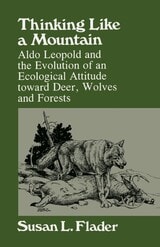
Thinking Like a Mountain
Aldo Leopold and the Evolution of an Ecological Attitude toward Deer, Wolves, and ForestsSusan L. Flader
University of Wisconsin Press, 1994
When initially published more than twenty years ago, Thinking Like a Mountain was the first of a handful of efforts to capture the work and thought of America's most significant environmental thinker, Aldo Leopold. This new edition of Susan Flader's masterful account of Leopold's philosophical journey, including a new preface reviewing recent Leopold scholarship, makes this classic case study available again and brings much-deserved attention to the continuing influence and importance of Leopold today.
Thinking Like a Mountain unfolds with Flader's close analysis of Leopold's essay of the same title, which explores issues of predation by studying the interrelationships between deer, wolves, and forests. Flader shows how his approach to wildlife management and species preservation evolved from his experiences restoring the deer population in the Southwestern United States, his study of the German system of forest and wildlife management, and his efforts to combat the overpopulation of deer in Wisconsin. His own intellectual development parallels the formation of the conservation movement, reflecting his struggle to understand the relationship between the land and its human and animal inhabitants.
Drawing from the entire corpus of Leopold's works, including published and unpublished writing, correspondence, field notes, and journals, Flader places Leopold in his historical context. In addition, a biographical sketch draws on personal interviews with family, friends, and colleagues to illuminate his many roles as scientist, philosopher, citizen, policy maker, and teacher. Flader's insight and profound appreciation of the issues make Thinking Like a Mountain a standard source for readers interested in Leopold scholarship and the development of ecology and conservation in the twentieth century.
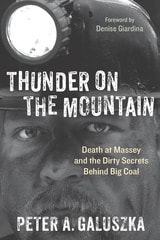
Thunder on the Mountain
Death at Massey and the Dirty Secrets behind Big CoalPeter A. Galuszka
West Virginia University Press, 2014
With a foreword by Denise Giardina
On April 5, 2010, an explosion ripped through Massey Energy’s Upper Big Branch Mine, killing twenty-nine coal miners. This tragedy was the deadliest mine disaster in the United States in forty years—a disaster that never should have happened. These deaths were rooted in the cynical corporate culture of Massey and its notorious former CEO Don Blankenship, and were part of an endless cycle of poverty, exploitation, and environmental abuse that has dominated the Appalachian coalfields since coal was first discovered there. And the cycle continues unabated as coal companies bury the most insidious dangers deep underground, all in search of higher profits, and hide the true costs from regulators, unions, and investors alike. But the disaster at Upper Big Branch goes beyond the coalfields of West Virginia. It casts a global shadow, calling into bitter question why coal miners in the United States are sacrificed to erect cities on the other side of the world, why the coal wars have been allowed to rage, polarizing the country, and how the world’s voracious appetite for energy is satisfied at such horrendous cost.
With Thunder on the Mountain, Peter A. Galuszka pieces together the true story of greed and negligence behind the tragedy at the Upper Big Branch Mine, and in doing so he has created a devastating portrait of an entire industry that exposes the coal-black motivations that led to the death of twenty-nine miners and fuel the ongoing war for the world’s energy future.
This paperback edition contains a foreword by Denise Giardinia that provides an update on Massey Energy and Donald Blankenship, Chairman and CEO of Massey Energy Company during the UBB disaster, and recounts her own experiences with Massey Energy and the United Mine Workers Association in the 1980s. This edition also includes a notes section and a bibliography.
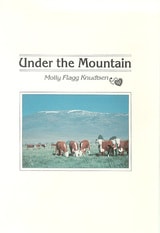
Under The Mountain
Molly Flagg Knudtsen
University of Nevada Press, 1982
This collection of vignettes about life in Central Nevada is much more than a historical document. According to author Molly Knudtsen, “These are the stories neighbors and families tell, where fact grows just a little larger than life. This is the stuff of legend.” The book focuses on a time when splendorous houses decorated the windswept valleys of Central Nevada; where fearless, stouthearted men and women braved the elements to survive and seek their fortune; and when people who loved the land clung to it and gave it a character all its own. These tales capture the spirit and folklore of early-day Central Nevada and illustrate the effect on its present-day inhabitants. Molly Knudtsen shares the experience of riding horseback through some of the great archaeological finds of the valley. She divulges the secret of converting flour, yeast, and potato water into a perfect loaf of bread. And through colorful anecdotes, she passes along the legendary accounts of Colonel Dave Buel.
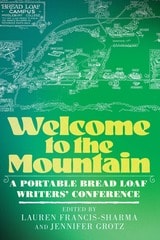
Welcome to the Mountain
A Portable Bread Loaf Writers' ConferenceLauren Francis-Sharma
Four Way Books, 2026
What do Truman Capote, Joan Didion, Archibald MacLeish, and Robert Hayden have in common? They are among the impressive array of American writers who have contributed to the legacy of the Bread Loaf Writers’ Conference in the last one hundred years.
To commemorate this esteemed institution’s centennial, Welcome to the Mountain recreates the experience of being in a writerly community that celebrates literature and invests in literary apprenticeship. This volume, edited by Lauren Francis-Sharma and Jennifer Grotz, comprises an extraordinary sampling of work from the historical to the contemporary, including lectures and readings first delivered at Bread Loaf. Its expansive range showcases everything from highly celebrated texts to rarer pieces and insightful musings by Toni Morrison, Brigit Pegeen Kelly, Randall Kenan, Czesław Miłosz, Julia Alvarez, and so many more.
Welcome to the Mountain tells the endless and thrilling stories of how writers become writers and how literary traditions evolve through our conversations with each other. Through this extraordinary book, we invite readers to make themselves at home in the rich landscape of American letters.