Results by title
3 books match the query 'Murder in mass media'
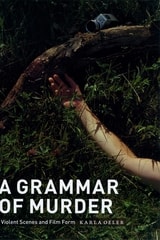
A Grammar of Murder
Violent Scenes and Film FormKarla Oeler
University of Chicago Press, 2009
The dark shadows and offscreen space that force us to imagine violence we cannot see. The real slaughter of animals spliced with the fictional killing of men. The missing countershot from the murder victim’s point of view. Such images, or absent images, Karla Oeler contends, distill how the murder scene challenges and changes film.
Reexamining works by such filmmakers as Renoir, Hitchcock, Kubrick, Jarmusch, and Eisenstein, Oeler traces the murder scene’s intricate connections to the great breakthroughs in the theory and practice of montage and the formulation of the rules and syntax of Hollywood genre. She argues that murder plays such a central role in film because it mirrors, on multiple levels, the act of cinematic representation. Death and murder at once eradicate life and call attention to its former existence, just as cinema conveys both the reality and the absence of the objects it depicts. But murder shares with cinema not only this interplay between presence and absence, movement and stillness: unlike death, killing entails the deliberate reduction of a singular subject to a disposable object. Like cinema, it involves a crucial choice about what to cut and what to keep.
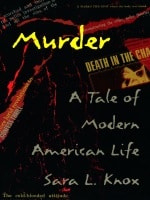
Murder
A Tale of Modern American LifeSara L. Knox
Duke University Press, 1998
In her approach to the telling of this cultural phenomenon, Knox draws on historical analysis and original research. She discusses such subjects as the continuing existence of capital punishment, the “sensational” American murderers Martha Beck and Ray Fernandez (aka the Honeymoon Killers), the connection between true crime books and romance narratives, and pulp murder novels of the 1930s and 1940s. Analyzing widespread interest in forensic psychiatry, sexuality, mortality, and the relation of gender to society’s reactions to murder, Knox refers to the early work of David Brion Davis, Bill Ellis, and Joel Black. While demonstrating how society’s focus has shifted from the act itself to the psychology of the murderer to the broader social forces at work, she discusses the writings of Willard Motley, William March, Curtis Bok, James Baldwin, and Kate Millett, among others.
Full of anecdotes and insights, Murder is a lively meditation on American culture that includes not only close critical readings of individual texts but also everyday matters of murder’s meaning. It will interest those involved with American studies, cultural studies, and true crime accounts.
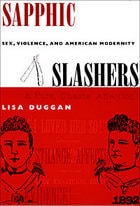
Sapphic Slashers
Sex, Violence, and American ModernityLisa Duggan
Duke University Press, 2000
Situating this story alongside simultaneously circulating lynching narratives (and its resistant versions, such as those of Memphis antilynching activist Ida B. Wells) Duggan reveals how stories of sex and violence were crucial to the development of American modernity. While careful to point out the differences between the public reigns of terror that led to many lynchings and the rarer instances of the murder of one woman by another privately motivated woman, Duggan asserts that dominant versions of both sets of stories contributed to the marginalization of African Americans and women while solidifying a distinctly white, male, heterosexual form of American citizenship. Having explored the role of turn-of-the-century print media—and in particular their tendency toward sensationalism—Duggan moves next to a review of sexology literature and to novels, most notably Radclyffe Hall’s The Well of Loneliness. Sapphic Slashers concludes with two appendices, one of which presents a detailed summary of Ward’s murder, the trial, and Mitchell’s eventual institutionalization. The other presents transcriptions of letters exchanged between the two women prior to the crime.
Combining cultural history, feminist and queer theory, narrative analysis, and compelling storytelling, Sapphic Slashers provides the first history of the emergence of the lesbian in twentieth-century mass culture.