Results by title
36 books match the query 'Genre'
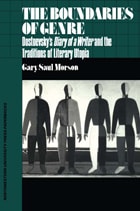
Boundaries of Genre
Gary Saul Morson
Northwestern University Press, 1989
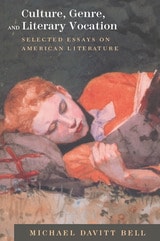
Culture, Genre, and Literary Vocation
Selected Essays on American LiteratureMichael Davitt Bell
University of Chicago Press, 2000
Throughout, Bell revisits issues of genre with an eye toward the unexpected details of authors' lives, and invites us to reconsider the hidden functions that terms such as "romanticism" and "realism" served for authors and their critics. Whether tracing the demands of the market or the expectations of readers, Bell examines the intimate relationship between literary production and culture; each essay closely links the milieu in which American writers worked with the trajectory of their storied careers.
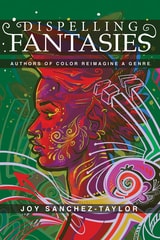
Dispelling Fantasies
Authors of Color Reimagine a GenreJoy Sanchez-Taylor
The Ohio State University Press, 2025
In Dispelling Fantasies, Joy Sanchez-Taylor examines how authors of color, such as R. F. Kuang, N. K. Jemisin, Nnedi Okorafor, Tomi Adeyemi, Tasha Suri, Aiden Thomas, Nghi Vo, and Marlon James, among others, offer critical counterpoints to the history of white-dominated, Eurocentric fantasy. The traditional fantasy that these authors are writing against reinforces Christian virtues and colonial, white supremacist structures; Sanchez-Taylor argues that its racial tropes are tied to a history of colonization and Christian missionary practices, with popular fantasy narratives often depicting Indigenous groups as primitive, deviant peoples in need of salvation. Such representations are based on a Western binary of rational versus magical and are influenced by tenets of Christianity, ultimately contributing to depictions of “the dark fantastic” or fantasy worlds where dark and othered characters are implicitly portrayed as evil and irredeemable. Organized around four Christian ideals that appear frequently in Western fantasy texts—virtue, envy, patriarchy, and salvation—Dispelling Fantasies demonstrates how non-Eurocentric fantasy worlds offer alternative versions of morality, race, gender, and sexuality and make space for authors to move away from hierarchical, binary systems of good and evil.

Experiencing the Novel
The Genre of Tender ConscienceEsther Yu
University of Chicago Press, 0
An innovative account of the novel's emergence across revolutionary England and beyond.
Esther Yu’s expansive study of the history of the novel charts the growth of the “tender conscience”—at once a new mode of subjectivity and a shared structure of ethical obligation—that gave rise to the novel’s characteristic features. At the heart of the early English novel is a strange character: a hyperconscious observer who continually transforms perception into ordered, written narrative. Against long-standing accounts that tie the novel’s subjects to the emergence of modern individualism, Experiencing the Novel traces these endlessly impressionable figures to the mid-seventeenth century and the English Revolution, when citizen-subjects made public declarations of tenderness. It is through the recovery of such “tender consciences” that a curious fact can be addressed anew. The first people in Europe to cut off the crown with the head of their king began to tell stories differently: They took to narrating through an acute, sensitive register of first-person prose.
A forceful, community-binding complex of cognition, sensation, and ethics, the tender conscience persisted well into the eighteenth century. It was a large-scale structure forged across decades, one that demands the wide-ranging literary-historical account it finally receives here. Experiencing the Novel opens among brilliantly inventive Tudor-era works—Beware the Cat (ca. 1553), the Marprelate project (1588-89), The Unfortunate Traveler (1594)—that by turns experiment with and reject sensitizing modes of conscience. Yu further takes up an extensive, first-person care of the conscience—a tenderizing process enacted by little-known practitioners that carries from John Milton’s Paradise Lost into the writings of John Locke, the novels of Daniel Defoe, the moral sentimentalism of David Hume and Adam Smith, as well as Laurence Sterne’s Tristram Shandy and Samuel Richardson’s Pamela.
Through its vision of the long seventeenth century, Experiencing the Novel reveals an improbable practice of consciousness that remade popular politics, philosophy, and the culture of sensibility from the margins.
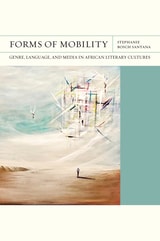
Forms of Mobility
Genre, Language, and Media in African Literary CulturesStephanie Bosch Santana
Northwestern University Press, 2025
Presents alternative categories of fiction through which to examine how contemporary writers have envisaged Africa’s changing literary terrains
Stephanie Bosch Santana analyzes southern African writers’ experimentations with literary form in periodical print and digital media since the mid-twentieth century in order to offer an alternative account of contemporary African imaginations of mobility. Based on an understudied archive of texts in English and Chichewa/Nyanja from Malawi, South Africa, Zimbabwe, and Zambia, Forms of Mobility: Genre, Language, and Media in African Literary Cultures examines new, noncanonical categories of fiction, including migrant forms, township tales, weekend stories, and digital diaries. These generically, linguistically, and geographically mobile forms map changing ideas of interconnection and belonging. By reading them “in motion,” as they travel across space, time, genre, and language and between publications and platforms, Bosch Santana limns multiple centers of literary influence and relation across southern African and Black diasporas, revealing forms of literary mobility and space making that are occluded by current models of world literature.
Genre And The Invention Of The Writer
Reconsidering the Place of Invention in CompositionAnis Bawarshi
Utah State University Press, 2003
Instead of mastering notions of "good" writing, Bawarshi feels that students gain more from learning how to adapt socially and rhetorically as they move from one "genred" site of action to the next.
Genre and Graduate-Level Research Writing
An Cheng
University of Michigan Press, 2018
Genre and Graduate-Level Research Writing is grounded in genre-based theory and full of best practices examples. The book opens by presenting the case for the use of genre in graduate-level research writing and by examining rhetorical consciousness-raising and its ties to genre. Unique to the volume is a thorough analysis of the materials designed to teach genre and research writing—focused on the textbooks of Swales & Feak (e.g., Academic Writing for Graduate Students) and similar texts. Other chapters provide examples of discovery-based genre tasks, evaluative methods for assessing discipline-specific writing, and techniques for becoming a more confident instructor of graduate-level research writing.
Genre and Openness in Proverbs 10
1-22:16Suzanna R. Millar
SBL Press, 2020
A fruitful reading strategy that reveals expansive meaning in Proverbs
Interpreters often characterize Proverbs 10:1–22:16 as a dead-end of cold, disengaged dogma closed off from the realities of the world. In Genre and Openness in Proverbs 10:1–22:16, Suzanna R. Millar takes a different view, arguing that the didactic proverbs in these chapters are not dull and dry but are filled with poetic complexities open to many possible interpretations and uses. By incorporating paremiology, the technical study of the proverb genre, Millar sheds light on important debates such as character development, kingship, the connection between act and consequence, and the acquisition of wisdom.
Features
- A clarification of the genre of the sayings in light of modern genre theory
- A linguistic analysis of how openness is generated in biblical proverbs
- An examination of the didactic use of proverbs to train the hearer’s mind
Genre and Second Language Writing
Ken Hyland
University of Michigan Press, 2004
Genre and the Performance of Publics
Mary Jo Reiff
Utah State University Press, 2016
In recent decades, genre studies has focused attention on how genres mediate social activities within workplace and academic settings. Genre and the Performance of Publics moves beyond institutional settings to explore public contexts that are less hierarchical, broadening the theory of how genres contribute to the interconnected and dynamic performances of public life.
Chapters examine how genres develop within publics and how genres tend to mediate performances in public domains, setting up a discussion between public sphere scholarship and rhetorical genre studies. The volume extends the understanding of genres as not only social ways of organizing texts or mediating relationships within institutions but as dynamic performances themselves.
By exploring how genres shape the formation of publics, Genre and the Performance of Publicsbrings rhetoric/composition and public sphere studies into dialogue and enhances the understanding of public genre performances in ways that contribute to research on and teaching of public discourse.

Genre in Popular Music
Fabian Holt
University of Chicago Press, 2007
The popularity of the motion picture soundtrack O Brother, Where Art Thou? brought an extraordinary amount of attention to bluegrass, but it also drew its share of criticism from some aficionados who felt the album’s inclusion of more modern tracks misrepresented the genre. This soundtrack, these purists argued, wasn’t bluegrass, but “roots music,” a new and, indeed, more overarching category concocted by journalists and marketers. Why is it that popular music genres like these and others are so passionately contested? And how is it that these genres emerge, coalesce, change, and die out?
In Genre in Popular Music, Fabian Holt provides new understanding as to why we debate music categories, and why those terms are unstable and always shifting. To tackle the full complexity of genres in popular music, Holt embarks on a wide-ranging and ambitious collection of case studies. Here he examines not only the different reactions to O Brother, but also the impact of rock and roll’s explosion in the 1950s and 1960s on country music and jazz, and how the jazz and indie music scenes in Chicago have intermingled to expand the borders of their respective genres. Throughout, Holt finds that genres are an integral part of musical culture—fundamental both to musical practice and experience and to the social organization of musical life.
Genre of Autobiography in Victorian Literature
Clinton Machann
University of Michigan Press, 1994
Genre of Autobiography in Victorian Literature
Clinton Machann
University of Michigan Press, 1995
Genre, Race, and the Production of Subjectivity in German Romanticism
Stephanie Galasso
Northwestern University Press, 2024
Late Enlightenment philosophers and writers like Herder, Goethe, and Schiller broke with conventions of form and genre to prioritize an idealized, and racially coded, universality. Newly translated literatures from colonial contexts served as the basis for their evaluations of how to contribute to a distinctly “German” national literary tradition, one that valorized modernity and freedom and thus fortified crucial determinants of modern concepts of whiteness. Through close readings of both canonical and less-studied Romantic texts, Stephanie Galasso examines the intimately entwined histories of racialized subjectivity and aesthetic theory and shows how literary genre is both symptomatic and generative of the cultural violence that underpinned the colonial project.
Poetic expression and its generic conventions continue to exert pressure on the framing and reception of the stories that can be told about interpersonal and structural experiences of oppression. Genre, Race, and the Production of Subjectivity in German Romanticism explores how white subjectivity is guarded by symbolic and material forms of violence.
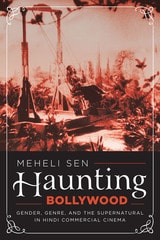
Haunting Bollywood
Gender, Genre, and the Supernatural in Hindi Commercial CinemaBy Meheli Sen
University of Texas Press, 2017
Haunting Bollywood is a pioneering, interdisciplinary inquiry into the supernatural in Hindi cinema that draws from literary criticism, postcolonial studies, queer theory, history, and cultural studies. Hindi commercial cinema has been invested in the supernatural since its earliest days, but only a small segment of these films have been adequately explored in scholarly work; this book addresses this gap by focusing on some of Hindi cinema’s least explored genres.
From Gothic ghost films of the 1950s to snake films of the 1970s and 1980s to today’s globally influenced zombie and vampire films, Meheli Sen delves into what the supernatural is and the varied modalities through which it raises questions of film form, history, modernity, and gender in South Asian public cultures. Arguing that the supernatural is dispersed among multiple genres and constantly in conversation with global cinematic forms, she demonstrates that it is an especially malleable impulse that routinely pushes Hindi film into new formal and stylistic territories. Sen also argues that gender is a particularly accommodating stage on which the supernatural rehearses its most basic compulsions; thus, the interface between gender and genre provides an exceptionally productive lens into Hindi cinema’s negotiation of the modern and the global. Haunting Bollywood reveals that the supernatural’s unruly energies continually resist containment, even as they partake of and sometimes subvert Hindi cinema’s most enduring pleasures, from songs and stars to myth and melodrama.
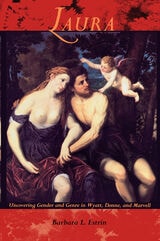
Laura
Uncovering Gender and Genre in Wyatt, Donne and MarvellBarbara L. Estrin
Duke University Press, 1994
Through close readings of the Rime sparse and the works of Wyatt, Donne, and Marvell, Estrin uncovers three Lauras: Laura-Daphne, who denies sexuality; Laura-Eve, who returns the poet’s love; and Laura-Mercury, who reinvents her own life. Estrin claims that in these three guises Laura subverts both genre and gender, thereby introducing multiple desires into the many layers of the poems. Drawing upon genre and gender theories advanced by Jean-François Lyotard and Judith Butler to situate female desire in the poem’s framework, Estrin shows how genre and gender in the Petrarchan tradition work together to undermine the stability of these very concepts.
Estrin’s Laura constitutes a fundamental reconceptualization of the Petrarchan tradition and contributes greatly to the postmodern reassessment of the Renaissance period. In its descriptions of how early modern poets formulate questions about sexuality, society and poetry, Laura will appeal to scholars of the English and Italian Renaissance, of gender studies, and of literary criticism and theory generally.
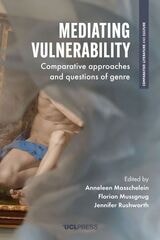
Mediating Vulnerability
Comparative Approaches and Questions of GenreEdited by Anneleen Masschelein, Florian Mussgnug, and Jennifer Rushworth
University College London, 2021
To experience vulnerability is to experience the tension between ruin and creativity: a vulnerable species faces extinction but also evolution, and a vulnerable person risks both irreparable harm and transformative connection. Mediating Vulnerability explores how this tension plays out across contemporary literary studies. Examining a variety of approaches to the destructive and remediating powers of genre, the authors consider how vulnerability intersects a range of representational forms including high-profile fiction by Margaret Atwood and Cormac McCarthy as well as lesser-known graphic novels, video games, television, and photography.

Music and Genre
New DirectionsGeorgina Born and David Brackett, editors
Duke University Press, 2027
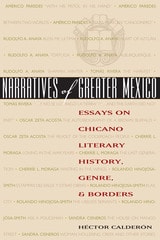
Narratives of Greater Mexico
Essays on Chicano Literary History, Genre, and BordersBy Héctor Calderón
University of Texas Press, 2005
Once relegated to the borders of literature—neither Mexican nor truly American—Chicana/o writers have always been in the vanguard of change, articulating the multicultural ethnicities, shifting identities, border realities, and even postmodern anxieties and hostilities that already characterize the twenty-first century. Indeed, it is Chicana/o writers' very in-between-ness that makes them authentic spokespersons for an America that is becoming increasingly Mexican/Latin American and for a Mexico that is ever more Americanized.
In this pioneering study, Héctor Calderón looks at seven Chicana and Chicano writers whose narratives constitute what he terms an American Mexican literature. Drawing on the concept of "Greater Mexican" culture first articulated by Américo Paredes, Calderón explores how the works of Paredes, Rudolfo Anaya, Tomás Rivera, Oscar Zeta Acosta, Cherríe Moraga, Rolando Hinojosa, and Sandra Cisneros derive from Mexican literary traditions and genres that reach all the way back to the colonial era. His readings cover a wide span of time (1892-2001), from the invention of the Spanish Southwest in the nineteenth century to the América Mexicana that is currently emerging on both sides of the border. In addition to his own readings of the works, Calderón also includes the writers' perspectives on their place in American/Mexican literature through excerpts from their personal papers and interviews, correspondence, and e-mail exchanges he conducted with most of them.
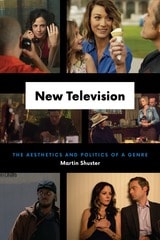
New Television
The Aesthetics and Politics of a GenreMartin Shuster
University of Chicago Press, 2017
Philosopher Martin Shuster argues that television is the modern art form, full of promise and urgency, and in New Television, he offers a strong philosophical justification for its importance. Through careful analysis of shows including The Wire, Justified, and Weeds, among others; and European and Anglophone philosophers, such as Stanley Cavell, Hannah Arendt, Martin Heidegger, and John Rawls; Shuster reveals how various contemporary television series engage deeply with aesthetic and philosophical issues in modernism and modernity. What unifies the aesthetic and philosophical ambitions of new television is a commitment to portraying and exploring the family as the last site of political possibility in a world otherwise bereft of any other sources of traditional authority; consequently, at the heart of new television are profound political stakes.
Notions of Genre
Writings on Popular Film Before Genre TheoryEdited by Barry Keith Grant and Malisa Kurtz
University of Texas Press, 2016
Much of the writing in film studies published today can be understood as genre criticism, broadly speaking. And even before film studies emerged as an academic discipline in the 1970s, cultural observers within and beyond the academy were writing about genre films and making fascinating attempts to understand their conventions and how they speak to, for, and about the culture that produces them. While this early writing on genre film was often unsystematic, impressionistic, journalistic, and judgmental, it nonetheless produced insights that remain relevant and valuable today.
Notions of Genre gathers the most important early writing on film genre and genre films published between 1945 and 1969. It includes articles by such notable critics as Susan Sontag, Dwight Macdonald, Siegfried Kracauer, James Agee, André Bazin, Robert Warshow, and Claude Chabrol, as well as essays by scholars in academic disciplines such as history, sociology, and theater. Their writings address major issues in genre studies, including definition, representation, ideology, audiences, and industry practices, across genres ranging from comedy and westerns to horror, science fiction, fantasy, gangster films, and thrillers. The only single-volume source for this early writing on genre films, Notions of Genre will be an invaluable resource for scholars and students of film genre, film history, film theory, cultural studies, and popular culture.
On Drama
Boundaries of Genre, Borders of SelfMichael Goldman
University of Michigan Press, 2000
On Edge
Gender and Genre in the Work of Shirley Jackson, Patricia Highsmith, and Leigh BrackettAshley Lawson
The Ohio State University Press, 2024
Honorable Mention, 2025 PCA Emily Toth Award For Best Single Work In Women’s Studies
Finalist, 2025 Mystery Writers of America's Edgar Awards, Best Critical/Biographical Category
Finalist, Bouchercon New Orleans 2025 Anthony Awards, Best Critical/Non-Fiction
Nominated for the 2025 Macavity Awards, Best Mystery-related Nonfiction/Critical
Ashley Lawson’s On Edge presents a new picture of postwar American literature, arguing that biases against genre fiction have unfairly disadvantaged the legacies of authors like Shirley Jackson, Patricia Highsmith, and Leigh Brackett. Each of these women navigated a male-dominated postwar publishing world without compromising their values. Their category-defying treatment of gender roles and genre classifications created suspense in their work that spoke to the tensions of the “Age of Anxiety.” Lawson engages with foundational voices in American literature, genre theory, and feminism to argue that, by merging the dominant mode of literary realism with fantastical or heightened elements, Brackett, Jackson, and Highsmith responded to the big questions of their era with startling and unnerving answers. By elevating genre play to a marker of literary skill, Lawson contends, we can secure these writers a more prominent place within the canon of midcentury American literature and open the door for the recovery of their similarly innovative peers.
Parallel Worlds
Genre, Discourse, and Poetics in Contemporary, Colonial, and Classic Maya LiteratureKerry M. Hull
University Press of Colorado, 2012
In this volume, contributions from leading scholars in Maya literary studies examine Maya discourse from Classic period hieroglyphic inscriptions to contemporary spoken narratives, focusing on parallelism to unite the literature historically. Contributors take an ethnopoetic approach, examining literary and verbal arts from a historical perspective, acknowledging that poetic form is as important as narrative content in deciphering what these writings reveal about ancient and contemporary worldviews.
Encompassing a variety of literary motifs, including humor, folklore, incantation, mythology, and more specific forms of parallelism such as couplets, chiasms, kennings, and hyperbatons, Parallel Worlds is a rich journey through Maya culture and pre-Columbian literature that will be of interest to students and scholars of anthropology, ethnography, Latin American history, epigraphy, comparative literature, language studies, indigenous studies, and mythology.
Real Folks
Race and Genre in the Great DepressionSonnet H. Retman
Duke University Press, 2011
Selling Science Fiction Cinema
Making and Marketing a GenreJ. P. Telotte
University of Texas Press, 2023
How science fiction films in the 1950s were marketed and helped create the broader genre itself.
For Hollywood, the golden age of science fiction was also an age of anxiety. Amid rising competition, fluid audience habits, and increasing government regulation, studios of the 1950s struggled to make and sell the kinds of films that once were surefire winners. These conditions, the leading media scholar J. P. Telotte argues, catalyzed the incredible rise of science fiction.
Though science fiction films had existed since the earliest days of cinema, the SF genre as a whole continued to resist easy definition through the 1950s. In grappling with this developing genre, the industry began to consider new marketing approaches that viewed films as fluid texts and audiences as ever-changing. Drawing on trade reports, film reviews, pressbooks, trailers, and other archival materials, Selling Science Fiction Cinema reconstructs studio efforts to market a promising new genre and, in the process, shows how salesmanship influenced what that genre would become. Telotte uses such films as The Thing from Another World, Forbidden Planet, and The Blob, as well as the influx of Japanese monster movies, to explore the shifting ways in which the industry reframed the SF genre to market to no-longer static audience expectations. Science fiction transformed the way Hollywood does business, just as Hollywood transformed the meaning of science fiction.
Spectral Characters
Genre and Materiality on the Modern StageSarah Balkin
University of Michigan Press, 2019
Theater’s materiality and reliance on human actors has traditionally put it at odds with modernist principles of aesthetic autonomy and depersonalization. Spectral Characters argues that modern dramatists in fact emphasized the extent to which humans are fictional, made and changed by costumes, settings, props, and spoken dialogue. Examining work by Ibsen, Wilde, Strindberg, Genet, Kopit, and Beckett, the book takes up the apparent deadness of characters whose selves are made of other people, whose thoughts become exteriorized communication technologies, and whose bodies merge with walls and furniture. The ghostly, vampiric, and telepathic qualities of these characters, Sarah Balkin argues, mark a new relationship between the material and the imaginary in modern theater. By considering characters whose bodies respond to language, whose attempts to realize their individuality collapse into inanimacy, and who sometimes don’t appear at all, the book posits a new genealogy of modernist drama that emphasizes its continuities with nineteenth-century melodrama and realism.

Stanley Kubrick at Look Magazine
Authorship and Genre in Photojournalism and FilmPhilippe D. Mather
Intellect Books, 2013
The Delight of Turkish Dizi
Memory, Genre and Politics of Television in TurkeyArzu Öztürkmen
Seagull Books, 2021
Standing at the crossroads of folklore, media, and performance studies, Arzu Öztürkmen explores the rise of the dizi genre in Turkey since the 1970s, when national television broadcasting began in the country. The Delight of Turkish Dizi approaches this unique genre—not quite soap opera or telenovela—as an art form that developed with the collective creative input of writers, producers, directors, actors, editors, musicians, and, lately, international distributors. Öztürkmen shows how dizi-making is a marathon run by sprinters, where production and broadcasting processes have been tightly interwoven, offering a mode of communication and consumption that is distinct to the Turkish television industry. The research consists of oral history with key figures in dizi production and ethnographic surveys of film sets, international content markets, and award ceremonies. This first-ever monograph on Turkish dizi will be a valuable addition to the field of performance and media studies while delighting the general reader as well.
The Early Novel in French
Poetics of a Genre in the MakingVirginia Krause
Northwestern University Press, 2027
Examining the role of changes in print technologies and poetics in the early novel
Around the same time that Aristotle’s Poetics was reemerging from obscurity, Rabelais was composing his Pantagruel series, while a host of influential works in a chivalric, sentimental, or pastoral vein were being imported from Spain and Italy. From this emergent corpus, Rabelais’s is the only name to have unambiguously made it into our modern canon of literary history, where he appears to stand alone as an early pioneer of the novel. The Early Novel in French: Poetics of a Genre in the Making explores the literary, cultural, and eminently material soil in which these early forms of what we would come to know as the novel originally took root, showing how they were imaginatively responding to the practices and uncertainties of the literary texts of their own era as well as to works of classical antiquity.
Within the flowering of experimental fictional forms in mid-sixteenth-century France, Virginia Krause identifies historical subplots shaping the development of this genre. As rhetorical culture continued to animate fictions through an active literary tradition, print culture was changing the very fabric of books. The early novel was thus at once rhetorically fashioned and technologically manufactured. Meanwhile, the legacy of medieval romance adventure persisted, making the early novel in French both a new laboratory for Aristotelian immersion and a vehicle for a mysterious and fugitive romanesque. Krause sheds fresh light on this new and rapidly evolving genre: its lifelike personas or “person-fictions”; its material forms, from pocket-sized volumes to vast literary serials; its immersive powers; and its underappreciated role in the production of the modern author.
The Idea of Indian Literature
Gender, Genre, and Comparative MethodPreetha Mani
Northwestern University Press, 2022
Indian literature is not a corpus of texts or literary concepts from India, argues Preetha Mani, but a provocation that seeks to resolve the relationship between language and literature, written in as well as against English. Examining canonical Hindi and Tamil short stories from the crucial decades surrounding decolonization, Mani contends that Indian literature must be understood as indeterminate, propositional, and reflective of changing dynamics between local, regional, national, and global readerships. In The Idea of Indian Literature, she explores the paradox that a single canon can be written in multiple languages, each with their own evolving relationships to one another and to English.
Hindi, representing national aspirations, and Tamil, epitomizing the secessionist propensities of the region, are conventionally viewed as poles of the multilingual continuum within Indian literature. Mani shows, however, that during the twentieth century, these literatures were coconstitutive of one another and of the idea of Indian literature itself. The writers discussed here—from short-story forefathers Premchand and Pudumaippittan to women trailblazers Mannu Bhandari and R. Chudamani—imagined a pan-Indian literature based on literary, rather than linguistic, norms, even as their aims were profoundly shaped by discussions of belonging unique to regional identity. Tracing representations of gender and the uses of genre in the shifting thematic and aesthetic practices of short vernacular prose writing, the book offers a view of the Indian literary landscape as itself a field for comparative literature.

The Power of Genre
Adena Rosmarin
University of Minnesota Press, 1986
The Power of Genre was first published in 1986. Minnesota Archive Editions uses digital technology to make long-unavailable books once again accessible, and are published unaltered from the original University of Minnesota Press editions.
The Power of Genre is a radical and systematic rethinking of the relationship between literary genre and critical explanation. Adene Rosmarin shows how traditional theories of genre—whether called "historical," "intrinsic," or "theoretical"—are necessarily undone by their attempts to define genre representationally. Rather, Rosmarin argues, the opening premise of critical argument is always critical purpose or, as E. H. Gombrich has said, function, and the genre or "form" follows the reform. The goal is a relational model that works.
Rosemarin analyzes existing theories of genre — those of Hirsch, Crane, Frye, Todorov, Jauss, and Rader are given particular attention—before proposing her own. These analyses uncover the illogic that plagues even sophisticated attempts to treat genre as a preexistent entity. Rosmarin shows how defining genre pragmatically – as explicitly chosen or devised to serve explicitly critical purposes – solves this problem: a pragmatic theory of genre builds analysis of its metaphors and motives into its program, thereby eliminating theory's traditional need to deny the invented and rhetorical nature of its schemes. A pragmatic theory, however, must be tested not only by its internal cohesion but also by its power to enable practice, and Rosmarin chooses the dramatic monologue, an infamously problematic genre, and its recent relative, the mask lyric, as testing grounds. Both genres—variously exemplified by poems of Browning, Thennyson, Eliot, and Pound—are ex post facto critical constructs that, when defined as such, make closely reasoned sense not only of particular poems but also of their perplexed interpretive histories. Moreover, both genres dwell on the historicity, textuality, and redemptive imperfection of the speaking self. This generic obsession ties the poems to their reception and, finally, to the openended, processes of hermeneutic question-and-answer stressed in Rosmarin's framing theory.
The Wire
Race, Class, and GenreEdited by Liam Kennedy and Stephen Shapiro
University of Michigan Press, 2012
Few other television series have received as much academic, media, and fan celebration as The Wire, which has been called the best dramatic series ever created. The show depicts the conflict between Baltimore's police and criminals to raise a warning about race; drug war policing; deindustrialization; and the inadequacies of America’s civic, educational, and political institutions. The show's unflinching explorations of a city in crisis and its nuanced portrayals of those affected make it a show all about race and class in America.
The essays in this volume offer a range of astute critical responses to this television phenomenon. More consistently than any other crime show of its generation, The Wire challenges viewers' perceptions of the racialization of urban space and the media conventions that support this. The Wire reminds us of just how remarkably restricted the grammar of race is on American television and related media, and of the normative codings of race---as identity, as landscape---across urban narratives, from documentary to entertainment media.

The Woman Detective
GENDER AND GENREViola Klein
University of Illinois Press, 1995
This new edition adds sixty new female private eyes to the roster and includes an afterword that assesses the current state of the genre's new and old novels. A comprehensive bibliography and a character list update the field through mid-1994.
"A highly intelligent analysis." -- Ms.
"Well-researched and well-written. . . . Traces the evolution of sexist boundaries in popular detective fiction from a feminist viewpoint and documents the parallels in social history and the women's rights movement." -- Ronald C. Miller, The Armchair Detective
"Identifies dozens of good novels whose titles are not well known, its promise of good reading extending well beyond its own covers." -- Jane Bakerman, Belles Lettres
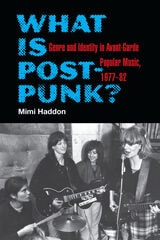
What Is Post-Punk?
Genre and Identity in Avant-Garde Popular Music, 1977-82Mimi Haddon
University of Michigan Press, 2020
Popular music in the US and UK during the late 1970s and early 1980s was wildly eclectic and experimental. “Post-punk,” as it was retroactively labeled, could include electro-pop melodies, distorted guitars, avant-garde industrial sounds, and reggae beats, and thus is not an easily definable musical category.
What Is Post-Punk? combines a close reading of the late-1970s music press discourse with musical analyses and theories of identity to unpack post-punk’s status as a genre. Mimi Haddon traces the discursive foundations of post-punk across publications such as Sounds, ZigZag, Melody Maker, the Village Voice, and NME, and presents case studies of bands including Wire, PiL, Joy Division, the Raincoats, and Pere Ubu. By positioning post-punk in relation to genres such as punk, new wave, dub, and disco, Haddon explores the boundaries of post-punk, and reveals it as a community of tastes and predilections rather than a stylistically unified whole. Haddon diversifies the discourse around post-punk, exploring both its gender and racial dynamics and its proto-industrial aesthetics to restore the historical complexity surrounding the genre’s terms and origins.
Writing Maternity
Medicine, Anxiety, Rhetoric, and GenreDara Rossman Regaignon
The Ohio State University Press, 2021