Results by title
20 books match the query 'Mushrooms'
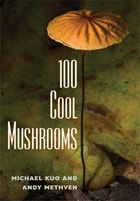
100 Cool Mushrooms
Michael Kuo and Andy Methven
University of Michigan Press, 2010
All mushrooms are cool, but the ones discussed in 100 Cool Mushrooms are especially cool. Authors Michael Kuo and Andy Methven cover a broad spectrum of notable North American mushrooms: from common fungi that are widely distributed and frequently found, to rare mushrooms that are not found in field guides; from the beautiful to the ugly (and even disgusting).
Each is described and shown, including its ecology and physical features. Inside, you'll find mushrooms such as:
Phallus rubicundus, a stinkhorn that in certain areas appears to be spreading on wood chips sold as commercial mulch. Now you might just find it in your backyard.
Cordyceps militaris, a little orange club fungus that grows in insects, then explodes from their bodies.
Piptoporus betulinus, a mushroom commonly found on birch trees, was found carefully packed in the belongings of the Tyrolean Iceman. Archaeologists speculate that he used it for medicinal purposes.
. . . and 97 more!
Dr. Michael Kuo, the principal developer of MushroomExpert.Com, is an English teacher in Illinois and an amateur mycologist. He is the author of Morels and 100 Edible Mushrooms.
Dr. Andrew Methven is Professor of Mycology and Chair of the Biology Department at Eastern Illinois University.

A Field Guide to Mushrooms of the Ozarks
Alan E. Bessette
University of Arkansas Press, 2027
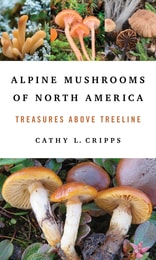
Alpine Mushrooms of North America
Treasures above TreelineCathy L. Cripps
University of Illinois Press, 2025
Features include:
- More than 200 color photographs
- Small size perfect for use in the field
- In-depth scientific information on 150 species, including some recently discovered and most not found outside alpine or Arctic habitats
- Division of species into ecological groups to aid with searching and identification
- Coverage of the Rocky Mountains of Montana, Wyoming, and Colorado, with extensions into British Columbia and Alaska, with many of the same mushrooms also found in the Arctic
- Tips on collecting for both professional researchers and amateur enthusiasts
- A conservation-based approach aimed at the general public, mycologists, researchers, naturalists, land managers, and others
Easy to use and charged with cutting-edge science, Alpine Mushrooms of North America is an expert guide to mycology’s final frontier.
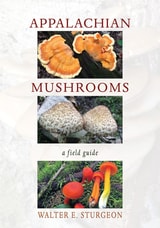
Appalachian Mushrooms
A Field GuideWalter E. Sturgeon
Ohio University Press, 2018
From one of the region’s foremost mushroom hunters—Walter E. Sturgeon—comes a long-overdue field guide to finding and identifying the mushrooms and fleshy fungi found in the Appalachian mountains from Canada to Georgia. Edibility and toxicity, habitat, ecology, and detailed diagnostic features of the disparate forms they take throughout their life cycles are all included, enabling the reader to identify species without the use of a microscope or chemicals.
Appalachian Mushrooms is unparalleled in its accuracy and currency, from its detailed photographs to descriptions based on the most advanced classification information available, including recent DNA studies that have upended some mushrooms’ previously accepted taxonomies. Sturgeon celebrates more than 400 species in all their diversity, beauty, and scientific interest, going beyond the expected specimens to include uncommon ones and those that are indigenous to the Appalachian region.
This guide is destined to be an indispensable authority on the subject for everyone from beginning hobbyists to trained experts, throughout Appalachia and beyond.
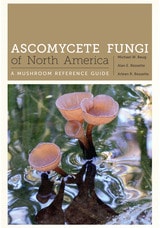
Ascomycete Fungi of North America
A Mushroom Reference GuideBy Michael Beug, Arleen Bessette, and Alan E. Bessette
University of Texas Press, 2014
Approximately 75 percent of all fungi that have been described to date belong to the phylum Ascomycota. They are usually referred to as Ascomycetes and are commonly found and collected by mushroom enthusiasts. Ascomycetes exhibit a remarkable range of biodiversity, are beautiful and visually complex, and some, including morels and truffles, are highly prized for their edibility. Many play significant roles in plant ecology because of the mycorrhizal associations that they form. Thus it is remarkable that no book dedicated to describing and illustrating the North American Ascomycetes has been published in over sixty years.
Filling the gap between technical publications and the limited representation of Ascomycetes in general mushroom field guides, Ascomycete Fungi of North America is a scientifically accurate work dedicated to this significant group of fungi. Because it is impossible to describe and illustrate the tens of thousands of species that occur in North America, the authors focus on species found in the continental United States and Canada that are large enough to be readily noticeable to mycologists, naturalists, photographers, and mushroom hunters. They provide 843 color photographs and more than 600 described species, many of which are illustrated in color for the first time. While emphasizing macroscopic field identification characteristics for a general audience, the authors also include microscopic and other advanced information useful to students and professional mycologists. In addition, a color key to the species described in this book offers a visual guide to assist in the identification process.
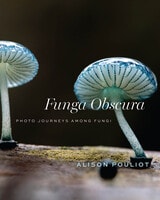
Funga Obscura
Photo Journeys Among FungiAlison Pouliot
University of Chicago Press, 2025
An unforgettable visual journey through the kingdom of fungi, both enigmatic and entrancing.
Recyclers, creators of soil, enablers of life, and food for many—fungi are as dynamic as they are diverse. And, throughout her career, Alison Pouliot has observed these organisms with a unique vision. As a scientist and photographer, she has led hundreds of forays through the forests of the Americas, Australia, and Europe. In this book, readers can travel along with her on these global explorations through stunning photographs and meditations on the landscape. She says her camera is where fungal lives come most clearly into focus. And like the camera obscura, this book, Funga Obscura, captures brief mycological moments and unforgettable fungus microcosms.
The word funga refers to the fungi of a region, and Pouliot’s photography spans continents. We see a parade of violet webcap mushrooms, spotted in the understory of a Pacific Northwest forest; brilliantly blue pixie’s parasols in Australia; an Italian alpine lichen, looking for all the world like a treasure map; and a showstopping whitelaced shank, ready to spread its spores in Switzerland. We learn that fungi live almost everywhere, from our lawns to forests and woodlands, from the ocean’s depths to deserts and alpine peaks. Yet, like a web of rootlike mycelium, Funga Obscura goes deeper to investigate how fungi shape landscapes and interact with other organisms, including humans. This journey spans eons, from long ago in evolutionary time, when fungi first emerged from the ocean onto land, to today, when we witness their work all around us. The scenes here challenge our ideas about what fungi are, what they do, and why they matter.
In Pouliot’s photographs, you might recognize a few old friends, but many mushrooms will be new acquaintances. Sometimes they make their presence immediately known; at other times, they just provide clues—and trails to follow.
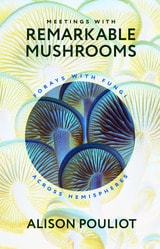
Meetings with Remarkable Mushrooms
Forays with Fungi across HemispheresAlison Pouliot
University of Chicago Press, 2023
A whirlwind journey through fungus frontiers that underscores how appreciating fungi is key to understanding our planet’s power and fragility.
What can we learn from the lives of fungi? Splitting time between the northern and southern hemispheres, ecologist Alison Pouliot ensures that she experiences two autumns per year in the pursuit of fungi—from Australia’s deserts to Iceland’s glaciers to America’s Cascade Mountains. In Meetings with Remarkable Mushrooms, we journey alongside Pouliot, magnifiers in hand, as she travels the world.
With Pouliot as our guide, we smell fire-loving truffles that transform their scent after burning to lure mammals who eat them and, ultimately, spread their spores. We spot the eerie glow of the ghost fungus, a deceptive entity that looks like an edible oyster mushroom but will soon heave back out—along with everything else in your stomach—if you take a bite. And we crawl alongside vegetable caterpillars, which are neither vegetable nor caterpillar but a fungus that devours insects from the inside out.
Featuring stunning color photographs of these mycological miracles, Meetings with Remarkable Mushrooms shows that understanding fungi is fundamental for harmonizing with the natural world.

Molds, Mushrooms, and Mycotoxins
Clyde M. Christensen
University of Minnesota Press, 1975
Molds, Mushrooms, and Mycotoxins was first published in 1975. Minnesota Archive Editions uses digital technology to make long-unavailable books once again accessible, and are published unaltered from the original University of Minnesota Press editions.
As Professor Christensen has made evident in his earlier books, including The Molds and Man,fungi are significantly interesting in their life-styles and in the many ways in which they affect man. Here he continues his exploration of the lives of the fungi and their relation to man, focusing on the harmful or dangerous effects which certain molds, mushrooms, and other fungi can have on human beings.
The first several chapters deal with fungi that are toxic in one way or another: either the fungi themselves are toxic when consumed, as with poisonous mushrooms and ergot, or the fungi secrete toxic compounds that diffuse into the substance on which they grow, making that substance toxic when eaten. He discusses hallucinogenic as well as poisonous mushrooms and provides extensive information about mycotoxins in human and animal foods, which are recently discovered health hazards.
Other chapters deal with fungus spores, which are a major cause of respiratory allergies, and with fungi which are predators or parasites of insects and nematodes. A chapter is devoted to fungus infections of man and animals, which at times constitute a serious public health problem. Another chapter discusses the nature, cause, and prevention of wood decay in trees and buildings. In a final chapter the author discusses some aspects of organic evolution in general as a background for presenting theories and facts on the evolution of fungi. He summarizes some of the ways in which fungi enter into our lives and economy, and looks to the role of fungi in the future.
The illustrations, in both black and white and color, show some of the fungi and processes that are discussed.
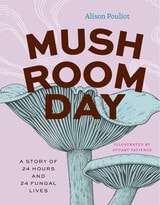
Mushroom Day
A Story of 24 Hours and 24 Fungal LivesAlison Pouliot
University of Chicago Press, 2025
On this mushroom-filled day, ecologist Alison Pouliot tours the world to introduce readers to a fascinating variety of fungi. Each chapter of Mushroom Day introduces a single fungus during a single hour, highlighting twenty-four different species.
In the dark of the night, the green glow of the ghost fungus guides us into the forest to learn about the mysteries of bioluminescence. At dawn, we awaken to find a fairy ring of mushrooms that has appeared overnight like something out of folklore. But we don’t have much time to linger, as we must reach the Italian forest before other porcino hunters forage the morning’s fattest and finest. In the heat of the afternoon, the ripe stench of the stinkhorn might send us out of the woods, while the enticing aroma of the aniseed funnel lures us back in. Late in the evening we spy a fungus known as the witches cauldron and wonder what it might tell us about the future. By the end of our mushroom day, we’ll have glimpsed the diversity of this unique kingdom, met fungus friends that feed and fascinate, and learned how humans can encourage their flourishing.
For each hour, celebrated artist Stuart Patience has depicted these scenes with evocative pen and ink illustrations. Working together to narrate and illustrate these unique moments in time, Pouliot and Patience have created an engaging read that is a perfect way to spend an hour or two—and a true gift for foragers, mycophiles, and anyone who wants to stop and appreciate fungi.
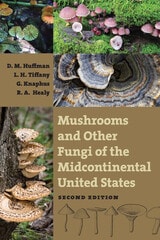
Mushrooms and Other Fungi of the Midcontinental United States
Donald M. Huffman
University of Iowa Press, 2008
This completely revised second edition provides all the information necessary to identify mushrooms in the ?eld in the midcontinental region of Iowa, Illinois, Nebraska, Missouri, Minnesota, South Dakota, and Wisconsin: the tallgrass prairies and the western parts of the eastern deciduous forests.
The first edition has been improved in significant ways. The authors have updated scientific names, added photos where there were none and replaced poor photos with better ones, improved the keys, added some species and deleted others, added a section on truffles, and annotated the bibliography. There were originally 224 species; now there are 248. Some of the new photos-125 in all-serve as a second photo for a species, where it is helpful to show details that cannot be viewed in a single photo.
The authors describe each species' cap, gills, stalk, annulus, and season when it is most likely to be seen as well as such characteristics as edibility and toxicity. In their detailed and lively introduction they discuss the economic and environmental aspects of fungi, basic mushroom biology, nomenclature, edibility and toxicity, and habitats and time of fruiting. Most important are the keys, which lead the dedicated reader to the major groups of fungi included in this guide. The section on mushrooms includes keys to their genera in addition to the species within each family discussed, and each of the subsequent sections has a key to the genera and species except where so few species are discussed that a key is not necessary. The volume also includes a glossary and two bibliographies, one with general and one with technical references.
Through their detailed technical descriptions and captivating color photos the authors convey their passionate fondness for these diverse and colorful organisms, whose mysterious appearances and disappearances have long made them objects of fascination.
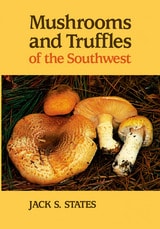
Mushrooms and Truffles of the Southwest
Jack S. States
University of Arizona Press, 1990

Mushrooms in Your Pocket
A Guide to the Mushrooms of IowaDonald M. And Lois H. Huffman & Tiffany
University of Iowa Press, 2004
In addition to crocuses and robins, springtime in Iowa brings out another harbinger of warmer weather: mushrooms. Melting snow and warmer temperatures provide optimal opportunity for mushroom enthusiasts; people of all ages can be found wandering the woods, clutching bags and hoping to spot a clump of elusive morels. Now, for budding naturalists, beginning mushroom hunters, and professionals outside of the area of mycology, Donald Huffman and Lois Tiffany have provided this laminated guide to the most common mushrooms of Iowa.
The guide illustrates forty-three species of Iowa mushrooms using color photos that show the fungi in the wild, from the yellow morel to the destroying angel to the pear-shaped puffball. Huffman and Tiffany give common and scientific names, descriptions of caps and stalks, descriptions of where the mushrooms can be found (on the ground in woods, in clusters on fallen logs, etc.), the season when they are most likely to be seen, plus information on edibility from the “choice edible” yellow morel, much coveted by generations of mushroom hunters, to the poisonous false morel.
Mushrooms’ diverse forms and variety of colors, along with their seemingly mysterious appearances and disappearances, have long made them objects of fascination. Mushrooms in Your Pocket will be an invaluable companion for finding and identifying these unusual and interesting organisms.
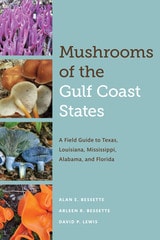
Mushrooms of the Gulf Coast States
A Field Guide to Texas, Louisiana, Mississippi, Alabama, and FloridaBy Alan E. Bessette, Arleen F. Bessette, and David P. Lewis
University of Texas Press, 2019
The weather patterns and topography of America's Gulf Coast create favorable growing conditions for thousands of species of mushrooms, but the complete region has generally gone uncharted when it comes to mycology. Mushrooms of the Gulf Coast States at last delivers an in-depth, high-quality, user-friendly field guide, featuring more than 1,000 common and lesser-known species—some of which are being illustrated in color for the first time.
Using easily identifiable characteristics and a color key, the authors enable anyone, whether amateur mushroom hunter or professional mycologist, to discern and learn about the numerous species of mushrooms encountered in Texas, Louisiana, Mississippi, Alabama, and Florida. Wild-food enthusiasts will appreciate the information on edibility or toxicity that accompanies each description, and they will also find the book’s detailed instructions for collecting, cleaning, testing, preserving, and cooking wild mushrooms to be of great interest. Providing encyclopedic knowledge in a handy format that fits in a backpack, Mushrooms of the Gulf Coast States is a must-have for any mushroom lover.
Mushrooms of the Midwest
Michael Kuo and Andrew S. Methven
University of Illinois Press, 2014
Fusing general interest in mushrooming with serious scholarship, Mushrooms of the Midwest describes and illustrates over five hundred of the region's mushroom species. From the cold conifer bogs of northern Michigan to the steamy oak forests of Missouri, the book offers a broad cross-section of the fungi, edible and not, that can be found growing in the Midwest’s diverse ecosystems.
With hundreds of color illustrations, Mushrooms of the Midwest is ideal for amateur and expert mushroomers alike. Michael Kuo and Andrew Methven provide identification keys and thorough descriptions. The authors discuss the DNA revolution in mycology and its consequences for classification and identification, as well as the need for well-documented contemporary collections of mushrooms.
Unlike most field guides, Mushrooms of the Midwest includes an extensive introduction to the use of a microscope in mushroom identification. In addition, Kuo and Methven give recommendations for scientific mushroom collecting, with special focus on ecological data and guidelines for preserving specimens. Lists of amateur mycological associations and herbaria of the Midwest are also included. A must-have for all mushroom enthusiasts!
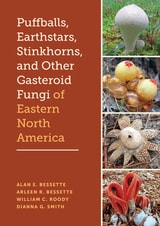
Puffballs, Earthstars, Stinkhorns, and Other Gasteroid Fungi of Eastern North America
Alan E. Bessette, Arleen R. Bessette, William C. Roody, Dianna G. Smith
University of Texas Press, 2025
The first fully illustrated reference guide to gasteroid mushrooms in North America.
Gasteroid fungi are one of the most diverse groups of mushrooms. Unlike the majority of mushrooms that produce spores externally, these unusual fungi produce spores within their fruitbodies. Puffballs, Earthstars, Stinkhorns, and Other Gasteroid Fungi of Eastern North America is the first color-illustrated reference guide for this unique group of fungi in North America.
Providing information for the identification of more than one hundred species, it includes keys based on macroscopic features, detailed species descriptions with both common and scientific names, accurate and beautiful color images, and key identification features. Additionally, the book contains a plethora of useful information about the biology of gasteroid fungi, current taxonomy, mechanisms of spore dispersal, as well as fun facts. A much-needed volume from well-known mycologists Alan and Arleen Bessette, William Roody, and Dianna Smith, this comprehensive book is a must-have for all fungi enthusiasts, from mushroom hunting hobbyists to professional mycologists.
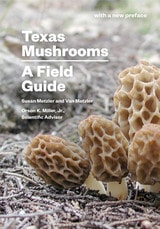
Texas Mushrooms
A Field GuideBy Susan and Van Metzler
University of Texas Press, 1992
Hundreds of species of mushrooms flourish in Texas, from the desert and semiarid regions of West Texas to the moist and acid soils of East Texas, where species that can also be found in South America live alongside those that might be spotted in Malaysia and Europe. Texas Mushrooms was the first—and is still the only—guide to all of the state’s mushrooms.
This colorful, easy-to-follow book will surprise and delight uninitiated nature enthusiasts while also supplying the experienced mushroom hunter with expert identification information. Excellent color photographs and precise descriptions of over 200 species will enable the mushroom hunter—even the amateur—to make quick, careful, easy distinctions between the edible varieties and the potentially toxic ones. In addition, kitchen-tested recipes are included, along with charts giving spore sizes and a list of recommended further reading.
In Texas, mushroom hunting can be a year-round, state-wide activity, and with this enticing field guide, collecting, identifying, and preparing wild mushrooms will become an activity the entire family can enjoy while appreciating the beauty of Texas from a new and fascinating angle.
The Boletes of Michigan
Alexander H. Smith and Harry D. Thiers
University of Michigan Press, 1971
The Devil's Book of Culture
History, Mushrooms, and Caves in Southern MexicoBy Benjamin Feinberg
University of Texas Press, 2003
Since the 1950s, the Sierra Mazateca of Oaxaca, Mexico, has drawn a strange assortment of visitors and pilgrims—schoolteachers and government workers, North American and European spelunkers exploring the region's vast cave system, and counterculturalists from hippies (John Lennon and other celebrities supposedly among them) to New Age seekers, all chasing a firsthand experience of transcendence and otherness through the ingestion of psychedelic mushrooms "in context" with a Mazatec shaman. Over time, this steady incursion of the outside world has significantly influenced the Mazatec sense of identity, giving rise to an ongoing discourse about what it means to be "us" and "them."
In this highly original ethnography, Benjamin Feinberg investigates how different understandings of Mazatec identity and culture emerge through talk that circulates within and among various groups, including Mazatec-speaking businessmen, curers, peasants, intellectuals, anthropologists, bureaucrats, cavers, and mushroom-seeking tourists. Specifically, he traces how these groups express their sense of culture and identity through narratives about three nearby yet strange discursive "worlds"—the "magic world" of psychedelic mushrooms and shamanic practices, the underground world of caves and its associated folklore of supernatural beings and magical wealth, and the world of the past or the past/present relationship. Feinberg's research refutes the notion of a static Mazatec identity now changed by contact with the outside world, showing instead that identity forms at the intersection of multiple transnational discourses.
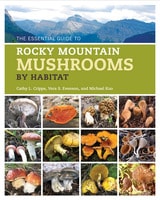
The Essential Guide to Rocky Mountain Mushrooms by Habitat
Cathy Cripps, Vera Evenson, and Michael Kuo
University of Illinois Press, 2016
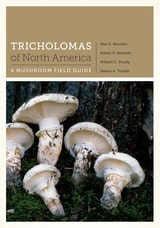
Tricholomas of North America
A Mushroom Field GuideBy Alan E. Bessette, Arleen R. Bessette, William C. Roody, Steven A. Trudell
University of Texas Press, 2013
More than 100 mushrooms in the genus Tricholoma have been reported in North America. Most are relatively large, showy mushrooms that grow on the ground near many species of temperate forest trees, both hardwoods and conifers. They typically fruit from late summer through early winter or even into spring in warmer areas. Some are fine edibles, including the matsutake. Others are inedible or even poisonous.
Filling the gap between technical publications and the limited representation of Tricholomas in general mushroom field guides, this book is the first comprehensive guide to North American Tricholomas. It contains more than 170 of the best documentary photographs available, often with more than one image of a species to illustrate the dramatic variation exhibited by many Tricholomas. The species descriptions provide extensive identification information including scientific and common names, macroscopic and microscopic features, occurrence/habit, edibility, and a comment section that addresses such things as synonomy, comparisons with similar species, varietial differences, explanations of species’ epithets, and other useful or interesting information. In addition, the authors provide a general introduction to Tricholomas that discusses identification features, ecology, simple chemical tests (for identification), and how to use the keys provided in this book.