Results by title
4 books match the query 'Mythologies'

French Colonial Documentary
Mythologies of HumanitarianismPeter J. Bloom
University of Minnesota Press, 2008
Despite altruistic goals, humanitarianism often propagates foreign, and sometimes unjust, power structures where it is employed. Tracing the visual rhetoric of French colonial humanitarianism, Peter J. Bloom’s unexpected analysis reveals how the project of remaking the colonies in the image of France was integral to its national identity.
French Colonial Documentary investigates how the promise of universal citizenship rights in France was projected onto the colonies as a form of evolutionary interventionism. Bloom focuses on the promotion of French education efforts, hygienic reform, and new agricultural techniques in the colonies as a means of renegotiating the social contract between citizens and the state on an international scale. Bloom’s insightful readings disclose the pervasiveness of colonial iconography, including the relationship between “natural man” and colonial subjectivity; representations of the Senegalese Sharpshooters as obedient, brave, and sexualized colonial subjects; and the appeal of exotic adventure narratives in the trans-Saharan film genre.
Examining the interconnection between French documentary realism and the colonial enterprise, Bloom demonstrates how the colonial archive is crucial to contemporary debates about multiculturalism in France.
Peter J. Bloom is associate professor of film and media studies at the University of California-Santa Barbara.y debates about multiculturalism in France.
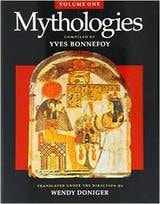
Mythologies
Edited by Yves Bonnefoy
University of Chicago Press, 1991
Drawing on a breathtaking array of sources, from the history of religions to anthropology, archaeology, literature, and linguistics, the contributors define a new approach to the understanding of myth in society.
For this first English-language edition, the articles have been rearranged by region or culture. Together they comprise an exceptionally broad, stimulating introduction to the religious and mythical traditions of the world—from the idea of death in Ancient Egypt to the ideology of nationalism in modern Europe. Greeks and Romans are here in force, naturally, but so too are the Bantu, Dinka, and Dogon of Africa and the Armenians, Mongols, and Turks of Asia.
Readers of Mythologies will discover a wealth of fresh primary sources on such little known traditions as those of the Vietnamese—and bold, provocative new interpretations of well-studied traditions, such as those of classical Greece.
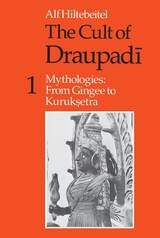
The Cult of Draupadi, Volume 1
Mythologies: From Gingee to KuruksetraAlf Hiltebeitel
University of Chicago Press, 1988
Volume 1 focuses on the Draupadī cult’s own double mythology, moving from its stories about Draupadī’s “primal temple” near the capital of the medieval South Indian Kingdom of Gingee to its version of the Mahābhārata war on the North Indian plain of Kurukṣetra. Throughout, Hiltebeitel intertwines “regional” data, gathered from both oral and written sources, with the “epic,” drawn from the cult’s own performative traditions as well as from classical versions of the Mahābhārata in both Tamil and Sanskrit. Pivotal to the overlap of these Gingee and Kurukṣetra mythologies are two folk figures unknown to classical epic traditions: Draupadī’s two guardians, Pōttu Rāja and Muttāl Rāvuttaṉ.

Women and Weasels
Mythologies of Birth in Ancient Greece and RomeMaurizio Bettini
University of Chicago Press, 2013