Results by title
31 books match the query 'NGOs (Non-Governmental Organizations)'

A New Green Order?
The World Bank and the Politics of the Global Environment FacilityZoe Young
Pluto Press, 2002
Investigating the workings of this little known aid fund, Zoe Young takes a critical look at the conflicts involved, focusing on how the GEF's agenda relates to questions of globalisation, knowledge and accountability in the United States and the World Bank.
As our landscapes, fertility, cultures and ecosystems are being destroyed every day, Zoe Young gives a disturbing account of the complex issues that must be addressed before the world's environment can be managed more democratically - and effectively.

All In
The Spread of Gambling in Twentieth-Century United StatesJonathan D Cohen
University of Nevada Press, 2018
A fresh take on the history of modern American gambling, All In provides a closer look at the shifting economic, cultural, religious, and political conditions that facilitated gambling’s expansion and prominence in American consumerism and popular culture. In its pages, a diverse range of essays covering commercial and Native American casinos, sports betting, lotteries, bingo, and more piece together a picture of how gambling became so widespread over the course of the twentieth century.
Drawing from a range of academic disciplines, this collection explores five aspects of American gambling history: crime, advertising, politics, religion, and identity.
In doing so, All In illuminates the on-the-ground debates over gambling’s expansion, the failed attempts to thwart legalized betting, and the consequences of its present ubiquity in the United States.
Beyond the Boomerang
From Transnational Advocacy Networks to Transcalar Advocacy in International PoliticsEdited by Christopher L. Pallas and Elizabeth A. Bloodgood
University of Alabama Press, 2022
From Networks to Scales: Rethinking Advocacy Power in Global Politics.
Margaret E. Keck and Kathryn Sikkink introduced the boomerang theory in their 1998 book, Activists beyond Borders: Advocacy Networks in International Politics. It remains one of the first broadly applicable theories for why groups of NGOs and interested individuals form transnational advocacy networks. Since its publication, however, the empirical conditions that prompted their theory have changed. The types of actors involved in transnational advocacy have diversified. Northern NGOs have lost power and influence and have been restricted in their access to southern states. Southern NGOs have developed the capacity to undertake advocacy on their own and often built closer relationships with their own governments. The architecture of global governance has likewise changed, providing new avenues of access and influence for southern voices.
In Beyond the Boomerang: From Transnational Advocacy Networks to Transcalar Advocacy in International Politics, editors Christopher L. Pallas and Elizabeth A. Bloodgood offer cutting-edge scholarship that synthesizes a new theoretical framework to develop a coherent, integrated picture of the current dynamics in global advocacy. This new theory of transcalar advocacy focuses on advocacy activities and policy impacts that transcend different levels or scales of political action. In transcalar advocacy, all NGOs–northern and southern–are treated as strategic actors, choosing the targets, scales of advocacy, and partnerships that best suit their capacities and goals. The case studies in the volume develop the empirical grounding of this theory using data from Latin America, Africa, Europe, and Asia, with several chapters featuring cross-national comparison. The chapters highlight the wide variety of actors involved in advocacy work, including NGOs, social movements, international institutions, governments, and businesses. Contributors use both qualitative and quantitative methodologies and bring to bear insights from political science, international relations, and sociology. The case studies also include diverse issue areas, from women’s rights to environmental protection, sustainable agriculture, health policy, and democracy promotion.
Building Back Better in India
Development, NGOs, and Artisanal Fishers after the 2004 TsunamiRaja Swamy
University of Alabama Press, 2021
Disaster, development, and the struggle for coastal livelihoods in post-tsunami India.
Building Back Better in India: Development, NGOs, and Artisanal Fishers after the 2004 Tsunami addresses the ways in which natural disasters impact the strategies and priorities of neoliberalizing states in the contemporary era. In the light of growing scholarly and public concern over “disaster capitalism” and the tendency of states and powerful international financial institutions to view disasters as “opportunities” to “build back better,” Raja Swamy offers an ethnographically rich account of post-disaster reconstruction, its contested aims, and the mixed outcomes of state policy, humanitarian aid, and local resistance. Using the 2004 Indian Ocean tsunami as a case study, Swamy investigates the planning and implementation of a reconstruction process that sought to radically transform the geography of a coastal district in the Indian state of Tamil Nadu.
Drawing on an ethnographic study conducted in Tamil Nadu’s Nagapattinam District, Swamy shows how and why the state-led, multilaterally financed, and NGO-mediated reconstruction prioritized the displacement of coastal fisher populations. Exploring the substantive differences shaping NGO action, specifically in response to core political questions affecting the well-being of their ostensible beneficiaries, this account also centers the political agency of disaster survivors and their allies among NGOs in contesting the meanings of recovery while navigating the process of reconstruction.
If humanitarian aid brought together NGOs and fishers as givers and recipients of aid, it also revealed in its workings competing and sometimes contradictory assumptions, goals, interests, and strategies driving the fraught historical relationship between artisanal fishers and the state. Importantly, this research foregrounds the ambiguous role of NGOs involved in the distribution of aid, as well as the agency and strategic actions of the primary recipients of aid—the fishers of Nagapattinam—as they struggled with a reconstruction process that made receipt of the humanitarian gift of housing conditional on the formal abandonment of all claims to the coast. Building Back Better in India thus bridges scholarly concerns with disasters, humanitarianism, and economic development with those focused on power, agency, and resistance.
Citizens against Crime and Violence
Societal Responses in MexicoTrevor Stack
Rutgers University Press, 2022
Civil Becomings
Performative Politics in the Amazon and the MediterraneanRaúl Acosta
University of Alabama Press, 2020
An anthropological approach to an emerging form of transnational political engagement by independent civil society organizations
Activism and advocacy have drawn academic interest as alternative ways of achieving collective ends outside established political institutions. However, there has been very little theoretical attention aimed at the interconnections between the two spheres. In Civil Becomings: Performative Politics in the Amazon and the Mediterranean, Raúl Acosta examines the manner in which progressive nongovernmental organizations (NGOs) and activists act in a more intermingled and processual way than scholars have previously acknowledged.
Acosta focuses on networks from the vantage point of two NGOs: one in Brazil that concentrated on environmental issues in the Amazon and another in Barcelona called the Mediterranean Social Forum. The focus of this research is not on organizational aspects of collaboration, but rather on the practices and contexts in which such cooperation occurs. Three major aspects of activist and advocacy networks are analyzed: their communicative characters, their collective performances of the political, and the negotiations they engage in between vernacular and cosmopolitan values.
This volume theorizes the cooperative actions of activist and advocacy networks as legitimating processes for the work of participating groups. In doing so, Acosta argues, they address the issues that justify a joint campaign or effort and also crucially underpin each participating collective as a worthy organization of civil society.
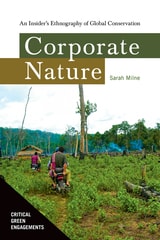
Corporate Nature
An Insider's Ethnography of Global ConservationSarah Milne
University of Arizona Press, 2022
Sarah Milne spent more than a decade working for and observing global conservation projects in Cambodia. During this time, she saw how big environmental NGOs can operate rather like corporations. Their core practice involves rolling out appealing and deceptively simple policy ideas, like Payments for Ecosystem Services (PES). Yet, as policy ideas prove hard to implement, NGOs must also carefully curate evidence from the field to give the impression of success and effectiveness.
In Corporate Nature, Milne delves inside the black box of mainstream global conservation. She reveals how big international NGOs struggle in the face of complexity—especially in settings where corruption and political violence prevail. She uses the case of Conservation International’s work in Cambodia to illustrate how apparently powerful NGOs can stumble in practice: policy ideas are transformed on the ground, while perverse side effects arise, like augmented authoritarian power, illegal logging, and Indigenous dispossession.
The real power of global conservation NGOs is therefore not in their capacity to control what happens in the field but in their capacity to ignore or conceal failings. Milne argues that this produces an undesirable form of socionature, called corporate nature, that values organizational success over diverse knowledges and ethical conduct.
Domesticating Democracy
The Politics of Conflict Resolution in BoliviaSusan Helen Ellison
Duke University Press, 2018

Environmental Groups and Legal Expertise
Shaping the Brexit processCarolyn Abbot and Maria Lee
University College London, 2021
This book explores the use and understanding of law and legal expertise by environmental groups. Rather than focusing on the courtroom, however, this volume scrutinizes environmental NGO advocacy during the extraordinarily dramatic Brexit process, from the referendum on leaving the EU in 2016 to the debate around the new Environment Bill in 2020. In an effort to show how legal expertise is more than a campaign tool or the threat of litigation, this book describes the ways in which law can provide distinctive ways of both seeing and changing the world. Legal resources in the environmental sector are not just a practical limit on what can be done, but an opportunity to investigate the very understanding of what should be done. Legal expertise was heavily and often effectively used in the anomalously law-heavy Brexit-environment debate. This book will clarify this moment and the NGO collaboration that made it possible for environmental advocates to call upon legal expertise in a moment of crisis.
Fighting for NOW
Diversity and Discord in the National Organization for WomenKelsy Kretschmer
University of Minnesota Press, 2019
An unparalleled exploration of NOW’s trajectory, from its founding to the present—and its future
A new wave of feminist energy has swept the globe since 2016—from women’s marches and the #MeToo movement to transwomen’s inclusion and exclusion in feminism and participation in institutional politics. Amid all this, an organization declared dead or dying for thirty years—the National Organization for Women—has seen a membership boom. NOW presents an intriguing puzzle for scholars and activists alike. Considered one of the most stable organizations in the feminist movement, it has experienced much conflict and schism. Scholars have long argued that factionalism is the death knell of organizations, yet NOW continues to thrive despite internal conflicts.
Fighting for NOW seeks to better understand how bureaucratic structures like NOW’s simultaneously provide stability and longevity, while creating space for productive and healthy conflict among members. Kelsy Kretschmer explores these ideas through an examination of conflict in NOW’s local chapters, its task forces and committees, and its satellite groups. NOW’s history provides evidence for three basic arguments: bureaucratic groups are not insulated from factionalism; they are important sites of creativity and innovation for their movements; and schisms are not inherently bad for movement organizations. Hence, Fighting for NOW is in stark contrast to conventional scholarship, which has conceptualized factionalism as organizational failure. It also provides one of the few book-length explorations of NOW’s trajectory, from its founding to the modern context.
Scholars will welcome the book’s insights that draw on open systems and resource dependency theories, as well as its rethinking of how conflict shapes activist communities. Students will welcome its clear and compelling history of the feminist movement and of how feminist ideas have changed over the past five decades.
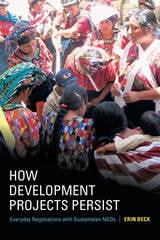
How Development Projects Persist
Everyday Negotiations with Guatemalan NGOsErin Beck
Duke University Press, 2017
Implementing Inequality
The Invisible Labor of International DevelopmentRebecca Warne Peters
Rutgers University Press, 2020
In the Spirit of Alinsky
Community Organizing’s Fight to Strengthen DemocracyRobert T. Gannett Jr.
University of Illinois Press, 2026
As Gannett shows, the methods pioneered by legendary activist Saul Alinsky provide the means for channeling citizens’ anger and frustration into meaningful social change. Gannett weaves his personal journey as an “outside agitator” through in-depth studies of successful and unsuccessful campaigns. Gannett places financial sustainability, political independence, and a commitment to process as much as to purpose at the core of organizing. He also focuses on the importance of veterans mentoring the next generation to meet the challenges of the future.
Hard-headed but hopeful, In the Spirit of Alinsky distills decades of on-the-ground experience into a guide for effective radical action.
Indigenous Development in the Andes
Culture, Power, and TransnationalismRobert Andolina, Nina Laurie, and Sarah A. Radcliffe
Duke University Press, 2009
The authors argue that this reconfiguration of development policy and practice permits Ecuadorian and Bolivian indigenous groups to renegotiate their relationship to development as subjects who contribute and participate. Yet it also recasts indigenous peoples and their cultures as objects of intervention and largely fails to address fundamental concerns of indigenous movements, including racism, national inequalities, and international dependencies. Andean indigenous peoples are less marginalized, but they face ongoing dilemmas of identity and agency as their fields of action cross national boundaries and overlap with powerful institutions. Focusing on the encounters of indigenous peoples with international development as they negotiate issues related to land, water, professionalization, and gender, Indigenous Development in the Andes offers a comprehensive analysis of the diverse consequences of neoliberal development, and it underscores crucial questions about globalization, governance, cultural identity, and social movements.
International Organizations and Research Methods
An IntroductionFanny Badache, Leah R. Kimber and Lucile Maertens, Editors
University of Michigan Press, 2023
Scholars have studied international organizations (IOs) in many disciplines, thus generating important theoretical developments. Yet a proper assessment and a broad discussion of the methods used to research these organizations are lacking. Which methods are being used to study IOs and in what ways? Do we need a specific methodology applied to the case of IOs? What are the concrete methodological challenges when doing research on IOs? International Organizations and Research Methods: An Introduction compiles an inventory of the methods developed in the study of IOs under the five headings of Observing, Interviewing, Documenting, Measuring, and Combining. It does not reconcile diverging views on the purpose and meaning of IO scholarship, but creates a space for scholars and students embedded in different academic traditions to reflect on methodological choices and the way they impact knowledge production on IOs.
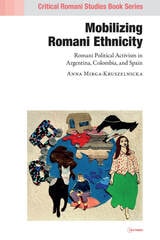
Mobilizing Romani Ethnicity
Romani Political Activism in Argentina, Colombia and SpainAnna Mirga-Kruszelnicka
Central European University Press, 2022
The Roma issue is generally treated as a European matter. Indeed, the Roma are the largest European minority—their presence outside of Europe is a result of various waves of migration over the past four hundred years. Likewise, the stereotypes associated with the Roma—the problematized, stigmatized status of a “Gypsy” as well as the historical and contemporary manifestations of antigypsyism—are also of European origin. This book claims, however, that the perception of Roma being strictly a European issue is flawed, and that re-connecting the Roma issue globally represents an important learning experience and an added value.
The book offers a critical exploration of Romani political activism in Colombia and Argentina, and compares it to that in Spain, narrated from the intimate perspective of Romani actors themselves. By outlining parallel lineages of Romani activism in three countries and on two continents, the author arrives at broad conclusions regarding the nature of ethnic mobilization. Mirga-Kruszelnicka proposes a new synergetic conceptualization of this multidirectional concept as an interplay between political opportunities, mobilizing structures, and frames of identity.
Contributing to the vivid debate about the relationship between the researcher and the researched, the book also includes an original discussion of the positionality of scholars of Romani background.
Organizing Democracy
How International Organizations Assist New DemocraciesPaul Poast and Johannes Urpelainen
University of Chicago Press, 2018
With Organizing Democracy, Paul Poast and Johannes Urpelainen argue that leaders of transitional democracies often have to draw on the support of international organizations to provide the public goods and expertise needed to consolidate democratic rule. Looking at the Baltic states’ accession to NATO, Poast and Urpelainen provide a compelling and statistically rigorous account of the sorts of support transitional democracies draw from international institutions. They also show that, in many cases, the leaders of new democracies must actually create new international organizations to better serve their needs, since they may not qualify for help from existing ones.
Power to the Partners
Organizational Coalitions in Social Justice AdvocacyMaraam A. Dwidar
University of Chicago Press, 2025
A vital examination of how social and economic justice organizations overcome resource disadvantages and build political power.
Why do some coalitions triumph while others fall short? In Power to the Partners, Maraam A. Dwidar documents the vital role of social and economic justice organizations in American politics and explores the process by which they strategically build partnerships to advance more effective and equitable advocacy. Using original data tracking the collaboration patterns of more than twenty thousand nationally active advocacy organizations, Dwidar evaluates the micro- and macro-level conditions surrounding these groups’ successful efforts to collectively shape public policy.
Power to the Partners reveals that while organizational advocates for social and economic justice are at a disadvantage in the American lobbying landscape—financially, tactically, and politically—coalition work can help ameliorate these disparities. By building and sustaining coalitions with structures and memberships that facilitate clarity, learning, and diverse perspectives, these advocates can successfully—and uniquely—make their mark on American public policy. Dwidar’s work offers critical insights for scholars and practitioners alike, from groundbreaking academic findings to evidence-based lessons for political organizers.
Saving the World
A Brief History of Communication for Devleopment and Social ChangeEmile G. McAnany
University of Illinois Press, 2012

The Distinction of Peace
A Social Analysis of PeacebuildingCatherine Goetze
University of Michigan Press, 2017
Goetze describes how the peacebuilding field came into being, how it defines who belongs to it and who does not, and what kind of group culture it has generated. Using an innovative methodology, she investigates the motivations of individuals who become peacebuilders, their professional trajectories and networks, and the “good peacebuilder” as an ideal. For many, working in peacebuilding in various ways—as an aid worker on the ground, as a lawyer at the United Nations, or as an academic in a think tank—has become not merely a livelihood, but also a form of participation in world politics. As a field, peacebuilding has developed techniques for incorporating and training new members, yet its internal politics also create the conditions of exclusion that often result in practical failures of the peacebuilding enterprise.
By providing a critical account of the social mechanisms that make up the peacebuilding field, Goetze offers deep insights into the workings of Western domination and global inequalities.
The Global Shelter Imaginary
Ikea Humanitarianism and Rightless ReliefAndrew Herscher
University of Minnesota Press, 2021
Examines how the humanitarian order advances a message of moral triumph and care while abandoning the dispossessed
Prompted by a growing number of refugees and other displaced people, intersections of design and humanitarianism are proliferating. From the IKEA Foundation’s Better Shelter to Airbnb’s Open Homes program, the consumer economy has engaged the global refugee crisis with seemingly new tactics that normalize an institutionally sanctioned politics of evasion. Exploring “the global shelter imaginary,” this book charts the ways shelter functions as a form of rightless relief that expels recognition of the rights of the displaced and advances political paradoxes of displacement itself.
The Good Project
Humanitarian Relief NGOs and the Fragmentation of ReasonMonika Krause
University of Chicago Press, 2014
In The Good Project, Monika Krause dives into the intricacies of the decision-making process at NGOs and uncovers a basic truth: It may be the case that relief agencies try to help people but, in practical terms, the main focus of their work is to produce projects. Agencies sell projects to key institutional donors, and in the process the project and its beneficiaries become commodities. In an effort to guarantee a successful project, organizations are incentivized to help those who are easy to help, while those who are hardest to help often receive no assistance at all. The poorest of the world are made to compete against each other to become projects—and in exchange they offer legitimacy to aid agencies and donor governments. Sure to be controversial, The Good Project offers a provocative new perspective on how NGOs succeed and fail on a local and global level.
The International Monetary Fund and Latin America
The Argentine Puzzle in ContextClaudia Kedar
Temple University Press, 2013
The International Monetary Fund (IMF) has played a critical role in the global economy since the postwar era. But, claims Claudia Kedar, behind the strictly economic aspects of the IMF’s intervention, there are influential interactions between IMF technocrats and local economists—even when countries are not borrowing money.
In The International Monetary Fund and Latin America, Kedar seeks to expose the motivations and constraints of the operations of both the IMF and borrowers. With access to never-before-seen archive materials, Kedar reveals both the routine and behind-the-scenes practices that have depicted International Monetary Fund–Latin American relations in general and the asymmetrical IMF-Argentina relations in particular.
Kedar also analyzes the “routine of dependency” that characterizes IMF-borrower relations with several Latin American countries such as Chile, Peru, and Brazil. The International Monetary Fund and Latin America shows how debtor countries have adopted IMF’s policies during past decades and why Latin American leaders today largely refrain from knocking at the IMF’s doors again.
The Third Sector
Community Organizations, NGOs, and NonprofitsMeghan Elizabeth Kallman and Terry Nichols Clark
University of Illinois Press, 2019
The Women of Katrina
How Gender, Race, and Class Matter in an American DisasterEmmanuel David
Vanderbilt University Press, 2012
Theorizing NGOs
States, Feminisms, and NeoliberalismVictoria Bernal and Inderpal Grewal, eds.
Duke University Press, 2014
Contributors. Sonia E. Alvarez, Victoria Bernal, LeeRay M. Costa, Inderpal Grewal, Laura Grünberg, Elissa Helms, Julie Hemment, Saida Hodžic, Lamia Karim, Sabine Lang, Lauren Leve, Kathleen O'Reilly, Aradhana Sharma
Unraveling of Civil Society
Peacebuilding, Health Crises, and Aid in Twenty-First-Century Guinea and Sierra LeoneMichelle Reddy
Ohio University Press, 2026
In recent years, the capacity of civil society to respond to crises has been increasingly constrained by rising authoritarianism. Yet in West Africa, where civil society has historically played a pivotal role in democratization, this trend reveals deeper structural challenges. Unraveling of Civil Society examines how international aid strategies emphasizing technical capacity and professionalization have inadvertently contributed to the politicization and fragmentation of civil society in Guinea and Sierra Leone.
Drawing on extensive fieldwork—including interviews with representatives of more than a hundred locally led organizations, analysis of 260 strategic plans, and collection of cross-national survey data—this book offers a rare longitudinal and comparative study of civil society in the region. It traces how donor-driven models have led organizations to become sector specific, mimic donor institutions, or align with political interests—ultimately reducing organizational diversity and weakening the social infrastructure necessary for collective action and crisis resilience.
The book situates these findings within broader debates on democratic backsliding, noting that three of the nine countries that transitioned to autocracy between 2021 and 2023—Guinea, Chad, and Mali—are in West Africa. Despite significant international investment, “coup culture” and unconstitutional power shifts have resurged, raising urgent questions about the effectiveness of aid and the role of civil society in sustaining democratic norms.
Combining comparative historical analysis with a mixed-methods approach, Unraveling of Civil Society challenges prevailing assumptions about capacity building and offers practical recommendations for democratizing local organizations from within. It advocates for participatory governance and funding mechanisms and engages with ongoing conversations around the localization and decolonization of aid in a shifting geopolitical landscape.
This book is essential reading for scholars of African studies, political science, development studies, and global civil society as well as for practitioners in crisis management and political reform.
Urban Dwellings, Haitian Citizenships
Housing, Memory, and Daily Life in HaitiVincent Joos
Rutgers University Press, 2022
Village Ties
Women, NGOs, and Informal Institutions in Rural BangladeshNayma Qayum
Rutgers University Press, 2022

When Friends Come From Afar
The Remarkable Story of Bernie Wong and Chicago's Chinese American Service LeagueSusan Blumberg-Kason
University of Illinois Press, 2024
At once intimate and broad in scope, When Friends Come from Afar uses one woman’s life to illuminate a bedrock Chicago institution.
Whose Agency
The Politics and Practice of Kenya's HIV-Prevention NGOsMegan Hershey
University of Wisconsin Press, 2019
By focusing on one particular type of NGO—those organized to help prevent the spread and transmission of HIV in Kenya—Megan Hershey interrogates the ways these organizations achieve (or fail to achieve) their planned outcomes. Along the way, she examines the slippery slope that is often used to define “success” based on meeting donor-set goals versus locally identified needs. She also explores the complex network of bureaucratic requirements at both the national and local levels that affect the delicate relationships NGOs have with the state. Drawing on extensive, original quantitative and qualitative research, Whose Agency serves as a much-needed case study for understanding the strengths and shortcomings of participatory development and community engagement.