Results by title

2 books match the query 'National characteristcs'
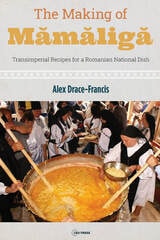
cover of The Making of Mamaliga: Transimperial Recipes for a Romanian National Dish

The Making of Mamaliga

Transimperial Recipes for a Romanian National Dish

Alex Drace-Francis

Central European University Press, 2022

Mămăligă, maize porridge or polenta, is a universally consumed dish in Romania and a prominent national symbol. But its unusual history has rarely been told. Alex Drace-Francis surveys the arrival and spread of maize cultivation in Romanian lands from Ottoman times to the eve of the First World War, and also the image of mămăligă in art and popular culture. Drawing on a rich array of sources and with many new findings, Drace-Francis shows how the making of mămăligă has been shaped by global economic forces and overlapping imperial systems of war and trade. 

The story of maize and mămăligă provides an accessible way to revisit many key questions of Romanian and broader regional history. More generally, the book links the history of production, consumption, and representation. Analyses of recipes, literary and popular depictions, and key vocabulary complete the work.
[more]
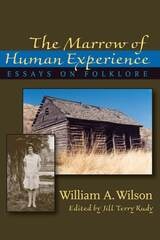
cover of The Marrow of Human Experience: Essays on Folklore by William A. Wilson

The Marrow of Human Experience

Essays on Folklore by William A. Wilson

edited by William A. Wilson and Jill Terry Rudy

Utah State University Press, 2006

Composed over several decades, the essays here are remarkably fresh and relevant. They offer instruction for the student just beginning the study of folklore as well as repeated value for the many established scholars who continue to wrestle with issues that Wilson has addressed. As his work has long offered insight on critical mattersn--nationalism, genre, belief, the relationship of folklore to other disciplines in the humanities and arts, the currency of legend, the significance of humor as a cultural expression, and so forth--so his recent writing, in its reflexive approach to narrative and storytelling, illuminates today's paradigms. Its notable autobiographical dimension, long an element of Wilson's work, employs family and local lore to draw conclusions of more universal significance. Another way to think of it is that newer folklorists are catching up with Wilson and what he has been about for some time. As a body, Wilson's essays develop related topics and connected themes. This collection organizes them in three coherent parts. The first examines the importance of folklore. What it is and its value in various contexts. Part two, drawing especially on the experience of Finland, considers the role of folklore in national identity, including both how it helps define and sustain identity and the less savory ways it may be used for the sake of nationalistic ideology. Part three, based in large part on Wilson's extensive work in Mormon folklore, which is the most important in that area since that of Austin and Alta Fife, looks at religious cultural expressions and outsider perceptions of them and, again, at how identity is shaped, by religious belief, experience, and participation; by the stories about them; and by the many other expressive parts of life encountered daily in a culture. Each essay is introduced by a well-known folklorist who discusses the influence of Wilson's scholarship. These include Richard Bauman, Margaret Brady, Simon Bronner, Elliott Oring, Henry Glassie, David Hufford, Michael Owen Jones, and Beverly Stoeltje.
[more]