Results by title
6 books match the query 'National characteristics, Latin American'

Blacks, Coloureds and National Identity in Nineteenth-century Latin America
Edited by Nancy Priscilla Naro
University of London Press, 2003
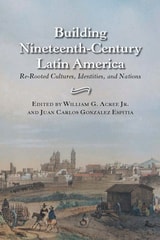
Building Nineteenth-Century Latin America
Re-Rooted Cultures, Identities, and NationsWilliam Garrett Acree
Vanderbilt University Press, 2009
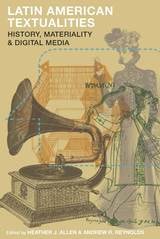
Latin American Textualities
History, Materiality, and Digital MediaEdited by Heather J. Allen and Andrew R. Reynolds
University of Arizona Press, 2018
Latin American Textualities is a wide-ranging, interdisciplinary look at textual history, textual artifacts, and digital textualities across Latin America from the colonial era to the present. Editors Heather J. Allen and Andrew R. Reynolds gather a wide range of scholars to investigate the region’s textual scholarship. Contributors offer engaging examples of not just artifacts but also the contexts in which the texts are used. Topics include Guamán Poma’s library, the effect of sound recordings on writing in Argentina, Sudamericana Publishing House’s contribution to the Latin American literary boom, and Argentine science fiction. Latin American Textualities provides new paths to reading Latin American history, culture, and literatures.
Contributors:
Heather J. Allen
Catalina Andrango-Walker
Sam Carter
Sara Castro-Klarén
Edward King
Rebecca Kosick
Silvia Kurlat Ares
Walther Maradiegue
Clayton McCarl
José Enrique Navarro
Andrew R. Reynolds
George Antony Thomas
Zac Zimmer
The Impure Imagination
Toward A Critical Hybridity In Latin American WritingJoshua Lund
University of Minnesota Press, 2006
In this pathbreaking work, Joshua Lund offers a thoughtful critique of hybridity by reading contemporary theories of cultural mixing against their historical precursors. The Impure Imagination is the first book to systematically analyze today’s dominant theories in relation to earlier, narrative manifestations of hybridity in Latin American writing, with a particular focus on Mexico and Brazil.
Generally understood as the impurification of standard or canonized forms, hybridity has historically been embraced as a basic marker of Latin American regional identity and as a strategy of resistance to cultural imperialism. Lund contends that Latin American theories and narratives of hybridity have been, and continue to be, underwritten by a structure of colonial power. Here he provides an informed critique and cogent investigation of this connection, its cultural effects, and its political implications. Using the emergence of hybridity as an analytical frame for thinking about culture in the Americas, Lund examines the contributions of influential thinkers, including Néstor García Canclini, Homi Bhabha, Jacques Derrida, Giorgio Agamben, Jorge Luis Borges, Antonio Candido, and many others.
Distinguished by its philosophical grounding and underpinned with case studies, The Impure Imagination employs postcolonial theory and theories of race as it explores Latin American history and culture. The result is an original and interrogative study of hybridity that exposes surprising—and unsettling—similarities with nationalistic discourses.
Joshua Lund is assistant professor of Spanish at the University of Pittsburgh. His essays have appeared in A Contracorriente, Race & Class, Cultural Critique, and the Journal of Latin American Cultural Studies.
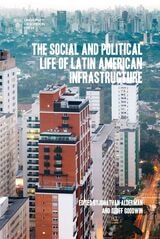
The Social and Political Life of Latin American Infrastructures
Edited by Jonathan Alderman and Geoff Goodwin
University of London Press, 2022
From roads, railways, statues, and bridges, infrastructure provides a unique lens through which to view our own national histories and societies. Serving as an important conduit between individuals and the state, infrastructure can help mediate citizenship, reshape social relations between people both within and across communities, and has the capacity to underpin—or indeed, undermine—nation-building.
Over the last century, infrastructure has transformed Latin America. Roads, railways, and airports have increased connectivity between spaces, peoples, and markets. Cables, switches, and tunnels have connected households to electricity grids, water systems, and digital technology. Public buildings, parks, and monuments have reshaped towns and cities and emerged as sites to construct and contest citizenship. Infrastructure has been welcomed and celebrated in Latin America, but it has also been resisted and destroyed.
Based on recent, original research, the essays in this collection cover a range of pressing infrastructural considerations, including sustainability, water conflict, extractive mining, and public housing in Brazil, Chile, Cuba, Colombia, Ecuador, and Mexico to better understand how infrastructure has reshaped Latin America over the past century.

Triangulations
Narrative Strategies for Navigating Latino IdentityDavid J. Vázquez
University of Minnesota Press, 2011
Just as mariners use triangulation, mapping an imaginary triangle between two known positions and an unknown location, so, David J. Vázquez contends, Latino authors in late twentieth-century America employ the coordinates of familiar ideas of self to find their way to new, complex identities. Through this metaphor, Vázquez reveals how Latino autobiographical texts, written after the rise of cultural nationalism in the 1960s, challenge mainstream notions of individual identity and national belonging in the United States.
In a traditional autobiographical work, the protagonist frequently opts out of his or her community. In the works that Vázquez analyzes in Triangulations, protagonists instead opt in to collective groups—often for the express political purpose of redefining that collective. Reading texts by authors such as Ernesto Galarza, Jesús Colón, Piri Thomas, Oscar “Zeta” Acosta, Judith Ortiz Cofer, John Rechy, Julia Alvarez, and Sandra Cisneros, Vázquez engages debates about the relationship between literature and social movements, the role of cultural nationalism in projects for social justice, the gender and sexual problematics of 1960s cultural nationalist groups, the possibilities for interethnic coalitions, and the interpretation of autobiography. In the process, Triangulations considers the potential for cultural nationalism as a productive force for aggrieved communities of color in their struggles for equality.