Results by title

7 books match the query 'Nationality'
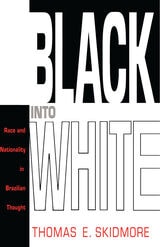
cover of Black into White: Race and Nationality in Brazilian Thought

Black into White

Race and Nationality in Brazilian Thought

Thomas E. Skidmore

Duke University Press, 1993
Published to wide acclaim in 1974, Thomas E. Skidmore's intellectual history of Brazilian racial ideology has become a classic in the field. Available for the first time in paperback, this edition has been updated to include a new preface and bibliography that surveys recent scholarship in the field. Black into White is a broad-ranging study of what the leading Brazilian intellectuals thought and propounded about race relations between 1870 and 1930. In an effort to reconcile social realities with the doctrines of scientific racism, the Brazilian ideal of "whitening"—the theory that the Brazilian population was becoming whiter as race mixing continued—was used to justify the recruiting of European immigrants and to falsely claim that Brazil had harmoniously combined a multiracial society of Europeans, Africans, and indigenous peoples.
[more]
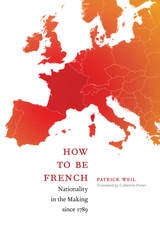
cover of How to Be French: Nationality in the Making since 1789

How to Be French

Nationality in the Making since 1789

Patrick Weil

Duke University Press, 2008

How to Be French is a magisterial history of French nationality law from 1789 to the present, written by Patrick Weil, one of France’s foremost historians. First published in France in 2002, it is filled with captivating human dramas, with legal professionals, and with statesmen including La Fayette, Napoleon, Clemenceau, de Gaulle, and Chirac. France has long pioneered nationality policies. It was France that first made the parent’s nationality the child’s birthright, regardless of whether the child is born on national soil, and France has changed its nationality laws more often and more significantly than any other modern democratic nation. Focusing on the political and legal confrontations that policies governing French nationality have continually evoked and the laws that have resulted, Weil teases out the rationales of lawmakers and jurists. In so doing, he definitively separates nationality from national identity. He demonstrates that nationality laws are written not to realize lofty conceptions of the nation but to address specific issues such as the autonomy of the individual in relation to the state or a sudden decline in population.

Throughout How to Be French, Weil compares French laws to those of other countries, including the United States, Great Britain, and Germany, showing how France both borrowed from and influenced other nations’ legislation. Examining moments when a racist approach to nationality policy held sway, Weil brings to light the Vichy regime’s denaturalization of thousands of citizens, primarily Jews and anti-fascist exiles, and late-twentieth-century efforts to deny North African immigrants and their children access to French nationality. He also reveals stark gender inequities in nationality policy, including the fact that until 1927 French women lost their citizenship by marrying foreign men. More than the first complete, systematic study of the evolution of French nationality policy, How to be French is a major contribution to the broader study of nationality.

[more]
cover of Muslim Communities Reemerge: Historical Perspectives on Nationality, Politics, and Opposition in the Former Soviet Union and Yugoslavia

Muslim Communities Reemerge

Historical Perspectives on Nationality, Politics, and Opposition in the Former Soviet Union and Yugoslavia

Andreas Kappeler, Gerhard Simon, and Georg Brunner, eds.

Duke University Press, 1994

The terrible events afflicting Muslims in Bosnia-Herzegovina and Tajikistan fill the news, commanding the world's attention. This timely volume offers rare insight into the background of these catastrophic conflicts. First published in German on the eve of the breakup of the Yugoslav and Soviet republics, it is one of the few books in any language to analyze, in detail and in depth, the historical and contemporary situation of Muslims in former communist states and thus clarifies the sources, development, and implications of the events that dominate today's foreign news.

In fourteen chapters and an updated introduction, European and North American specialists examine the recent evolution of Islamic expression and practice in these former Communist regions, as well as its political significance within officially atheistic regimes. Representing a wide range of disciplines and perspectives, the authors detail how the modern ethno-religious situation developed and matured in hostile circumstances, the degree of latitude the local Muslims achieved in religious expression, and what prospect the future seemed to offer just before the breakup of the Soviet Union and the Federal Republic of Yugoslavia. Overall, the book provides a thorough analysis of the coincidence and tension between ethnic and religious identity in two countries officially devoted to the separation of ethnic groups in domestic cultural arrangements but not in the social or political realm.

Contributors. Edward Allworth, Hans Bräker, Marie Broxup, Georg Brunner, Bert G. Fragner, Uwe Halbach, Wolfgang Höpken, Andreas Kappeler, Edward J. Lazzerini, Richard Lorenz, Alexandre Popovi´c, Sabrina Petra Ramet, Azade-Ayse Rorlich, Gerhard Simon, Tadeusz Swietochowski
[more]
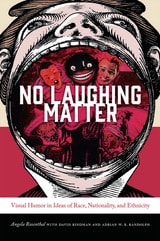
cover of No Laughing Matter: Visual Humor in Ideas of Race, Nationality, and Ethnicity

No Laughing Matter

Visual Humor in Ideas of Race, Nationality, and Ethnicity

Edited by Angela Rosenthal, David Bindman, and Adrian W. B. Randolph

Dartmouth College Press, 2015

In the wake of the Charlie Hebdo attacks, this collection—which gathers scholars in the fields of race, ethnicity, and humor—seems especially urgent. Inspired by Denmark’s Muhammad cartoons controversy, the contributors inquire into the role that racial and ethnic stereotypes play in visual humor and the thin line that separates broad characterization as a source of humor from its power to shock or exploit. The authors investigate the ways in which humor is used to demean or give identity to racial, national, or ethnic groups and explore how humor works differently in different media, such as cartoons, photographs, film, video, television, and physical performance. This is a timely and necessary study that will appeal to scholars across disciplines.
[more]
cover of No Safe Spaces: Re-casting Race, Ethnicity, and Nationality in American Theater

No Safe Spaces

Re-casting Race, Ethnicity, and Nationality in American Theater

Angela C. Pao

University of Michigan Press, 2010

"No Safe Spaces opens up a conversation beyond narrow polemics . . . Although cross-racial casting has been the topic of heated discussion, little sustained scholarship addresses both the historical precedents and theoretical dimensions. Pao illustrates the tensions and contradictions inherent not only in stage representations, but also in the performance of race in everyday life. A wonderful book whose potential readership goes well beyond theater and performance scholars."
---Josephine Lee, University of Minnesota

"Non-traditional casting, increasingly practiced in American theater, is both deeply connected to our country's racial self-image(s) and woefully under-theorized. Pao takes on the practice in its entirety to disentangle the various strands of this vitally important issue."
---Karen Shimakawa, New York University

No Safe Spaces looks at one of the most radical and enduring changes introduced during the Civil Rights era---multiracial and cross-racial casting practices in American theater. The move to cast Latino/a, African American, and Asian American actors in classic stage works by and about white Europeans and Americans is viewed as both social and political gesture and artistic innovation. Nontraditionally cast productions are shown to have participated in the national dialogue about race relations and ethnic identity and served as a source of renewed creativity for the staging of the canonical repertory.

Multiracial casting is explored first through its history, then through its artistic, political, and pragmatic dimensions. Next, the book focuses on case studies from the dominant genres of contemporary American theater: classical tragedy and comedy, modern domestic drama, antirealist drama, and the Broadway musical, using a broad array of archival source materials to enhance and illuminate its arguments.

Angela C. Pao is Associate Professor of Comparative Literature at Indiana University.

A volume in the series Theater: Theory/Text/Performance
[more]
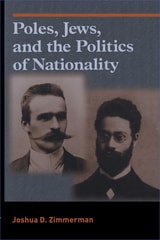
cover of Poles, Jews, and the Politics of Nationality: The Bund and the Polish Socialist Party in Late Tsarist Russia, 1892–1914

Poles, Jews, and the Politics of Nationality

The Bund and the Polish Socialist Party in Late Tsarist Russia, 1892–1914

Joshua D. Zimmerman

University of Wisconsin Press, 2004

The Jewish experience on Polish lands is often viewed backwards through the lens of the Holocaust and the ethnic rivalries that escalated in the period between the two world wars. Critical to the history of Polish-Jewish relations, however, is the period prior to World War I when the emergence of mass electoral politics in Czarist Russia led to the consolidation of modern political parties. Using sources published in Polish, Yiddish, Hebrew, and Russian, Joshua D. Zimmerman has compiled a full-length English-language study of the relations between the two dominant progressive movements in Russian Poland. He examines the Polish Socialist Party (PPS), which sought social emancipation and equal civil rights for minority nationalities, including Jews, under a democratic Polish republic, and the Jewish Labor Bund, which declared that Jews were a nation distinct from Poles and Russians and advocated cultural autonomy. By 1905, the PPS abandoned its call for Jewish assimilation, and recognized Jews as a separate nationality. Zimmerman demonstrates persuasively that Polish history in Czarist Russia cannot be fully understood without studying the Jewish influence and that Jewish history was equally infused with the Polish influence.
[more]
cover of Reconciling Rwanda: Unity, Nationality and State Control

Reconciling Rwanda

Unity, Nationality and State Control

Jennifer Melvin

University of London Press, 2015

In July 1994, the Rwandan Patriotic Front (RPF) set out to stabilise and secure Rwanda, a country decimated by genocide. This mandate was later extended to include the herculean task of promoting unity and reconciliation to a population torn apart by violence. More than two decades later, these goals appear to have been achieved. Beneath the veneer of reconciliation lies myriad programmes and legislation that do more than seek to unite the population - they keep the RPF in power. In Reconciling Rwanda: Unity, Nationality and State Control, Jennifer Melvin analyses the highly controversial RPF and its vision of reconciliation to determine who truly benefits from the construction of the new post-genocide Rwanda.
[more]