Results by title
21 books match the query 'Recollections'
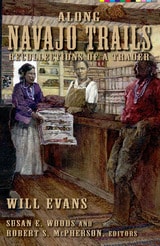
Along Navajo Trails
Recollections of a Trader 1898-1948Will Evans edited by Susan E. Woods and Robert McPherson
Utah State University Press, 2005

Cardinal Memories
Recollections from Baseball's Greatest FansEdited & Intro by Tina Wright
University of Missouri Press, 2000
Heralded by local and national media as perhaps baseball's most devoted followers, the lovers of St. Louis's legendary Redbirds have a special bond with their team. Cardinal Memories: Recollections from Baseball's Greatest Fans celebrates this relationship by focusing on the people in the stands. A collection of essays gathered from around the world, from St. Louis to Hong Kong, Cardinal Memories forms a history of the team the way it is best remembered—through the eyes and hearts of its fans.
By turns funny and poignant, these stories chronicle Cardinal teams and players from the Gashouse Gang to the Swifties, from El Birdos to Whiteyball and Big Mac. The bond between parent and child, the generosity of numerous players, and the power of a single game to unite thousands of people are only a few of the themes that run throughout this remarkable collection. Whether it's the tale of young fans clamoring at a bus stop for a glimpse of Stan the Man, a surprise gift from the "Mad Hungarian," or Mark McGwire's "71st" home run, these vignettes capture the joy, heartbreak, and passion of being a Cardinal fan.
Focusing on the game's emotional appeal, Cardinal Memories is about more than baseball—its evocative tales capture the game's deeper meanings and offer readers an affectionate slice of Americana. Transcending Cardinal country, these touching stories will appeal to baseball fans and sports enthusiasts everywhere.

From the Blue Windows
Recollections of Life in Queenstown, Singapore, in the 1960s and 1970sTan Kok Yang
National University of Singapore Press, 2013
From the Blue Windows is a collection of Tan Kok Yang's memories of growing up in Queenstown back when the tallest residential building there was fourteen storeys, the Alexandra Canal flooded regularly, and wayang shows were a regular feature on Mei Ling Street. He stayed in Princess Estate, an area that was colloquially known as "the Blue Windows" because of its unique blue glass louvred windows.
With nostalgia and a sense of loss, this memoir is a personal tribute to and celebration of Queenstown and a simple but fulfilling way of life that has all but vanished from modern Singapore.
Goodbye to Poplarhaven
Recollections of a Utah BoyhoodEdward A. Geary
University of Utah Press, 2017
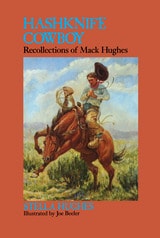
Hashknife Cowboy
Recollections of Mack HughesStella Hughes; Illustrated by Joe Beeler
University of Arizona Press, 1984
Stella Hughes, author of the best-selling Chuck Wagon Cookin' and a cowhand in her own right, has compiled from her husband's reminiscences an authentic look both at Arizona history and at cowboying as it really was. Illustrated by Joe Beeler, founding member of the Cowboy Artists of America.
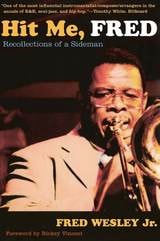
Hit Me, Fred
Recollections of a SidemanFred Wesley Jr.
Duke University Press, 2005
Wesley’s distinctive sound reverberates through rap and hip-hop music today. In Hit Me, Fred, he recalls the many musicians whose influence he absorbed, beginning with his grandmother and father—both music teachers—and including mentors in his southern Alabama hometown and members of the Army band. In addition to the skills he developed working with James Brown, George Clinton, Bootsy Collins, and the many talented musicians in their milieu, Wesley describes the evolution of his trombone playing through stints with the Ike and Tina Turner Revue, Hank Ballard, and Count Basie’s band. He also recounts his education in the music business, particularly through his work in Los Angeles recording sessions.
Wesley is a virtuoso storyteller, whether he's describing the electric rush of performances when the whole band is in the groove, the difficulties of trying to make a living as a rhythm and blues musician, or the frustrations often felt by sidemen. Hit Me, Fred is Wesley’s story of music-making in all its grit and glory.
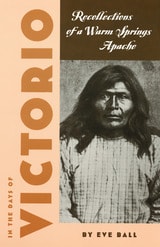
In the Days of Victorio
Recollections of a Warm Springs ApacheEve Ball; Narrated by James Kaywaykla
University of Arizona Press, 1970
"This volume contains a great deal of interesting information."—Journal of the West
"The Apache point of view [is] presented with great clarity."—Books of the Southwest
"A valuable addition to the southwestern frontier shelf and long will be drawn upon and used."—Journal of Arizona History
"A genuine contribution to the story of the Apache wars, and a very readable book as well."—Westerners Brand Book
"Shining through every page is the unquenchable spirit that was the Apache. Inured, indeed trained, to suffering, Apaches stood strong beside Victorio, Nana, and finally Geronimo in a vain attempt to maintain those things they held more dear than life itself—freedom, homeland, dignity as human beings. A warm and vital people, the Apaches had, and have, a great deal to offer."—Arizona and the West

Nothing Fancy
Recipes and Recollections of Soul-Satisfying FoodBy Diana Kennedy
University of Texas Press, 2016
Featuring new and revised recipes, photos, and bêtes noires, this culminating book of an illustrious career presents the favorite dishes and personal stories of the world’s foremost authority on traditional Mexican cooking and one of its most-celebrated food writers
Diana Kennedy is the world’s preeminent authority on authentic Mexican cooking and one of its best-known food writers. Renowned for her uncompromising insistence on using the correct local ingredients and preparation techniques, she has taught generations of cooks how to prepare traditional dishes from the villages of Mexico, and in doing so, has documented and helped preserve the country’s amazingly diverse and rich foodways. Kennedy’s own meals for guests are often Mexican, but she also indulges herself and close friends with the nostalgic foods in Nothing Fancy.
This acclaimed cookbook—now expanded with new and revised recipes, additional commentary, photos, and reminiscences—reveals Kennedy’s passion for simpler, soul-satisfying food, from the favorite dishes of her British childhood (including a technique for making clotted cream that actually works) to rare recipes from Ukraine, Norway, France, and other outposts. In her inimitable style, Kennedy discusses her addictions—everything from good butter, cream, and lard to cold-smoked salmon, Seville orange marmalade, black truffle shavings, escamoles (ant eggs), and proper croissants—as well as her bêtes noires—kosher salt, nonfat dairy products, cassia “cinnamon,” botoxed turkeys, and nonstick pans and baking sprays, among them. And look out for the ire she unleashes on “cookbookese,” genetically modified foods, plastic, and unecological kitchen practices! The culminating work of an illustrious career, Nothing Fancy is an irreplaceable opportunity to spend time in the kitchen with Diana Kennedy, listening to the stories she has collected and making the food she has loved over a long lifetime of cooking.
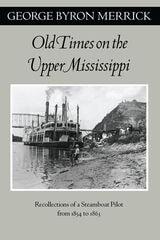
Old Times on the Upper Mississippi
Recollections of a Steamboat Pilot from 1854 to 1863George Byron Merrick
University of Minnesota Press, 2001
A long-awaited new edition of the steamboating classic.
George Byron Merrick chronicles the entire panorama of steamboat life he experienced in the mid-1800s, where he started as a cabin boy and worked up to cub pilot on the mighty Mississippi. Originally published in 1909, Merrick’s narrative matches lively stories about gamblers, shipwrecks, and steamboat races with rich descriptions of river life and steamboat operations.
Fesler-Lampert Minnesota Heritage Series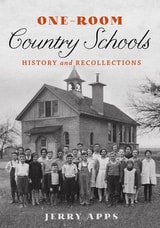
One-Room Country Schools
History and RecollectionsJerry Apps
Wisconsin Historical Society Press, 2015
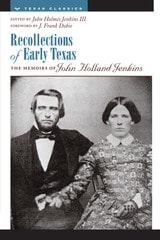
Recollections of Early Texas
Memoirs of John Holland JenkinsEdited by John Holmes Jenkins III
University of Texas Press, 1958
“[These reminiscences] light up for whoever will read the earliest days of early English-speaking Texas.” —J. Frank Dobie, from the foreword
A firsthand account of pioneer life in east Texas.
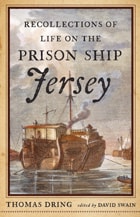
Recollections of Life on the Prison Ship Jersey
Thomas Dring
Westholme Publishing, 2010
“Among the many events which took place during the Revolutionary War from its commencement to its termination [are] the cruelties inflicted upon that unfortunate class of men who had the misfortune to be numbered among the prisoners [of the British] and more particularly those whom the dreadful chance of war had placed on board their prison ships at New York.” So begins the remarkable narrative of Thomas Dring. In 1824, Dring was an aging man of 65, retired in his native state of Rhode Island. Forty-two years before, he, like thousands of other young men, had been caught up in the American cause. In 1782, he had been captured by the British and sentenced to the infamous prison ship Jersey, a demasted hulk anchored in the East River off New York City. It is estimated that more than 11,000 men perished on the British prison ships over the course of the war, and their bones regularly washed up on the shore long after hostilities ceased. Dring survived to tell the tale, and in 1824, he decided to do just that. He was motivated partly because the fate of the prisoners was beginning to be doubted, that their hardships were thought to have been grossly exaggerated, and even that the entire experience had never occurred.
This book publishes for the first time the complete text of Dring’s handwritten manuscript, a major primary-source document, in which he describes the horrible conditions, treatment by guards, and experiences that he and others endured during captivity. Recollections of Life on the Prison Ship Jersey is a plea not to forget but instead to remember the inhumanity of the captors and the sacrifices of the captives—a message that continues to resonate today. Editor David Swain has provided an introductory essay and extensive notes that contain background information and historical documentation to accompany and illuminate the original manuscript.
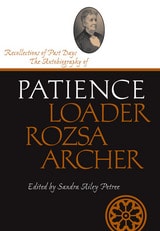
Recollections of Past Days
The Autobiography of Patience Loader Rozsa Archeredited by Sandra Ailey Petree
Utah State University Press, 2006
For visitors to the Martin's Cove historic site in Wyoming, Patience Loader has become an icon of the disastrous winter entrapment of the Martin and Willie handcart companies. Her record of those events is important, but there is much else of interest in her autobiography. In fact, it is a bit unusual that someone such as her would have left such an engaging record of her life.
The daughter of an English gardener, Patience Loader became a boarding house servant, domestic maid, and seamstress. Converted to Mormonism, she shipped with her parents to America. They joined the ill-fated Martin company, which because of poor planning and a late start west, was caught poorly prepared by severe high plains snowstorms in October and November 1856. The combined fatalities of the Martin and Willie companies made this the worst disaster in the history of overland travel. Patience = s father was one of those who died. After reaching Utah, Patience took the unusual step for a Mormon of marrying a soldier, John Rozsa, stationed at Camp Floyd. The troops there had made up the Utah Expedition, sent to ensure federal authority over the Mormons. Rozsa was a Hungarian immigrant and Mormon convert. When the Utah troops were recalled for the Civil War, Patience accompanied her husband, as an army laundress, to Washington, D.C., running a boarding house while Rozsa fought. After the war, he died at Fort Leavenworth of consumption, and Patience returned alone to Utah, where she became a cook at a mining camp in American Fork Canyon. Her autobiography ends there in 1872, though she lived till 1922.
Recollections of Things to Come
By Elena Garro
University of Texas Press, 1969
This remarkable first novel depicts life in the small Mexican town of Ixtepec during the grim days of the Revolution. The town tells its own story against a variegated background of political change, religious persecution, and social unrest. Elena Garro, who has also won a high reputation as a playwright, is a masterly storyteller. Although her plot is dramatically intense and suspenseful, the novel does not depend for its effectiveness on narrative continuity. It is a book of episodes, one that leaves the reader with a series of vivid impressions. The colors are bright, the smells pungent, the many characters clearly drawn in a few bold strokes. Octavio Paz, the distinguished poet and critic, has written that it "is truly an extraordinnary work, one of the most perfect creations in contemporary Latin American literature."
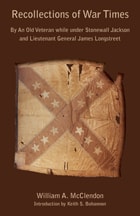
Recollections of War Times
By An Old Veteran while under Stonewall Jackson and Lieutenant General James LongstreetWilliam A. McClendon, with an introduction by Keith S. Bohannon
University of Alabama Press, 2010
"Gus" McClendon joined the 15th Alabama Infantry Regiment, and served in many of the Eastern Theater engagements. More than fifty years later, he sent down his reminiscences, still an unreconstructed Southern patriot, although able to look back with some amusement on his younger self.
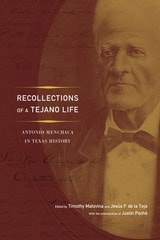
Recollections of a Tejano Life
Antonio Menchaca in Texas HistoryEdited by Timothy Matovina and Jesús F. de la Teja
University of Texas Press, 2013
San Antonio native, military veteran, merchant, and mayor pro tem José Antonio Menchaca (1800–1879) was one of only a few Tejano leaders to leave behind an extensive manuscript of recollections. Portions of the document were published in 1907, followed by a “corrected” edition in 1937, but the complete work could not be published without painstaking reconstruction. At last available in its entirety, Menchaca’s book of reminiscences captures the social life, people, and events that shaped the history of Texas’s tumultuous transformation during his lifetime. Highlighting not only Menchaca’s acclaimed military service but also his vigorous defense of Tejanos’ rights, dignity, and heritage, Recollections of a Tejano Life charts a remarkable legacy while incorporating scholarly commentary to separate fact from fiction.
Revealing how Tejanos perceived themselves and the revolutionary events that defined them, this wonderfully edited volume presents Menchaca’s remembrances of such diverse figures as Antonio López de Santa Anna, Jim Bowie, Davy Crockett, Sam Houston, General Adrián Woll, Comanche chief “Casamiro,” and Texas Ranger Jack Hays. Menchaca and his fellow Tejanos were actively engaged in local struggles as Mexico won her independence from Spain; later many joined the fight to establish the Republic of Texas, only to see it annexed to the United States nine years after the Battle of San Jacinto. This first-person account corrects important misconceptions and brings previously unspoken truths vividly to life.
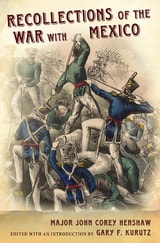
Recollections of the War with Mexico
Major John Corey Henshaw & Edited by Gary F. Kurutz
University of Missouri Press, 2008
Major John Henshaw, a dutiful regimental officer in the American invasion of Mexico, was one of only a handful of eyewitnesses to describe the two major theaters of that war from start to finish. But unlike most of his peers, he did not see himself as a conquering warrior and took pride in never having taken a life. He even wrote, “If I were alone, no earthly power could induce me to lend a helping hand in this base and infamous war.”
This book presents Henshaw’s recollections for the first time, covering all the action from the first skirmish in southern Texas to the collapse of Mexico City. As a member of the Seventh Infantry Regiment, this pugnacious line officer from New England served under both of the war’s principal generals, Zachary Taylor and Winfield Scott, and survived seven major battles. His writings constitute a virtual “minority opinion” report on the Mexican War.
Henshaw’s recollections include a rare and highly descriptive account of the siege of Fort Texas (later Fort Brown), plus rich new details of the storming of the Bishop’s Palace at Monterrey, the bombardment of Veracruz, the assault on Cerro Gordo, and the savage fighting outside the capital. His records of battles, marches, and maneuvers greatly augment what is already known about the campaign, but in addition to reporting daily occurrences and describing combat in graphic detail, Henshaw also reflected on the strategies and tactics—and what he saw as shortcomings—of officers on both sides.
Bitingly critical of those in command, of American volunteers, and of the war’s glory hounds, Henshaw admired the valor of ordinary soldiers on both sides of the fighting. And in the midst of the carnage, he also found time to describe Mexico’s cities and scenery in rhapsodic prose and express considerable empathy for its people. In addition to the “Recollections,” the volume includes vivid passages from letters Henshaw sent back to his wife, which supply additional details of the campaign. Editor Gary Kurutz provides an extensive biography of Henshaw, as well as comprehensive annotations to the text.
What Henshaw may have lacked as an unquestioning officer he more than made up for as an astute observer. Offering a decidedly different view of this war of American expansion, these writings with their balanced approach lend a fresh perspective among other primary sources and paint a startlingly honest picture of both Americans fighting abroad and those they fought.
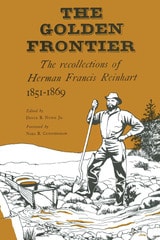
The Golden Frontier
The Recollections of Herman Francis Reinhart, 1851-1869By Herman Francis Reinhart
University of Texas Press, 1962
The gold rush was Herman Francis Reinhart's life for almost twenty years. From the summer of 1851 when, as a boy in his late teens, he traveled the Oregon trail to California, until a January day in 1869 when he climbed aboard an eastbound train at Evanston, Wyoming, he was a part of every gold discovery that stirred the West.
Reinhart dipped his pan in the streams of northern California and western Oregon—in Humbug Creek, Indian Creek, Rogue River, and Sucker Creek. He made the arduous and dangerous overland journey through Indian-occupied western Washington and British Columbia to find the Fraser River gold even more elusive than that farther south. With his teams and wagons he traversed all of the inland mine areas from Walla Walla to Fort Benton, from Boise Basin to South Pass City.
Reinhart's German common sense soon turned him from actual mining to other sources of income, but whatever his labor was, the mines were always the focal point of his activities. When he operated a bakery and saloon it was a business whose customers were miners, whose transactions were more likely to involve gold dust than legal tender, and whose gambling tables saw the exchange of mining fortunes. When he operated a whipsaw mill the timbers cut there were used by miners for sluices and cradles. For a while Reinhart farmed, but planting and harvesting suffered from interruption by frequent expeditions to the mines. And when he prospered as a teamster it was to and from the mining towns that he hauled passengers, supplies, and equipment.
The men who, like Herman Francis Reinhart, hopefully followed the golden frontier were not an articulate group, and the written records of their lives are few and fragmentary. But Reinhart, in his later years, recorded his experiences in five long, narrow, hardback ledgers. Many years after he died his daughter gave the ledgers to a friend in Chanute, Kansas—Nora Cunningham—who read the narrative, became fascinated by it, and typed it for publication.
Reinhart's account, written in a grammar and language all his own, is not a record of the historian's West, but of the West of the individual miner. The pages are filled with the details of day-to-day life of the miners—the subjects that interested them, the problems that plagued them, their fun and feuding, their frustrations and hopes. Edited by an authority of the history of the West, it is a book that will offer exciting reading to casual readers and scholars alike.
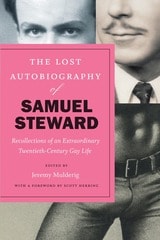
The Lost Autobiography of Samuel Steward
Recollections of an Extraordinary Twentieth-Century Gay LifeSamuel Steward
University of Chicago Press, 2018
The story of this life would undoubtedly have been a sensation if it had reached publication. But after finishing a 110,000-word draft in 1979, Steward lost interest in the project and subsequently published only a slim volume of selections from his manuscript.
In The Lost Autobiography of Samuel Steward, Jeremy Mulderig has integrated Steward’s truncated published text with the text of the original manuscript to create the first extended version of Steward’s autobiography to appear in print—the first sensational, fascinating, and ultimately enlightening story of his many lives told in his own words. The product of a rigorous line-by-line comparison of these two sources and a thoughtful editing of their contents, Mulderig’s thoroughly annotated text is more complete and coherent than either source alone while also remaining faithful to Steward’s style and voice, to his engaging self-deprecation and his droll sense of humor. Compellingly readable and often unexpectedly funny, this newly discovered story of a gay life full of wildly improbable—but nonetheless true—events is destined to become a landmark queer autobiography from the twentieth century.
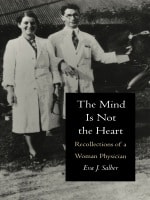
The Mind is Not the Heart
Recollections of a Woman PhysicianEva J. Salber
Duke University Press, 1993
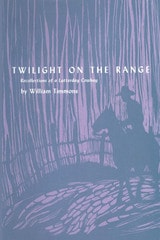
Twilight on the Range
Recollections of a Latterday CowboyBy William Timmons
University of Texas Press, 1962
Billie Timmons was fourteen when he met Charles Goodnight—over a wagonload of manure that had been jammed on a gatepost—and he went to work on the Goodnight Cross J Ranch shortly thereafter. The spirit of helpfulness that led Mr. Goodnight to strip off his coat and lift the wagon free for a lad in need sets the tone of this book, in which the author unwinds a spool of recollections of range-riding in Texas and North Dakota over an eighteen-year period.
When Billie Timmons went to work for Mr. Goodnight in 1892, Texas was undergoing a rapid transition from open range to fences. But around Texas campfires he heard tales about the northern range, told by cowboys who had ridden there and who had seen the northern lights, the tall free grass, swollen streams, and stampeding cattle. A longing to see that exciting country took hold of young Timmons.
His chance came when four buffaloes from the Goodnight ranch needed a nursemaid for their freight car trip to Yellowstone Park. Once in the northern country, Timmons stayed, casting his lot with the cowmen of North Dakota. He became the protégé of an extraordinary man, William Ray; he was foreman, friend, and confidant of banker-rancher Wilse Richards, a member of the Cowboy Hall of Fame. But even during his days in North Dakota he never lost touch with Charles Goodnight, a lifelong friend, and his portrayal of Goodnight provides much insight into the character of the man whose name belongs to the West.
In this book you experience the terror of being lost in the dead-white expanse of a North Dakota snowstorm; the gaiety of cowboy dances, for which there were never enough women available; the excitement of a near-riot in a Hebron, North Dakota, saloon, where cowboys from the 75 Ranch drank up or poured out all the liquor, then smashed all the glasses and bottles—one day before the state became bone-dry; and the loneliness of work on the range, where a flickering lantern on the side of a chuck wagon on a stormy night meant home for many a cowboy. Running like a bright thread through the narrative is Billie Timmons’s love of horses, from whom he learned the wisdom that some horses and some men are to be handled with great care and others are not to be handled at all. His chapter on Buck, his best-loved horse, is memorable.
In North Dakota, as in Texas, fences brought the end of the big herds and the end of cowboying for a man who enjoyed it to the hilt.