Results by title
7 books match the query 'Native'

Native To The Nation
Disciplining Landscapes And Bodies In AustraliaAllaine Cerwonka
University of Minnesota Press, 2004
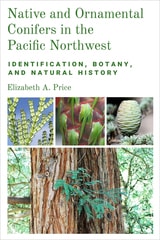
Native and Ornamental Conifers in the Pacific Northwest
Identification, Botany and Natural HistoryElizabeth A. Price
Oregon State University Press, 2022
Based on her experiences teaching workshops on conifer identification and cultivation, Elizabeth Price has developed Jargon-free photographic charts, which allow for side-by-side comparison of conifer features and guide the reader to species identification. The charts are detailed enough for specialists yet accessible to amateurs.
The book includes extensive material on the characteristics, botany, and natural history of conifer plant families, genera, and species, all illustrated with original photographs. Research across many disciplines is blended with direct observation and personal experience, creating a book that goes beyond identification and is both rigorous and engaging.
Native and Spanish New Worlds
Sixteenth-Century Entradas in the American Southwest and SoutheastEdited by Clay Mathers, Jeffrey M. Mitchem, and Charles M. Haecker
University of Arizona Press, 2013
No other volume assembles such a wide variety of archaeological, ethnohistorical, environmental, and biological information to elucidate the experience of Natives and Europeans in the early colonial world of Northern New Spain, and the global implications of entradas during this formative period in borderlands history.
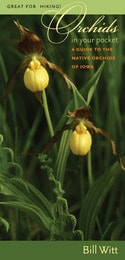
Orchids in Your Pocket
A Guide to the Native Orchids of Iowa (10-pack)Bill Witt
University of Iowa Press, 2006
Refiguring Rhetorical Education
Women Teaching African American, Native American, and Chicano/a Students, 1865-1911Jessica Enoch
Southern Illinois University Press, 2008
Refiguring Rhetorical Education: Women Teaching African American, Native American, and Chicano/a Students, 1865-1911 examines the work of five female teachers who challenged gendered and cultural expectations to create teaching practices that met the civic and cultural needs of their students.
The volume analyzes Lydia Maria Child’s The Freedmen’s Book, a post–Civil War educational textbook for newly freed slaves; Zitkala Ša’s autobiographical essays published in the Atlantic Monthly in 1900 that questioned the work of off-reservation boarding schools for Native American students; and Jovita Idar, Marta Peña, and Leonor Villegas de Magnón’s contributions to the Spanish-language newspaper La Crónica in 1910 and 1911—contributions that offered language and cultural instruction their readers could not receive in Texas public schools.
Author Jessica Enoch explores the possibilities and limitations of rhetorical education by focusing on the challenges that Child, Zitkala Ša, Idar, Peña, and Villegas made to dominant educational practices. Each of these teachers transformed their seemingly apolitical occupation into a site of resistance, revising debilitating educational methods to advance culture-based and politicized teachings that empowered their students to rise above their subjugated positions.
Refiguring Rhetorical Education considers how race, culture, power, and language are both implicit and explicit in discussions of rhetorical education for marginalized students and includes six major tenets to guide present-day pedagogies for civic engagement.
The Return of the Native
Indians and Myth-Making in Spanish America, 1810–1930Rebecca Earle
Duke University Press, 2007
Starting with the anti-Spanish wars of independence in the early nineteenth century, Earle charts the changing importance elite nationalists ascribed to the pre-Columbian past through an analysis of a wide range of sources, including historical writings, poems and novels, postage stamps, constitutions, and public sculpture. This eclectic archive illuminates the nationalist vision of creole elites throughout Spanish America, who in different ways sought to construct meaningful national myths and histories. Traces of these efforts are scattered across nineteenth-century culture; Earle maps the significance of those traces. She also underlines the similarities in the development of nineteenth-century elite nationalism across Spanish America. By offering a comparative study focused on Mexico, Guatemala, Colombia, Peru, Chile, and Ecuador, The Return of the Native illustrates both the common features of elite nation-building and some of the significant variations. The book ends with a consideration of the pro-indigenous indigenista movements that developed in various parts of Spanish America in the early twentieth century.
Woody Plants of Utah
A Field Guide with Identification Keys to Native and Naturalized Trees, Shrubs, Cacti, and VinesRenée Van Buren, Janet G. Cooper, Leila M. Shultz, and Kimball T. Harper
Utah State University Press, 2011
A comprehensive guide that includes a vast range of species and plant communities and employs thorough, original keys. Based primarily on vegetative characteristics, the keys don't require that flowers or other reproductive features be present, like many plant guides. And this guide's attention to woody plants as a whole allows one to identify a much greater variety of plants. That especially suits an arid region such as Utah with less diverse native trees. Woody plants are those that have stems that persist above ground even through seasons that don't favor growth, due to low precipitation or temperatures.
Woody Plants of Utah employs dichotomous identification keys that are comparable to a game of twenty questions. They work through a process of elimination by choosing sequential alternatives.
Detailed, illustrated plant descriptions complement the keys and provide additional botanical and environmental information in relation to a useful introductory categorization of Utah plant communities. Supplementary tools include photos, distribution maps, and an illustrated glossary.