Results by title
754 books match the query 'Native American Studies' and 76 start with a
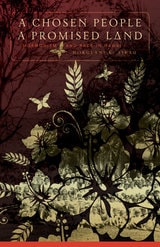
A Chosen People, a Promised Land
Mormonism and Race in Hawai’iHokulani K. Aikau
University of Minnesota Press, 2012
Christianity figured prominently in the imperial and colonial exploitation and dispossession of indigenous peoples worldwide, yet many indigenous people embrace Christian faith as part of their cultural and ethnic identities. A Chosen People, a Promised Land gets to the heart of this contradiction by exploring how Native Hawaiian members of the Church of Jesus Christ of Latter-Day Saints (more commonly known as Mormons) understand and negotiate their place in this quintessentially American religion.
Mormon missionaries arrived in Hawai‘i in 1850, a mere twenty years after Joseph Smith founded the church. Hokulani K. Aikau traces how Native Hawaiians became integrated into the religious doctrine of the church as a “chosen people”—even at a time when exclusionary racial policies regarding black members of the church were being codified. Aikau shows how Hawaiians and other Polynesian saints came to be considered chosen and how they were able to use their venerated status toward their own spiritual, cultural, and pragmatic ends.
Using the words of Native Hawaiian Latter-Day Saints to illuminate the intersections of race, colonization, and religion, A Chosen People, a Promised Land examines Polynesian Mormon articulations of faith and identity within a larger political context of self-determination.
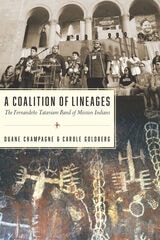
A Coalition of Lineages
The Fernandeño Tataviam Band of Mission IndiansDuane Champagne and Carole Goldberg
University of Arizona Press, 2021
The history of Southern California’s Indigenous communities is mapped through the story of family and their descendants, or lineages. The authors explain how politically and culturally independent lineages merged and strengthened via marriage, creating complex and enduring coalitions among Indigenous communities. The Indigenous people of Southern California faced waves of colonizers—the Spanish, then the Mexicans, followed by Americans—and their coalitions allowed them to endure to today.
Champagne and Goldberg are leading experts in Native sovereignty policies and histories. They worked in collaboration with members of the Fernandeño Tataviam Band of Mission Indians to illustrate how the community formed and persisted. A Coalition of Lineages is not only the story of a Native Southern California community, it is also a model for multicultural tribal development for recognized and nonrecognized Indian nations in the United States and elsewhere.
A Deeper Sense of Place
Stories and Journeys of Collaboration in Indigenous ResearchJay T. Johnson and Soren C. Larsen
Oregon State University Press, 2013
These first-person narratives offer insight into the challenges faced by Native and non-Native scholars to their academic and personal approaches during research with Indigenous communities. By addressing the ethical, political, intellectual, and practical meanings of collaboration with Indigenous peoples, A Deeper Sense of Place highlights the ways in which collaborative research can help Indigenous and settler communities find common ground through a shared commitment to land, people, and place.
A Deeper Sense of Place will inform students and academics engaged in research with Indigenous communities, as well as those interested in the challenges of employing critical, qualitative methodologies.
A Diné History of Navajoland
Klara Kelley and Harris Francis
University of Arizona Press, 2019
The early chapters, based on ceremonial origin stories, tell about Diné forebears. Next come the histories of Diné clans from late pre-Columbian to early post-Columbian times, and the coming together of the Diné as a sovereign people. Later chapters are based on histories of families, individuals, and communities, and tell how the Diné have struggled to keep their bond with the land under settler encroachment, relocation, loss of land-based self-sufficiency through the trading-post system, energy resource extraction, and climate change.
Archaeological and documentary information supplements the oral histories, providing a comprehensive investigation of Navajo history and offering new insights into their twentieth-century relationships with Hispanic and Anglo settlers.
For Diné readers, the book offers empowering histories and stories of Diné cultural sovereignty. “In short,” the authors say, “it may help you to know how you came to be where—and who—you are.”
A Fateful Time
The Background And Legislative History Of The Indian Reorganization ActElmer R. Rusco
University of Nevada Press, 2026
The Indian Reorganization Act (IRA) of 1934 has been generally acknowledged as the most important statute affecting Native Americans after the General Allotment Act of 1887, and it is probably the most important single statute affecting Native Americans during the two-thirds of a century since its passage. Over half the Native governments in the contemporary U.S. are organized under its provisions or under separate statutes that parallel the IRA in major ways. Although the impact of the IRA has been widely studied and debated, no scholar until now has looked closely at the forces that shaped its creation and passage. Author Elmer Rusco spent over a decade of research in national and regional archives and other repositories to examine the legislative intent of the IRA, including the role of issues like the nature and significance of judge-made Indian law; the allotment policy and its relation to Indian self-government; the nature of Native American governments before the IRA; the views and actions of John Collier, commissioner of Indian Affairs and leader in the campaign to reform the nation’s Indian policy; and the influence of relations between the president and Congress during the second year of the New Deal. Rusco also discusses the role of conflicting ideologies and interests in this effort to expand the rights of Native Americans; the general ignorance of Native American concerns and policy on the part of legislators engaged in the writing and passage of the law; and the limited but crucial impact of Indian involvement in the struggle over the IRA.
A Grammar and Dictionary of the Timucua Language
Julian Granberry
University of Alabama Press, 1993
Preserving the voice of a vanished people through language, history, and scholarship.
Taken from the surviving contemporary documentary sources, Julian Granberry's volume describes the grammar and lexicon for the extinct 17th-century Timucua language of Central and North Florida and traces the origins of the 17th-century Timucua speakers and their language. Originally privately published in 1987, with limited circulation, this is the only available publication on the Timucuan language. It provides full grammatical analysis and complete lexical data, and it synthesizes both linguistic and archaeological data in order to provide a coherent picture of the Timucua peoples. Granberry traces the probable historical origins of Timucua speakers to a central Amazonian homeland at approximately 2,500 B.C. and proposes that Timucua speakers were responsible for introducing ceramic wares into North America.
A History in Indigenous Voices
Menominee, Ho-Chunk, Oneida, Stockbridge, and Brothertown Interactions in the Removal EraCarol Cornelius
Wisconsin Historical Society Press, 2023
Treaties made in the 1800s between the United States and the Indigenous nations of what is now Wisconsin have had profound influence on the region’s cultural and political landscape. Yet few people realize that in the early part of that century, the Menominee and Ho-Chunk Nations of Wisconsin signed land treaties with several Indigenous nations from New York State. At the onset of the removal era, these eastern nations, including the Oneida Nation and the Six Nations Confederacy, were under constant pressure from the federal government and land speculators to move to lands around Green Bay and Lake Winnebago.
In this groundbreaking book, Carol A. Cornelius has compiled a careful account of these nation-to-nation treaties, in large part in the words of those Indigenous leaders who served as the voices and representatives of their nations. Drawing on a rich collection of primary sources, Cornelius walks readers through how, why, and for whom these treaties were made and how the federal government’s failure and unwillingness to acknowledge their legitimacy led to the further loss of Indigenous lands. The living documents transcribed here testify to the complexity and sovereignty of Indigenous governance then and now, making this volume a vital resource for historians and an accessible introduction to Indigenous treatymaking in Wisconsin.
Winner of the 2024 Wisconsin Historical Society’s Book of Merit Award
Finalist for the 2023 Foreword INDIES Book of the Year Award for Adult Nonfiction History
A History of Navajo Nation Education
Disentangling Our Sovereign BodyWendy Shelly Greyeyes; Foreword by Kevin K. Washburn
University of Arizona Press, 2022
On the heels of the fiftieth anniversary of the founding of the Department of Diné Education, this important education history explains how the current Navajo educational system is a complex terrain of power relationships, competing agendas, and jurisdictional battles influenced by colonial pressures and tribal resistance. An iron grip of colonial domination over Navajo education remains, thus inhibiting a unified path toward educational sovereignty. In providing the historical roots to today’s challenges, Wendy Shelly Greyeyes clears the path and provides a go-to reference to move discussions forward.
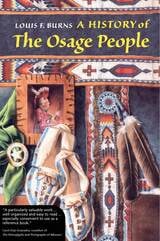
A History of the Osage People
Louis F. Burns
University of Alabama Press, 2004
Four centuries. One people. A legacy that shaped a nation.
Osage traditional lands are located in mid-continental America encompassed by the present-day states of Arkansas, Missouri, Kansas, and Oklahoma. Major waterways through these lands and the defensible terrain of the Ozark range provided the tribe a distinct advantage in prehistoric and early historic times. A warlike people, the Osage long encroached on neighboring tribal lands, especially those of the Caddo to the southwest. Yet good natural boundaries and centuries of success in warfare afforded the tribe little advantage in attempts to forestall Euro-American westward expansion. Three major routes to the West—the Missouri and Arkansas Rivers and the Continental Trail—crossed Osage land, so conflict with the newcomers was inevitable.
Louis Burns draws on ancestral oral traditions and research in a broad body of literature to tell the story of the Osage people. He writes clearly and concisely, from the Osage perspective. First published in 1989 and for many years out of print, this revised edition is augmented by a new preface and maps. Because of its masterful compilation and synthesis of the known data, A History of the Osage People continues to be the best reference for information on an important American Indian people.
A Hopi Social History
By Scott Rushforth and Steadman Upham
University of Texas Press, 1992
All anthropologists and archaeologists seek to answer basic questions about human beings and society. Why do people behave the way they do? Why do patterns in the behavior of individuals and groups sometimes persist for remarkable periods of time? Why do patterns in behavior sometimes change?
A Hopi Social History explores these basic questions in a unique way. The discussion is constructed around a historically ordered series of case studies from a single sociocultural system (the Hopi) in order to understand better the multiplicity of processes at work in any sociocultural system through time. The case studies investigate the mysterious abandonments of the Western Pueblo region in late prehistory, the initial impact of European diseases on the Hopis, Hopi resistance to European domination between 1680 and 1880, the split of Oraibi village in 1906, and some responses by the Hopis to modernization in the twentieth century.
These case studies provide a forum in which the authors examine a number of theories and conceptions of culture to determine which theories are relevant to which kinds of persistence and change. With this broad theoretical synthesis, the book will be of interest to students and scholars in the social sciences.
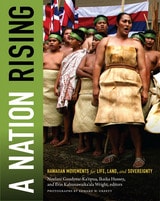
A Nation Rising
Hawaiian Movements for Life, Land, and SovereigntyNoelani Goodyear-Ka'opua, Ikaika Hussey, and Erin Kahunawaika'ala Wright, eds.
Duke University Press, 2014
Contributors. Noa Emmett Aluli, Ibrahim G. Aoudé, Kekuni Blaisdell, Joan Conrow, Noelani Goodyear-Ka'opua, Edward W. Greevy, Ulla Hasager, Pauahi Ho'okano, Micky Huihui, Ikaika Hussey, Manu Ka‘iama, Le‘a Malia Kanehe, J. Kehaulani Kauanui, Anne Keala Kelly, Jacqueline Lasky, Davianna Pomaika'i McGregor, Nalani Minton, Kalamaoka'aina Niheu, Katrina-Ann R. Kapa'anaokalaokeola Nakoa Oliveira, Jonathan Kamakawiwo'ole Osorio, Leon No'eau Peralto, Kekailoa Perry, Puhipau, Noenoe K. Silva, D. Kapua‘ala Sproat, Ty P. Kawika Tengan, Mehana Blaich Vaughan, Kuhio Vogeler, Erin Kahunawaika’ala Wright
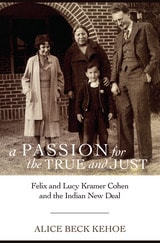
A Passion for the True and Just
Felix and Lucy Kramer Cohen and the Indian New DealAlice Beck Kehoe
University of Arizona Press, 2014
Kehoe argues that, due to anti-Semitism in 1930s America, Cohen could not speak for his legislation before Congress, and that Collier, an upper-class WASP, became the spokesman as well as the administrator. According to the author, historians of the Indian New Deal have not given due weight to Cohen’s work, nor have they recognized its foundation in his liberal secular Jewish culture. Both Felix and Lucy Cohen shared a belief in the moral duty of mitzvah, creating a commitment to the “true and the just” that was rooted in their Jewish intellectual and moral heritage, and their Social Democrat principles.
A Passion for the True and Just takes a fresh look at the Indian New Deal and the radical reversal of US Indian policies it caused, moving from ethnocide to retention of Indian homelands. Shifting attention to the Jewish tradition of moral obligation that served as a foundation for Felix and Lucy Kramer Cohen (and her professor Franz Boas), the book discusses Cohen’s landmark contributions to the principle of sovereignty that so significantly influenced American legal philosophy.
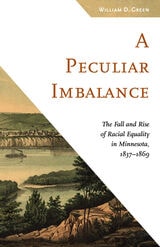
A Peculiar Imbalance
The Fall and Rise of Racial Equality in Minnesota, 1837–1869William D. Green
University of Minnesota Press, 2015
A Peculiar Imbalance is the little-known history of the black experience in Minnesota in the mid-1800s, a time of dramatic change in the region. William D. Green explains how, as white progressive politicians pushed for statehood, black men who had been integrated members of the community, owning businesses and maintaining good relationships with their neighbors, found themselves denied the right to vote or to run for office in those same communities.
As Minnesota was transformed from a wilderness territory to a state, the concepts of race and ethnicity and the distinctions among them made by Anglo-Americans grew more rigid and arbitrary. A black man might enjoy economic success and a middle-class lifestyle but was not considered a citizen under the law. In contrast, an Irish Catholic man was able to vote—as could a mixed-blood Indian—but might find himself struggling to build a business because of the ethnic and religious prejudices of the Anglo-American community. A Peculiar Imbalance examines these disparities, reflecting on the political, social, and legal experiences of black men from 1837 to 1869, the year of black suffrage.
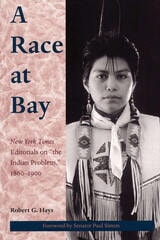
A Race at Bay
New York Times Editorials on "the Indian Problem," 1860 - 1900Robert G. Hays. Foreword by Paul Simon
Southern Illinois University Press, 1997
Robert G. Hays chronicles the "Indian problem" precisely as it was explained to Americans through the editorial columns of the New York Times between 1860 and 1900, the years when battles between white settlers and Native Americans split a nation and its spirit apart.
Covering the final forty-one years of the nineteenth century, Hays’s collection of Times editorials gives readers what current accounts cannot: perspectives by contemporary writers with unique insights into the public images of Native Americans and their place in a nation bent on expansion. The authentic voices of a national newspaper’s daily record speak with an urgency both immediate and real.
These editorials express the unbridled bitterness and raw ambition of a nation immersed in an agenda of conquest. They also resonate with the struggle to find a common ground. Some editorials are patronizing and ironic: "Yet it seems pitiful to cage so fine a savage among a herd of vulgar criminals in a penitentiary." Others include a willingness to poke fun: "Many persons on the platform were astonished to find that an ‘illiterate barbarian’ could handle the weapon of sarcasm. The truth is that the Indians spoke far better than ninety-nine out of a hundred members of congress." And yet others evince an attitude of respect, which set the tone for reconciling national ambition with natural rights.
In some instances, the Times allowed Native Americans to tell their own stories, as in this eloquent, moving account of the testimony of Satanta, the warrior chief of the Kiowas: "A certain dim foreboding of the Indians’ fate swept across his mind, and in its passage lit his eyes up with a fierce light, and his voice rose to a pitch of frenzy as he exclaimed: ‘We don’t want to settle—I love to roam over the prairie; there I am free and happy."
History demonstrates that the costs of owning one’s soil and one’s destiny remain without measure. Many of the problems blocking the progress of Native Americans continue unsolved: unemployment, infant mortality, suicide, crime, alcoholism, and poverty. Following such works as Helen Hunt Jackson’s A Century of Dishonor and Dee Brown’s Bury My Heart at Wounded Knee, Hays looks back on the records of national history for the roots of our challenges today.
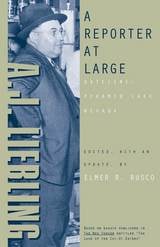
A Reporter At Large
Dateline: Pyramid Lake, NevadaAj Liebling
University of Nevada Press, 1999
Liebling recorded the litigation over the fate of the Pyramid Lake Reservation lands in a series of articles published in The New Yorker in 1955. Reprinted here in their entirety, the essays discuss the affair in detail, following it from the shores of the lake to the halls of Congress, and introducing readers to the colorful world of 1950s Nevada. This is a valuable record of one of Nevada’s most enduring and significant debates over the uses of the land and the precious water that nourishes it. Introduction by Elmer R. Rusco.
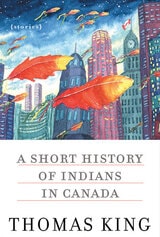
A Short History of Indians in Canada
StoriesThomas King
University of Minnesota Press, 2013

A Third University Is Possible
la la paperson
University of Minnesota Press, 2017
A Third University is Possible unravels the intimate relationship between the more than 200 US land grant institutions, American settler colonialism, and contemporary university expansion. Author la paperson cracks open uncanny connections between Indian boarding schools, Black education, and missionary schools in Kenya; and between the Department of Homeland Security and the University of California. Central to la paperson’s discussion is the “scyborg,” a decolonizing agent of technological subversion.
Drawing parallels to Third Cinema and Black filmmaking assemblages, A Third University is Possible ultimately presents new ways of using language to develop a framework for hotwiring university “machines” to the practical work of decolonization.
Forerunners: Ideas First is a thought-in-process series of breakthrough digital publications. Written between fresh ideas and finished books, Forerunners draws on scholarly work initiated in notable blogs, social media, conference plenaries, journal articles, and the synergy of academic exchange. This is gray literature publishing: where intense thinking, change, and speculation take place in scholarship.
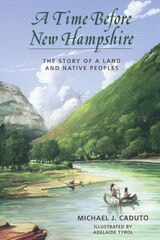
A Time Before New Hampshire
The Story of a Land and Native PeoplesMichael J. Caduto
University Press of New England, 2004

A Tohono O'odham Grammar
Ofelia Zepeda
University of Arizona Press, 1983
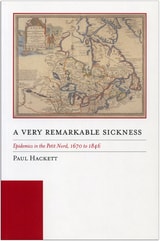
A Very Remarkable Sickness
Epidemics in the Petit Nord, 1670 to 1846Paul Hackett
University of Manitoba Press, 2002

A World of Many Worlds
Marisol de la Cadena and Mario Blaser, editors
Duke University Press, 2018
Contributors. Mario Blaser, Alberto Corsín Jiménez, Déborah Danowski, Marisol de la Cadena, John Law, Marianne Lien, Isabelle Stengers, Marilyn Strathern, Helen Verran, Eduardo Viveiros de Castro
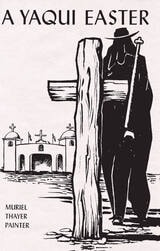
A Yaqui Easter
Muriel Thayer Painter
University of Arizona Press, 1971

Aazheyaadizi
Worldview, Language, and the Logics of DecolonizationMark D. Freeland
Michigan State University Press, 2020
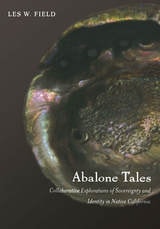
Abalone Tales
Collaborative Explorations of Sovereignty and Identity in Native CaliforniaLes W. Field
Duke University Press, 2008
Tales about abalone and their historical and contemporary meanings are related by Field and his coauthors, who include the chair and other members of the Muwekma Ohlone Tribe; a Point Arena Pomo elder; the chair of the Wiyot tribe and her sister; several Hupa Indians; and a Karuk scholar, artist, and performer. Reflecting the divergent perspectives of various Native groups and people, the stories and analyses belie any presumption of a single, unified indigenous understanding of abalone. At the same time, they shed light on abalone’s role in cultural revitalization, struggles over territory, tribal appeals for federal recognition, and connections among California’s Native groups. While California’s abalone are in danger of extinction, their symbolic power appears to surpass even the environmental crises affecting the state’s vulnerable coastline.

Aboriginal Resource Use in Canada
Historical and Legal AspectsKerry Abel
University of Manitoba Press, 1991

Aby Warburg and America
The Art Historian as EthnographerHorst Bredekamp
Bard Graduate Center, 2021
Accomplishing NAGPRA
Perspectives on the Intent, Impact, and Future of the Native American Graves Protection and Repatriation ActSangita Chari and Jaime M. N. Lavallee
Oregon State University Press, 2013
NAGPRA requires museums and federal agencies to return requested Native American cultural items to lineal descendants, culturally affiliated Indian tribes, and Native Hawai’ian organizations. Since the 1990 passage of the act, museums and federal agencies have made more than one million cultural items—and the remains of nearly forty thousand Native Americans—available for repatriation.
Drawing on case studies, personal reflections, historical documents, and statistics, the volume examines NAGPRA and its grassroots, practical application throughout the United States.? Accomplishing NAGPRA will appeal to professionals and academics with an interest in cultural resource management, Indian and human rights law, Indigenous studies, social justice movements, and public policy.
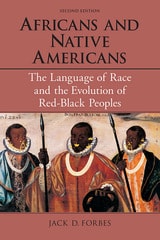
Africans and Native Americans
The Language of Race and the Evolution of Red-Black PeoplesJack D. Forbes
University of Illinois Press, 1993
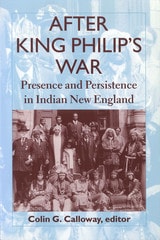
After King Philip’s War
Presence and Persistence in Indian New EnglandEdited by Colin G. Calloway
Dartmouth College Press, 1997
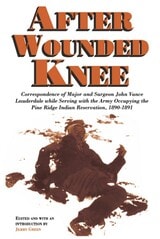
After Wounded Knee
Correspondence of Major and Surgeon John Vance Lauderdale while Serving with the Army Occupying the Pine Ridge Indian Reservation, 1890-1891Jerry Green
Michigan State University Press, 1996
The Wounded Knee Massacre of December 29, 1890, known to U.S. military historians as the last battle in "the Indian Wars," was in reality another tragic event in a larger pattern of conquest, destruction, killing, and broken promises that continue to this day.
On a cold winter's morning more than a century ago, the U.S. Seventh Cavalry attacked and killed more than 260 Lakota men, women, and children at Wounded Knee Creek in South Dakota. In the aftermath, the broken, twisted bodies of the Lakota people were soon covered by a blanket of snow, as a blizzard swept through the countryside. A few days later, veteran army surgeon John Vance Lauderdale arrived for duty at the nearby Pine Ridge Indian Reservation. Shocked by what he encountered, he wrote numerous letters to his closest family members detailing the events, aftermath, and daily life on the Reservation under military occupation. He also treated the wounded, both Cavalry soldiers and Lakota civilians. What distinguishes After Wounded Knee from the large body of literature already available on the massacre is Lauderdale's frank appraisals of military life and a personal observation of the tragedy, untainted by self-serving reminiscence or embellished newspaper and political reports. His sense of frustration and outrage toward the military command, especially concerning the tactics used against the Lakota, is vividly apparent in this intimate view of Lauderdale's life. His correspondence provides new insight into a familiar subject and was written at the height of the cultural struggle between the U.S. and Lakota people. Jerry Green's careful editing of this substantial collection, part of the John Vance Lauderdale Papers in the Western Americana Collection in Yale University's Beinecke Library, clarifies Lauderdale's experiences at the Pine Ridge Indian Reservation.
Afterlives of Indigenous Archives
Edited by Ivy Schweitzer and Gordon Henry
Dartmouth College Press, 2019

Against Extraction
Indigenous Modernism in the Twin CitiesMatt Hooley
Duke University Press, 2024
Aggression and Sufferings
Settler Violence, Native Resistance, and the Coalescence of the Old SouthF. Evan Nooe
University of Alabama Press, 2024
WINNER OF THE FRANCIS B. SIMKINS AWARD, SOUTHERN HISTORICAL ASSOCIATION
WINNER OF THE 2024 BEST FIRST BOOK AWARD FROM PHI ALPHA THETA, THE NATIONAL HISTORY HONOR SOCIETY
A bold reconceptualization of how settler expansion and narratives of victimhood, honor, and revenge drove the conquest and erasure of the Native South and fed the emergence of a distinct white southern identity.
In 1823, Tennessee historian John Haywood encapsulated a foundational sentiment among the white citizenry of Tennessee when he wrote of a “long continued course of aggression and sufferings” between whites and Native Americans. According to F. Evan Nooe, “aggression” and “sufferings” are broad categories that can be used to represent the framework of factors contributing to the coalescence of the white South.
Traditionally, the concept of coalescence is an anthropological model used to examine the transformation of Indigenous communities in the Eastern Woodlands from chieftaincies to Native tribes, confederacies, and nations in response to colonialism. Applying this concept to white southerners, Nooe argues that through the experiences and selective memory of settlers in the antebellum South, white southerners incorporated their aggression against and suffering at the hands of the Indigenous peoples of the Southeast in the coalescence of a regional identity built upon the violent dispossession of the Native South. This, in turn, formed a precursor to Confederate identity and its later iterations in the long nineteenth century.
Geographically, Aggression and Sufferings prioritizes events in South Carolina, Florida, Tennessee, Georgia, and Alabama. Nooe considers how divergent systems of violence and justice between Native Americans and white settlers (such as blood revenge and concepts of honor) functioned in the region and examines the involved societies’ conflicting standards on how to equitably resolve interpersonal violence. Finally, Nooe explores how white southerners constructed, propagated, and perpetuated harrowing tales of colonizers as both victims and heroes in the violent expulsion of the region’s Native peoples from their homelands. This constructed sense of regional history and identity continued to flower into the antebellum period, during western expansion, and well through the twentieth century.
All My Relatives
Community in Contemporary Ethnic American LiteraturesBonnie TuSmith
University of Michigan Press, 1994
All My Relatives provides a new way of reading popular works such as The Woman Warrior, The Joy Luck Club, The Color Purple and John Edgar Wideman's Sent for You Yesterday. TuSmith's study will appeal to general readers as well as students and scholars of American culture, ethnic studies, and American literature.
"An original contribution to the field. TuSmith's willingness to step over invisible boundaries and to draw parallels between the cultural contexts of several ethnic groups at once is refreshing and important." --Amy Ling, University of Wisconsin, Madison
"Ambitious and timely . . . a significant work that Americanists will want to read. TuSmith does an excellent job of clarifying the meaning and significance of the term "ethnicity" in relation to American literature."--Ramón Saldívar, Stanford University
". . . TuSmith establishes the importance of traditional (usually oral) modes of expression to ethnic texts that are both relational and accessible . . . . [S]hould become a standard point of reference in the emerging field of comparative American literature."--Choice
Bonnie TuSmith is Assistant Professor of English, Bowling Green State University.
Allotment Stories
Indigenous Land Relations under Settler SiegeDaniel Heath Justice
University of Minnesota Press, 2021
More than two dozen stories of Indigenous resistance to the privatization and allotment of Indigenous lands
Land privatization has been a longstanding and ongoing settler colonial process separating Indigenous peoples from their traditional homelands, with devastating consequences. Allotment Stories delves into this conflict, creating a complex conversation out of narratives of Indigenous communities resisting allotment and other dispossessive land schemes.
From the use of homesteading by nineteenth-century Anishinaabe women to maintain their independence to the role that roads have played in expropriating Guam’s Indigenous heritage to the links between land loss and genocide in California, Allotment Stories collects more than two dozen chronicles of white imperialism and Indigenous resistance. Ranging from the historical to the contemporary and grappling with Indigenous land struggles around the globe, these narratives showcase both scholarly and creative forms of expression, constructing a multifaceted book of diverse disciplinary perspectives. Allotment Stories highlights how Indigenous peoples have consistently used creativity to sustain collective ties, kinship relations, and cultural commitments in the face of privatization. At once informing readers while provoking them toward further research into Indigenous resilience, this collection pieces back together some of what the forces of allotment have tried to tear apart.
Contributors: Jennifer Adese, U of Toronto Mississauga; Megan Baker, U of California, Los Angeles; William Bauer Jr., U of Nevada, Las Vegas; Christine Taitano DeLisle, U of Minnesota–Twin Cities; Vicente M. Diaz, U of Minnesota–Twin Cities; Sarah Biscarra Dilley, U of California, Davis; Marilyn Dumont, U of Alberta; Munir Fakher Eldin, Birzeit U, Palestine; Nick Estes, U of New Mexico; Pauliina Feodoroff; Susan E. Gray, Arizona State U; J. Kēhaulani Kauanui, Wesleyan U; Rauna Kuokkanen, U of Lapland and U of Toronto; Sheryl R. Lightfoot, U of British Columbia; Kelly McDonough, U of Texas at Austin; Ruby Hansen Murray; Tero Mustonen, U of Eastern Finland; Darren O’Toole, U of Ottawa; Shiri Pasternak, Ryerson U; Dione Payne, Te Whare Wānaka o Aoraki–Lincoln U; Joseph M. Pierce, Stony Brook U; Khal Schneider, California State U, Sacramento; Argelia Segovia Liga, Colegio de Michoacán; Leanne Betasamosake Simpson; Jameson R. Sweet, Rutgers U; Michael P. Taylor, Brigham Young U; Candessa Tehee, Northeastern State U; Benjamin Hugh Velaise, Google American Indian Network.
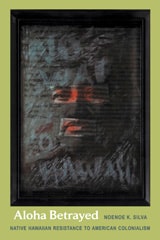
Aloha Betrayed
Native Hawaiian Resistance to American ColonialismNoenoe K. Silva
Duke University Press, 2004

American Indian Activism
ALCATRAZ TO THE LONGEST WALKEdited by Troy Johnson; Joane Nagel; and Duane Champagne
University of Illinois Press, 1997
In this volume, some of the dominant scholars in the field chronicle and analyze Native American activism of the 1960s and 1970s. Much of what is included here began as a special issue of the American Indian Culture and Research Journal; the introduction has been extensively modified and one chapter deleted. Importantly, the new first chapter provides extended background and historical analysis of the Alcatraz takeover and discusses its place in contemporary Indian activism.
Contributors include: Karren Baird-Olson, LaNada Boyer, Edward D. Castillo, Duane Champagne, Ward Churchill, Vine Deloria, Jr., Tim Findley, Jack D. Forbes, Adam (Nordwall) Fortunate Eagle, Lenny Foster, John Garvey, George P. Horse Capture, Troy Johnson, Luis S. Kemnitzer, Woody Kipp, Joane Nagel, Robert A. Rundstrom, Steve Talbot
American Indian Constitutional Reform and the Rebuilding of Native Nations
Edited by Eric D. Lemont
University of Texas Press, 2006
Since 1975, when the U.S. government adopted a policy of self-determination for American Indian nations, a large number of the 562 federally recognized nations have seized the opportunity to govern themselves and determine their own economic, political, and cultural futures. As a first and crucial step in this process, many nations are revising constitutions originally developed by the U.S. government to create governmental structures more attuned to native people's unique cultural and political values. These new constitutions and the governing institutions they create are fostering greater governmental stability and accountability, increasing citizen support of government, and providing a firmer foundation for economic and political development.
This book brings together for the first time the writings of tribal reform leaders, academics, and legal practitioners to offer a comprehensive overview of American Indian nations' constitutional reform processes and the rebuilding of native nations. The book is organized in three sections. The first part investigates the historical, cultural, economic, and political motivations behind American Indian nations' recent reform efforts. The second part examines the most significant areas of reform, including criteria for tribal membership/citizenship and the reform of governmental institutions. The book concludes with a discussion of how American Indian nations are navigating the process of reform, including overcoming the politics of reform, maximizing citizen participation, and developing short-term and long-term programs of civic education.
American Indian Educators in Reservation Schools
Terry Huffman
University of Nevada Press, 2014
American Indian Languages
Cultural and Social ContextsShirley Silver and Wick R. Miller
University of Arizona Press, 1997
Authors Silver and Miller demonstrate the complexity and diversity of these languages while dispelling popular misconceptions. Their text reveals the linguistic richness of languages found throughout the Americas, emphasizing those located in the western United States and Mexico, while drawing on a wide range of other examples found from Canada to the Andes. It introduces readers to such varied aspects of communicating as directionals and counting systems, storytelling, expressive speech, Mexican Kickapoo whistle speech, and Plains sign language.
The authors have included basics of grammar and historical linguistics, while emphasizing such issues as speech genres and other sociolinguistic issues and the relation between language and worldview. They have incorporated a variety of data that have rarely or never received attention in nontechnical literature in order to underscore the linguistic diversity of the Americas, and have provided more extensive language classification lists than are found in most other texts.
American Indian Languages: Cultural and Social Contexts is a comprehensive resource that will serve as a text in undergraduate and lower-level graduate courses on Native American languages and provide a useful reference for students of American Indian literature or general linguistics. It also introduces general readers interested in Native Americans to the amazing diversity and richness of indigenous American languages.
Coverage includes:
Achumawi, Acoma, Algonquin, Apache, Araucanian, Arawakan, Athapascan, Atsugewi, Ayamara, Bacairi, Bella Coola, Beothuk, Biloxi, Blackfoot, Caddoan, Cahto, Cahuilla, Cakchiquel, Carib, Cayuga, Chemehuevi, Cherokee, Chibchan, Chichimec, Chimakuan, Chimariko, Chinook, Chipewyan, Choctaw-Chickasaw, Chol, Cocopa, Coeur d'Alene, Comanche, Coos, Cora, Cree, Creek, Crow, Cubeo, Cupeño, Dakota, Delaware, Diegueño, Eskimo-Aleut, Esselen, Eyak, Fox, Gros Ventre, Guaraní, Guarijío, Haida, Havasupai, Hill Patwin, Hopi, Huastec, Huave, Hupa, Inuit-Inupiaq, Iroquois, Jaqaru, Je, Jicaque, Kalapuyan, Kamia, Karankawas, Karuk, Kashaya, Keres, Kickapoo, Kiliwa, Kiowa-Tanoan, Koasati, Konkow, Kuna, Kwakiutl, Kwalhioqua-Tlatskanai, Lakota, Lenca, Luiseño, Maidu, Mapuche, Markoosie, Mayan, Mazahua, Mazatec, Métis, Mexica, Micmac, Misumalpan, Mitchif, Miwok, Mixe-Zoquean, Mixtec, Mobilian, Mohave, Mohawk, Muskogean, Nahuatl, Natchez, Navajo, Nez Perce, Nheengatú, Nicola, Nomlaki, Nootka, Ojibwa, Oneida, O'odham, Otomí, Paiute, Palaihnihan, Panamint, Panoan, Paya, Pima, Pipil, Pomo, Poplocan, Pueblo, Puquina, Purpecha, Quechua, Quiché, Quileute, Sahaptian, Salish, Seneca, Sequoyah, Seri, Serrano, Shasta, Shoshoni, Sioux, Sirenikski, Slavey, Subtiaba-Tlapanec, Taíno, Takelma, Tanaina, Tarahumara, Tequistlatecan, Tewa, Tlingit, Toba, Toltec, Totonac, Tsimshian, Tubatulabal, Tukano, Tunica, Tupí, Ute, Uto-Aztecan, Vaupés, Venture¤o, Wakashan, Walapai, Wappo, Washo, Wintu, Wiyot, Xinca, Yahi, Yana, Yokuts, Yucatec, Yuchi, Yuki, Yuma, Yurok, Zapotec, Zoquean, and Zuni.
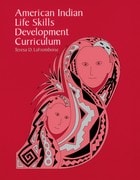
American Indian Life Skills Development Curriculum
Teresa D. LaFromboise
University of Wisconsin Press, 1996
Suicide is a significant problem for many adolescents in Native American Indian populations. American Indian Life Skills Development Curriculum is a course for high school students and some middle school students that is designed to drastically reduce suicidal thinking and behavior.
Created in collaboration with students and community members from the Zuni Pueblo and the Cherokee Nation of Oklahoma, this curriculum addresses key issues in Native American Indian adolescents’ lives and teaches such life skills as communication, problem solving, depression and stress management, anger regulation, and goal setting. The course is unique in its skills-based approach. After first increasing awareness and knowledge of suicide, it then teaches students specific methods to help a peer turn away from suicidal thinking and seek help from an appropriate help-giver.
The skills-based approach of this curriculum follows well-established teaching methods to develop social skills. Teachers and peers inform students of the rationale and components of a particular skill, model and demonstrate the skill for them, and later provide feedback on individual skill performance.
American Indian Literature, Environmental Justice, and Ecocriticism
The Middle PlaceJoni Adamson
University of Arizona Press, 2001
This powerful book is one of the first to examine the intersections between literature and the environment from the perspective of the oppressions of race, class, gender, and nature, and the first to review American Indian literature from the standpoint of environmental justice and ecocriticism. By examining such texts as Sherman Alexie's short stories and Leslie Marmon Silko's novel Almanac of the Dead, Adamson contends that these works, in addition to being literary, are examples of ecological criticism that expand Euro-American concepts of nature and place.
Adamson shows that when we begin exploring the differences that shape diverse cultural and literary representations of nature, we discover the challenge they present to mainstream American culture, environmentalism, and literature. By comparing the work of Native authors such as Simon Ortiz with that of environmental writers such as Edward Abbey, she reveals opportunities for more multicultural conceptions of nature and the environment.
More than a work of literary criticism, this is a book about the search to find ways to understand our cultural and historical differences and similarities in order to arrive at a better agreement of what the human role in nature is and should be. It exposes the blind spots in early ecocriticism and shows the possibilities for building common ground— a middle place— where writers, scholars, teachers, and environmentalists might come together to work for social and environmental change.
American Indian Medicine Ways
Spiritual Power, Prophets, and HealingEdited by Clifford E. Trafzer
University of Arizona Press, 2017
This groundbreaking collection provides fascinating stories of wisdom, spiritual power, and forces within tribal communities that have influenced the past and may influence the future. Through discussions of omens, prophecies, war, peace, ceremony, ritual, and cultural items such as masks, prayer sticks, sweat lodges, and peyote, this volume offers examples of the ways in which Native American beliefs in spirits have been and remain a fundamental aspect of history and culture. Drawing from written and oral sources, the book offers readers a greater understanding of creation narratives, oral histories, and songs that speak of healers, spirits, and power from tribes across the North American continent.
American Indian medicine ways and spiritual power remain vital today. With the help of spirits, people can heal the sick, protect communities from natural disasters, and mediate power of many kinds between the spiritual and corporeal worlds. As the contributors to this volume illustrate, healers are the connective cloth between the ancient past and the present, and their influence is significant for future generations.
CONTRIBUTORS
R. David Edmunds
Joseph B. Herring
Benjamin Jenkins
Troy R. Johnson
Michelle Lorimer
L. G. Moses
Richard D. Scheuerman
Al Logan Slagle
Clifford E. Trafzer
American Indian Persistence and Resurgence
Karl Kroeber
Duke University Press, 1994
Diverse commentators, including literary critics, anthropologists, ethnohistorians, poets and a novelist address persistent issues facing Native Americans and Native American studies today. The future of White-Indian relation, the viability of Pan-Indianism, tensions between Native Americans and North American anthropologists, and new devlopments in ethnohistory are among the topics discussed. The survival of Native Americans as recorded in this collection, an expanded edition of a special issue of boundary 2, brings into focus the dynamically adaptive values of Native American culture. Native Americans’ persistence in U.S. culture—not disappearing under the pressure to assimilate or through genocidal warfare—reminds us of the extent to which any living culture is defined by the process of transformation.
Contributors. Linda Ainsworth, Jonathan Boyarin, Raymomd J. DeMallie, Elaine Jahner, Karl Kroeber, William Overstreet, Douglas R. Parks, Katharine Pearce, Jarold Ramsey, Wendy Rose, Edward H. Spicer, Gerald Vizenor, Priscilla Wald
American Indian Sovereignty and the U.S. Supreme Court
The Masking of JusticeBy David E. Wilkins
University of Texas Press, 1997
"Like the miner's canary, the Indian marks the shift from fresh air to poison gas in our political atmosphere; and our treatment of Indians, even more than our treatment of other minorities, reflects the rise and fall in our democratic faith," wrote Felix S. Cohen, an early expert in Indian legal affairs.
In this book, David Wilkins charts the "fall in our democratic faith" through fifteen landmark cases in which the Supreme Court significantly curtailed Indian rights. He offers compelling evidence that Supreme Court justices selectively used precedents and facts, both historical and contemporary, to arrive at decisions that have undermined tribal sovereignty, legitimated massive tribal land losses, sanctioned the diminishment of Indian religious rights, and curtailed other rights as well.
These case studies—and their implications for all minority groups—make important and troubling reading at a time when the Supreme Court is at the vortex of political and moral developments that are redefining the nature of American government, transforming the relationship between the legal and political branches, and altering the very meaning of federalism.

American Indians
William T. Hagan
University of Chicago Press, 1993
"The author has reduced the long story—often as tangled as a five-year-old's fishing line—into a brief, clear, and highly interesting book. . . . A remarkable achievement."—San Francisco Chronicle
American Indians and National Parks
Robert H. Keller and Michael F. Turek
University of Arizona Press, 1998
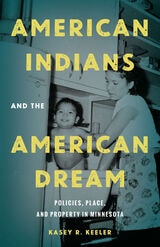
American Indians and the American Dream
Policies, Place, and Property in MinnesotaKasey R. Keeler
University of Minnesota Press, 2023
Understanding the processes and policies of urbanization and suburbanization in American Indian communities
Nearly seven out of ten American Indians live in urban areas, yet studies of urban Indian experiences remain scant. Studies of suburban Natives are even more rare. Today’s suburban Natives, the fastest-growing American Indian demographic, highlight the tensions within federal policies working in tandem to move and house differing groups of people in very different residential locations. In American Indians and the American Dream, Kasey R. Keeler examines the long history of urbanization and suburbanization of Indian communities in Minnesota.
At the intersection of federal Indian policy and federal housing policy, American Indians and the American Dream analyzes the dispossession of Indian land, property rights, and patterns of home ownership through programs and policies that sought to move communities away from their traditional homelands to reservations and, later, to urban and suburban areas. Keeler begins this analysis with the Homestead Act of 1862, then shifts to the Indian Reorganization Act in the early twentieth century, the creation of Little Earth in Minneapolis, and Indian homeownership during the housing bubble of the early 2000s.
American Indians and the American Dream investigates the ways American Indians accessed homeownership, working with and against federal policy, underscoring American Indian peoples’ unequal and exclusionary access to the way of life known as the American dream.
Cover alt text: Vintage photo of Native person bathing smiling child in the sink of a midcentury kitchen. Title in yellow.
American Indians, American Justice
By Vine Deloria, Jr., and Clifford M. Lytle
University of Texas Press, 1983
Baffled by the stereotypes presented by Hollywood and much historical fiction, many other Americans find the contemporary American Indian an enigma. Compounding their confusion is the highly publicized struggle of the contemporary Indian for self-determination, lost land, cultural preservation, and fundamental human rights—a struggle dramatized both by public acts of protest and by precedent-setting legal actions. More and more, the battles of American Indians are fought—and won—in the political arena and the courts.
American Indians, American Justice explores the complexities of the present Indian situation, particularly with regard to legal and political rights. It is the first book to present an overview of federal Indian law in language readably accessible to the layperson. Remarkably comprehensive, it is destined to become a standard sourcebook for all concerned with the plight of the contemporary Indian.
Beginning with an examination of the historical relationship of Indians and the courts, the authors describe how tribal courts developed and operate today, and how they relate to federal and state governments. They define such key legal concepts as tribal sovereignty and Indian Country. By comparing and contrasting the workings of Indian and non-Indian legal institutions, the authors illustrate how Indian tribes have adapted their customs, values, and institutions to the demands of the modern world. Describing the activities of attorneys and Indian advocates in asserting and defending Indian rights, they identify the difficulties typically faced by Indians in the criminal and civil legal arenas and explore the public policy and legal rights of Indians as regards citizenship, voting rights, religious freedom, and basic governmental services.
American Indians
The First of This LandC. Matthew Snipp
Russell Sage Foundation, 1989