Results by title
6 books match the query 'Native plants for cultivation'
A Guide to Native Plants of the New York City Region
Gargiullo, Margaret B
Rutgers University Press, 2010
One of the most serious threats to indigenous plants is the introduction of invasive non-native species by landscapers after new developments are built. In this unique guide, ecologist Margaret B. Gargiullo presents a detailed look at the full scope of flora that is native to this region and available for propagation. Geared specifically for landscape architects, designers, land managers, and restorationists, this book offers practical advice on how to increase the amount of indigenous flora growing in the mepolitan area, and in some cases, to reintroduce plants that have completely disappeared.
More than one hundred line drawings of plants and their specific habitats, ranging from forests to beaches, help readers visualize the full potential for landscaping in the area. A separate entry for each plant also provides detailed information on size, flower color, blooming time, and its possible uses in wetland mitigation, erosion control, and natural area restoration. Some plants are also highlighted for their ability to thrive in areas that are typically considered inhospitable to greenery.
Easily searchable by plant type or habitat, this guide is an essential reference for everyone concerned with the region's natural plant life. Since most of the plants can also be grown well beyond the New York City metropolitan area, this book will also be useful for project managers doing restoration work in most of southern New England and the mid-Atlantic region, including Pennsylvania, Delaware, and Maryland.
Gardening in the Desert
A Guide to Plant Selection and CareMary Irish
University of Arizona Press, 2000
Newcomers to the Southwest usually find that their favorite landscape plants aren't suited to the hot, dry climate. Many authors offer advice on adapting plants to the desert; now Mary Irish tells how gardeners can better adapt themselves to the challenge.
Drawing on her experience with public horticulture in the Phoenix metropolitan area, Irish explores the vexations and delights of desert gardening. She offers practical advice on plants and gardening practices for anyone who lives in the Southwest, from El Paso to Palm Springs, Tucson to Las Vegas.
Irish encourages readers who may be new to the desert—or desert dwellers who may be new to gardening—to stop struggling against heat, aridity, and poor soils and instead learn to use and appreciate the wonderful and well-adapted plants native to the desert. She shares information and anecdotes about trees, shrubs, perennials, agaves, cacti, and other plants that make gardening in the Southwest a unique experience, and provides further information about plants from other desert regions that will easily adapt to the Southwest. In addition to descriptions of plants, Irish also offers tips on planting, watering, pruning, and propagation.
For anyone who has struggled to maintain a patch of green or blanched at their water bill after unproductive irrigation, the answer to an attractive landscape may be as close as the desert around you. And for anyone who has bought a catalog guide to desert plants and not known which to choose, this book can set you on the right path. Mary Irish shows how to take heart in available plants of adaptable beauty in a book to enjoy while waiting for the next planting cycle.
Native Plants for Southwestern Landscapes
By Judy Mielke
University of Texas Press, 1993
Winner, Xeriscape Award of Recognition, Arizona Municipal Water Users Association
Southwest Book Award, Border Regional Library Association
For gardeners who want to conserve water, the color, fragrance, shade, and lush vegetation of a traditional garden may seem like a mirage in the desert. But such gardens can flourish when native plants grow in them. In this book, Judy Mielke, an expert on Southwestern gardening, offers the most comprehensive guide available to landscaping with native plants. Writing simply enough for beginning gardeners, while also providing ample information for landscape professionals, she presents over three hundred trees, shrubs, vines, grasses, groundcovers, wildflowers, cacti, and other native plants suited to arid landscapes.
The heart of the book lies in the complete descriptions and beautiful color photographs of plants native to the Mojave, Sonoran, and Chihuahuan desert regions of the southwestern United States and northern Mexico. Mielke characterizes each plant and gives detailed information on its natural habitat, its water, soil, light, temperature, and pruning requirements, and its possible uses in landscape design.
In addition, Mielke includes informative discussions of desert ecology, growing instructions for native plants and wildflowers, and "how-to" ideas for revegetation of disturbed desert areas using native plants. She concludes the book with an extensive list of plants by type, including those that have specific features such as shade or fragrance. She also supplies a list of public gardens that showcase native plants.

Propagation of Pacific Northwest Native Plants
Robin Rose
Oregon State University Press, 1998
The Prairie Garden
Seventy Native Plants You Can Grow in Town or CountryJ. Robert Smith with Beatrice S. Smith
University of Wisconsin Press, 1980
Prairie plants are among the toughest of all ornamentals. While they fascinate gardeners with their beauty and versatility, they require little maintenance. They are highly resistant to insect and disease damage, and they need not be replanted every year.
In recent years, the idea of growing prairie plants has gained increasing appeal among gardeners. Bob and Beatrice Smith have prepared this practical growing guide—based on their more than fourteen years of experience and experimentation—for all people who wish to grow prairie plants. The Smiths, who have grown all the plants they discuss here, share their wealth of experience with the reader. They recommend the best sites, tell how to plan and prepare the site and how to treat and plant seeds, and share important tips on propagation, transplanting, and managing the prairie garden or landscape. To aid in both planning and identification, the book includes full-color illustrations of all seventy plants.
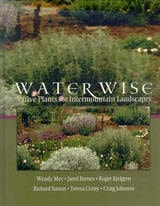
Water Wise
Native Plants for Intermountain LandscapesWendy Mee, Jared Barnes, Roger Kjelgren, Richard Sutton, Teresa Cerny, and Craig Johnson
Utah State University Press, 2003
Today, native plants and water conservation are subjects of vital interest to cities, offices, homeowners, and agriculture alike, as all are affected by the growing shortage of water in the Intermountain region.
This comprehensive volume provides specific information about shrubs, trees, grasses, forbs, and cacti that are native to most states in the Intermountain West, and that can be used in landscaping to conserve water, reflect and preserve the region's landscape character, and help protect its ecological integrity. The book is an invaluable guide for the professional landscaper, horticulturist, and others in the Intermountain nursery industry, as well as for the student, general reader, gardener, and homeowner.
Water Wise is both convenient and comprehensive. The heart of the book presents hundreds of species, devoting a full page to each, with a description of appearance, habitat, landscape use, and other comments. Color photographs illustrate each plant described. A reader-friendly introduction provides important background on the ecology of the Intermountain West, along with full descriptions of native plant habitats and associations.
An accessible resource of accurate native plant information for all readers, Water Wise will be indispensable to professional landscapers and amateurs alike.