Results by title
9 books match the query 'Natural Foods'
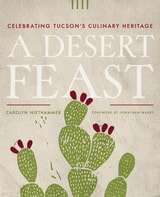
A Desert Feast
Celebrating Tucson's Culinary HeritageCarolyn Niethammer, Foreword by Johnathan Mabry
University of Arizona Press, 2020
Southwest Book of the Year Award Winner
Pubwest Book Design Award Winner
Drawing on thousands of years of foodways, Tucson cuisine blends the influences of Indigenous, Mexican, mission-era Mediterranean, and ranch-style cowboy food traditions. This book offers a food pilgrimage, where stories and recipes demonstrate why the desert city of Tucson became American’s first UNESCO City of Gastronomy.
Both family supper tables and the city’s trendiest restaurants feature native desert plants and innovative dishes incorporating ancient agricultural staples. Award-winning writer Carolyn Niethammer deliciously shows how the Sonoran Desert’s first farmers grew tasty crops that continue to influence Tucson menus and how the arrival of Roman Catholic missionaries, Spanish soldiers, and Chinese farmers influenced what Tucsonans ate.
White Sonora wheat, tepary beans, and criollo cattle steaks make Tucson’s cuisine unique. In A Desert Feast, you’ll see pictures of kids learning to grow food at school, and you’ll meet the farmers, small-scale food entrepreneurs, and chefs who are dedicated to growing and using heritage foods. It’s fair to say, “Tucson tastes like nowhere else.”
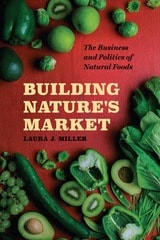
Building Nature's Market
The Business and Politics of Natural FoodsLaura J. Miller
University of Chicago Press, 2017
Building Nature’s Market shows how the meaning of natural foods was transformed as they changed from a culturally marginal, religiously inspired set of ideas and practices valorizing asceticism to a bohemian lifestyle to a mainstream consumer choice. Laura J. Miller argues that the key to understanding this transformation is to recognize the leadership of the natural foods industry. Rather than a simple tale of cooptation by market forces, Miller contends the participation of business interests encouraged the natural foods movement to be guided by a radical skepticism of established cultural authority. She challenges assumptions that private enterprise is always aligned with social elites, instead arguing that profit-minded entities can make common cause with and even lead citizens in advocating for broad-based social and cultural change.
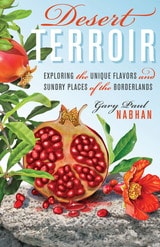
Desert Terroir
Exploring the Unique Flavors and Sundry Places of the BorderlandsBy Gary Paul Nabhan
University of Texas Press, 2012
Why does food taste better when you know where it comes from? Because history—ecological, cultural, even personal—flavors every bite we eat. Whether it’s the volatile chemical compounds that a plant absorbs from the soil or the stories and memories of places that are evoked by taste, layers of flavor await those willing to delve into the roots of real food. In this landmark book, Gary Paul Nabhan takes us on a personal trip into the southwestern borderlands to discover the terroir—the “taste of the place”—that makes this desert so delicious.
To savor the terroir of the borderlands, Nabhan presents a cornucopia of local foods—Mexican oregano, mesquite-flour tortillas, grass-fed beef, the popular Mexican dessert capirotada, and corvina (croaker or drum fish) among them—as well as food experiences that range from the foraging of Cabeza de Vaca and his shipwrecked companions to a modern-day camping expedition on the Rio Grande. Nabhan explores everything from the biochemical agents that create taste in these foods to their history and dispersion around the world. Through his field adventures and humorous stories, we learn why Mexican oregano is most potent when gathered at the most arid margins of its range—and why foods found in the remote regions of the borderlands have surprising connections to foods found by his ancestors in the deserts of the Mediterranean and the Middle East. By the end of his movable feast, Nabhan convinces us that the roots of this fascinating terroir must be anchored in our imaginations as well as in our shifting soils.
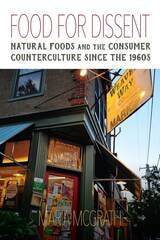
Food for Dissent
Natural Foods and the Consumer Counterculture since the 1960sMaria McGrath
University of Massachusetts Press, 2019
In the 1960s and early 1970s, countercultural rebels decided that, rather than confront the system, they would create the world they wanted. The natural foods movement grew out of this contrarian spirit. Through a politics of principled shopping, eating, and entrepreneurship, food revolutionaries dissented from corporate capitalism and mainstream America.
In Food for Dissent, Maria McGrath traces the growth of the natural foods movement from its countercultural fringe beginning to its twenty-first-century “food revolution” ascendance, focusing on popular natural foods touchstones—vegetarian cookbooks, food co-ops, and health advocates. Guided by an ideology of ethical consumption, these institutions and actors spread the movement's oppositionality and transformed America's foodscape, at least for some. Yet this strategy proved an uncertain instrument for the advancement of social justice, environmental defense, and anti-corporatism. The case studies explored in Food for Dissent indicate the limits of using conscientious eating, shopping, and selling as tools for civic activism.

Honey, I'm Homemade
Sweet Treats from the Beehive across the Centuries and around the WorldEdited by May Berenbaum, Illustrated by Nils Cordes
University of Illinois Press, 2010
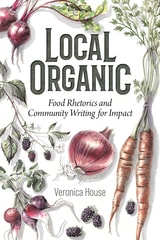
Local Organic
Food Rhetorics and Community Writing for ImpactVeronica House
Utah State University Press, 2025
Local Organic offers writing and rhetoric faculty and graduate students an ecological methodology to produce, teach, and theorize writing to help communities engage with a wide array of social issues and to work toward individual and community-level impacts.
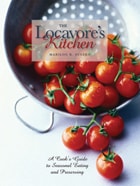
The Locavore’s Kitchen
A Cook’s Guide to Seasonal Eating and PreservingMarilou K. Suszko
Ohio University Press, 2011
More and more Americans are becoming dedicated locavores, people who prefer to eat locally grown or produced foods and who enjoy the distinctive flavors only a local harvest can deliver. The Locavore’s Kitchen invites readers to savor homegrown foods that come from the garden, the farm stand down the road, or local farmers’ markets through cooking and preserving the freshest ingredients.
In more than 150 recipes that highlight seasonal flavors, Marilou K. Suszko inspires cooks to keep local flavors in the kitchen year round. From asparagus in the spring to pumpkins in the fall, Suszko helps readers learn what to look for when buying seasonal homegrown or locally grown foods as well as how to store fresh foods, and which cooking methods bring out fresh flavors and colors. Suszko shares tips and techniques for extending seasonal flavors with detailed instructions on canning, freezing, and dehydrating and which methods work best for preserving texture and flavor.
The Locavore’s Kitchen is an invaluable reference for discovering the delicious world of fresh, local, and seasonal foods.

The Pinon Pine
A Natural And Cultural HistoryRonald M. Lanner
University of Nevada Press, 1981
An engaging look at the history of the piñon pine and its ecosystem. Combining natural history and observations of the cultural importance of the tree to both native Indians and European settlers, Lanner provides information on the management of the tree and its interdependence with the birds and animals of the piñon-juniper woodland. Science, cultural history, and ecologicall issues, plus delicious recipes using the piñon pine nuts, make for a concise natural and cultural history of the piñon pine.
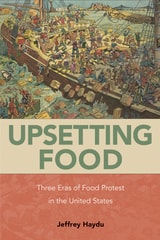
Upsetting Food
Three Eras of Food Protests in the United StatesJeffrey Haydu
Temple University Press, 2021
Battle lines have long been drawn over how food is produced, what food is made available to whom, and how best to protect consumers from risky or unhealthy food. Jeffrey Haydu resurrects the history of food reform and protest in Upsetting Food, showing how activists defined food problems, articulated solutions, and mobilized for change in the United States.
Haydu’s sociological history starts in the 1830s with diet reformer Sylvester Graham, who blamed alcohol and store-bought bread—signs of a commercializing urban society—for poor health and moral decline. His successors at the turn of the twentieth century rallied against impure food and pushed for women to be schooled in scientific food preparation and nutrition. Decades later, in the 1960s and ’70s, a grassroots movement for organic food battled commercial food production in favor of food grown ecologically, by small farmers, and without artificial chemicals.
Each campaign raised doubts about food safety, health, and transparency, reflecting how a capitalist system can undermine trust in food. But Haydu also considers how each movement reflects the politics, inequalities, and gender relations of its time. And he traces how outcomes of each campaign laid the groundwork for the next. The three eras thus come together as parts of a single, recurring food movement.
Upsetting Food offers readers a historical background to better understand contemporary and contentious food politics.