Results by title
19 books match the query 'Naturalism in literature'
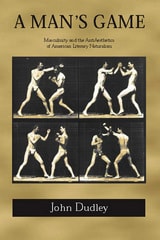
A Man's Game
Masculinity and the Anti-Aesthetics of American Literary NaturalismJohn Dudley
University of Alabama Press, 2004
Demonstrates how concepts of masculinity shaped the aesthetic foundations of literary naturalism
A Man’s Game explores the development of American literary naturalism as it relates to definitions of manhood in many of the movement’s key texts and the aesthetic goals of writers such as Stephen Crane, Jack London, Frank Norris, Edith Wharton, Charles Chestnutt, and James Weldon Johnson. John Dudley argues that in the climate of the late 19th century, when these authors were penning their major works, literary endeavors were widely viewed as frivolous, the work of ladies for ladies, who comprised the vast majority of the dependable reading public. Male writers such as Crane and Norris defined themselves and their work in contrast to this perception of literature. Women like Wharton, on the other hand, wrote out of a skeptical or hostile reaction to the expectations of them as woman writers.
Dudley explores a number of social, historical, and cultural developments that catalyzed the masculine impulse underlying literary naturalism: the rise of spectator sports and masculine athleticism; the professional role of the journalist, adopted by many male writers, allowing them to camouflage their primary role as artist; and post-Darwinian interest in the sexual component of natural selection. A Man’s Game also explores the surprising adoption of a masculine literary naturalism by African American writers at the beginning of the 20th century, a strategy, despite naturalism's emphasis on heredity and genetic determinism, that helped define the black struggle for racial equality

American Naturalism and the Jews
Garland, Norris, Dreiser, Wharton, and CatherDonald Pizer
University of Illinois Press, 2007
Culture, Genre, and Literary Vocation
Selected Essays on American LiteratureMichael Davitt Bell
University of Chicago Press, 2000
Throughout, Bell revisits issues of genre with an eye toward the unexpected details of authors' lives, and invites us to reconsider the hidden functions that terms such as "romanticism" and "realism" served for authors and their critics. Whether tracing the demands of the market or the expectations of readers, Bell examines the intimate relationship between literary production and culture; each essay closely links the milieu in which American writers worked with the trajectory of their storied careers.
Dissecting Stephen King
From the Gothic to Literary NaturalismHeidi Strengell
University of Wisconsin Press, 2005
Ultimately, Strengell shows how King shatters our illusions of safety and control: "King places his decent and basically good characters at the mercy of indifferent forces, survival depending on their moral strength and the responsibility they may take for their fellow men."
Documents of American Realism and Naturalism
Donald Pizer
Southern Illinois University Press, 1998
Donald Pizer presents the major critical discussions of American realism and naturalism from the beginnings of the movement in the 1870s to the present. He includes the most often cited discussions ranging from William Dean Howells, Henry James, and Frank Norris in the late nineteenth century to those by V. L. Parrington, Malcolm Cowley, and Lionel Trilling in the early twentieth century. To provide the full context for the effort to interpret the nature and significance of realism and naturalism during the periods when the movements were live issues on the critical scene, however, he also includes many uncollected essays. His selections since World War II reflect the major recent tendencies in academic criticism of the movements.
Through introductions to each of the three sections, Pizer provides background, delineating the underlying issues motivating attempts to attack, defend, or describe American realism and naturalism. In particular, Pizer attempts to reveal the close ties between criticism of the two movements and significant cultural concerns of the period in which the criticism appeared. Before each selection, Pizer provides a brief biographical note and establishes the cultural milieu in which the essay was originally published. He closes his anthology with a bibliography of twentieth-century academic criticism of American realism and naturalism.
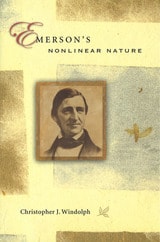
Emerson's Nonlinear Nature
Christopher J. Windolph
University of Missouri Press, 2007
In this provocative study, Christopher Windolph analyzes Emersonian naturalism from the standpoint of nonlinearity, offering new ways of reading and thinking about Emerson’s stance toward naturalism and the influence of science on his thought. Drawing on ideas in perspective theory, architecture, and nonlinear dynamics to argue that Emerson’s natural philosophy follows from his analysis of the development of organic forms, Windolph breaks new ground in Emerson studies by exploring how considerations of shape and the act of seeing underpin all of Emerson’s theories about nature.
Bringing to his study a focused attention to the history of Western science and philosophy, Windolph reexamines Emerson’s understanding of how the act of seeing occurs and of the eye’s ability to see through appearances to organizing principles, showing how Emerson’s naturalism extends beyond the narrow confines of traditional linear science. Through extensive readings of Emerson’s journals, essays, and lectures, Windolph shows that Emerson was an empirical idealist who integrated a scientific approach to nature with an exploration of nonlinear principles, revealing him to be more prescient in his writings about certain recent developments in scientific thought than has been realized.
This work makes a major contribution to the ongoing study of Emerson and science, expanding Emerson’s role as a major American philosopher while rebutting those who see him primarily as a rhetorician or poetic propagandist. Emerson’s Nonlinear Nature opens new ways of thinking about Emerson’s work in its nineteenth-century contexts, reassesses his reception in twentieth-century criticism, and makes a strong case for his continuing relevance in the century ahead.

Fictions of the Bad Life
The Naturalist Prostitute and Her Avatars in Latin American Literature, 1880–2010Claire Thora Solomon
The Ohio State University Press, 2014
Fictions of the Bad Life illustrates how at very different moments—the turn of the twentieth century, the 1920s–30s, and finally the turn of the twenty-first century—the past is rewritten to accommodate contemporary desires for historical belonging and national identity, even as these efforts inevitably re-inscribe the repressed colonial history they wish to change.
Fighting Words
Polemics and Social Change in Literary NaturalismIra Wells
University of Alabama Press, 2013
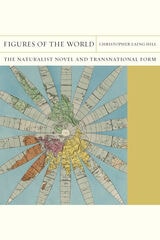
Figures of the World
The Naturalist Novel and Transnational FormChristopher Laing Hill
Northwestern University Press, 2020
The book begins by tracing the history of naturalist fiction from the 1860s into the twentieth century and the reasons it spread around the world. Hill explores the development of three naturalist figures—the degenerate body, the self-liberated woman, and the social milieu—through close readings of fiction from France, Japan, and the United States. Rather than genealogies of European influence or the domination of cultural “peripheries” by the center, novels by Émile Zola, Tayama Katai, Frank Norris, and other writers reveal conspicuous departures from metropolitan models as writers revised naturalist methods to address new social conditions. Hill offers a new approach to studying culture on a large scale for readers interested in literature, the arts, and the history of ideas.
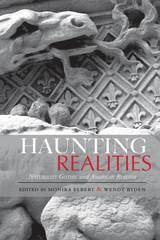
Haunting Realities
Naturalist Gothic and American RealismEdited by Monika Elbert and Wendy Ryden
University of Alabama Press, 2017
An innovative collection of essays examining the sometimes paradoxical alignment of Realism and Naturalism with the Gothic in American literature to highlight their shared qualities
Following the golden age of British Gothic in the late eighteenth century, the American Gothic’s pinnacle is often recognized as having taken place during the decades of American Romanticism. However, Haunting Realities explores the period of American Realism—the end of the nineteenth century—to discover evidence of fertile ground for another age of Gothic proliferation.
At first glance, “Naturalist Gothic” seems to be a contradiction in terms. While the Gothic is known for its sensational effects, with its emphasis on horror and the supernatural, the doctrines of late nineteenth-century Naturalism attempted to move away from the aesthetics of sentimentality and stressed sobering, mechanistic views of reality steeped in scientific thought and the determinism of market values and biology. Nonetheless, what binds Gothicism and Naturalism together is a vision of shared pessimism and the perception of a fearful, lingering presence that ominously haunts an impending modernity. Indeed, it seems that in many Naturalist works reality is so horrific that it can only be depicted through Gothic tropes that prefigure the alienation and despair of modernism.
In recent years, research on the Gothic has flourished, yet there has been no extensive study of the links between the Gothic and Naturalism, particularly those which stem from the early American Realist tradition. Haunting Realities is a timely volume that addresses this gap and is an important addition to scholarly work on both the Gothic and Naturalism in the American literary tradition.
Imagining the Primitive in Naturalist and Modernist Literature
Gina M. Rossetti
University of Missouri Press, 2006

Realism and Naturalism in Nineteenth-Century American Literature, Revised Edition
Donald Pizer
Southern Illinois University Press, 1984
The 1966 edition of this book has become a standard work. In this new, revised edition, Pizer has dropped three chapters and has refined and extended the work by adding six: “American Literary Naturalism: An Approach Through Form,” “American Literary Naturalism: The Example of Dreiser,” “The Problem of Philosophy in the Naturalistic Novel,” “Hamlin Garland’s 1891 Main-Travelled Roads: Local Color as Art,” “Jack London: The Problem of Form,” and “Dreiser’s ‘Nigger Jeff’: The Development of an Aesthetic.”
The book contains definitions of realism and naturalism based on representative novels of the period ranging from Howells’ Rise of Silas Lapham to Crane’s Red Badge of Courage; analyses of the literary criticism of the age, stressing that of Howells, Garland, and Norris; and close readings of specific works by major figures of the period.
Recalling the Wild
Naturalism and the Closing of the American WestLawlor, Mary
Rutgers University Press, 2000
Ever since the first interactions between Europeans and Native Americans, the “West” has served as a site of complex geographical, social and cultural transformation. American literature is defined, in part, by the central symbols derived from these points of contact. By the end of the nineteenth century, the Western frontier was declared “closed,” a demise solidified by Frederick Jackson Turner’s influential essay “The Significance of the Frontier in American History (1893). At the same time, “naturalism” was popularized by the writings of Frank Norris, Stephen Crane, Jack London, Willa Cather, and the photographs of Edward Curtis. Though very different artists, they were united by their common attraction to the mythic American West.
As she investigates the interactions of representations of the West, Lawlor effortlessly melds literary studies, American studies, and history. She traces the cultural conception of the American West through its incarnations in the “westernism” of Daniel Boone and James Fenimore Cooper and the romanticism of the expansive frontier they helped formulate. Simultaneously, however, the influence of evolutionism and the styles of French naturalism began to challenge this romantic idiom. This naturalistic discourse constructed the West as a strictly material place, picturing a limited and often limiting geography that portrayed regional identity as the product of material “forces” rather than of individualistic enterprise.
With subtle, probing language, Lawlor explains how literary and artistic devices helped shape the idea of the American West and the changing landscape of the continent at the turn of the last century.

Resisting Regionalism
Gender And Naturalism In American Fiction, 1885-1915Donna Campbell
Ohio University Press, 1997
When James Lane Allen defined the “Feminine Principle” and the “Masculine Principle” in American fiction for the Atlantic Monthly in 1897, he in effect described local color fiction and naturalism, two branches of realism often regarded as bearing little relationship to each other. In this award-winning study of both movements, Resisting Regionalism explores the effect the cultural dominance of women’s local color fiction in the 1890’s had on young male naturalist writers, who rebelled against the local colorists and their “teacup tragedies.”
An immensely popular genre, local color fiction reached its peak in the 1880s in such literary journals as Harper’s Monthly, Scribner’s, the Atlantic Monthly, and the Century. These short stories exhibited local “characters,” depicted marginal groups and vanishing folkways, and addressed issues of absence, loss, limitation, and the past. Despite such prickly themes, according to Donna Campbell, local color fiction “fulfilled some specific needs of the public – for nostalgia, for a retreat into mildly exotic locales, for a semblance of order preserved in ritual.”
By the turn of the century, however, local color fiction was fading from the scene, supplanted by writers of adventure fiction and historical romances, with whom local colorists increasingly merged, and opposed by the naturalists. In examining this historic shift, Resisting Regionalism shows that far from being distanced from local color fiction, nationalism emerged in part as a dissenting response to its popularity and to the era’s concerns about the dominance of feminine influence in American literature. The new generation of authors, including Crane, Norris, London, Frederic, Wharton, resisted the cultural myths and narrative strategies common to local colorists Sarah Orne Jewett, Rose Terry Cooke, Mary E. Wilkins Freeman, and Constance Fenimore Woolson. Yet, as Campbell underscores in her analysis of Stephan Crane’s The Monster, the naturalists could, and did, integrate local color conventions with the grotesque and horrifying to powerful effect.
In clear, accessible prose, Resisting Regionalism provides fresh readings of naturalistic works in the context of the dispute between local color and naturalism. In the process, this book shows the debt naturalism owes to local color fiction and illuminates a neglected but significant literary era.
The Vast and Terrible Drama
American Literary Naturalism in the Late Nineteenth CenturyEric Carl Link
University of Alabama Press, 2004
A broad treatment of the cultural, social, political, and literary under-pinnings of an entire period and movement in American letters
The Vast and Terrible Drama is a critical study of the context in which authors such as Oliver Wendell Holmes, Stephen Crane, Frank Norris, Theodore Dreiser, and Jack London created their most significant work. In 1896 Frank Norris wrote: "Terrible things must happen to the characters of the naturalistic tale. They must be twisted from the ordinary . . . and flung into the throes of a vast and terrible drama." There could be "no teacup tragedies here." This volume broadens our understanding of literary naturalism as a response to these and other aesthetic concerns of the 19th century.
Themes addressed include the traditionally close connection between French naturalism and American literary naturalism; relationships between the movement and the romance tradition in American literature, as well as with utopian fictions of the 19th century; narrative strategies employed by the key writers; the dominant naturalist theme of determinism; and textual readings that provide broad examples of the role of the reader. By examining these and other aspects of American literary naturalism, Link counters a century of criticism that has perhaps viewed literary naturalism too narrowly, as a subset of realism, bound by the conventions of realistic narration.

Theory and Practice of American Literary Naturalism
Selected Essay and ReviewsDonald Pizer
Southern Illinois University Press, 1993
In his first book devoted exclusively to naturalism, Donald Pizer brings together thirteen essays and four reviews written over a thirty-year period that in their entirety constitute a full-scale interpretation of the basic character and historical shape of naturalism in America.
The essays fall into three groups. Some deal with the full range of American naturalism, from the 1590s to the late twentieth century, and some are confined either to the 1890s or to the twentieth century. In addition to the essays, an introduction in which Pizer recounts the development of his interest in American naturalism, reviews of recent studies of naturalism, and a selected bibliography contribute to an understanding of Pizer’s interpretation of the movement.
One of the recurrent themes in the essays is that the interpretation of American naturalism has been hindered by the common view that the movement is characterized by a commitment to Emile Zola’s deterministic beliefs and that naturalistic novels are thus inevitably crude and simplistic both in theme and method. Rather than accept this notion, Pizer insists that naturalistic novels be read closely not for their success or failure in rendering obvious deterministic beliefs but rather for what actually does occur within the dynamic play of theme and form within the work.
Adopting this method, Pizer finds that naturalistic fiction often reveals a complex and suggestive mix of older humanistic faiths and more recent doubts about human volition, and that it renders this vital thematic ambivalence in increasingly sophisticated forms as the movement matures. In addition, Pizer demonstrates that American naturalism cannot be viewed monolithically as a school with a common body of belief and value. Rather, each generation of American naturalists, as well as major figures within each generation, has responded to threads within the naturalistic impulse in strikingly distinctive ways. And it is indeed this absence of a rigid doctrinal core and the openness of the movement to individual variation that are responsible for the remarkable vitality and longevity of the movement.
Because the essays have their origin in efforts to describe the general characteristics of American naturalism rather than in a desire to cover the field fully, some authors and works are discussed several times (though from different angles) and some referred to only briefly or notat all. But the essays as a collection are "complete" in the sense that they comprise an interpretation of American naturalism both in its various phases and as a whole. Those authors whose works receive substantial discussion include Stephen Crane, Frank Norris, Theodore Dreiser, Edith Wharton, James T. Farrell, Norman Mailer, Joyce Carol Oates, and William Kennedy. Of special interest is Pizer’s essay on Ironweed, which appears here for the first time.
Twentieth-Century American Literary Naturalism
An InterpretationDonald Pizer
Southern Illinois University Press, 1982
Scorned by critics since birth, decreed dead by many, naturalism, according to Donald Pizer, is “one of the most persistent and vital strains in American fiction, perhaps the only modern literary form in America that has been both popular and significant.”
To define naturalism and explain its tenacious hold throughout the twentieth century on the American creative imagination, Pizer explores six novels: James T. Farrell’s Studs Lonigan, John Dos Passos’s U.S.A., John Steinbeck’s The Grapes of Wrath, Norman Mailer’s The Naked and the Dead, William Styron’s Lie Down in Darkness, and Saul Bellow’s The Adventures of Augie March.
Pizer’s approach to these novels is empirical; he does not wrench each novel awkwardly until it fits his framework of generalizations and principles; rather, he approaches the novels as fiction and arrives at his definition through his close reading of the works.
Establishing the background of naturalism, Pizer explains that it comes under attack because it is “sordid and sensational in subject matter,” it challenges “man’s faith in his innate moral sense and thus his responsibility for his actions,” and it is so full of “social documentation” that it is often dismissed as little more than a photographic record of a life or an era; thus the “aesthetic validity of the naturalistic novel has often been questioned.”
Pizer posits the 1890s, the 1930s,and the late 1940s as the decades when naturalism flourished in America. He concentrates on literary criticism, not on the philosophy ofnaturalism, to show that literary criticism can make a contribution to a particularly muddled area of literary history—a naturalism that is alive and changing, thus resisting the neat definitions reserved for the dead.
Unguessed Kinships
Naturalism and the Geography of Hope in Cormac McCarthySteven Frye
University of Alabama Press, 2023
Literary naturalism at play in one of America’s most visionary novelists: Cormac McCarthy
It took six novels and nearly thirty years for Cormac McCarthy to find commercial success with the National Book Award–winning All the Pretty Horses, followed by major prizes, more best sellers, and Hollywood adaptations of his work. Those successes, though, have obscured McCarthy’s commitment to an older form of literary expression: naturalism.
It is hardly a secret that McCarthy’s work tends to darker themes: violence, brutality, the cruel indifference of nature, themes which would not be out of place in the writing of Jack London or Stephen Crane. But literary naturalism is more than the oversimplified Darwinism that many think of. Nature may be red in tooth and claw, and humans are part of nature, but the humanity depicted in naturalist literature is capable of love, selflessness, and spirituality, as well.
In Unguessed Kinships, Steven Frye illuminates all these dimensions of McCarthy’s work. In his novels and plays, McCarthy engages both explicitly and obliquely with the project of manifest destiny, in the western drama Blood Meridian, the Tennessee Valley Authority-era Tennessee novels, and the atomic frontier of Alamogordo in Cities of the Plain. McCarthy’s concerns are deeply religious and philosophical, drawing on ancient Greek philosophy, Gnosticism, and Nietzsche, among other sources. Frye argues for McCarthy not merely as a naturalist writer but as a naturalist in the most expansive sense. Unguessed Kinships includes biographical and historical context in each chapter, widening the appeal of the text to not just naturalists or McCarthy scholars but anyone studying the literature of the South or the West.
Women, Compulsion, Modernity
The Moment of American NaturalismJennifer L. Fleissner
University of Chicago Press, 2004
Fleissner shows that this era's expanding opportunities for women were inseparable from the same modern developments—industrialization, consumerism—typically believed to constrain human freedom. With Women, Compulsion, and Modernity, Fleissner creates a new language for the strange way the writings of the time both broaden and question individual agency.