Results by title
7 books match the query 'New Age'
China Enters the Twentieth Century
Chang Chih-tung and the Issues of a New Age, 1895-1909Daniel H. Bays
University of Michigan Press, 1978
Healing Songs
Ted Gioia
Duke University Press, 2006
Until recently, that is. Over the past few decades there has been a resurgence of interest in healing music. In the midst of this nascent revival, Ted Gioia, a musician, composer, and widely praised author, offers the first detailed exploration of the uses of music for curative purposes from ancient times to the present. Gioia’s inquiry into the restorative powers of sound moves effortlessly from the history of shamanism to the role of Orpheus as a mythical figure linking Eastern and Western ideas about therapeutic music, and from Native American healing ceremonies to what clinical studies can reveal about the efficacy of contemporary methods of sonic healing.
Gioia considers a broad range of therapies, providing a thoughtful, impartial guide to their histories and claims, their successes and failures. He examines a host of New Age practices, including toning, Cymatics, drumming circles, and the Tomatis method. And he explores how the medical establishment has begun to recognize and incorporate the therapeutic power of song. Acknowledging that the drumming circle will not—and should not—replace the emergency room, nor the shaman the cardiologist, Gioia suggests that the most promising path is one in which both the latest medical science and music—with its capacity to transform attitudes and bring people together—are brought to bear on the multifaceted healing process.
In Healing Songs, as in its companion volume Work Songs, Gioia moves beyond studies of music centered on specific performers, time periods, or genres to illuminate how music enters into and transforms the experiences of everyday life.
Nature Religion in America
From the Algonkian Indians to the New AgeCatherine L. Albanese
University of Chicago Press, 1990
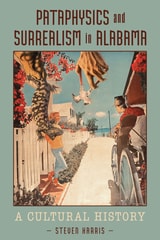
Pataphysics and Surrealism in Alabama
A Cultural HistorySteven Harris
University of Alabama Press, 2026
An exploration of the surrealist artists, musicians, and performers who forged a unique experimental arts community in Alabama
Pataphysics and Surrealism in Alabama: A Cultural History is the first book to uncover a remarkable chapter in American experimental art, music, dance and writing, tracing the activities of a creative group known as Raudelunas, the music collective Transcendprovisation, and the surrealist association initially called Glass Veal: a series of interrelated artistic and cultural movements that originated in Tuscaloosa and Birmingham, Alabama, during the 1970s. Drawing on extensive archival research and firsthand accounts, including interviews with twenty-six participants in these groups, sound recordings, publications, and other primary sources, Steven Harris traces the history of a vibrant creative community that began when three University of Alabama students started improvising music together and encouraged others to join them.
From these sessions emerged a dynamic network of performers and artists whose work challenged conventional boundaries between disciplines. Inspired by musical improvisation, surrealism, and pataphysics, participants embraced spontaneity and absurdity as they developed a positive expression of creativity that was both uniquely Southern and sharply distinctive from the dominant culture that surrounded them.
Harris situates these movements within broader histories of Alabama, Dada, pataphysics, surrealism, and improvised music and dance while charting their lasting influence on the artists who participated in them. Featuring a timeline of major events, biographies of key members, and an anthology of representative writings, Pataphysics and Surrealism in Alabama is an essential contribution to the history of American experimental culture.

Political Economy, Rebooted
Old Concepts for a New AgeGreta Krippner, Marion Fourcade, and Sarah Quinn, editors
Duke University Press, 2027
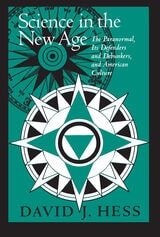
Science In The New Age
The Paranormal, Its Defenders & Debunkers,David J. Hess
University of Wisconsin Press, 1993
Hess begins by looking at each group’s unique version of knowledge, science, and religion and at its story about the other groups. Comparing the various discourses, texts, writers, and groups as cultures, he shows how skeptics, parapsychologists, and New Agers may disagree vehemently with each other, but end up sharing many rhetorical strategies, metaphors, models, values, and cultural categories. Furthermore, he argues, their shared “paraculture” has a great deal in common with the larger culture of the United States. The dialogue on the paranormal, Hess concludes, has as much to do with gender, power, and cultural values as it does with spirits, extrasensory perception, and crystal healing.
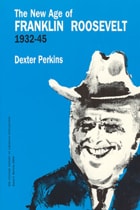
The New Age of Franklin Roosevelt, 1932-1945
Dexter Perkins
University of Chicago Press, 1957
Scarcely had the New Deal become a part of American life, however, when World War II broke out, and America became a global power leading the Allies to victory, began development of the atomic bomb, and laid plans for the United Nations organization.
In the opinion of many historians, F.D.R.'s thirteen years are the most important era in twentieth-century American history. Now Dexter Perkins takes an objective look at Roosevelt and his times—the great depression, the great social experiment, the great war—and presents a balanced evaluation of America from the Blue Eagle days of NRA to the shocking April afternoon of Roosevelt's death.
"A fair-minded, clear, and brief guide to that complex man and even more complex era."—Frank Freidel, Christian Science Monitor