Results by title
13 books match the query 'New Approaches'
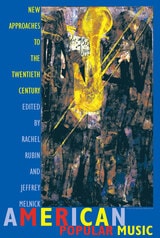
American Popular Music
New Approaches to the Twentieth CenturyRachel Rubin
University of Massachusetts Press, 2001
Designed as a broad introductory survey, and written by experts in the field, this book examines the rise of American music over the past hundred years — the period in which that music came into its own and achieved unprecedented popularity. Beginning with a look at music as a business, eleven essays explore a variety of popular musical genres, including Tin Pan Alley, blues, jazz, country, gospel, rhythm and blues, rock and roll, folk, rap, and Mexican American corridos. Reading these essays, we come to see that the forms created by one group often appeal to, and are in turn influenced by, other groups—across lines of race, ethnicity, class, gender, region, and age. The chapters speak to one another, arguing for the primacy of such concepts as minstrelsy, urbanization, hybridity, and crossover as the most powerful tools for understanding American popular music. Moving beyond outdated music-industry categories and misleading genre labels, while acknowledging the complexities of the market, the book recovers and reinforces the essential blackness of much popular music—even a presumably white form like country and western. In addition to Rachel Rubin and Jeffrey Melnick, contributors include Reebee Garofalo, Geoffrey Jacques, Kip Lornell, Mark Anthony Neal, Millie Rahn, David Sanjek, James Smethurst, Elijah Wald, and Gail Hilson Woldu.
Beyond Tordesillas
New Approaches to Comparative Luso-Hispanic StudiesEdited by Robert Patrick Newcomb and Richard A. Gordon
The Ohio State University Press, 2017
The jumping-off point for Beyond Tordesillas is the critic Jorge Schwartz’s evocative call to arms, “Down with Tordesillas!” In this groundbreaking essay, Schwartz looks to the imaginary line created by the Treaty of Tordesillas (1494), which divided the known world into Spanish and Portuguese spheres of influence, to stand in for generations of literary and cultural noncommunication between the Spanish- and Portuguese-speaking spheres, and their attendant academic disciplines. This volume’s contributions range topically across continents, from the Iberian Peninsula to Latin American countries. They also range across genres, with studies that analyze fictional narrative, music, performance, and visual culture. Beyond Tordesillas forcefully challenges the disciplinary—and indeed, arbitrary—boundaries that for too long have separated Hispanic and Luso-Brazilian studies.
Chaos, Creativity, Completion
New Approaches to Writing and ADHDEdited by Chloe Martinez and Lisa Van Orman Hadley
University of Chicago Press, 2026
A rising number of ADHD diagnoses, particularly among adults, is not only confirmed by medical studies and mainstream reporting but also borne out across social media and elsewhere among people who’d been privately coping with persistent, often inexpressible challenges. Many of the contributors to this collection can attest to how a later-in-life diagnosis radically demystified the patterns, impulses, and impasses that had affected their lives and their writing. The essays in Chaos, Creativity, Completion reflect the ways poets, novelists, memoirists, filmmakers, and others have come to understand and engage the relationship between their ADHD and their creative tool kits.
These essays consider how writers can embrace rather than mask their neurodifference, offering multiple ways of finding writing practices that work for ADHD brains—including techniques that often look quite different from traditional writing instruction. Some essays are analytical, some are reflective, and some are delightfully weird, employing humor, research, personal narrative, deep description, close reading, and experimental approaches to genre and form. Each essay also concludes with a writing prompt, providing readers with opportunities to expand their own creative toolkits. Finally, the book includes an interview with David Kessler, a licensed therapist and nationally recognized ADHD advocate, and an appendix with a glossary of helpful terms and a list of recommended resources, from books and organizations to apps and gadgets.
Just as the experience of ADHD varies from person to person, so, too, do the ways those experiences can be expressed. Chaos, Creativity, Completion is a kaleidoscopic, adventurous series of takes on what writing looks like today.
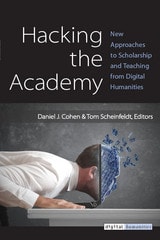
Hacking the Academy
New Approaches to Scholarship and Teaching from Digital HumanitiesDaniel J. Cohen and Tom Scheinfeldt, Editors
University of Michigan Press, 2013
On May 21, 2010, Daniel J. Cohen and Tom Scheinfeldt posted the following provocative questions online:
“Can an algorithm edit a journal? Can a library exist without books? Can students build and manage their own learning management platforms? Can a conference be held without a program? Can Twitter replace a scholarly society?”
As recently as the mid-2000s, questions like these would have been unthinkable. But today serious scholars are asking whether the institutions of the academy as they have existed for decades, even centuries, aren’t becoming obsolete. Every aspect of scholarly infrastructure is being questioned, and even more importantly, being hacked. Sympathetic scholars of traditionally disparate disciplines are canceling their association memberships and building their own networks on Facebook and Twitter. Journals are being compiled automatically from self-published blog posts. Newly minted PhDs are forgoing the tenure track for alternative academic careers that blur the lines between research, teaching, and service. Graduate students are looking beyond the categories of the traditional CV and building expansive professional identities and popular followings through social media. Educational technologists are “punking” established technology vendors by rolling out their own open source infrastructure.
Here, in Hacking the Academy, Daniel J. Cohen and Tom Scheinfeldt have gathered a sampling of the answers to their initial questions from scores of engaged academics who care deeply about higher education. These are the responses from a wide array of scholars, presenting their thoughts and approaches with a vibrant intensity, as they explore and contribute to ongoing efforts to rebuild scholarly infrastructure for a new millennium.
Lessons and Legacies XIII
New Approaches to an Integrated History of the Holocaust: Social History, Representation, TheoryEdited and with an introduction by Alexandra Garbarini and Paul B. Jaskot
Northwestern University Press, 2018
Lifeways in the Northern Maya Lowlands
New Approaches to Archaeology in the Yucatán PeninsulaEdited by Jennifer P. Mathews and Bethany A. Morrison
University of Arizona Press, 2006
By exploring various social and political levels of Maya society through a broad expanse of time, Lifeways in the Northern Maya Lowlands not only reconstructs a little-known past, it also suggests the broad implications of archaeology for related studies of tourism, household economies, and ethnoarchaeology. It is a benchmark work that pointedly demonstrates the need for researchers in both north and south to ignore modern geographic boundaries in their search for new ideas to further their understanding of the ancient Maya.
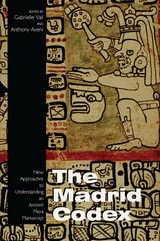
Madrid Codex
New Approaches to Understanding an Ancient Maya ManuscriptGabrielle Vail
University Press of Colorado, 2004
Contributors include: Harvey M. Bricker, Victoria R. Bricker, John F. Chuchiak IV, Christine L. Hernández, Bryan R. Just, Merideth Paxton, and John Pohl. Additional support for this publication was generously provided by the Eugene M. Kayden Fund at the University of Colorado.

New Approaches to Comparative Education
Edited by Philip G. Altbach and Gail P. Kelly
University of Chicago Press, 1986
New Approaches to Interpreter Education
Cynthia B. Roy
Gallaudet University Press, 2006
The latest addition to the Interpreter Education series expands the tools available to instructors with six new, vital chapters on new curricula and creative teaching methods. Series editor Cynthia B. Roy leads the way by calling for the use of a discourse-oriented curriculum for educating interpreters. In the following chapter, Claudia Angelelli outlines the bottom-line principles for teaching effective health-care interpreting, postulating a model that depends upon the development of skills in six critical areas: cognitive-processing, interpersonal, linguistics, professional, setting-specific, and sociocultural. Risa Shaw, Steven D. Collins, and Melanie Metzger collaborate on describing the process for establishing a bachelor of arts program in interpreting at Gallaudet University distinct from the already existent masters program.
In the fourth chapter, Doug Bowen-Bailey describes how to apply theories of discourse-based interpreter education in specific contexts by producing customized videos. Jemina Napier blends three techniques for instructing signed language interpreters in Australia: synthesizing sign and spoken language interpreting curricula; integrating various interpreting concepts into a theoretical framework; and combining online and face-to-face instruction. Finally, Helen Slatyer delineates the use of an action research methodology to establish a curriculum for teaching ad hoc interpreters of languages used by small population segments in Australia.
New Approaches to Latin American History
Edited by Richard Graham and Peter H. Smith
University of Texas Press, 1974
New Approaches to Latin American History incorporates methods and concepts from the social sciences without abandoning a distinctively historical approach. A collection of original essays by distinguished younger scholars, it proposes original concepts and methods for analyzing crucial problems in Latin American history.
Using as examples such subjects as salvery, dictatorship, immigration, and the relationship between land ownership and political power, the contributors show how approaches and techniques from psychology, political science, economics. and sociology can be applied to historical studies. The papers attempt to explain the thematic and substantive importance of the particular problems at hand; describe and evaluate standard approaches to them; propose original hypotheses; suggest methods for testing the hypotheses; or indicate major methodological or conceptual difficulties that have so far hampered such work.
Despite their diversity of content, the papers show strong underlying unities. First, they all point to the need for placing institutions and actions in a broad societal context. The authurs present an implicit, cumulative argument against the excessive isolation of historical phenomena. Second, they demonstrate the utility of interdisciplinary research. Third, they issue an implicit call for rigorous comparative analysis. The propositions formulated in these essays can best tested and modified in comparative fashion.
Ultimately this book deals with the exposition of a research style: a style based on systematic doubt, an awareness of the need for conceptual rigor, and a willingness to try new methodologies. For this reason it is of interest to historians in every field as well as to students of Latin America.
New Approaches to Resistance in Brazil and Mexico
John Gledhill and Patience A. Schell, eds.
Duke University Press, 2012
Contributors. Helga Baitenmann, Marcus J. M. de Carvalho, Guillermo de la Peña, John Gledhill, Matthew Gutmann, Maria Gabriela Hita, Alan Knight, Ilka Boaventura Leite, Jean Meyer, John Monteiro, Luis Nicolau Parés, Patricia R. Pessar, Patience A. Schell, Robert Slenes, Juan Pedro Viqueira, Margarita Zárate
New Approaches to Teaching Folk and Fairy Tales
Christa Jones
Utah State University Press, 2016
This interdisciplinary collection introduces scholarly perspectives on how to teach fairy tales in a variety of courses and academic disciplines, including anthropology, creative writing, children’s literature, cultural studies, queer studies, film studies, linguistics, second language acquisition, translation studies, and women and gender studies, and points the way to other intermedial and intertextual approaches. Challenging the fairy-tale canon as represented by the Brothers Grimm, Charles Perrault, Hans Christian Andersen, and Walt Disney, contributors reveal an astonishingly diverse fairy-tale landscape.
The book offers instructors a plethora of fresh ideas, teaching materials, and outside-the-box teaching strategies for classroom use as well as new and adaptable pedagogical models that invite students to engage with class materials in intellectually stimulating ways. A cutting-edge volume that acknowledges the continued interest in university courses on fairy tales, New Approaches to Teaching Folk and Fairy Tales enables instructors to introduce their students to a new, critical understanding of the fairy tale as well as to a host of new tales, traditions, and adaptations in a range of media.
Teaching Slavery
New Approaches to Britain's Colonial PastKatie Donington, Abdul Mohamud, Robin Whitburn, and Nicholas Draper
University College London, 2023
This groundbreaking book combines the latest academic research on Britain’s involvement in colonial slavery with innovative thinking on teaching “difficult histories” in the classroom. It addresses three main shortcomings in how slavery is taught in British secondary schools: insufficient teacher training in both historical content and pedagogy; a shortage of high-quality, research-informed teaching resources; and a lack of published guidance to support ethical and effective classroom engagement. Offering educators both historical and pedagogical approaches to discussing slavery, it examines key themes of race, gender, resistance, and abolition through illuminating historical examples.