Results by title
17 books match the query 'New Essays'
A Power to Translate the World
New Essays on Emerson and International CultureEdited by David LaRocca and Ricardo Miguel-Alfonso
Dartmouth College Press, 2016
Acquaintance, Knowledge, and Logic
New Essays on Bertrand Russell's "The Problems of Philosophy"Edited and with an Introduction by Donovan Wishon and Bernard Linsky
CSLI, 2015
After Jena
New Essays on Fichte's Later PhilosophyTom Rockmore
Northwestern University Press, 2008
The career of J. G. Fichte, a central figure in German idealism and in the history of philosophy, divides into two distinct phases: the first period, in which he occupied the chair of critical philosophy at the University of Jena (1794-1799); and the following period, after he left Jena for Berlin. Due in part to the inaccessibility of the German texts, Fichte scholarship in the English-speaking world has tended to focus on the Jena period, neglecting the development of this major thinker's mature development. The essays collected in this book begin to correct this imbalance. Concerned in a variety of ways with Fichte's post-Jena philosophy, these essays by distinguished and emerging scholars demonstrate the depth and breadth of Fichte scholarship being done in English.
With an introduction that locates the essays in philosophical and historical terms, the book divides into three related categories: Fichte’s development, his view of religion, and other aspects of his "popular" (or not-so-popular) philosophy. From a wide range of perspectives, the essays show how Fichte’s later development reflects the philosophical concerns of his time, the specific debates in which he engaged, and the complex events of his philosophical career.
Ancient Sex
New EssaysEdited by Ruby Blondell and Kirk Ormand, epilogue by David M. Halperin
The Ohio State University Press, 2015
Rather than reopening old debates, Ancient Sex takes up Foucault’s call for discursive analysis and elucidates some of the ways that ancient Greek and Roman texts and visual arts articulate a culturally specific discourse about sexual matters. Each contributor presupposes that sexual and gendered identities are discursively produced, and teases out some of the ways that the Greeks and Romans spoke and thought about these issues. Comprising essays by emerging and established scholars, this volume emphasizes in particular: sexual discourses about women; the interaction between sexual identities and class status; gender as an unstable discursive category (even in antiquity); and the relationships between ancient and modern sexual categories.
Between / Beyond / Hybrid
New Essays on TransdisciplinarityEdited by Hartmut von Sass
Diaphanes, 2019
Community and Solitude
New Essays on Johnson’s CircleLee, Anthony W
Bucknell University Press, 2019
Contributors: Christopher Catanese, James Caudle, Marilyn Francus, Christine Jackson-Holzberg, Claudia Thomas Kairoff, Elizabeth Lambert, Anthony W. Lee, James E. May, John Radner, and Lance Wilcox.
Published by Bucknell University Press. Distributed worldwide by Rutgers University Press.
Emergence and Embodiment
New Essays on Second-Order Systems TheoryBruce Clarke and Mark B. N. Hansen, eds.
Duke University Press, 2009
In response to the apparent dissolution of boundaries at work in the contemporary technosciences of emergence, neocybernetics observes that cognitive systems are operationally bounded, semi-autonomous entities coupled with their environments and other systems. Second-order systems theory stresses the recursive complexities of observation, mediation, and communication. Focused on the neocybernetic contributions of von Foerster, Francisco Varela, and Niklas Luhmann, this collection advances theoretical debates about the cultural, philosophical, and literary uses of their ideas. In addition to the interview with von Foerster, Emergence and Embodiment includes essays by Varela and Luhmann. It engages with Humberto Maturana’s and Varela’s creation of the concept of autopoiesis, Varela’s later work on neurophenomenology, and Luhmann’s adaptations of autopoiesis to social systems theory. Taken together, these essays illuminate the shared commitments uniting the broader discourse of neocybernetics.
Contributors. Linda Brigham, Bruce Clarke, Mark B. N. Hansen, Edgar Landgraf, Ira Livingston, Niklas Luhmann, Hans-Georg Moeller, John Protevi, Michael Schiltz, Evan Thompson, Francisco J. Varela, Cary Wolfe
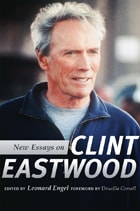
New Essays on Clint Eastwood
Leonard Engel
University of Utah Press, 2012
A common thread throughout the volume is the respect for Eastwood’s commitment to cinematic storytelling. Indi-vidually and collectively, the essays highlight the variety and complexity of Eastwood’s themes and his accomplish-ments throughout a lifetime of endeavors. Examining his Westerns and detective films illustrates how Eastwood left his iconic stamp on those genres, while discussion of his more recent films expounds on his use of family, history, and myth to transcend generic conventions and to project a hard-won vision of a united humanity beyond the separation of ethnic, racial, and national conflicts. Cumulatively, the essays remind us of his lifelong devotion to perfecting his artistry and his powers as a storyteller.
New Essays on Fichte's Later Jena Wissenschaftslehre
Daniel Breazeale and Tom Rockmore
Northwestern University Press, 2002
Peckinpah Today
New Essays on the Films of Sam PeckinpahEdited by Michael Bliss
Southern Illinois University Press, 2012
Written exclusively for this collection by today’s leading Peckinpah critics, the nine essays in Peckinpah Today explore the body of work of one of America’s most important filmmakers, revealing new insights into his artistic process and the development of his lasting themes. Edited by Michael Bliss, this book provides groundbreaking criticism of Peckinpah’s work by illuminating new sources, from modified screenplay documents to interviews with screenplay writers and editors.
Included is a rare interview with A. S. Fleischman, author of the screenplay for The Deadly Companions, the film that launched Peckinpah’s career in feature films. The collection also contains essays by scholar Stephen Prince and Paul Seydor, editor of the controversial special edition of Pat Garrett and Billy the Kid. In his essay on Straw Dogs, film critic Michael Sragow reveals how Peckinpah and co-scriptwriter David Zelag Goodman transformed a pulp novel into a powerful film. The final essay of the collection surveys Peckinpah’s career, showing the dark turn that the filmmaker’s artistic path took between his first and last films. This comprehensive approach reinforces the book’s dawn-to-dusk approach, resulting in a fascinating picture of a great filmmaker’s work.
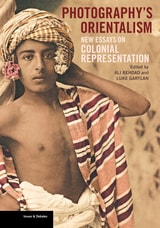
Photography's Orientalism
New Essays on Colonial RepresentationAli Behdad
J. Paul Getty Trust, The, 2013
Photography’s Orientalism offers the first in-depth cultural study of the works of European and non- European photographers active in the Middle East and India, focusing on the relationship between photographic, literary, and historical representations of this region and beyond. The essays explore the relationship between art and politics by considering the connection between the European presence there and aesthetic representations produced by traveling and resident photographers, thereby contributing to how the history of photography is understood.
Prairie Metropolis
New Essays on Winnipeg Social HistoryEsyllt W. Jones
University of Manitoba Press, 2009
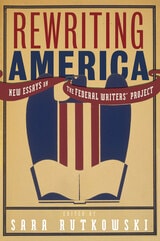
Rewriting America
New Essays on the Federal Writers' ProjectEdited by Sara Rutkowski
University of Massachusetts Press, 2022
Established in 1935, the Federal Writers’ Project (FWP) sent over 6,500 unemployed historians, teachers, writers, and librarians out to document America’s past and present in the midst of the Great Depression. The English poet W. H. Auden referred to this New Deal program as “one of the noblest and most absurd undertakings ever attempted by any state.”
Featuring original work by scholars from a range of disciplinary perspectives, this edited collection provides fresh insights into how this extraordinary program helped transform American culture. In addition to examining some of the major twentieth-century writers whose careers the FWP helped to launch—including Ralph Ellison, Richard Wright, and Margaret Walker—Rewriting America presents new perspectives on the role of African Americans, Mexican Americans, Asian Americans, and women on the project. Essays also address how the project’s goals continue to resonate with contemporary realities in the midst of major economic and cultural upheaval.
Along with the volume editor, contributors include Adam Arenson, Sue Rubenstein DeMasi, Racheal Harris, Jerrold Hirsch, Kathi King, Maiko Mine, Deborah Mutnick, Diane Noreen Rivera, Greg Robinson, Robert Singer, James Sun, and David A. Taylor.
Southern Women Playwrights
New Essays in History and CriticismEdited by Robert McDonald and Linda Rohrer Paige
University of Alabama Press, 2001
This timely collection addresses the neglected state of scholarship on southern women dramatists by bringing together the latest criticism on some of the most important playwrights of the 20th century.
Coeditors Robert McDonald and Linda Rohrer Paige attribute the neglect of southern women playwrights in scholarly criticism to "deep historical prejudices" against drama itself and against women artists in general, especially in the South. Their call for critical awareness is answered by the 15 essays they include in Southern Women Playwrights, considerations of the creative work of universally acclaimed playwrights such as Beth Henley, Marsha Norman, and Lillian Hellman (the so-called "Trinity") in addition to that of less-studied playwrights, including Zora Neale Hurston, Carson McCullers, Alice Childress, Naomi Wallace, Amparo Garcia, Paula Vogel, and Regina Porter.
This collection springs from a series of associated questions regarding the literary and theatrical heritage of the southern woman playwright, the unique ways in which southern women have approached the conventional modes of comedy and tragedy, and the ways in which the South, its types and stereotypes, its peculiarities, its traditions-both literary and cultural-figure in these women's plays. Especially relevant to these questions are essays on Lillian Hellman, who resisted the label "southern writer," and Carson McCullers, who never attempted to ignore her southernness.
This book begins by recovering little-known or unknown episodes in the history of southern drama and by examining the ways plays assumed importance in the lives of southern women in the early 20th century. It concludes with a look at one of the most vibrant, diverse theatre scenes outside New York today-Atlanta.
The Historical Renaissance
New Essays on Tudor and Stuart Literature and CultureEdited by Heather Dubrow and Richard Strier
University of Chicago Press, 1988
The volume includes studies of mid-Tudor culture as well as of Elizabethan and Stuart periods.
The Revival of Pragmatism
New Essays on Social Thought, Law, and CultureMorris Dickstein, ed.
Duke University Press, 1998
As the twenty-five intellectuals who take part in this discussion show, pragmatism has become a complex terrain on which a rich variety of contemporary debates have been played out. Contributors such as Richard Rorty, Stanley Cavell, Nancy Fraser, Robert Westbrook, Hilary Putnam, and Morris Dickstein trace pragmatism’s cultural and intellectual evolution, consider its connection to democracy, and discuss its complex relationship to the work of Emerson, Nietzsche, and Wittgenstein. They show the influence of pragmatism on black intellectuals such as W. E. B. Du Bois, explore its view of poetic language, and debate its effects on social science, history, and jurisprudence. Also including essays by critics of the revival such as Alan Wolfe and John Patrick Diggins, the volume concludes with a response to the whole collection from Stanley Fish.
Including an extensive bibliography, this interdisciplinary work provides an in-depth and broadly gauged introduction to pragmatism, one that will be crucial for understanding the shape of the transformations taking place in the American social and philosophical scene at the end of the twentieth century.
Contributors. Richard Bernstein, David Bromwich, Ray Carney, Stanley Cavell, Morris Dickstein, John Patrick Diggins, Stanley Fish, Nancy Fraser, Thomas C. Grey, Giles Gunn, Hans Joas, James T. Kloppenberg, David Luban, Louis Menand, Sidney Morgenbesser, Richard Poirier, Richard A. Posner, Ross Posnock, Hilary Putnam, Ruth Anna Putnam, Richard Rorty, Michel Rosenfeld, Richard H. Weisberg, Robert B. Westbrook, Alan Wolfe
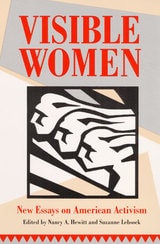
Visible Women
New Essays on American ActivismEdited by Nancy A. Hewitt and Suzanne Lebsock
University of Illinois Press, 1993
In this collection, fifteen leading historians of women and American history explore women's political action from 1830 to the present. Together, their contributions illustrate the tremendous scope and racial, ethnic, and class diversity of women's public activism while also clarifying various conceptual issues. Essays include an analysis of ideologies and strategies; suffrage militance in 1870s; ideas for a feminist approach to public life; labor feminism in the urban South; women's activism in Tampa, Florida; black women and economic nationalism; black women's clubs; the YMCA's place in the community; the role of Southern churchwomen in racial reform and transformation; and other topics.
"Establishes important links between citizenship, race, and gender following the Reconstruction amendments and the Dawes Act of 1887."--Sharon Hartmann Strom, American Historical Review