Results by title
3 books match the query 'New Forms'
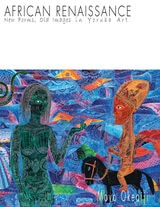
African Renaissance
New Forms, Old Images in Yoruba ArtM Okediji
University Press of Colorado, 2002
African Renaissance: New Forms, Old Images in Yoruba Art describes, analyzes, and interprets the historical and cultural contexts of an African art renaissance using the twentieth- and twenty-first-century transformation of ancient Yoruba artistic heritage. Juxtaposing ancient and contemporary Yoruba art, Moyo Okediji defines this art history through the lens of colonialism, an experience that served to both destroy ancient art traditions and revive Yoruba art in the twentieth century.
With vivid reproductions of paintings, prints, and drawings, Okediji describes how Yoruba art has replenished and redefined itself. Okediji groups the text into several broadly overlapping periods that intricately detail the journey of Yoruba art and artists: first through oppression by European colonialism, then the attainment of Nigeria’s independence and the new nation’s subsequent military coup, and ending with present-day native Yoruban artists fleeing their homeland.
Associative Democracy
New Forms of Economic and Social GovernancePaul Hirst
University of Massachusetts Press, 1994
Not simply a utopian idea, associative democracy calls for new forms of economic and social governance as supplements to representative democracy and market economies. It addresses the problems of the overload of big government by democratizing and empowering civil society. It transfers social provision to self-governing voluntary associations, while retaining public funding and political accountability. In the economic sphere, it advocates regional economic regulation through public-private partnerships, the promotion of self-governing industrial districts, and the democratization of the company.

Australian TV News
New Forms, Functions, and FuturesStephen Harrington
Intellect Books, 2013