Results by title
3 books match the query 'New Lives'
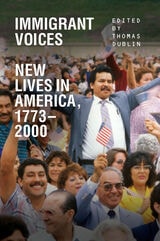
Immigrant Voices
New Lives in America, 1773-2000Edited by Thomas Dublin
University of Illinois Press, 2014
A classroom staple, Immigrant Voices: New Lives in America, 1773-2000 has been updated with writings that reflect trends in immigration to the United States through the turn of the twenty-first century. New chapters include a selection of letters from Irish immigrants fleeing the famine of the 1840s, writings from an immigrant who escaped the civil war in Liberia during the 1980s, and letters that crossed the U.S.-Mexico border during the late 1980s and early '90s. With each addition editor Thomas Dublin has kept to his original goals, which was to show the commonalities of the U.S. immigrant experience across lines of gender, nation of origin, race, and even time.

Old People, New Lives
Community Creation in a Retirement ResidenceJennie Keith
University of Chicago Press, 1982
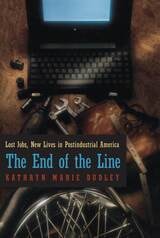
The End of the Line
Lost Jobs, New Lives in Postindustrial AmericaKathryn Marie Dudley
University of Chicago Press, 1994
"An excellent study not only of the cultural disruptions caused by the shutdown of Chrysler's operations in Kenosha, Wisconsin, but also of the ideology of progress that abetted the shutdown."—Stephen Amberg, Industrial and Labor Relations Review
"With the eye of an anthropologist, [Dudley] examines the tensions between the 'culture of hands' and the 'culture of mind.' Her account is especially instructive because, by many measures, Kenosha has successfully recovered, yet for many the pain still remains."—Booklist
"Exceptional. . . . Should be widely read."—Douglas Harper, Contemporary Sociology
"Make[s] clear what a tenuous concept economic security is, especially when the rules for achieving security are in flux."—Barbara Presley Noble, New York Times