Results by title
4 books match the query 'New Wave'
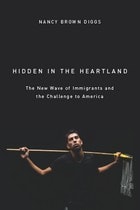
Hidden in the Heartland
The New Wave of Immigrants and the Challenge to AmericaNancy Brown Diggs
Michigan State University Press, 2011
As other teens returned home from school, thirteen-year-old José Silva headed for work at a restaurant, where he would remain until 2:00 a.m. Francisca Herrera, a tomato picker, was exposed to pesticides while she was pregnant and gave birth to a baby without arms or legs. Silva and Herrera immigrated illegally to the United States, and their experiences are far from unique. In this comprehensive, balanced overview of the immigration crisis, Nancy Brown Diggs examines the abusive, unethical conditions under which many immigrants work, and explores how what was once a border problem now extends throughout the country. Drawing from a wide spectrum of sources, Hidden in the Heartland demonstrates how the current situation is untenable for both illegal immigrants and American citizens. A vivid portrait of the immigration crisis, the book makes a passionate case for confronting this major human rights issue—a threat to the very unity of the country.
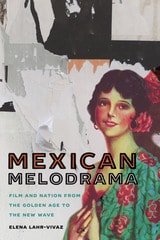
Mexican Melodrama
Film and Nation from the Golden Age to the New WaveElena Lahr-Vivaz
University of Arizona Press, 2016
Mexico’s Golden Age of film—the period from the 1930s to the 1950s—is considered “golden” due to both the prestige of the era’s stars and the critical and popular success of the films released. Golden Age directors often turned to the tropes of melodrama and allegory to offer spectators an image of an idealized Mexico and to spur the formation of a spectatorship united through shared tears and laughter. In contrast, Lahr-Vivaz demonstrates that new-wave directors of the 1990s and 2000s use the melodramatic mode to present a vision of fragmentation and to open a space for critical resistance. In so doing, new-wave directors highlight the limitations rather than the possibilities of a unified spectatorship, and point to the need for spectators to assume a critical stance in the face of the exigencies of the present.
Written in an accessible style, Mexican Melodrama offers a timely comparative analysis of critically acclaimed films that will serve as key referents in discussions of Mexican cinema for years to come.

No More Chainsaws
Feminist Criticism and the New Wave of Women's Horror CinemaDan Vena
Rutgers University Press, 2026
“Welcome to the Golden Age of Women-Directed Horror.” Over the last fifteen years, there has been a sustained global influx of women artists working in mainstream and independent horror cinemas earning notable public and industry acclaim. As a result, now, for the first time in horror history, there is also a concentrated corpus of films that explicitly address topics of identity, sexuality, trauma, and monstrosity from women’s perspectives. No More Chainsaws offers an in-depth analysis of some of the earliest and underrated releases within this New Wave of women’s horror cinema: Catherine Hardwicke’s Twilight (2008), Karyn Kusama’s Jennifer’s Body (2009), Jennifer and Sylvia Soska’s American Mary (2012), and Kimberly Peirce’s Carrie (2013). No More Chainsaws articulates the ways in which these contemporary films attempt to liberate horror from an overdetermining gendered lexicon of violence and terror.
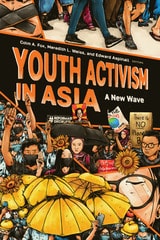
Youth Activism in Asia
A New WaveEdited by Colm A. Fox, Meredith L. Weiss, Edward Aspinall
University of Michigan Press, 2026
Over the last decade, a youth revolt has swept through Asia. Massive, regime-rocking protests have grabbed global attention as students and other young people have confronted security forces on the streets, taking great risks to condemn authoritarian rule, promote democracy, and to push forward new agendas of personal freedom and gender equality. Behind the scenes, young people have experimented with novel and diverse modes of political and social activism, often using new tools of online communication and cultural expression, forging new kinds of coalitions, and exploring nonconfrontational and subterranean networking.
Youth Activism in Asia focuses equally on the episodes of spectacular protest and on varieties of less visible engagement, examining the diversity, origins, and impact of contemporary youth activism in Asia. With fifteen case studies, the volume highlights shared patterns among demands, tactical repertoires, and activist networks, and examines what differentiates protest movements across countries and over time. Drawing on original fieldwork and, in many cases, their own experience, the authors address Brunei, China, Hong Kong, Indonesia, Malaysia, Myanmar, the Philippines, Singapore, Taiwan, Thailand, Timor-Leste, and transnational activism. Conceiving of “activism” broadly as any action intended to bring about social and political change, the volume makes theoretical contributions to our understanding of the relationship between protest and democratic backsliding, engagement with new communication technologies, and this generation’s distinctive intersectional politics. Youth Activism in Asia showcases the creativity, energy, boldness, and diversity of a new generation of Asian political activists.