Results by title
6 books match the query 'Normandy'
D-Day Through French Eyes
Normandy 1944Mary Louise Roberts
University of Chicago Press, 2014
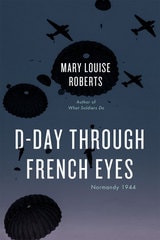
Silent parachutes dotting the night sky—that’s how one woman in Normandy in June 1944 learned that the D-Day invasion was underway. Though they yearned for liberation, the people of Normandy steeled themselves for further warfare, knowing that their homes, land, and fellow citizens would have to bear the brunt of the attack. In D-Day through French Eyes, Mary Louise Roberts resets our view of the usual stories of that momentous operation, taking readers across the Channel to view the invasion anew. Roberts builds her history from an impressive range of gripping first-person accounts from French citizens, reinvigorating a story we thought we knew. The result is a fresh perspective on the heroism, sacrifice, and achievement of D-Day.

D-Day in History and Memory
The Normandy Landings in International Remembrance and CommemorationMichael Dolski
University of North Texas Press, 2014
Glidermen of Neptune
The American D-Day Glider AttackCharles J. Masters
Southern Illinois University Press, 1995
Although the word gliderman does not appear in the dictionary, a brave group of World War II soldiers known as glidermen flew into combat inside unarmed and unarmored canvas-covered gliders known as "flying coffins."
Charles J. Masters points out that because World War II was the first truly mechanized and armored global conflict, the role of the glidermen and their combat gliders was at best anachronistic. Fighter planes exceeded speeds of 400 miles per hour and were heavily armed with multiple machine guns. Dogfights had taken on new dimensions, eclipsing the tactics, speed, and firepower first evidenced by the fragile biplanes of World War I. Tanks achieved a lethal efficiency barely dreamed of even five years before the war. An array of weaponry never seen in any previous military engagement confronted the combat soldier during World War II.And yet there were gliders. And glidermen.
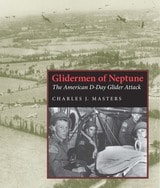
Masters tells of these men and of their fragile aircraft in a war of mechanized chaos. In copious detail, he describes the gliders and the Americans who boarded them during the American D-Day glider attack, a mission that was part of the overall cross-channel plan code-named "Operation Neptune." The son of a gliderman with the 82nd Airborne Division, Masters had unique access to the surviving glidermen and comrades of his father. During the course of his research, he located and interviewed 106 of the men who had flown the D-Day mission in gliders. As an insider—in a sense almost a member of the family and fraternity of glider-men—Masters was cordially received by the members of the American airborne divisions that participated in D-Day, many of whom told him stories they had seldom told their own friends and families. Often harrowing and always riveting, the stories these men told an eager listener and researcher are very much a part of this narrative.
Masters has also assembled the finest existing collection of photographs of the American D-Day glider attack. These photographs—many of which have never before been published—provide a spectacular photographic record of a little-known aspect of this war. In fact, because of the short military history of the American combat glider, most readers, including veterans of World War II, will not have seen one of these "flying coffins," even at a distance. These photographs afford the opportunity to actually examine the inside of the combat gliders used on D-Day, to observe the glidermen in action, and to witness the often tragic consequences of the glider attack.

Normandy to the Bulge
An American GI in Europe During World War IIRichard Courtney
Southern Illinois University Press, 1997
Basing this compelling war memoir on his original World War II diary, Pfc. Richard D. Courtney tells what it was like to be a combat infantryman in the greatest and most destructive war in history.

Rommel
The End of a LegendRalf Georg Reuth
Haus Publishing, 2019
The Comanche Code Talkers of World War II
By William C. Meadows
University of Texas Press, 2003
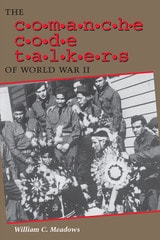
Among the allied troops that came ashore in Normandy on D-Day, June 6, 1944, were thirteen Comanches in the 4th Infantry Division, 4th Signal Company. Under German fire they laid communications lines and began sending messages in a form never before heard in Europe—coded Comanche. For the rest of World War II, the Comanche Code Talkers played a vital role in transmitting orders and messages in a code that was never broken by the Germans.
This book tells the full story of the Comanche Code Talkers for the first time. Drawing on interviews with all surviving members of the unit, their original training officer, and fellow soldiers, as well as military records and news accounts, William C. Meadows follows the group from their recruitment and training to their active duty in World War II and on through their postwar lives up to the present. He also provides the first comparison of Native American code talking programs, comparing the Comanche Code Talkers with their better-known Navajo counterparts in the Pacific and with other Native Americans who used their languages, coded or not, for secret communication. Meadows sets this history in a larger discussion of the development of Native American code talking in World Wars I and II, identifying two distinct forms of Native American code talking, examining the attitudes of the American military toward Native American code talkers, and assessing the complex cultural factors that led Comanche and other Native Americans to serve their country in this way.