Results by title
337 books match the query 'North America' and 32 start with a
A Big History of North America
From Montezuma to MonroeKevin Jon Fernlund
University of Missouri Press, 2023
Nevertheless, the three-century journey to get to this point had been anything but predictable. The United States’ rise as a regional power was very much conditioned by constantly shifting transcontinental, transpacific, and above all transatlantic factors, all of which influenced North America’s three interactive cultural spheres: the Indigenous, the Hispano, and the Anglo. And while the United States profoundly shaped the history of Canada and Mexico, so, too, did these two transcontinental countries likewise shape the course of U.S. history.
In this ground-breaking work, Kevin Fernlund shows us that any society’s social development is directly related to its own social power and, just as crucially, to the protective extension or destructive intrusion of the social power of other societies.
A History of the Chicago Portage
The Crossroads That Made Chicago and Helped Make AmericaBenjamin Sells
Northwestern University Press, 2021
This fascinating account explores the significance of the Chicago Portage, one of the most important—and neglected—sites in early US history. A seven-mile-long strip of marsh connecting the Chicago and Des Plaines Rivers, the portage was inhabited by the earliest indigenous people in the Midwest and served as a major trade route for Native American tribes. A link between the Mississippi River and the Atlantic Ocean, the Chicago Portage was a geopolitically significant resource that the French, British, and US governments jockeyed to control. Later, it became a template for some of the most significant waterways created in the nineteenth and twentieth centuries. The portage gave Chicago its name and spurred the city’s success—and is the reason why the metropolis is located in Illinois, not Wisconsin.
A History of the Chicago Portage: The Crossroads That Made Chicago and Helped Make America is the definitive story of a national landmark.
A Private Wilderness
The Journals of Sigurd F. OlsonSigurd F. Olson
University of Minnesota Press, 2024
The personal diaries of one of America’s best-loved naturalists, revealing his difficult and inspiring path to finding his voice and becoming a writer
Few writers are as renowned for their eloquence about the natural world, its power and fragility, as Sigurd F. Olson (1899–1982). Before he could give expression to The Singing Wilderness, however, he had to find his own voice. It is this struggle, the painstaking and often simply painful process of becoming the writer and conservationist now familiar to us, that Olson documented in the journal entries gathered here.
Written mostly during the years from 1930 to 1941, Olson’s journals describe the dreams and frustrations of an aspiring writer honing his skills, pursuing recognition, and facing doubt while following the academic career that allowed him to live and work even as it consumed so much of his time. But even as he speaks with immediacy and intensity about the conditions of his apprenticeship, Olson can be seen developing the singular way of observing and depicting the natural world that would bring him fame—and also, more significantly, alert others to the urgent need to understand and protect that world. Author of Olson’s definitive biography, editor David Backes brings a deep knowledge of the writer to these journals, providing critical context, commentary, and insights along the way.
When Olson wrote, in the spring of 1941, “What I am afraid of now is that the world will blow up just as I am getting it organized to suit me,” he could hardly have known how right he would prove to be. It is propitious that at our present moment, when the world seems once more balanced on the precipice, we have the words of Sigurd F. Olson to remind us of what matters—and of the hard work and the wonder that such a reckoning requires.
A Song over Miskwaa Rapids
A NovelLinda LeGarde Grover
University of Minnesota Press, 2023
A fifty-year-old mystery converges with a present-day struggle over family, land, and history—now available in paperback
When a rock is dislodged from its slope by mischievous ancestors, the past rises to meet the present, and Half-Dime Hill gives up a gruesome secret it has kept for half a century. Some people of Mozhay Point have theories about what happened; others know—and the discovery stirs memories long buried, reviving a terrible story yet to be told.
Returning to the fictional Ojibwe reservation in northern Minnesota she has so deftly mapped in her award-winning books, Linda LeGarde Grover reveals traumas old and new as Margie Robineau, in the midst of a fight to keep her family’s long-held allotment land, uncovers events connected to a long-ago escape plan across the Canadian border, and the burial—at once figurative and painfully real—of not one crime but two. While Margie is piecing the facts together, Dale Ann is confronted by her own long-held secrets and the truth that the long ago and the now, the vital and the departed are all indelibly linked, no matter how much we try to forget.
As the past returns to haunt those involved, Margie prepares her statement for the tribal government, defending her family’s land from a casino development and sorting the truths of Half-Dime Hill from the facts that remain there. Throughout the narrative, a chorus of spirit women gather in lawn chairs with coffee and cookies to reminisce, reflect, and speculate, spinning the threads of family, myth, history, and humor—much as Grover spins another tale of Mozhay Point, weaving together an intimate and complex novel of a place and its people.
Retail e-book files for this title are screen-reader friendly.

A World You Do Not Know
Settler Societies, Indigenous Peoples and the Attack on Cultural DiversityColin Samson
University of London Press, 2014

AIDS in Industrialized Democracies
Passions, Politics, and PoliciesBayer, Ronald
Rutgers University Press, 1992
In the ten years since the first cases of AIDS were reported, the disease has spread around the world. Every country has had to come up with policies suited to its own conditions, economy, culture, and institutions. The differences among their approaches are striking. This volume, the first international comprehensive comparison of responses to AIDS, is a unique guide to the world's most urgent public health crisis.
Sixteen leading experts in public health, social science, government, and public policy from USA, Canada, Germany, Australia, Spain, Britain, France, the Netherlands, Denmark, Sweden, and Japan candidly recount and analyze the responses of their own nations and comment on the lessons that can be drawn from each country's experience. For each country, they look critically at the tragic statistics of AIDS incidence; the circumstances of AIDS's first appearance; public health traditions of mandatory screening, contact tracing, and quarantine; attitudes toward drug abuse, homosexuality, sex education; publicity about AIDS; legal and customary protections of civil rights, minority groups, medical confidentiality; access to health care and insurance; and the interplay of formal and informal interest groups in shaping policy. The spectrum of AIDS policy ranges from severe "contain-and-control" programs to much more liberal plans based on education, cooperation, and inclusion.
No matter what policy a nation has constructed to deal with AIDS, the coming decade will test how well that policy conforms to democratic ideals. By scrutinizing the responses to AIDS so far, this book aims to give countries around the world a chance to learn from each others' mistakes and triumphs. It will be essential reading for all students and professionals in public health and public policy.

Aazheyaadizi
Worldview, Language, and the Logics of DecolonizationMark D. Freeland
Michigan State University Press, 2020

Accountability Across Borders
Migrant Rights in North AmericaEdited by Xóchitl Bada and Shannon Gleeson
University of Texas Press, 2019
Collecting the diverse perspectives of scholars, labor organizers, and human-rights advocates, Accountability across Borders is the first edited collection that connects studies of immigrant integration in host countries to accounts of transnational migrant advocacy efforts, including case studies from the United States, Canada, and Mexico.
Covering the role of federal, state, and local governments in both countries of origin and destinations, as well as nongovernmental organizations (NGOs), these essays range from reflections on labor solidarity among members of the United Food and Commercial Workers in Toronto to explorations of indigenous students from the Maya diaspora living in San Francisco. Case studies in Mexico also discuss the enforcement of the citizenship rights of Mexican American children and the struggle to affirm the human rights of Central American migrants in transit. As policies regarding immigration, citizenship, and enforcement are reaching a flashpoint in North America, this volume provides key insights into the new dynamics of migrant civil society as well as the scope and limitations of directives from governmental agencies.
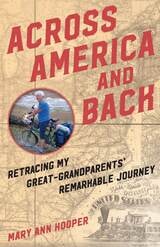
Across America and Back
Retracing My Great-Grandparents' Remarkable JourneyMary Ann Hooper
University of Nevada Press, 2018
Using the common thread of the same train trip across the American landscape, she weaves together the two stories—her great grandparents, Charles and Fannie Crosby’s leisurely Victorian tourist trip described in both their diaries—and her own trip. Mary Ann’s adventurous and determined voice fills the pages with entertaining encounters on the train, escapades on her folding bike, and her reflections on her birth country and her own life story.
During her journey, she discovers the stories of her 1950s childhood reflect a “Wild West” at odds with the West her great-grandparents record in their diaries, leading her to uncover more of the real and meatier history of the American West—going through conquest, rapid settlement, and economic development. As Mary Ann fulfills her quest to understand better why glorified myths were created to describe the Wild West of her childhood, and reflects on the pitfalls of what “progress” is doing to the environment, she is left with a much bigger question: Can we transform our way of doing things quickly enough to stop our much-loved West becoming an uninhabitable desert?
Across a Great Divide
Continuity and Change in Native North American Societies, 1400–1900Edited by Laura L. Scheiber and Mark D. Mitchell
University of Arizona Press, 2010
The contributors address a series of interlocking themes. Several consider the role of indigenous agency in the processes of colonial interaction, paying particular attention to gender and status. Others examine the ways long-standing native political economies affected, and were in turn affected by, colonial interaction. A third group explores colonial-period ethnogenesis, emphasizing the emergence of new native social identities and relations after 1500. The book also highlights tensions between the detailed study of local cases and the search for global processes, a recurrent theme in postcolonial research.
If archaeologists are to bridge the artificial divide separating history from prehistory, they must overturn a whole range of colonial ideas about American Indians and their history. This book shows that empirical archaeological research can help replace long-standing models of indigenous culture change rooted in colonialist narratives with more nuanced, multilinear models of change—and play a major role in decolonizing knowledge about native peoples.

After Bipolarity
The Vanishing Threat, Theories of Cooperation and the Future of the Atlantic AllianceFred Chernoff, Editor
University of Michigan Press, 1995
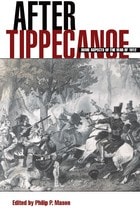
After Tippecanoe
Some Aspects of the War of 1812Philip P. Mason
Michigan State University Press, 2011
Though the Shawnee chief Tecumseh attempted to form a confederacy of tribes to stem the tide of white settlement in the Old Northwest, in November of 1811, the Americans marched to his village at the mouth of Tippecanoe Creek. The ensuing battle ended all hope of an Indian federation and had far-reaching effects on American and British relations. The British, blamed for providing the Indians with arms, drew the ire of hawks in Congress, who clamored ever more loudly for a war to end England’s power in North America. Revised with a new introduction and updated biographical information, After Tippecanoe contains six papers originally presented as lectures in Windsor, Canada, and Detroit, Michigan, during the winter of 1961–62 by three American and three Canadian historians. Their focus is the War of 1812 as it unfolded in the Great Lakes region, with special emphasis on the conflict in Michigan, New York, and Ontario, Canada.
After the Ice Age
The Return of Life to Glaciated North AmericaE. C. Pielou
University of Chicago Press, 1991
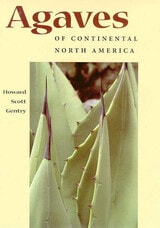
Agaves of Continental North America
Howard Scott Gentry
University of Arizona Press, 1982
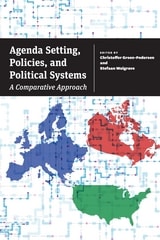
Agenda Setting, Policies, and Political Systems
A Comparative ApproachEdited by Christoffer Green-Pedersen and Stefaan Walgrave
University of Chicago Press, 2014
Agenda Setting and Political Attention brings together essays on eleven countries and two broad themes. Contributors to the first section analyze the extent to which party and electoral changes and shifts in the partisan composition of government have led—or not led—to policy changes in the United States, the United Kingdom, the Netherlands, Denmark, Switzerland, and France. The second section turns the focus on changing institutional structures in Germany, Italy, Belgium, Spain, and Canada, including the German reunification and the collapse of the Italian party system. Together, the essays make clear the efficacy of the agenda-setting approach for understanding not only how policies evolve, but also how political systems function.
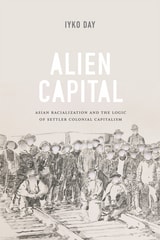
Alien Capital
Asian Racialization and the Logic of Settler Colonial CapitalismIyko Day
Duke University Press, 2016
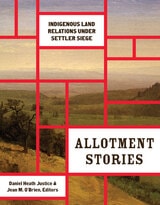
Allotment Stories
Indigenous Land Relations under Settler SiegeDaniel Heath Justice
University of Minnesota Press, 2021
More than two dozen stories of Indigenous resistance to the privatization and allotment of Indigenous lands
Land privatization has been a longstanding and ongoing settler colonial process separating Indigenous peoples from their traditional homelands, with devastating consequences. Allotment Stories delves into this conflict, creating a complex conversation out of narratives of Indigenous communities resisting allotment and other dispossessive land schemes.
From the use of homesteading by nineteenth-century Anishinaabe women to maintain their independence to the role that roads have played in expropriating Guam’s Indigenous heritage to the links between land loss and genocide in California, Allotment Stories collects more than two dozen chronicles of white imperialism and Indigenous resistance. Ranging from the historical to the contemporary and grappling with Indigenous land struggles around the globe, these narratives showcase both scholarly and creative forms of expression, constructing a multifaceted book of diverse disciplinary perspectives. Allotment Stories highlights how Indigenous peoples have consistently used creativity to sustain collective ties, kinship relations, and cultural commitments in the face of privatization. At once informing readers while provoking them toward further research into Indigenous resilience, this collection pieces back together some of what the forces of allotment have tried to tear apart.
Contributors: Jennifer Adese, U of Toronto Mississauga; Megan Baker, U of California, Los Angeles; William Bauer Jr., U of Nevada, Las Vegas; Christine Taitano DeLisle, U of Minnesota–Twin Cities; Vicente M. Diaz, U of Minnesota–Twin Cities; Sarah Biscarra Dilley, U of California, Davis; Marilyn Dumont, U of Alberta; Munir Fakher Eldin, Birzeit U, Palestine; Nick Estes, U of New Mexico; Pauliina Feodoroff; Susan E. Gray, Arizona State U; J. Kēhaulani Kauanui, Wesleyan U; Rauna Kuokkanen, U of Lapland and U of Toronto; Sheryl R. Lightfoot, U of British Columbia; Kelly McDonough, U of Texas at Austin; Ruby Hansen Murray; Tero Mustonen, U of Eastern Finland; Darren O’Toole, U of Ottawa; Shiri Pasternak, Ryerson U; Dione Payne, Te Whare Wānaka o Aoraki–Lincoln U; Joseph M. Pierce, Stony Brook U; Khal Schneider, California State U, Sacramento; Argelia Segovia Liga, Colegio de Michoacán; Leanne Betasamosake Simpson; Jameson R. Sweet, Rutgers U; Michael P. Taylor, Brigham Young U; Candessa Tehee, Northeastern State U; Benjamin Hugh Velaise, Google American Indian Network.
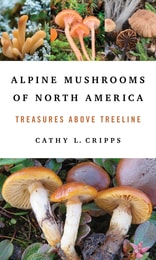
Alpine Mushrooms of North America
Treasures above TreelineCathy L. Cripps
University of Illinois Press, 2025
Features include:
- More than 200 color photographs
- Small size perfect for use in the field
- In-depth scientific information on 150 species, including some recently discovered and most not found outside alpine or Arctic habitats
- Division of species into ecological groups to aid with searching and identification
- Coverage of the Rocky Mountains of Montana, Wyoming, and Colorado, with extensions into British Columbia and Alaska, with many of the same mushrooms also found in the Arctic
- Tips on collecting for both professional researchers and amateur enthusiasts
- A conservation-based approach aimed at the general public, mycologists, researchers, naturalists, land managers, and others
Easy to use and charged with cutting-edge science, Alpine Mushrooms of North America is an expert guide to mycology’s final frontier.
Amateurs in North American Archaeology
Changing PerspectivesEdited by Andrew L. Christenson
University of Utah Press, 2025
Until the mid-twentieth century, professional archaeologists readily worked alongside amateur or avocational archaeologists—those who did not have an academic, professional, or governmental affiliation. However, the gulf between professionals and amateurs has grown in recent decades, and amateurs are now often viewed more warily and are even conflated with looters. Amateurs in North American Archaeology traces the trajectory of this change, noting its implications for archaeological studies across the continent.
The volume’s contributors discuss time periods, noteworthy individuals, archaeological societies, and geographical regions, offering a wide-ranging perspective on a topic that is frequently overlooked. Though the book evaluates the past, it also makes crucial claims for the future of effective, inclusive archaeological study, emphasizing the importance of diverse perspectives and alternate interpretations.

American Gay
Stephen O. Murray
University of Chicago Press, 1996
Murray's erudite scholarship challenges prevailing assumptions about gay history and society. He questions conventional wisdom about the importance of World War II and the Stonewall riots for conceiving and challenging shared oppression. He reviews gay complicity in the repathologizing of homosexuality during the early years of the AIDS epidemic. Discussing recent demands for inclusion in the "straight" institutions of marriage and the US military, he concludes that these are new forms of resistance, not attempts to assimilate. Finally, Murray examines racial and ethnic differences in self-representation and identification.
Drawing on two decades of studying gay life in North America, this tour de force of empirical documentation and social theory critically reviews what is known about the emergence, growth, and internal diversity of communities of openly gay men and lesbians. American Gay thus deepens our understanding of the ways individuals construct sexualities through working and living together.
American Indian Life Skills Development Curriculum
Teresa D. LaFromboise
University of Wisconsin Press, 1996
Suicide is a significant problem for many adolescents in Native American Indian populations. American Indian Life Skills Development Curriculum is a course for high school students and some middle school students that is designed to drastically reduce suicidal thinking and behavior.
Created in collaboration with students and community members from the Zuni Pueblo and the Cherokee Nation of Oklahoma, this curriculum addresses key issues in Native American Indian adolescents’ lives and teaches such life skills as communication, problem solving, depression and stress management, anger regulation, and goal setting. The course is unique in its skills-based approach. After first increasing awareness and knowledge of suicide, it then teaches students specific methods to help a peer turn away from suicidal thinking and seek help from an appropriate help-giver.
The skills-based approach of this curriculum follows well-established teaching methods to develop social skills. Teachers and peers inform students of the rationale and components of a particular skill, model and demonstrate the skill for them, and later provide feedback on individual skill performance.
An Investigation of Ethnographic and Archaeological Specimens of Mescalbeans (Sophora secundiflora) in American Museums
William L. Merrill
University of Michigan Press, 1977
Ancient Complexities
New Perspectives in Pre-Columbian North AmericaSusan Alt
University of Utah Press, 2010
Edited by Susan M. Alt
Foundations of Archaeological Inquiry
Jim Skibo, Series Editor
Anthropology and Archaeology
Many archaeologists have long been frustrated with the traditional, reductionist representation of complexity. Yet, even after years of debate, there seem to be never ending disagreements over the complexity of places like Chaco Canyon, Cahokia, and Poverty Point. This matters, because there are political and scholarly implications to calling any place or people more or less complex. In North America especially, given historical biases and the mound-builder myth, archaeologists need to rethink complexity as they seek to explain the past.
Based on a Society of American Archaeology symposium, Ancient Complexities offers a current overview of what is meant by cultural complexity and how archaeologists study the development of complex societies in North America. Taking a critical look at how accepted definitions of complexity have bounded our thinking about ancient societies, this volume presents new theoretical perspectives and states a case for the need for different definitions in order to move this discussion ahead.
This collection by scholars of North American archaeology is a must read for anyone wishing to be abreast of the most current dialogue on complexity taking place in modern archaeology.
André Michaux in North America
Journals and Letters, 1785–1797Translated from the French, Edited, and Annotated by Charlie Williams, Eliane M. Norman, and Walter Kingsley Taylor
University of Alabama Press, 2020
Tracing the roots of American botany through the journals of an eighteenth-century explorer.
Known to today’s biologists primarily as the “Michx.” at the end of more than 700 plant names, André Michaux was an intrepid French naturalist. Under the directive of King Louis XVI, he was commissioned to search out and grow new, rare, and never-before-described plant species and ship them back to his homeland in order to improve French forestry, agriculture, and horticulture. He made major botanical discoveries and published them in his two landmark books, Histoire des chênes de l’Amérique (1801), a compendium of all oak species recognized from eastern North America, and Flora Boreali-Americana (1803), the first account of all plants known in eastern North America.
Straddling the fields of documentary editing, history of the early republic, history of science, botany, and American studies, André Michaux in North America: Journals and Letters, 1785–1797 is the first complete English edition of Michaux’s American journals. This copiously annotated translation includes important excerpts from his little-known correspondence as well as a substantial introduction situating Michaux and his work in the larger scientific context of the day.
To carry out his mission, Michaux traveled from the Bahamas to Hudson Bay and west to the Mississippi River on nine separate journeys, all indicated on a finely rendered, color-coded map in this volume. His writings detail the many hardships—debilitating disease, robberies, dangerous wild animals, even shipwreck—that Michaux endured on the North American frontier and on his return home. But they also convey the soaring joys of exploration in a new world where nature still reigned supreme, a paradise of plants never before known to Western science. The thrill of discovery drove Michaux ever onward, even ultimately to his untimely death in 1802 on the remote island of Madagascar.

Apostles of Equality
The Birneys, the Republicans, and the Civil WarD. Laurence Rogers
Michigan State University Press, 2011
The first biographical account of the life of James Gillespie Birney in more than fifty years, this fabulously insightful history illuminates and elevates an all-but-forgotten figure whose political career contributed mightily to the American political fabric. Birney was a southern-born politician at the heart of the antislavery movement, with two southern-born sons who were major generals involved in key Union Army activities, including the leadership of the black troops. The interaction of the Birneys with historical figures (Abraham Lincoln, Harriet Beecher Stowe, and Henry Clay) highlights the significance of the family’s activities in politics and war. D. Laurence Rogers offers a unique historiography of the abolition movement, the Civil War, and Reconstruction through the experiences of one family navigating momentous developments from the founding of the Republic until the late 19th century.
Appalachia as Contested Borderland of the Early Modern Atlantic, 1528-1715
Kimberly C. Borchard
Arizona Center for Medieval and Renaissance Studies, 2021
Archaeological Investigations on Agattu, Aleutian Islands
Albert C. Spaulding
University of Michigan Press, 1962
Archaeological Remote Sensing in North America
Innovative Techniques for Anthropological ApplicationsEdited by Duncan P. McKinnon and Bryan S. Haley
University of Alabama Press, 2017
Updating the highly praised 2006 publication Remote Sensing in Archaeology, edited by Jay K. Johnson, Archaeological Remote Sensing in North America: Innovative Techniques for Anthropological Applications is a must-have volume for today’s archaeologist. Targeted to practitioners of archaeological remote sensing as well as students, this suite of current and exemplary applications adheres to high standards for methodology, processing, presentation, and interpretation.
The use of remote sensing technologies to address academic and applied archaeological and anthropological research problems is growing at a tremendous rate in North America. Fueling this growth are new research paradigms using innovative instrumentation technologies and broader-area data collection methods. Increasingly, investigators pursuing these new approaches are integrating remote sensing data collection with theory-based interpretations to address anthropological questions within larger research programs.
In this indispensable volume, case studies from around the country demonstrate the technically diverse and major remote sensing methods and their integration with relevant technologies, such as geographic information systems (GIS) and global positioning systems (GPS), and include various uses of the “big four”: magnetometry, resistivity, ground-penetrating radar (GPR), and electromagnetic induction.
The study explores four major anthropological themes: site structure and community organization; technological transformation and economic change; archaeological landscapes; and earthen mound construction and composition. Concluding commentary from renowned expert Kenneth L. Kvamme overviews the practices, advances, and trends of geophysics and remote sensing in the past decade.
Aridland Springs in North America
Ecology and ConservationEdited by Lawrence E. Stevens and Vicky J. Meretsky; Foreword by Gary Paul Nabhan
University of Arizona Press, 2008
Aridland Springs in North America offers a much-needed comprehensive synthesis of aridland springs ecology. Stevens and Meretsky have assembled chapters from numerous and diverse experts from the fields of geology, hydrology, geomorphology, water quality, ecosystem dynamics, water law, and conservation biology. Through analyses and case studies, these contributors provide an in-depth overview of these topics and address issues critical for improving the knowledge and conservation of springs. This volume goes beyond examining the ecological importance of aridland springs to provide practical and productive ideas for their preservation. The authors facilitate future research by cultivating a language with which to collectively describe and study springs ecosystems, creating the beginnings of a comprehensive springs classification system. This book could not be more timely, as groundwater depletion throughout the continent is rapidly decimating these vital sources of life.
CONTENTS
Prologue
Gary P. Nabhan
1 Springs Ecosystem Ecology And Conservation
Lawrence E. Stevens And Vicky J. Meretsky
2 The Demise Of Desert Springs
Peter J. Unmack And W. L. Minckley*
3 The Hydrology Of Desert Springs In North America
David K. Kreamer And Abe Springer
4 A Comprehensive Springs Classification System: Integrating Geomorphic, Hydrogeochemical, And Ecological Criteria
Abraham E. Springer, Lawrence E. Stevens, Diana E. Anderson, Roderic A. Parnell1, David K. Kreamer, Lisa Levin, And Stephen P. Flora1
5 Quaternary Cauldron Springs As Paleoecological Archives
C. Vance Haynes Jr.
6 The Extreme Environment, Trophic Structure, And Ecosystem Dynamics Of A Large Fishless Desert Spring: Montezuma Well, Arizona
Dean W. Blinn
7 Combining Ecological Research And Conservation: A Case Study In Cuatro Ciénegas, Coahuila, México
Dean A. Hendrickson, Jane C. Marks, Angie Moline, Eric Dinger, Adam Cohen
8 The Desert Fan Palm Oasis
James W. Cornett
9 Spring-Supported Vegetation Along The Colorado River, Colorado Plateau: Floristics, Vegetation Structure And Environment
John R. Spence
10 Mechanisms Of Change In Seep/Spring Plant Communities On The Southern Colorado Plateau
Vicky J. Meretsky
11 Biodiversity And Productivity At An Undisturbed Spring In Comparison With Adjacent Grazed Riparian And Upland Habitats
Bianca S. Perla And Lawrence E. Stevens
12 Plant Diversity Influenced By Indigenous Management Of Freshwater Springs: Flora Of Quitovac, Sonora, Mexico
Gary Paul Nabhan
13 Historic And Prehistoric Ethnobiology Of Desert Springs
Amadeo M. Rea
14 Vegetation Dynamics Of Great Basin Springs: Potential Effects Of Groundwater Withdrawal
Duncan Patten, Leigh Rouse, Juliet Stromberg
15 The Knowles Canyon Hanging Garden, Glen Canyon National Recreation Area, Eight Years After Burning: Changes In Vegetation And Soil Biota
Tim B. Graham
16 Between The Cracks: Water Law And Spring Conservation In Arizona
Nancy Nelson
17 Ep
Art for a New Understanding
Native Voices, 1950s to NowMindy N. Besaw
University of Arkansas Press, 2018
This fully illustrated volume includes essays by art historians and historians and reflections by the artists included in the collection. Also included are key contemporary writings—from the 1950s onward—by artists, scholars, and critics, investigating the themes of transculturalism and pan-Indian identity, traditional practices conducted in radically new ways, displacement, forced migration, shadow histories, the role of personal mythologies as a means to reimagine the future, and much more.
As both a survey of the development of Indigenous art from the 1950s to the present and a consideration of Native artists within contemporary art more broadly, Art for a New Understanding expands the definition of American art and sets the tone for future considerations of the subject. It is an essential publication for any institution or individual with an interest in contemporary Native American art, and an invaluable resource in ongoing scholarly considerations of the American contemporary art landscape at large.
Ascomycete Fungi of North America
A Mushroom Reference GuideBy Michael Beug, Arleen Bessette, and Alan E. Bessette
University of Texas Press, 2014
Approximately 75 percent of all fungi that have been described to date belong to the phylum Ascomycota. They are usually referred to as Ascomycetes and are commonly found and collected by mushroom enthusiasts. Ascomycetes exhibit a remarkable range of biodiversity, are beautiful and visually complex, and some, including morels and truffles, are highly prized for their edibility. Many play significant roles in plant ecology because of the mycorrhizal associations that they form. Thus it is remarkable that no book dedicated to describing and illustrating the North American Ascomycetes has been published in over sixty years.
Filling the gap between technical publications and the limited representation of Ascomycetes in general mushroom field guides, Ascomycete Fungi of North America is a scientifically accurate work dedicated to this significant group of fungi. Because it is impossible to describe and illustrate the tens of thousands of species that occur in North America, the authors focus on species found in the continental United States and Canada that are large enough to be readily noticeable to mycologists, naturalists, photographers, and mushroom hunters. They provide 843 color photographs and more than 600 described species, many of which are illustrated in color for the first time. While emphasizing macroscopic field identification characteristics for a general audience, the authors also include microscopic and other advanced information useful to students and professional mycologists. In addition, a color key to the species described in this book offers a visual guide to assist in the identification process.
Atlas of Wintering North American Birds
An Analysis of Christmas Bird Count DataTerry Root
University of Chicago Press, 1989
Terry Root has used the data from the 1963-72 counts to provide the first large-scale biogeographical account of birds wintering in North America. Using sophisticated computer techniques, Root has translated the data into both traditional contour maps and innovative new maps that stimulate three dimensions. The maps show at a glance that, for example, the Baltimore Oriole winters primarily along the eastern seaboard, with the densest populations in Florida between Tallahassee and Gainesville and in North Carolina from Rocky Mount to the Croatan National Forest.