Results by title
17 books match the query 'Nostalgia'
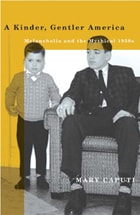
A Kinder, Gentler America
Melancholia and the Mythical 1950sMary Caputi
University of Minnesota Press, 2005
Analyzing these competing uses of the past, A Kinder, Gentler America reveals how longing for the era of “the greatest generation” actually exposes a disillusionment with the present. Caputi draws on the theoretical frameworks of Julia Kristeva and Walter Benjamin to look at how the decade has been portrayed in movies such as Pleasantville and Far from Heaven and delves further to investigate our disenchantment’s lost origins in early modernity through a reading of the poetry of Baudelaire. What emerges is a stark contrast between the depictions of a melancholic present and a cheerful, shiny past. In the right’s invocation of the mythical 1950s and the left’s criticism of the same, Caputi recognizes a common unfulfilled desire, and proposes that by understanding this loss both sides can begin to accept that American identity, despite chaos and confusion, lies in the here and now.
Mary Caputi is professor of political science at California State University, Long Beach, and is author of Voluptuous Yearnings: A Feminist Theory of the Obscene.
Acting Like Men
Gender, Drama, and Nostalgia in Ancient GreeceKaren Bassi
University of Michigan Press, 1999
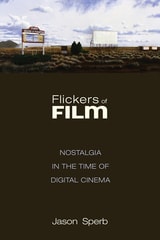
Flickers of Film
Nostalgia in the Time of Digital CinemaSperb, Jason
Rutgers University Press, 2015
In Flickers of Film, Jason Sperb offers nuanced and unexpected answers to these questions, examining the benefits of certain types of film nostalgia, while also critiquing how Hollywood’s nostalgic representations of old technologies obscure important aspects of their histories. He interprets this affection for the prehistory and infancy of digital technologies in relation to an industry-wide anxiety about how the digital has grown to dominate Hollywood, pushing it into an uncertain creative and economic future. Yet he also suggests that Hollywood’s nostalgia for old technologies ignores the professionals who once employed them, as well as the labor opportunities that have been lost through the computerization and outsourcing of film industry jobs.
Though it deals with nostalgia, Flickers of Film is strikingly cutting-edge, one of the first studies to critically examine Pixar’s role in the film industry, cinematic representations of videogames, and the economic effects of participatory culture. As he takes in everything from Terminator: Salvation to The Lego Movie, Sperb helps us see what’s distinct about this recent wave of self-aware nostalgic films—how Hollywood nostalgia today isn’t what it used to be.
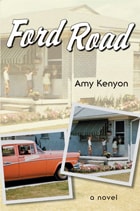
Ford Road
Amy Kenyon
University of Michigan Press, 2012
After the death of her mother, Kay Seger abandons her career as a historical consultant to a Los Angeles film company and returns to her childhood home in Michigan. There, she rekindles a teenage love affair with Joe Chase, now a Vietnam War veteran and Ford auto worker. Afflicted by grief and the mysterious symptoms of an unidentified ailment, Kay, at Joe's urging, begins an investigation of her family's past.
As Kay pores over the boxes of papers, letters, and photo albums her mother left behind, vivid recollections of a bygone Detroit, ragged and teeming at the start of the automotive age, come to life alongside snapshots of Michigan's rural western counties after the settlement of the frontier. In the midst of her searches, Kay comes across the long-forgotten medical history of nostalgia, and it is this new knowledge that helps her to recover the lost histories of her family and find a resolution to her troubled relationship with Joe.
An exploration of memory as both pathology and promise, Ford Roadoffers a moving examination of the injuries we inflict on the people closest to us, the worldly injuries that are often beyond our control, and our astonishing ability to act upon and inhabit our own stories. It is also a meditation on American car culture, the road, and the role of early Hollywood in the creation of America's vision of itself. Written in spare, evocative prose, historian Amy Kenyon's first novel is as heartbreaking as it is thought-provoking.
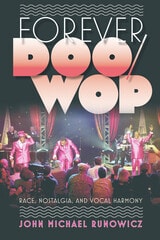
Forever Doo-Wop
Race, Nostalgia, and Vocal HarmonyJohn Michael Runowicz
University of Massachusetts Press, 2010
Music can be a storehouse for emotional, social, and cultural experiences that deepen and acquire greater value over time. This is a book about a particular genre of vocal harmony music called doo-wop that has accrued deep meaning and affective power among Americans since its inception in the aftermath of World War II. Although the first doo-wop singers were primarily young black males in major American cities, it wasn't long before white working-class teenagers began emulating their rhythm-and-blues harmonies. The racial exchange of this distinctive genre and the social bonding it engendered have had a significant and lasting impact on American musical culture.
In Forever Doo-Wop, John Runowicz traces the history of this music from its origins in nineteenth-century barbershop quartets through its emergence in the postwar era to its nostalgic adulthood from the mid-1960s to today. The book is based on interviews he has conducted and observations he has made over the last twenty-two years working as guitarist, musical director, and second tenor with one of the legendary doo-wop groups, the Cadillacs, on what is popularly known as the “oldies circuit.” As a graduate student, he broadened his research to include the wider doo-wop community.
Forever Doo-Wop invites readers to gaze through a window on our society and culture where certain truths are revealed about how white and black Americans coexist and interact, about how popular music functions as a vehicle for nostalgia, and about the role of music making over a long lifetime.
Imagined States
Nationalism, Utopia, and Longing in Oral Culturesedited by Luisa Del Giudice & Gerald Porter
Utah State University Press, 2003
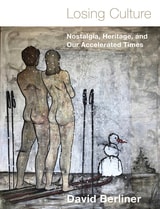
Losing Culture
Nostalgia, Heritage, and Our Accelerated TimesDavid Berliner
Rutgers University Press, 2020
Such sentiments get echoed around the world, from aging Trump supporters in West Virginia to young villagers in West Africa. But what is triggering this sense of cultural loss, and to what ends does this rhetoric get deployed?
To answer these questions, anthropologist David Berliner travels around the world, from Guinea-Conakry, where globalization affects the traditional patriarchal structure of cultural transmission, to Laos, where foreign UNESCO experts have become self-appointed saviors of the nation’s cultural heritage. He also embarks on a voyage of critical self-exploration, reflecting on how anthropologists handle their own sense of cultural alienation while becoming deeply embedded in other cultures. This leads into a larger examination of how and why we experience exonostalgia, a longing for vanished cultural heydays we never directly experienced.
Losing Culture provides a nuanced analysis of these phenomena, addressing why intergenerational cultural transmission is vital to humans, yet also considering how efforts to preserve disappearing cultures are sometimes misguided or even reactionary. Blending anthropological theory with vivid case studies, this book teaches us how to appreciate the multitudes of different ways we might understand loss, memory, transmission, and heritage.

Nostalgia and Videogame Music
A Primer of Case Studies, Theories and Analyses for the Player-AcademicEdited by Vincent E. Rone, Can Aksoy, and Sarah Pozderac-Chenevey
Intellect Books, 2022
This book allows readers to understand the relationships and memories they often form around games, and music is central to this process. The quest into the past begins with this book, a map that leads to the intersection between nostalgia and videogame music. Informed by research on musicology, memory, and practices of gaming culture, this edited volume discusses different forms of nostalgia, considers how videogames display their relation to those forms, and explores the ways theoretically self-conscious positions can be found in games. An important scholarly addition to the burgeoning field of ludomusicology, this book will appeal to researchers, educators, practitioners, undergraduate and graduate students, and videogame fans and players alike.
Nostalgia
Origins and Ends of an Unenlightened DiseaseHelmut Illbruck
Northwestern University Press, 2012
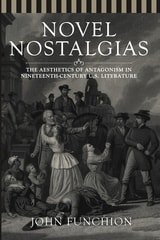
Novel Nostalgias
The Aesthetics of Antagonism in Nineteenth Century U.S. LiteratureJohn Funchion
The Ohio State University Press, 2015
In contrast with studies that characterized the nineteenth-century U.S. novel as a consensus-generating form complicit with disciplinary culture, Funchion shows how novels shaped a series of culture wars by advancing antagonistic nostalgias. Southern slave owners and their slaves or industrial magnates and their union opponents alike enlisted the power of nostalgia to validate their rival visions of the nation as lost moments awaiting recovery. Antagonistic nostalgias legitimated the political claims of movements as diverse as abolitionism, sectionalism, populism, socialism, anarchism, and cosmopolitanism. Novel Nostalgias provides a deep cultural historical understanding of the nineteenth-century United States, but ultimately, it also allows for a better understanding of how twenty-first-century movements function.

Paradoxes of Nostalgia
Cold War Triumphalism and Global Disorder since 1989Penny M. Von Eschen
Duke University Press, 2022
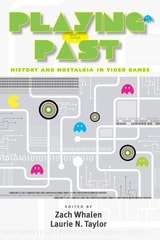
Playing the Past
History and Nostalgia in Video GamesZach Whalen
Vanderbilt University Press, 2008
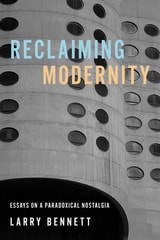
Reclaiming Modernity
Essays on a Paradoxical NostalgiaLarry Bennett
University of Illinois Press, 2025
Larry Bennett explores the complexities of nostalgia with considerations of the historic preservation of brutalist architecture, specifically Bertrand Goldberg’s Prentice Women’s Hospital in Chicago; the memoirs and recollections of early and mid-twentieth-century Brooklyn and Detroit; and the turntable’s rebirth as a musical instrument alongside the vinyl LP’s resurgence as a prized way of consuming music. Bennett tracks modernity as expressed through ideas, artistic products, and widespread social practices. His consideration of nostalgia focuses on our inclination to rediscover value in people, places, and social habits diminished by the passage of time.
Provocative and multidisciplinary, Reclaiming Modernity delves into the paradox of how we feel nostalgia for ideas and times that emerged from an impulse to shun nostalgia.
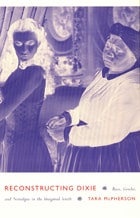
Reconstructing Dixie
Race, Gender, and Nostalgia in the Imagined SouthTara McPherson
Duke University Press, 2003
Illuminating crucial connections between understandings of race, gender, and place on the one hand and narrative and images on the other, McPherson reads a number of representations of the South produced from the 1930s to the present. These are drawn from fiction, film, television, southern studies scholarship, popular journalism, music, tourist sites, the internet, and autobiography. She examines modes of affect or ways of "feeling southern" to reveal how these feelings, along with the narratives and images she discusses, sanction particular racial logics. A wide-ranging cultural studies critique, Reconstructing Dixie calls for vibrant new ways of thinking about the South and for a revamped and reinvigorated southern studies.
Reconstructing Dixie will appeal to scholars in American, southern, and cultural studies, and to those in African American, media, and women’s studies.
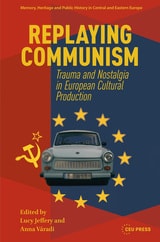
Replaying Communism
Trauma and Nostalgia in European Cultural ProductionLucy Jeffery
Central European University Press, 2026
The volume adopts an interdisciplinary approach to extend debates on the lasting impact of the communist era across Central and Eastern Europe with chapters thematically threaded through concepts including curation, immersion, interaction, humor and authenticity. A ‘trauma/nostalgia paradigm’ emerges as the tissue connecting the plurality of post-communist efforts employed to address the region’s contested pasts. Twelve original essays by contributors from both ‘inside’ and ‘outside’ the region detail how twenty-first-century cultural productions reengage the communist past. The impact of this past is seen as fundamental to understanding and shaping Central and Eastern European identities.
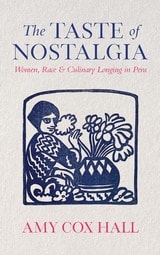
The Taste of Nostalgia
Women, Race, and Culinary Longing in PeruAmy Cox Hall
University of Texas Press, 2024
An exploration of gender, race, and food in Peru in the 1950s and 1960s and today.
From the late 1940s to the mid 1960s, Peru’s rapid industrialization and anti-communist authoritarianism coincided with the rise of mass-produced cookbooks, the first televised cooking shows, glossy lifestyle magazines, and imported domestic appliances and foodstuffs. Amy Cox Hall’s The Taste of Nostalgia uses taste as a thematic and analytic thread to examine the ways that women, race, and the kitchen were foundational to Peruvian longings for modernity, both during the Cold War and today.
Drawing on interviews, personal stories, media images, and archival and ethnographic research, Cox Hall considers how elite, European-descended women and the urban home were central to Peru’s modernizing project and finds that all women who labored within the deeply racialized and gendered world of food helped set the stage for a Peruvian food nationalism that is now global in the twenty-first century. Cox Hall skillfully connects how the sometimes-unsavory tastes of the past are served again in today’s profitable and pervasive gastronostalgia that helps sell Peru and its cuisine both at home and abroad.
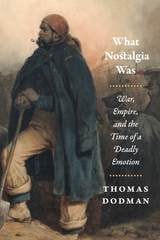
What Nostalgia Was
War, Empire, and the Time of a Deadly EmotionThomas Dodman
University of Chicago Press, 2017
What Nostalgia Was unearths that history. Thomas Dodman begins his story in Basel, where a nineteen-year-old medical student invented the new diagnosis, modeled on prevailing notions of melancholy. From there, Dodman traces its spread through the European republic of letters and into Napoleon's armies, as French soldiers far from home were diagnosed and treated for the disease. Nostalgia then gradually transformed from a medical term to a more expansive cultural concept, one that encompassed Romantic notions of the aesthetic pleasure of suffering. But the decisive shift toward its contemporary meaning occurred in the colonies, where Frenchmen worried about racial and cultural mixing came to view moderate homesickness as salutary. An afterword reflects on how the history of nostalgia can help us understand the transformations of the modern world, rounding out a surprising, fascinating tour through the history of a durable idea.