Results by title
27 books match the query 'Novel as Form'
Acoustic Properties
Radio, Narrative, and the New Neighborhood of the AmericasTom McEnaney
Northwestern University Press, 2017
Based on original archival research in Buenos Aires, Havana, Paris, and the United States, the book develops a literary media theory that understands sound as a transmedial phenomenon and radio as a transnational medium. Analyzing the construction of new social and political relations in the wake of the United States’ 1930s Good Neighbor Policy, Acoustic Properties challenges standard narratives of hemispheric influence through new readings of Richard Wright’s cinematic work in Argentina, Severo Sarduy’s radio plays in France, and novels by John Dos Passos, Manuel Puig, Raymond Chandler, and Carson McCullers. Alongside these writers, the book also explores Che Guevara and Fidel Castro’s Radio Rebelde, FDR’s fireside chats, Félix Caignet’s invention of the radionovela in Cuba, Evita Perón’s populist melodramas in Argentina, Orson Welles’s experimental New Deal radio, Cuban and U.S. “radio wars,” and the 1960s African American activist Robert F. Williams’s proto–black power Radio Free Dixie.
From the doldrums of the Great Depression to the tumult of the Cuban Revolution, Acoustic Properties illuminates how novelists in the radio age converted writing into a practice of listening, transforming realism as they struggled to channel and shape popular power.
Behold an Animal
Four Exorbitant ReadingsThangam Ravindranathan
Northwestern University Press, 2019
As animals recede from our world, what tale is being told by literature’s creatures? Behold an Animal: Four Exorbitant Readings examines incongruous animals in the works of four major contemporary French writers: an airborne horse in a novel by Jean-Philippe Toussaint, extinct orangutans in Éric Chevillard, stray dogs in Marie NDiaye, vanishing (bits of) hedgehogs in Marie Darrieussecq. Resisting naturalist assumptions that an animal in a story is simply—literally or metaphorically—an animal, Thangam Ravindranathan understands it rather as the location of something missing. The animal is a lure: an unfinished figure fleeing the frame, crossing bounds of period, genre, even medium and language. Its flight traces an exorbitant (self-)portrait in which thinking admits to its commerce with life and flesh. It is in its animals, at the same time unbearably real and exquisitely unreal, that literature may today be closest to philosophy.
This book’s primary focus is the contemporary French novel and continental philosophy. In addition to Toussaint, Chevillard, NDiaye, and Darrieussecq, it engages the work of Jean de La Fontaine, Eadweard Muybridge, Edgar Allan Poe, Lewis Carroll, Samuel Beckett, and Francis Ponge.
Curating Worlds
Museum Practices in Contemporary LiteratureEmma Bond
Northwestern University Press, 2025
Showing how museum practices shed new light on literary form
How and why do books deploy objects in order to narrate the past? To answer this question, Emma Bond sifts through collections of objects stored in boxes, drawers, baskets, and displayed on shelves in contemporary texts by authors such as Valeria Luiselli, Maaza Mengiste, Orhan Pamuk, and Olga Tokarczuk and interprets them using a framework of museum practices. These practices, which include collection, curation, conservation, and display, have helped to turn real-life museums into three-dimensional narrative spaces. Curating Worlds: Museum Practices in Contemporary Literature shows how we can use this same set of practices to shed light on literary form itself: how stories are created, shaped, and communicated. Harnessing museum practices as an innovative lens for critical interpretation, Bond provides a fresh theoretical framework to engage with the meanings of object collections in literature and to make sense of the lives, and afterlives, of things today.
Dwelling in Fiction
Poetics of Place and the Experimental Novel in Latin AmericaAshley R. Brock
Northwestern University Press, 2023
The radical formal experiments undertaken by writers across Latin America in the mid-twentieth century introduced friction, opacity, and self-reflexivity to the very act of reading. Dwelling in Fiction: Poetics of Place and the Experimental Novel in Latin America explores the limitations and the possibilities of literature for conveying place-specific forms of life. Focusing on authors such as José María Arguedas, João Guimarães Rosa, and Juan José Saer, who are often celebrated for universalizing regional themes, Ashley R. Brock brings a new critical lens to Latin American writers who were ambivalent toward their era’s “boom.”
Beyond mere resistance to or critique of the commodification and political instrumentalization of rural topics and types, this countertrend of critical regionalism positions readers themselves as outsiders, pushing them to engage their senses, to train their attention, and to learn to dwell in unknown textual landscapes. Dwelling in Fiction draws on a transnational community of thinkers and writers to show how their midcentury aesthetic practices of sensorial pedagogy anticipate contemporary turns toward affect, embodiment, decoloniality, and ecological thought.
Epic and Exile
Novels of the German Popular Front, 1933-1945Hunter Bivens
Northwestern University Press, 2015

Experiencing the Novel
The Genre of Tender ConscienceEsther Yu
University of Chicago Press, 0
An innovative account of the novel's emergence across revolutionary England and beyond.
Esther Yu’s expansive study of the history of the novel charts the growth of the “tender conscience”—at once a new mode of subjectivity and a shared structure of ethical obligation—that gave rise to the novel’s characteristic features. At the heart of the early English novel is a strange character: a hyperconscious observer who continually transforms perception into ordered, written narrative. Against long-standing accounts that tie the novel’s subjects to the emergence of modern individualism, Experiencing the Novel traces these endlessly impressionable figures to the mid-seventeenth century and the English Revolution, when citizen-subjects made public declarations of tenderness. It is through the recovery of such “tender consciences” that a curious fact can be addressed anew. The first people in Europe to cut off the crown with the head of their king began to tell stories differently: They took to narrating through an acute, sensitive register of first-person prose.
A forceful, community-binding complex of cognition, sensation, and ethics, the tender conscience persisted well into the eighteenth century. It was a large-scale structure forged across decades, one that demands the wide-ranging literary-historical account it finally receives here. Experiencing the Novel opens among brilliantly inventive Tudor-era works—Beware the Cat (ca. 1553), the Marprelate project (1588-89), The Unfortunate Traveler (1594)—that by turns experiment with and reject sensitizing modes of conscience. Yu further takes up an extensive, first-person care of the conscience—a tenderizing process enacted by little-known practitioners that carries from John Milton’s Paradise Lost into the writings of John Locke, the novels of Daniel Defoe, the moral sentimentalism of David Hume and Adam Smith, as well as Laurence Sterne’s Tristram Shandy and Samuel Richardson’s Pamela.
Through its vision of the long seventeenth century, Experiencing the Novel reveals an improbable practice of consciousness that remade popular politics, philosophy, and the culture of sensibility from the margins.
Fiction Beyond Secularism
Justin Neuman
Northwestern University Press, 2014
Modernist thinkers once presumed a progressive secularity, with the novel replacing religious texts as society’s moral epics. Yet religion—beginning with the Iranian revolution of 1979, through the collapse of communism, and culminating in the singular rupture of September 11, 2001—has not retreated quietly out of sight.
In Fiction Beyond Secularism, Justin Neuman argues that contemporary novelists who are most commonly identified as antireligious—among them Orhan Pamuk, Salman Rushdie, Ian McEwan, Margaret Atwood, Nadine Gordimer, Haruki Murakami, and J. M. Coetzee—have defied assumptions and have instead written some of the most trenchant critiques of secular ideologies, as well as the most exciting and rigorous inquiries into the legacies of the religious imagination. As a result, many readers (or nonreaders) on either side of the religious divide neglect the insights of works like The Satanic Verses, Disgrace, and Snow. Fiction Beyond Secularism serves as a timely corrective.
Figures of the World
The Naturalist Novel and Transnational FormChristopher Laing Hill
Northwestern University Press, 2020
The book begins by tracing the history of naturalist fiction from the 1860s into the twentieth century and the reasons it spread around the world. Hill explores the development of three naturalist figures—the degenerate body, the self-liberated woman, and the social milieu—through close readings of fiction from France, Japan, and the United States. Rather than genealogies of European influence or the domination of cultural “peripheries” by the center, novels by Émile Zola, Tayama Katai, Frank Norris, and other writers reveal conspicuous departures from metropolitan models as writers revised naturalist methods to address new social conditions. Hill offers a new approach to studying culture on a large scale for readers interested in literature, the arts, and the history of ideas.
First Contact
Speculative Visions of the Conquest of the AmericasZac Zimmer
Northwestern University Press, 2025
Examining the power of speculative fiction to reimagine historical accounts of the conquest of the Americas
The historical conquest of the Americas resides at the core of all first-contact narratives, which stage colonization and resistance in the generic guise of speculative fiction. Starting from this axiom, First Contact: Speculative Visions of the Conquest of the Americas moves through a corpus of Mexican novels, Andean visual arts practices, and other cultural artifacts that have dramatized counterfactual narratives. Reimagining the early colonial period’s historiography from a south-to-north directionality while inventing parallel realities, these texts, which are concerned with limit cases, alterities, and alternative temporalities, refuse any reliance on the imperial ontologies of European expansion. Zac Zimmer examines these works to explore the slippage that exists between science fiction as the exemplary genre of the modern, colonial reality and literary speculation as an aesthetic tool that can be used to imagine other possible worlds. First Contact thus poses a foundational question: Can we understand the conquest as an originary world-historical event without eclipsing the other cosmologies that existed, and continue to exist, within the contact zone? Can we decolonize the speculative imagination itself?
Form and Instability
Eastern Europe, Literature, Postimperial DifferenceAnita Starosta
Northwestern University Press, 2015
Located at the intersection of comparative literature, area studies, and literary theory, this interdisciplinary study has a twofold commitment: to Eastern Europe on the one hand and to literature on the other. It aims to intervene in the way we conceive of Eastern Europe by seeking to develop a more equitable way of thinking, one that avoids subordinating it to Eurocentric narratives of progress. At the same time, it marshals literature as both object and method of this rethinking, in order to extend existing conceptions of the usefulness and of the proper organization of literary studies. The three terms in the title of this book mark a passage—via literature—from “Eastern Europe” as an inadequate and obsolescent category to “post-imperial difference” as a more accurate, if provisional, account of the region. By way of original readings of particular texts, and by attending to literature as a critical
Forms of Mobility
Genre, Language, and Media in African Literary CulturesStephanie Bosch Santana
Northwestern University Press, 2025
Presents alternative categories of fiction through which to examine how contemporary writers have envisaged Africa’s changing literary terrains
Stephanie Bosch Santana analyzes southern African writers’ experimentations with literary form in periodical print and digital media since the mid-twentieth century in order to offer an alternative account of contemporary African imaginations of mobility. Based on an understudied archive of texts in English and Chichewa/Nyanja from Malawi, South Africa, Zimbabwe, and Zambia, Forms of Mobility: Genre, Language, and Media in African Literary Cultures examines new, noncanonical categories of fiction, including migrant forms, township tales, weekend stories, and digital diaries. These generically, linguistically, and geographically mobile forms map changing ideas of interconnection and belonging. By reading them “in motion,” as they travel across space, time, genre, and language and between publications and platforms, Bosch Santana limns multiple centers of literary influence and relation across southern African and Black diasporas, revealing forms of literary mobility and space making that are occluded by current models of world literature.
How to Read a Moment
The American Novel and the Crisis of the PresentMathias Nilges
Northwestern University Press, 2021
“Time is a thing that grows scarcer every day,” observes one of Don DeLillo’s characters. “The future is gone,” The Baffler argues. “Where’s my hoverboard!?” a meme demands. Contemporary capitalism, a system that insists that everything happen at once, creates problems for social thought and narrative alike. After all, how does one tell the time of instantaneity? In this moment of on-demand service and instant trading, it has become difficult to imagine the future.
The novel emerged as the art form of a rapidly changing modern world, a way of telling time in its progress. Nilges argues that this historical mission is renewed today through works that understand contemporaneity as a form of time shaping that props up our material world and cultural imagination. But the contemporary American novel does not simply associate our present with a crisis of futurity. Through analyses of works by authors such as DeLillo, Jennifer Egan, Charles Yu, and Colson Whitehead, Nilges illustrates that the novel presents ways to make sense of the temporality that controls our purportedly fully contemporary world. In so doing, the novel recovers a sense of possibility and hope, forwarding a dazzling argument for its own importance today.
Immaterial Archives
An African Diaspora Poetics of LossJenny Sharpe
Northwestern University Press, 2020
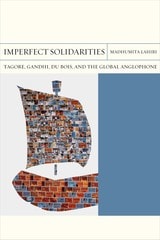
Imperfect Solidarities
Tagore, Gandhi, Du Bois, and the Global AnglophoneMadhumita Lahiri
Northwestern University Press, 2021
A century ago, activists confronting racism and colonialism—in India, South Africa, and Black America—used print media to connect with one another. Then, as now, the most effective medium for their undertakings was the English language. Imperfect Solidarities: Tagore, Gandhi, Du Bois, and the Global Anglophone tells the story of this interconnected Anglophone world. Through Rabindranath Tagore’s writings on China, Mahatma Gandhi’s recollections of South Africa, and W. E. B. Du Bois’s invocations of India, Madhumita Lahiri theorizes print internationalism. This methodology requires new terms within the worldwide hegemony of the English language (“the global Anglophone”) in order to encourage alternate geographies (such as the Global South) and new collectivities (such as people of color).
The women of print internationalism feature prominently in this account. Sonja Schlesin, born in Moscow, worked with Indians in South Africa. Sister Nivedita, an Irish woman in India, collaborated with a Japanese historian. Jessie Redmon Fauset, an African American, brought the world home to young readers through her work as an author and editor.
Reading across races and regions, genres and genders, Imperfect Solidarities demonstrates the utility of the neologism for postcolonial literary studies.
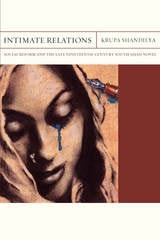
Intimate Relations
Social Reform and the Late Nineteenth-Century South Asian NovelKrupa Shandilya
Northwestern University Press, 2017
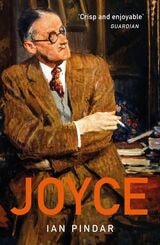
Joyce
Second EditionIan Pindar
Haus Publishing, 2025
James Joyce (1882–1941) is hailed as one of the greatest writers of the twentieth century. Rejecting his homeland and its religion as a young man, Joyce went on to reinvent the Dublin of his youth in his fiction. His masterpiece, Ulysses—once banned in Britain and the United States—redefined the modern novel and has become a canonical classic. Finnegans Wake, written as Joyce’s eyesight deteriorated, cemented his legacy as one of the founding figures of modernist literature.
In a revised edition of this lucid and compelling biography, containing a new foreword from the author, crucial events in Joyce’s life, from his self-imposed exile to his creative triumphs, are explored vividly. Ian Pindar reveals how Joyce’s work carefully blends the abstract and the mundane, capturing the great human comedy of which we are all part.
Nobody Comes of Age
Essays on the Victorian NovelCatherine Gallagher
University of Chicago Press, 2027
A collection of field-defining essays on the Victorian novel, taking up a fascinating paradox in literary history: why do we care so deeply about fictional characters who don’t really exist?
n Nobody Comes of Age, Catherine Gallagher explores the Victorian novel by examining its most fundamental building block: the fictional character. Gallagher argues that “Nobodies”—nonreferential, yet realistic, invented personae, usually of middling social status—were the very engine of the genre’s development. Having arrived on the fictional scene in the eighteenth century, Nobody came of age during the Victorian era. The novel achieved cultural hegemony, and Victorian novelists explored these characters’ fictionality in tandem with the great intellectual developments of their time. Readers, knowing well that novel personae were not portraits of actual individuals, nevertheless expected them to yield important insights into the social and cultural changes of the age.
Nobody Comes of Age gathers in revised form a selection of Catherine Gallagher’s classic and still influential essays on the Victorian novel. These essays take up topics such as the relationship between fiction and the decline of religious belief in the period, and how novelists worked the tension between characters who seemed typical and plots that were unpredictable. Gallagher expertly navigates across a range of canonical texts, from the ordinary outcomes of George Eliot’s Middlemarch to the archetypal sacrifices in Thomas Hardy’s Tess of the d'Urbervilles. For scholars and students of nineteenth-century British literature, Nobody Comes of Age is an essential companion.
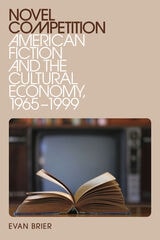
Novel Competition
American Fiction and the Cultural Economy, 1965-1999Evan Brier
University of Iowa Press, 2024
Perverse Attachments
Reading Fiction Around 1800Anastasia Eccles
University of Chicago Press, 2026
This new theory of reader response describes “perverse attachment,” or the powerful desire to intervene in a story, even when it is impossible to do so.
Fiction has long inspired resistance in its readers: making them, for example, wish for a different plot, cringe at a moment of social discomfort, or itch to warn a character about an approaching calamity. These are symptoms of a condition that Anastasia Eccles calls “perverse attachment,” in which a person feels an urge to act on something beyond their control. Eccles theorizes this form of frustrated agency as a constitutive part of the experience of reading fiction, especially under the influence of literary sentimentalism in the late eighteenth and early nineteenth centuries. It was also, significantly, a defining aspect of the mass politics that emerged in the same period, which rested on the demands of new political subjects to participate in a process that excluded them.
Perverse Attachments recovers a repertoire of aesthetic responses keyed to the psychodynamics of modern political life: complicity, suspense, historical regret, and cringing. Combining identification and disidentification, immersion and detachment, these experiences challenge deep-seated binaries in our theories of reading and point toward a new account of the political stakes of literary form.
Through readings of works by Charlotte Smith, Walter Scott, Jane Austen, and others Eccles shows how this distinctive aesthetic and political relation shaped the major genres of Romantic fiction and gave rise to some of the novel’s characteristic forms, like the character type of the witness-protagonist and the techniques of free indirect discourse. The result is a major work in the theory of the novel and the history of readerly experience.
Provinces of the Mind
The Modern Novel on Provincial TimeVictoria Baena
University of Chicago Press, 2027
How the provinces, rather than cities or capitals, became the key setting dramatized in—but also transformed by—modern novels in English and French.
To be provincial is to mistake one’s narrow milieu for the world: it is to fall prey to an error of scale. But it is also to feel behind, belated, and excluded from the possibilities of the modern world. In this elegant study of the novel “on provincial time,” Victoria Baena argues that the literary geography of “the provinces” played a key role in forging European narratives of modernity.
In the wake of French revolutionaries’ suppression of older provincial identities and as Britain expanded its imperial reach, the provinces were reinvented on various scales: from countryside to small town, from domestic region to faraway colony. Baena brings together Marxist and feminist spatial theory with a close attention to the politics of narrative form in order to show how the remarkably mobile concept of the provinces developed across social and cultural frameworks from 1800 to 1933. Offering new interpretations of novels of the realist tradition—by Honoré de Balzac, George Eliot, Emily Brontë, George Sand, Thomas Hardy, Marcel Proust, Alain-Fournier, James Joyce, and Claude McKay—she shows how the question of representing the provinces transformed the modern novel.
Provinces of the Mind illuminates some of the more pernicious fictions of provincialism. But it also describes, often movingly, the desire no longer to be provincial, along with the ambivalence and alienation that can entail. Ultimately, the book shows how literary critics can use the provinces to translate questions of literary geography across borders. By interrogating the provincialisms of our own time and place, Baena suggests, critics might make a better case for those worth retaining, as well as a better grasp of those to be left behind.
Scotland's Forgotten Treasure
The Visionary Romances of George MacDonaldColin Manlove
Aberdeen University Press, 2017
Secondhand China
Spain, the East, and the Politics of TranslationCarles Prado-Fonts
Northwestern University Press, 2022
Uncovering an eclectic and surprising archive, Prado-Fonts draws on diverse cultural artifacts from popular literature, journalism, and early cinema to offer a rich account of how China was seen across the West between 1880 and 1930. Enrique Gaspar, Luis de Oteyza, Vicente Blasco Ibáñez, and lesser-known authors writing in Spanish and Catalan put themselves in dialogue with Leo Tolstoy, John Dewey, W. Somerset Maugham, Bertrand Russell, Pearl Buck, and André Malraux, as well as stereotypical figures from popular culture like Fu Manchu and Charlie Chan. Throughout, Prado-Fonts exposes translation as a technology of cultural hegemony and China as an appealing object for representation. A timely contribution to our understanding of how we create and consume knowledge about the world, Secondhand China is essential reading for scholars and students of Orientalism, postcolonial studies, translation studies, comparative literature, and cultural studies.
The Afterlife of Sympathy
Reading American Literary Realism in the Wake of "Uncle Tom’s Cabin"Faye Halpern
University of Massachusetts Press, 2024
Literary realism rose to prominence in postbellum America with what the realists heralded as artful and accurate depictions of the world. Realism is thought to have replaced sentimentality—an earlier mode of writing the realists disparaged, which has often been seen as antithetical to realism. Literary scholar Faye Halpern challenges this apparent binary by uncovering how and why William Dean Howells, Mark Twain, Henry James, Constance Fenimore Woolson, and Charles Chesnutt incorporated sentimental elements into their most famous works.
With its distinctively narratological approach, The Afterlife of Sympathy offers a more rhetorical way to understand sentimentality and assess the ethical complexity of sympathy. Halpern demonstrates how sentimentality enables authors to form intimate relationships between their characters and readers to supplement the critical distance that realist writers otherwise celebrate and that has remained a key value in literary studies today. In reassessing American literary realism, Halpern seeks not only to understand why these writers adopted sentimental techniques but to provide insight into contemporary arguments in literary studies about critical distance and sympathetic identification.
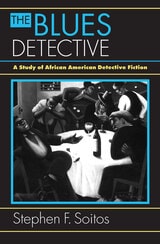
The Blues Detective
A Study of African American Detective FictionStephen Soitos
University of Massachusetts Press, 1996
This illuminating book makes the case for a tradition of African American detective fiction—novels written by black Americans about black detectives and incorporating distinctly African American tropes and themes. Beginning with Pauline Hopkins in 1901, black authors consciously altered and subverted the formulas of detective fiction in significant ways. Such writers as J. E. Bruce, Rudolph Fisher, Chester Himes, Ishmael Reed, and Clarence Major created a new genre that responded to the social and political concerns of the black community.
Examining the work of these authors, Stephen Soitos frames his analysis in terms of four uniquely African American tropes: altered detective personas, double-consciousness detection, black vernaculars, and hoodoo. He argues that black writers created sleuths who were in fact “blues detectives,” engaged not only in solving crimes, but also in exploring the mysteries of black life and culture.
Soitos grounds his study in African American literary theory, particularly the work of Houston Baker, Bernard Bell, and Henry Louis Gates, Jr. He offers both a new way of conceiving black detective fiction and a series of insightful readings of books in this genre.
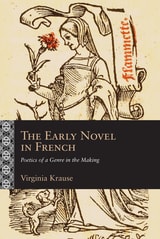
The Early Novel in French
Poetics of a Genre in the MakingVirginia Krause
Northwestern University Press, 2027
Examining the role of changes in print technologies and poetics in the early novel
Around the same time that Aristotle’s Poetics was reemerging from obscurity, Rabelais was composing his Pantagruel series, while a host of influential works in a chivalric, sentimental, or pastoral vein were being imported from Spain and Italy. From this emergent corpus, Rabelais’s is the only name to have unambiguously made it into our modern canon of literary history, where he appears to stand alone as an early pioneer of the novel. The Early Novel in French: Poetics of a Genre in the Making explores the literary, cultural, and eminently material soil in which these early forms of what we would come to know as the novel originally took root, showing how they were imaginatively responding to the practices and uncertainties of the literary texts of their own era as well as to works of classical antiquity.
Within the flowering of experimental fictional forms in mid-sixteenth-century France, Virginia Krause identifies historical subplots shaping the development of this genre. As rhetorical culture continued to animate fictions through an active literary tradition, print culture was changing the very fabric of books. The early novel was thus at once rhetorically fashioned and technologically manufactured. Meanwhile, the legacy of medieval romance adventure persisted, making the early novel in French both a new laboratory for Aristotelian immersion and a vehicle for a mysterious and fugitive romanesque. Krause sheds fresh light on this new and rapidly evolving genre: its lifelike personas or “person-fictions”; its material forms, from pocket-sized volumes to vast literary serials; its immersive powers; and its underappreciated role in the production of the modern author.
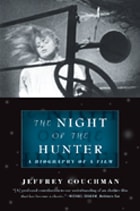
The Night of the Hunter
A Biography of a FilmJeffrey Couchman
Northwestern University Press, 2009
Reaching simultaneously into the realms of film and literature, this detailed exploration of The Night of the Hunter examines the genesis and the eclectic form of each work and the process of transformation by which the novel became a motion picture. It provides the first major study of the long-lost first-draft screenplay by James Agee and confronts a fifty-year controversy about the authorship of the film. This is a story of artistic convergence on many levels--of novelist and director, director and actor, and cinematic form and tastes. The novel, a 1953 debut from Davis Grubb, was a popular and critical success, remaining on the New York Times best-seller list for four months. Hollywood responded to its atmospheric lyricism, and in the hands of first time director Charles Laughton, the book became a film that is equal parts thriller, allegory, and fever dream, filled with slow, inexorable suspense. On the set, Laughton functioned both as an auteur and a collaborator to create his vision of the book, mixing cinematic flourishes both realistic and abstract in sometimes tense situations. The talents that clashed or came together along the road from book to movie make the final film a product of rich stylistic contradiction and rewarding complexity. Through biography, production history, and critical analysis of the novel and film, author Jeffrey Couchman makes the case that this initially overlooked cinematic gem is a prismatic work that continually reveals new aspects of itself.
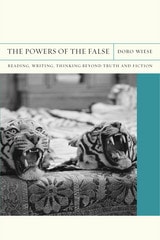
The Powers of the False
Reading, Writing, Thinking beyond Truth and FictionDoro Wiese
Northwestern University Press, 2014