Results by title
4 books match the query 'Olson, Greg'
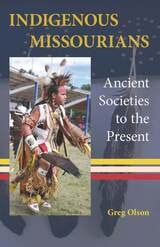
Indigenous Missourians
Ancient Societies to the PresentGreg Olson
University of Missouri Press, 2023
The history of Indigenous people in present-day Missouri is far more nuanced, complex, and vibrant than the often-told tragic stories of conflict with white settlers and forced Indian removal would lead us to believe. In this path-breaking narrative, Greg Olson presents the Show Me State’s Indigenous past as one spanning twelve millennia of Native presence, resilience, and evolution. While previous Missouri histories have tended to include Indigenous people only during periods when they constituted a threat to the state’s white settlement, Olson shows us the continuous presence of Native people that includes the present day.
Beginning thousands of years before the state of Missouri existed, Olson recounts how centuries of inventiveness and adaptability enabled Native people to create innovations in pottery, agriculture, architecture, weaponry, and intertribal diplomacy. Olson also shows how the resilience of Indigenous people like the Osages allowed them to thrive as fur traders, even as settler colonialists waged an all-out policy of cultural genocide against them.
Though the state of Missouri claimed to have forced Indigenous people from its borders after the 1830s, Olson uses U.S. Census records and government rolls from the allotment period to show that thousands remained. In the end, he argues that, with a current population of 27,000 Indigenous people, Missouri remains very much a part of Indian Country, and that Indigenous history is Missouri history.
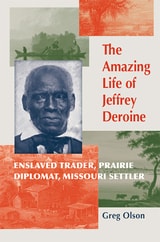
The Amazing Life of Jeffrey Deroine
Enslaved Trader, Prairie Diplomat, and Missouri SettlerGreg Olson
University of Missouri Press, 2026
Though scraps of his life are still present in the historical record, specifics have proven elusive. Still, it is important to tell Deroine’s life story, as it gives us a look both into the life of an enslaved man and the struggles of a free person of color in pre-Civil War Missouri. His life spanned a critical point in the history of the state, and he seems to have spent most of it at the very heart of the action.
Though not well known, the story of Jeffrey Deroine is significant because it illustrates the nuanced intersectionality of lives on the American frontier. Deroine was a man of both French and African descent who lived much of his life among Indigenous people. Born into slavery, he became a free person of color who was a businessman, owned property, and enslaved others. His life defied expectations and stereotypes, and a consideration of it allows us to better understand the history of Missouri and the West.
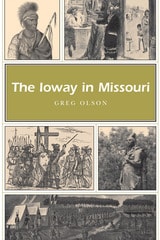
The Ioway in Missouri
Greg Olson
University of Missouri Press, 2008
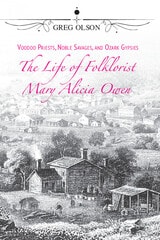
Voodoo Priests, Noble Savages, and Ozark Gypsies
The Life of Folklorist Mary Alicia OwenGreg Olson
University of Missouri Press, 2025
Folklorist Wayland Hand once called Mary Alicia Owen “the most famous American Woman Folklorist of her time.” Drawing on primary sources, such as maps, census records, court documents, personal letters and periodicals, and the scholarship of others who have analyzed various components of Owen’s multifaceted career, historian Greg Olson offers the most complete account of her life and work to date. He also offers a critical look at some of the short stories Owen penned, sometimes under the name Julia Scott, and discusses how the experience she gained as a fiction writer helped lead her to a successful career in folklore.
Olson analyzes many of the nineteenth-century theories, stereotypes, and popular beliefs that influenced the work of Owen and many of her peers. By taking a cross-disciplinary look at her works of fiction, poetry, folklore, history, and anthropology, this volume sheds new light on elements of Owen’s career that have not previously been discussed in print. Examples of the romance stories that Owen wrote for popular magazines in the 1880’s are identified and examined in the context of the time in which Owen wrote them.
This groundbreaking biography shows that Owen was more than just a folklorist—she was a nineteenth-century woman of many contradictions. She was an independent woman of many interests who possessed a keen intellect and a genuine interest in people and their stories. Specialists in folklore, anthropology, women’s studies, local and regional history, and Missouriana will find much to like in this thoroughly researched study.