Results by title
12 books match the query 'Optics'
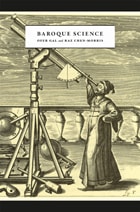
Baroque Science
Ofer Gal and Raz Chen-Morris
University of Chicago Press, 2013
Gal and Chen-Morris show how the protagonists of the new mathematical natural philosophy grasped at the very far and very small by entrusting observation to the mediation of artificial instruments, and how they justified this mediation by naturalizing and denigrating the human senses. They show how the physical-mathematical ordering of heavens and earth demanded obscure and spurious mathematical procedures, replacing the divine harmonies of the late Renaissance with an assemblage of isolated, contingent laws and approximated constants. Finally, they show how the new savants, forced to contend that reason is hopelessly estranged from its surrounding world and that nature is irreducibly complex, turned to the passions to provide an alternative, naturalized foundation for their epistemology and ethics.
Enforcing order in the face of threatening chaos, blurring the boundaries of the natural and the artificial, and mobilizing the passions in the service of objective knowledge, the New Science, Gal and Chen-Morris reveal, is a Baroque phenomenon: deeply entrenched in and crucially formative of the culture of its time.
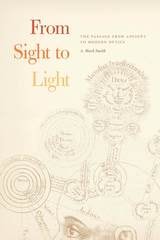
From Sight to Light
The Passage from Ancient to Modern OpticsA. Mark Smith
University of Chicago Press, 2014
Breaking from previous scholarship that sees Johannes Kepler as the culmination of a long-evolving optical tradition that traced back to Greek antiquity via the Muslim Middle Ages, Smith presents Kepler instead as marking a rupture with this tradition, arguing that his theory of retinal imaging, which was published in 1604, was instrumental in prompting the turn from sight to light. Kepler’s new theory of sight, Smith reveals, thus takes on true historical significance: by treating the eye as a mere light-focusing device rather than an image-producing instrument—as traditionally understood—Kepler’s account of retinal imaging helped spur the shift in analytic focus that eventually led to modern optics.
A sweeping survey, From Sight to Light is poised to become the standard reference for historians of optics as well as those interested more broadly in the history of science, the history of art, and cultural and intellectual history.
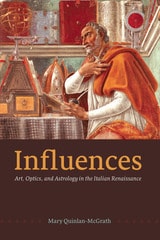
Influences
Art, Optics, and Astrology in the Italian RenaissanceMary Quinlan-McGrath
University of Chicago Press, 2013
Light Filaments
Structures, challenges and applicationsJean-Claude Diels
The Institution of Engineering and Technology, 2022

Newton's Optical Writings
A Guided StudyDennis Sepper
Rutgers University Press, 1994
Isaac Newton’s classic writings on light and optics are the heart of this volume in the series, Masterworks of Discovery: Guided Studies of Great Texts in Science. The innovative series is aimed at making the great works of scientific discovery accessible to students and lay readers. For each volume, distinguished historians of science have carefully selected original texts (or extracts) and accompanied them with interpretive commentary, explanatory notes, and bio-bibliographical material. These volumes are not synopses or histories to take the place of the original works. Instead, they enable non-specialists to read these classics for themselves and take an active part in discovering the excitement of scientific discovery.
Newton first revealed his scientific genius in his pathbreaking work on optics and the properties of light. Through Newton’s early 1672 letter to the Royal Society and long extracts from his mature work, Opticks (1704), the reader can follow Newton’s own descriptions of his experiments on prisms and films, his arguments about white and colored light and the “particle” nature of light, and his influential remarks on scientific method. Dennis Sepper’s deft commentaries, diagrams, and notes help clarify difficulties that modern readers are apt to encounter in Newton’s language and science. Sepper also provides an engaging sketch of Newton’s life, the scientific background to these discoveries, and their aftermath.
Optical MEMS for Chemical Analysis and Biomedicine
Hongrui Jiang
The Institution of Engineering and Technology, 2016
Sensors for Ranging and Imaging
Graham Brooker
The Institution of Engineering and Technology, 2022
The Eye of War
Military Perception from the Telescope to the DroneAntoine Bousquet
University of Minnesota Press, 2018
How perceptual technologies have shaped the history of war from the Renaissance to the present
From ubiquitous surveillance to drone strikes that put “warheads onto foreheads,” we live in a world of globalized, individualized targeting. The perils are great. In The Eye of War, Antoine Bousquet provides both a sweeping historical overview of military perception technologies and a disquieting lens on a world that is, increasingly, one in which anything or anyone that can be perceived can be destroyed—in which to see is to destroy.
Arguing that modern-day global targeting is dissolving the conventionally bounded spaces of armed conflict, Bousquet shows that over several centuries, a logistical order of militarized perception has come into ascendancy, bringing perception and annihilation into ever-closer alignment. The efforts deployed to evade this deadly visibility have correspondingly intensified, yielding practices of radical concealment that presage a wholesale disappearance of the customary space of the battlefield. Beginning with the Renaissance’s fateful discovery of linear perspective, The Eye of War discloses the entanglement of the sciences and techniques of perception, representation, and localization in the modern era amid the perpetual quest for military superiority. In a survey that ranges from the telescope, aerial photograph, and gridded map to radar, digital imaging, and the geographic information system, Bousquet shows how successive technological systems have profoundly shaped the history of warfare and the experience of soldiering.
A work of grand historical sweep and remarkable analytical power, The Eye of War explores the implications of militarized perception for the character of war in the twenty-first century and the place of human subjects within its increasingly technical armature.

The Optics of Ibn al-Haytham Books IV–V
On Reflection and Images Seen by ReflectionAbdelhamid I. Sabra
University of London Press, 2023
Ibn al-Haytham was perhaps the greatest mathematician and physicist of the medieval Arabic/Islamic world. The most famous book in which he applied his scientific method is his Optics, through which he dealt with both the mathematics of rays of light and the physical aspects of the eye in seven comprehensive books. His rethinking of the entire science of optics set the scene for the whole of the subsequent development of the subject, influencing figures such as William of Ockham, Kepler, Descartes, and Christaan Huygens. The immense work of editing, translating into English, and commenting on this work was undertaken by Abdelhamid I. Sabra. This English translation of Books IV–V was completed by Sabra just before his death in 2013 with an introduction and critical analysis. It has been extensively revised by Jan Hogendijk.
The Refracted Muse
Literature and Optics in Early Modern SpainEnrique Garcia Santo-Tomas
University of Chicago Press, 2017
While Spain is often thought to have taken little notice of the Scientific Revolution, García Santo-Tomás tells a different story, one that reveals Golden Age Spanish literature to be in close dialogue with the New Science. Drawing on the work of writers such as Cervantes, Lope de Vega, Calderón de la Barca, and Quevedo, he helps us trace the influence of science and discovery on the rapidly developing and highly playful genre of the novel. Indeed, García Santo-Tomás makes a strong case that the rise of the novel cannot be fully understood without taking into account its relationship to the scientific discoveries of the period.
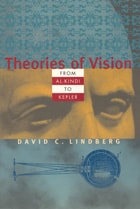
Theories of Vision from Al-kindi to Kepler
David C. Lindberg
University of Chicago Press, 1981
David C. Lindberg is professor and chairman of the department of the history of science at the University of Wisconsin, Madison.

Useful Optics
Walter T. Welford
University of Chicago Press, 1991
Welford offers a succinct review of principles basic to the construction and use of optics in physics. His lucid explanations and clear illustrations will particularly help those whose interests lie in other areas but who nevertheless must understand enough about optics to create the experimental apparatus necessary to their research. Consistently emphasizing applications and practical points of design, Welford covers a host of topics: mirrors and prisms, optical materials, aberration, the limits of image formation and resolution, illumination for image-forming systems, laser beams, interference and interferometry, detectors and light sources, holography, and more. The final chapter deals with putting together an experimental optics system.
Many areas of the physical sciences and engineering increasingly demand an appreciation of optics. Welford's Useful Optics will prove indispensable to any researcher trying to develop and use effective optical apparatus.
Walter T. Welford (1916-1990) was professor of physics at Imperial College of Science, Technology and Medicine from 1951 until his death. He was a Fellow of the Royal Society and of the Optical Society of America.