Results by title
4 books match the query 'Oral reading'
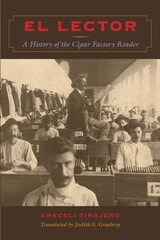
El Lector
A History of the Cigar Factory ReaderBy Araceli Tinajero
University of Texas Press, 2009
The practice of reading aloud has a long history, and the tradition still survives in Cuba as a hard-won right deeply embedded in cigar factory workers' culture. In El Lector, Araceli Tinajero deftly traces the evolution of the reader from nineteenth-century Cuba to the present and its eventual dissemination to Tampa, Key West, Puerto Rico, and Mexico. In interviews with present-day and retired readers, she records testimonies that otherwise would have been lost forever, creating a valuable archive for future historians.
Through a close examination of journals, newspapers, and personal interviews, Tinajero relates how the reading was organized, how the readers and readings were selected, and how the process affected the relationship between workers and factory owners. Because of the reader, cigar factory workers were far more cultured and in touch with the political currents of the day than other workers. But it was not only the reading material, which provided political and literary information that yielded self-education, that influenced the workers; the act of being read to increased the discipline and timing of the artisan's job.

Reid's Read-Alouds 2
Modern-Day Classics from C.S. Lewis to Lemony SnicketRob Reid
American Library Association, 2010
Reid's Read-Alouds
Selections for Children and TeensRob Reid
American Library Association, 2009
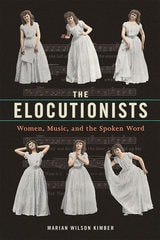
The Elocutionists
Women, Music, and the Spoken WordMarian Wilson Kimber
University of Illinois Press, 2017
Marian Wilson Kimber restores elocution with music to its rightful place in performance history. Gazing through the lenses of gender and genre, Wilson Kimber argues that these female artists transgressed the previous boundaries between private and public domains. Their performances advocated for female agency while also contributing to a new social construction of gender. Elocutionists, proud purveyors of wholesome entertainment, pointedly contrasted their "acceptable" feminine attributes against those of morally suspect actresses. As Wilson Kimber shows, their influence far outlived their heyday. Women, the primary composers of melodramatic compositions, did nothing less than create a tradition that helped shape the history of American music.