Results by title
45 books match the query 'What'
"What the Railroad Will Bring Us"
The Legacy of the Transcontinental Railroad CorporationsRichard White
Utah State University Press, 2020
The Arrington Lecture series, established by one of the twentieth-century West's most distinguished historians, Leonard Arrington, has become a leading forum for prominent historians to address topics related to Mormon history. Utah State University hosts the Leonard J. Arrington Mormon History Lecture Series through the Merrill-Cazier Library Special Collections and Archives department.

Affording Justice
How the Legal Profession Is Failing America's Middle Class and What to Do About ItSheldon Krantz
Duke University Press, 2027
An Imperfect Book
What the Book of Mormon Tells Us about ItselfEarl M. Wunderli
Signature Books, 2013
Dale E. Luffman, Association for Mormon Letters
Campaign Finance and American Democracy
What the Public Really Thinks and Why It MattersDavid M. Primo and Jeffrey D. Milyo
University of Chicago Press, 2020
Primo and Milyo probe original survey data to determine Americans’ sentiments on the role of money in politics, what drives these sentiments, and why they matter. What Primo and Milyo find is that while many individuals support the idea of reform, they are also skeptical that reform would successfully limit corruption, which Americans believe stains almost every fiber of the political system. Moreover, support for campaign finance restrictions is deeply divided along party lines, reflecting the polarization of our times. Ultimately, Primo and Milyo contend, American attitudes toward money in politics reflect larger fears about the health of American democracy, fears that will not be allayed by campaign finance reform.
Charter School City
What the End of Traditional Public Schools in New Orleans Means for American EducationDouglas N. Harris
University of Chicago Press, 2020
New Orleans became the first US city ever to adopt a school system based on the principles of markets and economics. When the state took over all of the city’s public schools, it turned them over to non-profit charter school managers accountable under performance-based contracts. Students were no longer obligated to attend a specific school based upon their address, allowing families to act like consumers and choose schools in any neighborhood. The teacher union contract, tenure, and certification rules were eliminated, giving schools autonomy and control to hire and fire as they pleased.
In Charter School City, Douglas N. Harris provides an inside look at how and why these reform decisions were made and offers many surprising findings from one of the most extensive and rigorous evaluations of a district school reform ever conducted. Through close examination of the results, Harris finds that this unprecedented experiment was a noteworthy success on almost every measurable student outcome. But, as Harris shows, New Orleans was uniquely situated for these reforms to work well and that this market-based reform still required some specific and active roles for government. Letting free markets rule on their own without government involvement will not generate the kinds of changes their advocates suggest.
Combining the evidence from New Orleans with that from other cities, Harris draws out the broader lessons of this unprecedented reform effort. At a time when charter school debates are more based on ideology than data, this book is a powerful, evidence-based, and in-depth look at how we can rethink the roles for governments, markets, and nonprofit organizations in education to ensure that America’s schools fulfill their potential for all students.
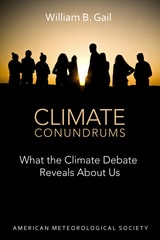
Climate Conundrums
What the Climate Debate Reveals About UsWilliam B. Gail
American Meteorological Society, 2014
Climate Conundrums is a journey through how we as humans think, individually and collectively, about the debate. It eschews rhetoric or fist-pounding conclusions and instead explores our ongoing attempts to reach a societal understanding about climate change and how we should respond to it. The essays throughout are broadly organized around our relationship with nature, the challenges facing human society, and the path ahead for civilization. Each begins with a question—Can we make nature better? Could science and religion reconcile?—and from there follows an introspective path through all sides of the debates. Some are longstanding issues, such as whether humans are growing increasingly distant from nature. Others are brought on by recent developments, such as whether technology can eventually solve all of society’s needs.
While no final answers are given, the insights that come from reflecting on these questions can help us better find our way and better connect with each other across the climate divide.
Come and Hear
What I Saw in My Seven-and-a-Half-Year Journey through the TalmudAdam Kirsch
Brandeis University Press, 2021
Spurred by a curiosity about Daf Yomi—a study program launched in the 1920s in which Jews around the world read one page of the Talmud every day for 2,711 days, or about seven and a half years—Adam Kirsch approached Tablet magazine to write a weekly column about his own Daf Yomi experience. An avowedly secular Jew, Kirsch did not have a religious source for his interest in the Talmud; rather, as a student of Jewish literature and history, he came to realize that he couldn’t fully explore these subjects without some knowledge of the Talmud. This book is perfect for readers who are in a similar position. Most people have little sense of what the Talmud actually is—how the text moves, its preoccupations and insights, and its moments of strangeness and profundity. As a critic and journalist Kirsch has experience in exploring difficult texts, discussing what he finds there, and why it matters. His exploration into the Talmud is best described as a kind of travel writing—a report on what he saw during his seven-and-a-half-year journey through the Talmud. For readers who want to travel that same path, there is no better guide.

Gamers…in the Library?! The Why, What, and How of Videogame Tournaments for All Ages
Eli Neiburger
American Library Association, 2007
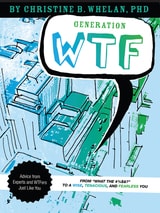
Generation WTF
From What the #$%&! to a Wise, Tenacious, and Fearless You: Advice on How to Get There from Experts and WTFers Just Like YouChristine B. Whelan
Templeton Press, 2011
We all know what “WTF” usually means: it’s an exclamation of frustration, anger, and an understandable reaction to the brutal new economic realities that have hit young adults harder than any other group. WTF happened to promises of a bright future? What happened to the jobs? And what do we do now that the rules have changed?
Recent college grads were raised in a time of affluence and entitlement, lulled into thinking that a golden future would happen. Young adults with few role models to teach values like thrift, perseverance, and self-control are ill-equipped to cope with sacrifice and failure. Their dismal employment prospects are merely the most visible symptom of more significant challenges. Fortunately, it’s not too late to change course. This optimistic, reflective, and technologically savvy generation already possesses the tools to thrive—if only they learn to harness the necessary skills for success.
In Generation WTF, Christine Whelan does just that. Dr. Whelan, one of the foremost authorities on the history of the self-help genre, worked with more than one hundred young people to test and tweak the best old-school advice and personalize it for the modern twenty-something. After a decade of researching the industry—and years advising “WTFers” as they struggle to make their way in the “real world”—Dr. Whelan knows firsthand what advice works and what Generation WTF has to offer.
Rather than focusing on the frustration that “WTF” usually stands for, Dr. Whelan leads the charge to reclaim the acronym as a battle cry for a positive future: Generation WTF will be a wise, tenacious, and fearless generation, strengthened by purpose and hope. This practical new guide will show these WTFers the way to success and instill lasting habits that will serve them well in both good times and bad.
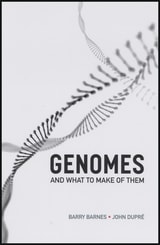
Genomes and What to Make of Them
Barry Barnes and John Dupré
University of Chicago Press, 2008
For the nonscientist, the claims and counterclaims are dizzying—what does it really mean to understand the genome? Barry Barnes and John Dupré offer an answer to that question and much more in Genomes and What to Make of Them, a clear and lively account of the genomic revolution and its promise. The book opens with a brief history of the science of genetics and genomics, from Mendel to Watson and Crick and all the way up to Craig Venter; from there the authors delve into the use of genomics in determining evolutionary paths—and what it can tell us, for example, about how far we really have come from our ape ancestors. Barnes and Dupré then consider both the power and risks of genetics, from the economic potential of plant genomes to overblown claims that certain human genes can be directly tied to such traits as intelligence or homosexuality. Ultimately, the authors argue, we are now living with a new knowledge as powerful in its way as nuclear physics, and the stark choices that face us—between biological warfare and gene therapy, a new eugenics or a new agricultural revolution—will demand the full engagement of both scientists and citizens.
Written in straightforward language but without denying the complexity of the issues, Genomes and What to Make of Them is both an up-to-date primer and a blueprint for the future.
Human Predicaments
And What to Do about ThemJohn Kekes
University of Chicago Press, 2016
Kekes considers how we might deal with these predicaments by comparing how others in different times and cultures have approached them. He examines what is good, bad, instructive, and dangerous in the sexually charged politics of the Shilluk, the Hindu caste system, Balinese role-morality, the religious passion of Cortes and Simone Weil, the fate of Colonel Hiromichi Yahara during and after the battle for Okinawa, the ritual human sacrifices of the Aztecs, and the tragedies to which innocence may lead. In doing so, he shakes us out of our deep-seated ways of thinking, enlarging our understanding of the possibilities available to us as we struggle with the problems that stand in the way of how we want to live. The result is a highly interesting journey through time and space that illuminates and helps us cope with some of the most basic predicaments we all face as human beings.
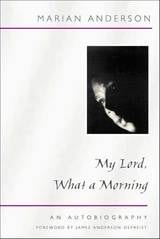
My Lord, What a Morning
An AutobiographyMarian Anderson
University of Illinois Press, 2002
My Lord, What a Morning is a gentle and engrossing memoir, abounding with the tender and inspiring stories of Marian Anderson's life in her own modest words. From her humble but proud beginnings in south Philadelphia to international vocal renown, the legendary contralto writes of triumph and adversity, of being grounded in faith and surrounded by family, and of the music that shaped her career.
Anderson published My Lord, What a Morning in 1956 on the heels of her groundbreaking role as the first African American to perform at the Metropolitan Opera. In it are bittersweet reminiscences of a working-class childhood, from her first job scrubbing the neighbors' steps to the sorrow and upheaval of her father's untimely death. Here are the stories of a young girl with prodigious talent and her warm remembrances of the teachers, managers, friends, accompanists, and fans who worked to foster it. In addition, she provides a veritable travelogue of her concerts across the globe and rare glimpses at the personal life of a woman more concerned with family than celebrity.
With eleven photographs and a touching new foreword by Anderson's nephew, famed conductor and poet James DePreist, this edition of My Lord, What a Morning revives the classic portrait of a musical legend who was resilient in the bullying face of bigotry and gracious in the unfaltering glow of fame.
Nonprofit Governance
The Why, What, and How of Nonprofit BoardshipJohn Tropman and Thomas J. Harvey
University of Scranton Press, 2009
This thorough volume offers up-to-date information and practical guidelines for board members and executives of nonprofit organizations large and small. Among the topics addressed are the historical roots of the voluntary sector in America, a complete discussion of the key responsibilities of nonprofit boards, suggestions for board organization, appropriate protocol for meetings, legal issues affecting nonprofit groups, and useful tools for self-assessment. This guide will be indispensable to the almost two million nonprofit organizations existing in the United States today.
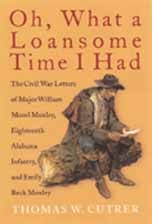
Oh, What a Loansome Time I Had
The Civil War Letters of Major William Morel Moxley, Eighteenth Alabama Infantry, and Emily Beck MoxleyEmily Beck Moxley
University of Alabama Press, 2002
Most surviving correspondence of the Civil War period was written by members of a literate, elite class; few collections exist in which the woman's letters to her soldier husband have been preserved. Here, in the exchange between William and Emily Moxley, a working-class farm couple from Coffee County, Alabama, we see vividly an often-neglected aspect of the Civil War experience: the hardships of civilian life on the home front.
Emily's moving letters to her husband, startling in their immediacy and detail, chronicle such difficulties as a desperate lack of food and clothing for her family, the frustration of depending on others in the community, and her growing terror at facing childbirth without her husband, at the mercy of a doctor with questionable skills. Major Moxley's letters to his wife reveal a decidedly unromantic side of the war, describing his frequent encounters with starvation, disease, and bloody slaughter.
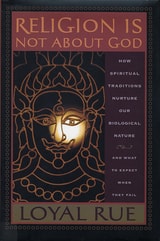
Religion is Not about God
How Spiritual Traditions Nurture our Biological Nature and What to Expect When They FailLoyal Rue
Rutgers University Press, 2006
Thousands of religious traditions have appeared over the course of human history but only a relative few have survived. Some speak of a myriad of gods, others of only one, and some recognize no gods at all. Volumes have been written attempting to prove the existence or nonexistence of supernatural being(s). So, if religion is not about God, then what is it about?
In this provocative book, Loyal Rue contends that religion, very basically, is about us. Successful religions are narrative (myth) traditions that influence human nature so that we might think, feel, and act in ways that are good for us, both individually and collectively. Through the use of images, symbols, and rituals, religion promotes reproductive fitness and survival through the facilitation of harmonious social relations. Drawing on examples from the major traditions—Judaism, Christianity, Islam, Hinduism, and Buddhism—Rue shows how each religion, in its own way, has guided human behavior to advance the twin goals of personal fulfillment and social coherence.
As all faiths are increasingly faced with a crisis of intellectual plausibility and moral relevance, this book presents a compelling and positive view of the centrality and meaning of religion.

Religion is Not about God
How Spiritual Traditions Nurture our Biological Nature and What to Expect When They FailLoyal Rue
Rutgers University Press, 2006
2006 Choice Outstanding Academic Title
Thousands of religious traditions have appeared over the course of human history but only a relative few have survived. Some speak of a myriad of gods, others of only one, and some recognize no gods at all. Volumes have been written attempting to prove the existence or nonexistence of supernatural being(s). So, if religion is not about God, then what is it about?
In this provocative book, Loyal Rue contends that religion, very basically, is about us. Successful religions are narrative (myth) traditions that influence human nature so that we might think, feel, and act in ways that are good for us, both individually and collectively. Through the use of images, symbols, and rituals, religion promotes reproductive fitness and survival through the facilitation of harmonious social relations. Drawing on examples from the major traditions—Judaism, Christianity, Islam, Hinduism, and Buddhism—Rue shows how each religion, in its own way, has guided human behavior to advance the twin goals of personal fulfillment and social coherence.
As all faiths are increasingly faced with a crisis of intellectual plausibility and moral relevance, this book presents a compelling and positive view of the centrality and meaning of religion.
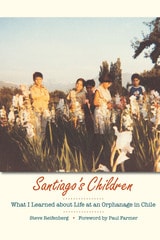
Santiago's Children
What I Learned about Life at an Orphanage in ChileBy Steve Reifenberg
University of Texas Press, 2008
Runner-up, Bronze Medal, Independent Publishers Book Awards: Memoir/Autobiography Category, 2009
Unclear about his future career path, Steve Reifenberg found himself in the early 1980s working at a small orphanage in a poor neighborhood in Santiago, Chile, where a determined single woman was trying to create a stable home for a dozen or so children who had been abandoned or abused. With little more than good intentions and very limited Spanish, the 23-year-old Reifenberg plunged into the life of the Hogar Domingo Savio, becoming a foster father to kids who stretched his capacities for compassion and understanding in ways he never could have imagined back in the United States.
In this beautifully written memoir, Reifenberg recalls his two years at the Hogar Domingo Savio. His vivid descriptions create indelible portraits of a dozen remarkable kids—mature-beyond-her-years Verónica; sullen, unresponsive Marcelo; and irrepressible toddler Andrés, among them. As Reifenberg learns more about the children's circumstances, he begins to see the bigger picture of life in Chile at a crucial moment in its history.
The early 1980s were a time of economic crisis and political uprising against the brutal military dictatorship of Augusto Pinochet. Reifenberg skillfully interweaves the story of the orphanage with the broader national and international forces that dramatically impact the lives of the kids. By the end of Santiago's Children, Reifenberg has told an engrossing story not only of his own coming-of-age, but also of the courage and resilience of the poorest and most vulnerable residents of Latin America.
Saving Our Children From Poverty
What the United States Can Learn From FranceBarbara R. Bergmann
Russell Sage Foundation, 1996
Soft Corruption
How Unethical Conduct Undermines Good Government and What To Do About ItSchluter, William E
Rutgers University Press, 2017
In this searing personal narrative, the former state senator recounts his fight to expose and reform these acts of government misconduct. Not afraid to cite specific cases of soft corruption in New Jersey politics, he paints a vivid portrait of public servants who care more about political power and personal gain than the public good. By recounting events that he witnessed firsthand in the Garden State, he provides dramatic illustrations of ills that afflict American politics nationwide.
As he identifies five main forms of soft corruption, Schluter diagnoses the state government’s ethical malaise, and offers concrete policy suggestions for how it might be cured. Not simply a dive through the muck of New Jersey politics, Soft Corruption is an important first step to reforming our nation’s political system, a book that will inspire readers to demand that our elected officials can and must do better.
Visit: www.softcorruption.com (http://www.softcorruption.com)
Spirituality In Patient Care
Why, How, When, and WhatHarold Koenig
Templeton Press, 2002
This book is intended as a guide for practicing physicians, medical students, and residents to help identify and address the spiritual needs of patients. Those who will benefit most will be physicians who wish to know how to integrate spirituality into clinical practice in an effective and sensitive manner. Other professionals, such as nurses and chaplains, may use this book as they interact with doctors, other health professionals, and hospital administrators.
Spirituality in Patient Care
Why, How, When, and WhatHarold G Koenig
Templeton Press, 2007
Spirituality in Patient Care
Why, How, When, and WhatHarold G Koenig
Templeton Press, 2013
The Empire's Old Clothes
What the Lone Ranger, Babar, and Other Innocent Heroes Do to Our MindsAriel Dorfman
Duke University Press, 2010
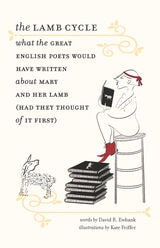
The Lamb Cycle
What the Great English Poets Would Have Written About Mary and Her Lamb (Had They Thought of It First)David R. Ewbank
Brandeis University Press, 2023
In The Lamb Cycle, David R. Ewbank achieves the unthinkable—he writes so convincingly in the style of the great English poets that one could be lulled into thinking that Shakespeare himself was inspired to muse upon the subject of “Mary Had a Little Lamb.” Ewbank captures not only the style of each of the poets he chooses, but also their preoccupations and subject matter. So D.H. Lawrence’s Mary longs for her lamb as any woman longing for her lover, whilst T.S. Eliot’s Mary is recollected by an old man looking back on his life. Alexander Pope writes an “An Essay on Lambs,” and Tennyson’s lotus eaters become “The Clover Eater.” Brilliantly written, sophisticated, and laugh-out-loud funny, these poems, enhanced by Kate Feiffer’s charming illustrations, will enchant anyone who has ever read an English poem.
The Wandering Mind
What the Brain Does When You're Not LookingMichael C. Corballis
University of Chicago Press, 2015
That may be bad news for me, but is it bad news for people in general? Does the fact that as much as fifty percent of our waking hours find us failing to focus on the task at hand represent a problem? Michael Corballis doesn’t think so, and with The Wandering Mind, he shows us why, rehabilitating woolgathering and revealing its incredibly useful effects. Drawing on the latest research from cognitive science and evolutionary biology, Corballis shows us how mind-wandering not only frees us from moment-to-moment drudgery, but also from the limitations of our immediate selves. Mind-wandering strengthens our imagination, fueling the flights of invention, storytelling, and empathy that underlie our shared humanity; furthermore, he explains, our tendency to wander back and forth through the timeline of our lives is fundamental to our very sense of ourselves as coherent, continuing personalities.
Full of unusual examples and surprising discoveries, The Wandering Mind mounts a vigorous defense of inattention—even as it never fails to hold the reader’s.
Ungrading
Why Rating Students Undermines Learning (and What to Do Instead)Susan D. Blum
West Virginia University Press, 2020
The moment is right for critical reflection on what has been assumed to be a core part of schooling. In Ungrading, fifteen educators write about their diverse experiences going gradeless. Some contributors are new to the practice and some have been engaging in it for decades. Some are in humanities and social sciences, some in STEM fields. Some are in higher education, but some are the K–12 pioneers who led the way. Based on rigorous and replicated research, this is the first book to show why and how faculty who wish to focus on learning, rather than sorting or judging, might proceed. It includes honest reflection on what makes ungrading challenging, and testimonials about what makes it transformative.
CONTRIBUTORS:
Aaron Blackwelder
Susan D. Blum
Arthur Chiaravalli
Gary Chu
Cathy N. Davidson
Laura Gibbs
Christina Katopodis
Joy Kirr
Alfie Kohn
Christopher Riesbeck
Starr Sackstein
Marcus Schultz-Bergin
Clarissa Sorensen-Unruh
Jesse Stommel
John Warner
What I Saw, Heard, Learned . . .
Giorgio Agamben
Seagull Books, 2023
What can the senses of an attentive philosopher see, hear, and learn that can, in turn, teach us about living better lives? Perhaps it’s less a matter of asking what and more a matter of asking how. These latest reflections from Italy’s foremost philosopher form a sort of travelogue that chronicles Giorgio Agamben’s profound interior journey. Here, with unprecedented immediacy, Agamben shares his final remarks, late-life observations, and reflections about his life that flashed before his eyes. What did he see in that brief flash? What did he stay faithful to? What remains of all those places, friends, and teachers?
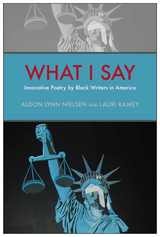
What I Say
Innovative Poetry by Black Writers in AmericaAldon Lynn Nielsen
University of Alabama Press, 2015
The elder poets in this collection, such as Nathaniel Mackey, C. S. Giscombe, Will Alexander, and Ron Allen, came of age during and were powerfully influenced by the Black Arts Movement, and What I Say grounds the collection in its black modernist roots. In tracing the fascinating and unexpected paths of experimentation these poets explored, however, Nielsen and Ramey reveal the tight delineations of African American poetry that omitted noncanonical forms. This invigorating panoply of work, when restored, brings into focus the creatively elastic frontiers and multifaceted expressions of contemporary black poetry.
Several of the poets discussed in What I Say forged relationships with members of the L=A=N=G=U=A=G=E poetry movement and participated in the broader community of innovative poetry that emerged in the late 1970s and early 1980s and continues to exert a powerful influence today.
Each volume can stand on its own, and reading them in tandem will provide a clear vision of how innovative African American poetries have evolved across the twentieth century and into the twenty-first. What I Say is infinitely teachable, compelling, and rewarding. It will appeal to a broad readership of poets, poetics teachers, poetics scholars, students of African American literature in nonnarrative forms, Afro-futurism, and what lies between the modern and the contemporary in global and localized writing practices.
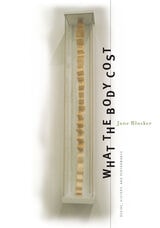
What The Body Cost
Desire, History, And PerformanceJane Blocker
University of Minnesota Press, 2004
Reexamines rebelliousness and desire in the history of performance art
Because performance is by its very nature ephemeral, it elicits a desire for what is lost more than any other form of art making. But what is the nature of that desire, and on what models has it been structured? How has it affected the ways in which the history of performance art gets told?
In What the Body Cost, Jane Blocker revisits key works in performance art by Carolee Schneemann, Vito Acconci, Hannah Wilke, Yves Klein, Ana Mendieta, and others to challenge earlier critiques that characterize performance, or body art, as a purely revolutionary art form and fail to recognize its reactionary—and sometimes damaging—effects. The scholarship to date on performance art has not, she finds, gone far enough in locating the body at the center of the performance, nor has it acknowledged the psychic, emotional, or social costs exacted on that body. Drawing on the work of critical theorists such as Roland Barthes and Catherine Belsey, as well as queer theory and feminism, What the Body Cost reads against patriarchal and heteronormative tendencies in art history while providing a corrective to the established view that performance art is necessarily transgressive. Instead, Blocker suggests that the historiography of performance art is a postmodern lovers’s discourse in which practitioners, historians, and critics alike fervently seek the body while doubting it can ever be found.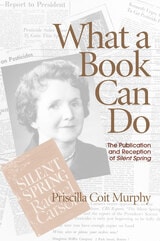
What a Book Can Do
The Publication and Reception of "Silent Spring"Priscilla Coit Murphy
University of Massachusetts Press, 2005
Murphy reviews the publishing history of the Houghton Mifflin edition and the prior New Yorker serialization, describing Carson's approach to her project as well as the views and expectations of her editors. She also documents the response of opponents to Carson's message, notably the powerful chemical industry, including efforts to undermine, delay, or stop publication altogether.
Murphy then investigates the media's role, showing that it went well beyond providing a forum for debate. In addition, she analyzes the perceptions and expectations of the public at large regarding the book, the debate, and the media. By probing all of these perspectives, Murphy sheds new light on the dynamic between newsmaking books, the media, and the public. In the process, she addresses a host of broader questions about the place of books in American culture, past, present, and future.
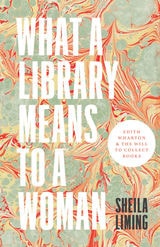
What a Library Means to a Woman
Edith Wharton and the Will to Collect BooksSheila Liming
University of Minnesota Press, 2020
Examining the personal library and the making of self
When writer Edith Wharton died in 1937, without any children, her library of more than five thousand volumes was divided and subsequently sold. Decades later, it was reassembled and returned to The Mount, her historic Massachusetts estate. What a Library Means to a Woman examines personal libraries as technologies of self-creation in modern America, focusing on Wharton and her remarkable collection of books.
Sheila Liming explores the connection between libraries and self-making in late nineteenth- and early twentieth-century American culture, from the 1860s to the 1930s. She tells the story of Wharton’s library in concert with Wharton scholarship and treatises from this era concerning the wider fields of book history, material and print culture, and the histories (and pathologies) of collecting. Liming’s study blends literary and historical analysis while engaging with modern discussions about gender, inheritance, and hoarding. It offers a review of the many meanings of a library collection, while reading one specific collection in light of its owner’s literary celebrity.
What a Library Means to a Woman was born from Liming’s ongoing work digitizing the Wharton library collection. It ultimately argues for a multifaceted understanding of authorship by linking Wharton’s literary persona to her library, which was, as she saw it, the site of her self-making.
What a Philosopher Is
Becoming NietzscheLaurence Lampert
University of Chicago Press, 2018
With this book, Laurence Lampert answers that question. He does so through his trademark technique of close readings of key works in Nietzsche’s journey to philosophy: The Birth of Tragedy, Schopenhauer as Educator, Richard Wagner in Bayreuth, Human All Too Human, and “Sanctus Januarius,” the final book of the 1882 Gay Science. Relying partly on how Nietzsche himself characterized his books in his many autobiographical guides to the trajectory of his thought, Lampert sets each in the context of Nietzsche’s writings as a whole, and looks at how they individually treat the question of what a philosopher is. Indispensable to his conclusions are the workbooks in which Nietzsche first recorded his advances, especially the 1881 workbook which shows him gradually gaining insights into the two foundations of his mature thinking. The result is the most complete picture we’ve had yet of the philosopher’s development, one that gives us a Promethean Nietzsche, gaining knowledge even as he was expanding his thought to create new worlds.
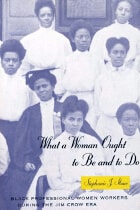
What a Woman Ought to Be and to Do
Black Professional Women Workers during the Jim Crow EraStephanie J. Shaw
University of Chicago Press, 1996
What a Woman Ought to Be and to Do brings to life a world in which African-American families, communities, and schools worked to encourage the self-confidence, individual initiative, and social responsibility of girls. Shaw shows us how, in a society that denied black women full professional status, these girls embraced and in turn defined an ideal of "socially responsible individualism" that balanced private and public sphere responsibilities. A collective portrait of character shaped in the toughest circumstances, this book is more than a study of the socialization of these women as children and the organization of their work as adults. It is also a study of leadership—of how African American communities gave their daughters the power to succeed in and change a hostile world.
What the Anti-Federalists Were For
The Political Thought of the Opponents of the ConstitutionHerbert J. Storing
University of Chicago Press, 1981
Storing here offers a brilliant introduction to the thought and principles of the Anti-Federalists as they were understood by themselves and by other men and women of their time. His comprehensive exposition restores to our understanding the Anti-Federalist share in the founding its effect on some of the enduring themes and tensions of American political life. The concern with big government and infringement of personal liberty one finds in the writings of these neglected Founders strikes a remarkably timely note.

What the Anti-Federalists Were For
The Political Thought of the Opponents of the ConstitutionHerbert J. Storing
University of Chicago Press, 1981
The Anti-Federalists, in Herbert J. Storing's view, are somewhat paradoxically entitled to be counted among the Founding Fathers and to share in the honor and study devoted to the founding. "If the foundations of the American polity was laid by the Federalists," he writes, "the Anti-Federalist reservations echo through American history; and it is in the dialogue, not merely in the Federalist victory, that the country's principles are to be discovered." It was largely through their efforts, he reminds us, that the Constitution was so quickly amended to include a bill of rights.
Storing here offers a brilliant introduction to the thought and principles of the Anti-Federalists as they were understood by themselves and by other men and women of their time. His comprehensive exposition restores to our understanding the Anti-Federalist share in the founding its effect on some of the enduring themes and tensions of American political life. The concern with big government and infringement of personal liberty one finds in the writings of these neglected Founders strikes a remarkably timely note.
What the Body Told
Rafael Campo
Duke University Press, 1996
Lost in the Hospital
It’s not that I don’t like the hospital.
Those small bouquets of flowers, pert and brave.
The smell of antiseptic cleansers.
The ill, so wistful in their rooms, so true.
My friend, the one who’s dying, took me out
To where the patients go to smoke, IV’s
And oxygen tanks attached to them—
A tiny patio for skeletons. We shared
A cigaratte, which was delicious but
Too brief. I held his hand; it felt
Like someone’s keys. How beautiful it was,
The sunlight pointing down at us, as if
We were important, full of life, unbound.
I wandered for a moment where his ribs
Had made a space for me, and there, beside
The thundering waterfall of is heart,
I rubbed my eyes and thought “I’m lost.”
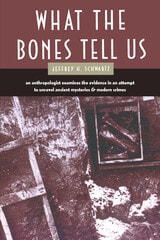
What the Bones Tell Us
Jeffrey H. Schwartz
University of Arizona Press, 1997
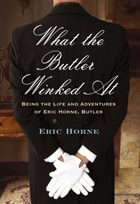
What the Butler Winked At
Being the Life and Adventures of Eric Horne, ButlerEric Horne
Westholme Publishing, 2011
A Memoir of the Real Downton Abbey Experience
Eric Horne served as a butler in some of the great English country manors from the 1860s until just after World War I, when many of the families whose heirs died in battle were forced to sell off their homes. Born in Southampton, Horne came from a humble family who valued education. Horne excelled in school and wished to go to sea, but lacking his parents’ permission, he instead ended up as a footboy for a local household. Over the years, Horne moved up in the service of the aristocracy: his goal was to become butler to the king of England, a position he very nearly secured. He did end up in the service of several distinguished households for many decades, and upon his retirement in 1922, he decided to write his memoir. Horne is a unique voice; not only did he have intimate contact with his employers and the household staff, he also possessed literary talent, so that his account provides authentic detail as well as shrewd—and often witty—views of the aristocracy, the servants, and their activities. Horne is not sentimental though; he does not think that he used his life wisely, having never learned a true trade. He reveals the plight of the servant class, where once a butler lost his employment—particularly following the devastation of World War I—he was likely to end up in a poorhouse, because employers did not usually provide pensions and servants were rarely able to save enough money to survive on their own. What the Butler Winked At is a fascinating and essential account of life in a country house during the height of the Victorian and Edwardian eras.
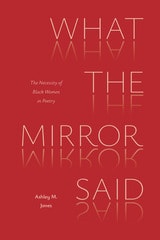
What the Mirror Said
The Necessity of Black Women in PoetryAshley M. Jones
University of Michigan Press, 2026
Part critical essay, part personal essay collection, What the Mirror Said traces the influence of nine Black women poets in Jones’s writing and life. She brings together historical biographical information, personal reflection, and close readings as she explores personal connections to poets from Phillis Wheatley to Patricia Smith. This book is expansive in its study, from classical metrical scansion to metaphorical explication. In offering new ways to interpret poems by important contemporary poets, What the Mirror Said makes the case for the need to study and celebrate Black women poets.
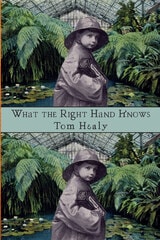
What the Right Hand Knows
Tom Healy
Four Way Books, 2009
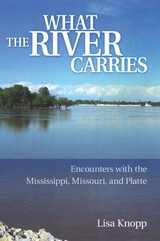
What the River Carries
Encounters with the Mississippi, Missouri, and PlatteLisa Knopp
University of Missouri Press, 2012
Because Knopp was born and raised just a few blocks away, she considers the Mississippi from the perspective of a native resident, a “dweller in the land.” She revisits places she has long known: Nauvoo, Illinois, the site of two nineteenth-century utopias, one Mormon, one Icarian; Muscatine, Iowa, once the world’s largest manufacturer of pearl (mussel shell) buttons; and the mysterious prehistoric bird- and bear-shaped effigy mounds of northeastern Iowa. On a downriver trip between the Twin Cities and St. Louis, she meditates on what can be found in Mississippi river water—state lines, dissolved oxygen, smallmouth bass, corpses, family history, wrecked steamboats, mayfly nymphs, toxic perfluorinated chemicals, philosophies.
Knopp first encountered the Missouri as a tourist and became acquainted with it through literary and historical documents, as well as stories told by longtime residents. Her journey includes stops at Fort Bellefontaine, where Lewis and Clark first slept on their sojourn to the Pacific; Little Dixie, Missouri’s slaveholding, hemp-growing region, as revealed through the life of Jesse James’s mother; Fort Randall Dam and Lake Francis Case, the construction of which destroyed White Swan on the Yankton Sioux Reservation; and places that produced unique musical responses to the river, including Native American courting flutes, indie rock, Missouri River valley fiddling, Prohibition-era jazz jam sessions, and German folk music.
Knopp’s relationship with the Platte is marked by intentionality: she settled nearby and chose to develop deep and lasting connections over twenty years’ residence. On this adventure, she ponders the half-million sandhill cranes that pass through Nebraska each spring, the ancient varieties of Pawnee corn growing at the Great Platte River Road Archway Monument, a never-broken tract of tallgrass prairie, the sugar beet industry, and the changes in the river brought about by the demands of irrigation.
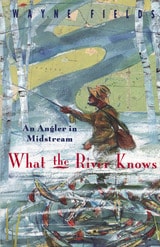
What the River Knows
An Angler in MidstreamWayne Fields
University of Chicago Press, 1996
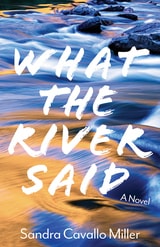
What the River Said
A Novelsandra cavallo miller
University of Nevada Press, 2021
In this riveting third book of the Dr. Abby Wilmore series, Dr. Abby returns to her medical clinic in Grand Canyon National Park. Happy to be reunited with her staff and her partner, Dr. John Pepper, Abby is back treating park visitors and personnel as well as local residents. However, a wave of heart attacks among apparently healthy hikers creates a new puzzle, and soon there are rumors of people using performance-enhancing drugs. Abby’s situation deteriorates when a new female friend suddenly disappears, and Abby berates herself for missing the woman’s depression.
As Abby struggles with the disappearance of her friend, Dr. Pepper is preoccupied by a mysterious threat from his past and becomes badly
injured in an apparent fall. While he recuperates, Abby takes over much of the clinic work while they provide a home for Pepper’s troubled teenage niece and an adopted stray dog.
Abby soon discovers that there is something more sinister behind the recent troubling events. In this exhilarating follow-up to The Color of Rock and Where Light Comes and Goes, Abby must learn to confront her past in order to stand up for the ones she loves.
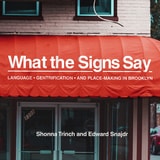
What the Signs Say
Language, Gentrification, and Place-Making in BrooklynShonna Trinch
Vanderbilt University Press, 2020
Shonna Trinch and Edward Snajdr, a sociolinguist and an anthropologist respectively, show how the beliefs and ideas that people take as truths about language and its speakers are deployed in these different sign types. They also present in-depth ethnographic case studies that reveal how gentrification and corporate redevelopment in Brooklyn are intimately connected to public communication, literacy practices, the transformation of motherhood and gender roles, notions of historical preservation, urban planning, and systems of privilege. Far from peripheral or irrelevant, shop signs say loud and clear that language displayed in public always matters.
This book is the recipient of the 2021 Norman L. and Roselea J. Goldberg Prize from Vanderbilt University Press for the best book in the area of art or medicine.
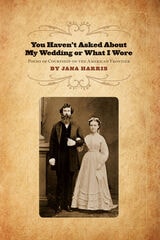
You Haven't Asked About My Wedding or What I Wore
Poems of Courtship on the American FrontierJana Harris
University of Alaska Press, 2014
For thirty years poet Jana Harris researched the diaries and letters of North American pioneer women. While the names and experiences of the authors varied, Harris found one story often connected them: their most powerful memories were of courtships and weddings. They dreamed of having a fine wedding while they spent their lives hauling water, scrubbing floors, and hoping for admirers. Many married men they hardly knew.
Based on primary research of nineteenth-century frontier women, Harris uses her compelling poetry to resurrect a forgotten history. She captures the hope, anxiety, anger, and despair of these women through a variety of characters and poetic strategies, while archival photographs give faces to the names and details to the settings. Harris’s meticulous research and stirring words give these pioneer women a renewed voice that proves the timelessness of the hopes and fears of love and marriage.