Results by title
8 books match the query 'Organic farming'
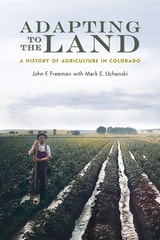
Adapting to the Land
A History of Agriculture in ColoradoJohn F. Freeman
University Press of Colorado, 2021
Ancestral Puebloans farmed and grazed within the limits of nature. Early settlers adjusted their cultivation methods through trial and error, while later agriculturists relied on research and technical advice from the Colorado Agricultural College. As part of wartime mobilization, the federal government prompted farmers to efficiently increase yields. To meet the demand for food and fiber scientific and technical innovations led to the development of new plant cultivars and livestock breeds, advances in mechanization, and widespread use of synthetic amendments. Increasing concern over soil fertility and the loss of irrigation water to urbanization contributed to more changes. Despite, or perhaps because of, what we see today along the Front Range, Colorado may still have a chance to slow or even reverse its seemingly unrestrained growth, creating a more vibrant, earth-friendly society in which agriculture plays an increasingly significant part. Scientific discoveries and innovations in regenerative cultivation are clearing the path to a more sustainable future.
Adapting to the Land adds an ecological and horticultural perspective to historical interpretations of recurring agricultural issues in the state and tracks the concept of stewardship, suggesting that spiritual beliefs continue to contribute to debates over acceptable agricultural practices and the effects of urbanization upon the land. This book will be a key resource for students, scholars, and general readers interested in agricultural and Colorado history, sustainability, and rural sociology.
Consumed
Food for a Finite PlanetSarah Elton
University of Chicago Press, 2013
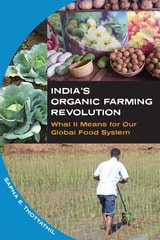
India's Organic Farming Revolution
What It Means for Our Global Food SystemSapna E. Thottathil
University of Iowa Press, 2014
Sapna Thottathil calls on us to rethink the politics of organic food by focusing on what it means for the people who grow and sell it—what it means for their health, the health of their environment, and also their economic and political well-being. Taking readers to the state of Kerala in southern India, she shows us a place where the so-called “Green Revolution” program of hybrid seeds, synthetic fertilizers, and rising pesticide use had failed to reduce hunger while it caused a cascade of economic, medical, and environmental problems. Farmers burdened with huge debts from buying the new seeds and chemicals were committing suicide in troubling numbers. Farm laborers suffered from pesticide poisoning and rising rates of birth defects. A sharp fall in biodiversity worried environmental activists, and everyone was anxious about declining yields of key export crops like black pepper and coffee.
In their debates about how to solve these problems, farmers, environmentalists, and policymakers drew on Kerala’s history of and continuing commitment to grassroots democracy. In 2010, they took the unprecedented step of enacting a policy that requires all Kerala growers to farm organically by 2020. How this policy came to be and its immediate economic, political, and physical effects on the state’s residents offer lessons for everyone interested in agriculture, the environment, and what to eat for dinner. Kerala’s example shows that when done right, this kind of agriculture can be good for everyone in our global food system.
Organic Coffee
Sustainable Development by Mayan FarmersMaria Elena Martinez-Torres
Ohio University Press, 2006
Maria Elena Martinez-Torres explains how Mayan farmers have built upon their ethnic networks to make a crucial change in their approach to agriculture. Taking us inside Chiapas, Mexico's poorest state and scene of the 1994 Zapatista uprising, she examines the anatomy of the ongoing organic coffee boom and the fair-trade movement. The organic coffee boom arose as very poor farmers formed cooperatives, revalued their ethnic identity, and improved their land through organic farming. The result has been significant economic benefits for their families and ecological benefits for the future sustainability of agriculture in the region.
Organic Coffee refutes the myth that organic farming is less productive than chemical-based agriculture and gives us reasons to be hopeful for indigenous peoples and peasant farmers
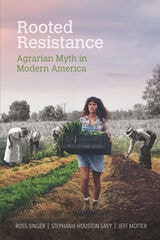
Rooted Resistance
Agrarian Myth in Modern AmericaNorie R. Singer
University of Arkansas Press, 2020
Through a careful examination of several case studies, Rooted Resistance traverses the ground of agrarian myth in modern America. The authors investigate key figures and movements in the history of modern agrarianism, including the World War I victory garden efforts, the postwar Country Life movement for the vindication of farmers’ rights, the Southern Agrarian critique of industrialism, and the practical and spiritual prophecy of organic farming put forth by J. I. Rodale. This critical history is then brought up to date with recent examples such as the contested South Central Farm in urban Los Angeles and the spectacular rise and fall of the Chipotle “Food with Integrity” branding campaign.
By examining a range of case studies, Singer, Grey, and Motter aim for a deeper critical understanding of the many applications of agrarian myth and reveal why it can help provide a pathway for positive systemic change in the food system.
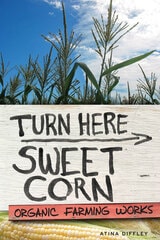
Turn Here Sweet Corn
Organic Farming WorksAtina Diffley
University of Minnesota Press, 2013
When the hail starts to fall, Atina Diffley doesn’t compare it to golf balls. She’s a farmer. It’s “as big as a B-size potato.” As her bombarded land turns white, she and her husband Martin huddle under a blanket and reminisce: the one-hundred-mile-per-hour winds; the eleven-inch rainfall (“that broccoli turned out gorgeous”); the hail disaster of 1977. The romance of farming washed away a long time ago, but the love? Never. In telling her story of working the land, coaxing good food from the fertile soil, Atina Diffley reminds us of an ultimate truth: we live in relationships—with the earth, plants and animals, families and communities.
A memoir of making these essential relationships work in the face of challenges as natural as weather and as unnatural as corporate politics, her book is a firsthand history of getting in at the “ground level” of organic farming. One of the first certified organic produce farms in the Midwest, the Diffleys’ Gardens of Eagan helped to usher in a new kind of green revolution in the heart of America’s farmland, supplying their roadside stand and a growing number of local food co-ops. This is a story of a world transformed—and reclaimed—one square acre at a time.
And yet, after surviving punishing storms and the devastating loss of fifth-generation Diffley family land to suburban development, the Diffleys faced the ultimate challenge: the threat of eminent domain for a crude oil pipeline proposed by one of the largest privately owned companies in the world, notorious polluters Koch Industries. As Atina Diffley tells her David-versus-Goliath tale, she gives readers everything from expert instruction in organic farming to an entrepreneur’s manual on how to grow a business to a legal thriller about battling corporate arrogance to a love story about a single mother falling for a good, big-hearted man.
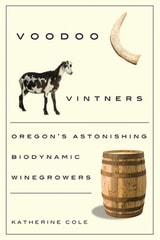
Voodoo Vintners
Oregon's Astonishing Biodynamic WinegrowersKatherine Cole
Oregon State University Press, 2011
Could cow horns, vortexes, and the words of a prophet named Rudolf Steiner hold the key to producing the most alluring wines in the world—and to saving the planet?
In Voodoo Vintners, wine writer Katherine Cole reveals the mysteries of biodynamic winegrowing, tracing its practice from Paleolithic times to the finest domaines in Burgundy today. At the epicenter of the American biodynamic revolution are the Oregon winemakers who believe that this spiritual style of farming results in the truest translations of terroir and the purest pinot noirs possible.
Cole introduces these “voodoo vintners,” examining their motivations and rationalizations and explaining why the need to farm biodynamically courses through their blood. Her engaging narrative answers the call of oenophiles everywhere for more information about this “beyond organic” style of winemaking.
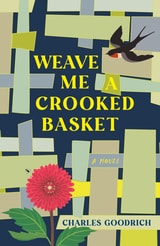
Weave Me a Crooked Basket
A NovelCharles Goodrich
University of Nevada Press, 2023
It’s the summer of 2008, and thirty-five-year-old Ursula Tunder, reeling from the breakup of a bad marriage, has abandoned her career as a botanist and moved home to the family farm to start a wholesale garden-plant greenhouse, and, perhaps more importantly, to care for her ailing father, Joe. Her younger brother, Bodie, now that a shoulder injury has ended his NFL career, comes home as well, to try his hand at organic farming. Their land at the edge of a prosperous college town is coveted by developers. Ursula wants to sell the farm to Camas Valley State University, which has promised to create a research facility on the land, but Bodie and his idealistic wife, Fleece, are committed to farming.
Enter Nu, Ursula and Bodie’s Vietnamese-American cousin by adoption, and an up-and-coming visual artist. When Nu gets arrested after a fight with a pair of dirt bikers, Joe persuades him to take refuge at the Tunder farm. Nu gets pressed into service helping Bodie with farm chores and taking care of Joe, so Ursula seizes the opportunity to get away from the farm, accepting a temporary job surveying native plants in the Cascades. But when Joe’s health plummets and Bodie’s finances crash, Ursula abandons her summer job to return home once again.
Facing bankruptcy, Ursula, Bodie, and Nu enlist a ragtag troupe of land-defenders in a festival of resistance in a last-ditch effort to save a way of life that may disappear forever.