Results by title
2 books match the query 'Osborn, Matthew Warner'
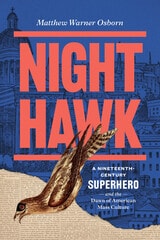
Night Hawk
A Nineteenth-Century Superhero and the Dawn of American Mass CultureMatthew Warner Osborn
University of Chicago Press, 2026
Unmasks the long-forgotten story of how a flying, superhuman vigilante played a pivotal role in the founding of the American labor movement.
On July 5, 1828, more than a century before Superman arrived on Earth, a superhero took flight in Philadelphia’s night sky. Buried on page three of a small local newspaper, the announcement of his arrival appeared under the title “The Night-Hawk, No. 1” with a cryptic epigraph from Romeo and Juliet: “I’ll be a candleholder and look on.” Who and what was the Night Hawk? As Matthew Warner Osborn reveals, this was the sobriquet of a mysterious columnist for the weekly Mechanics’ Free Press, the first radical socialist newspaper in America. Dressed in a mysterious cloak, the Night Hawk soared over Philadelphia, revealing the evil crimes of prominent gentlemen, fighting murderous criminals, and calling out fraudulent moral authorities.
The Night Hawk was the ingenious invention of an impoverished actor, Cornelius A. Logan, who created the character as a public champion of Philadelphia’s Working Men’s movement, the first successful American labor party. The Night Hawk’s nocturnal adventures transformed their socialist ideology into an entertaining fantasy that dramatized the struggle against industrial exploitation and the degradation of working people. The success of the character made Logan into a celebrity, and he went on to become a popular and innovative comedian on the antebellum stage.
A harbinger of the superheroes we know today, the Night Hawk promises to illuminate dark secrets from the past, but he can also shed light on our present. He ignites our need to see corrupt elites unmasked and held accountable for their actions, all while protecting the innocent and oppressed. Americans have always loved to fantasize about powerful superheroes who hide behind masks while chasing bad guys, and Osborn shows in this entertaining history how the Night Hawk was perhaps the first standard bearer for that enduring mystique.
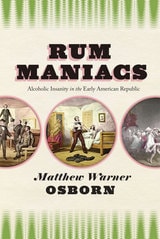
Rum Maniacs
Alcoholic Insanity in the Early American RepublicMatthew Warner Osborn
University of Chicago Press, 2014
In Rum Maniacs, Matthew Warner Osborn reveals how and why pathological drinking became a subject of medical interest, social controversy, and lurid fascination in the early American republic. At the heart of that story is the disease that Poe suffered: delirium tremens. First described in 1813, delirium tremens and its characteristic hallucinations inspired sweeping changes in how the medical profession saw and treated the problems of alcohol abuse. Based on new theories of pathological anatomy, human physiology, and mental illness, the new diagnosis founded the medical conviction and popular belief that habitual drinking could become a psychological and physiological disease. By midcentury, delirium tremens had inspired a wide range of popular theater, poetry, fiction, and illustration. This romantic fascination endured into the twentieth century, most notably in the classic Disney cartoon Dumbo, in which a pink pachyderm marching band haunts a drunken young elephant. Rum Maniacs reveals just how delirium tremens shaped the modern experience of alcohol addiction as a psychic struggle with inner demons.