Results by title
15 books match the query 'Ottoman Empire, 1288-1918'
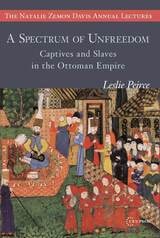
A Spectrum of Unfreedom
Captives and Slaves in the Ottoman EmpireLeslie Peirce
Central European University Press, 2021
Without the labor of the captives and slaves, the Ottoman empire could not have attained and maintained its strength in early modern times. With Anatolia as the geographic focus, Leslie Peirce searches for the voices of the unfree, drawing on archives, histories written at the time, and legal texts.
Unfree persons comprised two general populations: slaves and captives. Mostly household workers, slaves lived in a variety of circumstances, from squalor to luxury. Their duties varied with the status of their owner. Slave status might not last a lifetime, as Islamic law and Ottoman practice endorsed freeing one’s slave.
Captives were typically seized in raids, generally to disappear, their fates unknown. Victims rarely returned home, despite efforts of their families and neighbors to recover them. The reader learns what it was about the Ottoman environment of the sixteenth and seventeenth centuries that offered some captives the opportunity to improve the conditions of their bondage. The book describes imperial efforts to fight against the menace of captive-taking despite the widespread corruption among the state’s own officials, who had their own interest in captive labor.
From the fortunes of captives and slaves the book moves to their representation in legend, historical literature, and law, where, fortunately, both captors and their prey are present.
Christian Networks in the Ottoman Empire
A Transnational HistoryYura Konstantinova
Central European University Press, 2024
Observers and historians continue to marvel at the diversity and complexity of the Ottoman Empire. This book explores the significant and multifaceted role that Orthodox Christian networks played in the sultan’s realm from the 17th century until WWI. These multi-ethnic, multi-lingual, and multi-confessional formations contributed fundamentally to the political, economic, social, and cultural development of the Empire as well as to its gradual disintegration.
Bringing together scholars from most Balkan countries, Christian Networks in the Ottoman Empire describes the variety of Orthodox Christian networks under Ottoman rule. The examples examined include commercial relations, intellectual networks, educational systems, religious dynamics, consular activities, and revolutionary movements, and involve Muslims and Christians, Romanians and Serbs, Bulgarians and Greeks, Albanians and Turks. The contributions show that the Christian populations and their elites were an integral part of Ottoman society.
The geographical spread of the formal and informal networks enriches our understanding of the terms ‘center’ and ‘periphery.’ They were either centered within the official Ottoman borders and extended their activities to other states and empires, or vice versa, located elsewhere, but also active in the Ottoman Empire. A common feature of these formations is their constant fluctuation, which enables a dynamic understanding of Ottoman history.
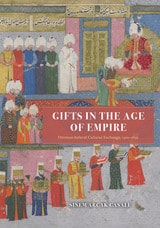
Gifts in the Age of Empire
Ottoman-Safavid Cultural Exchange, 1500–1639Sinem Arcak Casale
University of Chicago Press, 2023
When the Safavid dynasty, founded in 1501, built a state that championed Iranian identity and Twelver Shi'ism, it prompted the more established Ottoman Empire to align itself definitively with Sunni legalism. The political, religious, and military conflicts that arose have since been widely studied, but little attention has been paid to their diplomatic relationship. Sinem Arcak Casale here sets out to explore these two major Muslim empires through a surprising lens: gifts. Countless treasures—such as intricate carpets, gilded silver cups, and ivory-tusk knives—flowed from the Safavid to the Ottoman Empire throughout the sixteenth century. While only a handful now survive, records of these gifts exist in court chronicles, treasury records, poems, epistolary documents, ambassadorial reports, and travel narratives. Tracing this elaborate archive, Casale treats gifts as representative of the complicated Ottoman-Safavid coexistence, demonstrating how their rivalry was shaped as much by culture and aesthetics as it was by religious or military conflict. Gifts in the Age of Empire explores how gifts were no mere accessories to diplomacy but functioned as a mechanism of competitive interaction between these early modern Muslim courts.
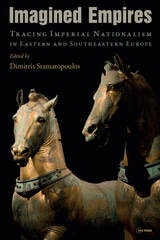
Imagined Empires
Tracing Imperial Nationalism in Eastern and Southeastern EuropeDimitris Stamatopoulos
Central European University Press, 2021
The Balkans offer classic examples of how empires imagine they can transform themselves into national states (Ottomanism) and how nation-states project themselves into future empires (as with the Greek “Great Idea” and the Serbian “Načertaniye”). By examining the interaction between these two aspirations this volume sheds light on the ideological prerequisites for the emergence of Balkan nationalisms.
With a balance between historical and literary contributions, the focus is on the ideological hybridity of the new national identities and on the effects of “imperial nationalisms” on the emerging Balkan nationalisms. The authors of the twelve essays reveal the relation between empire and nation-state, proceeding from the observation that many of the new nation-states acquired some imperial features and behaved as empires. This original and stimulating approach reveals the imperialistic nature of so-called ethnic or cultural nationalism.
On the Semicivilized
Coloniality, Finance, and Embodied Sovereignty in CairoJulia Elyachar
Duke University Press, 2025
Ottoman Empire and Islamic Tradition
Norman Itzkowitz
University of Chicago Press, 1972
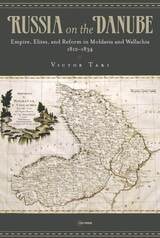
Russia on the Danube
Empire, Elites, and Reform in Moldavia and Wallachia, 1812–1834Victor Taki
Central European University Press, 2021
One of the goals of Russia’s Eastern policy was to turn Moldavia and Wallachia, the two Romanian principalities north of the Danube, from Ottoman vassals into a controllable buffer zone and a springboard for future military operations against Constantinople. Russia on the Danube describes the divergent interests and uneasy cooperation between the Russian officials and the Moldavian and Wallachian nobility in a key period between 1812 and 1834. Victor Taki’s meticulous examination of the plans and memoranda composed by Russian administrators and the Romanian elite underlines the crucial consequences of this encounter. The Moldavian and Wallachian nobility used the Russian-Ottoman rivalry in order to preserve and expand their traditional autonomy. The comprehensive institutional reforms born out of their interaction with the tsar’s officials consolidated territorial statehood on the lower Danube, providing the building blocks of a nation state.
The main conclusion of the book is that although Russian policy was driven by self-interest, and despite the Russophobia among a great part of the Romanian intellectuals, this turbulent period significantly contributed to the emergence, several decades later, of modern Romania.
Russian-Ottoman Borderlands
The Eastern Question ReconsideredEdited by Lucien J. Frary and Mara Kozelsky
University of Wisconsin Press, 2014
The contributors address ethnicity, religion, popular attitudes, violence, dislocation and mass migration, economic rivalry, and great-power diplomacy. Through a variety of fresh approaches, they examine the consequences of the Eastern Question in the lives of those peoples it most affected, the millions living in the Russian and Ottoman Empires and the borderlands in between.
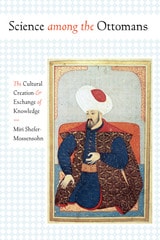
Science among the Ottomans
The Cultural Creation and Exchange of KnowledgeBy Miri Shefer-Mossensohn
University of Texas Press, 2015
Scholars have long thought that, following the Muslim Golden Age of the medieval era, the Ottoman Empire grew culturally and technologically isolated, losing interest in innovation and placing the empire on a path toward stagnation and decline. Science among the Ottomans challenges this widely accepted Western image of the nineteenth- and early twentieth-century Ottomans as backward and impoverished.
In the first book on this topic in English in over sixty years, Miri Shefer-Mossensohn contends that Ottoman society and culture created a fertile environment that fostered diverse scientific activity. She demonstrates that the Ottomans excelled in adapting the inventions of others to their own needs and improving them. For example, in 1877, the Ottoman Empire boasted the seventh-longest electric telegraph system in the world; indeed, the Ottomans were among the era’s most advanced nations with regard to modern communication infrastructure. To substantiate her claims about science in the empire, Shefer-Mossensohn studies patterns of learning; state involvement in technological activities; and Turkish- and Arabic-speaking Ottomans who produced, consumed, and altered scientific practices. The results reveal Ottoman participation in science to have been a dynamic force that helped sustain the six-hundred-year empire.
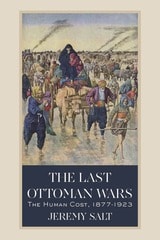
The Last Ottoman Wars
The Human Cost, 1877–1923Jeremy Salt
University of Utah Press, 2019
Jeremy Salt brings to the surface previously ignored facts that disrupt the conventional narrative of an ethno-religious division between Muslim perpetrators and Christian victims of violence. Salt shows instead that all major ethno-religious groups—including Armenians, Turks, Kurds, and Greeks—were guilty of violent acts. The result is a more balanced picture of European involvement in the Ottoman Empire and the Balkans, one that highlights the destructive role of British Prime Minister David Lloyd George and other European leaders grabbing for Ottoman resources up to the end of World War I. The effects of these events are felt to the present day.
This extraordinary story centers not on military campaigns but on ordinary civilians whose lives were disrupted and in many cases destroyed by events over which they had no control. Disease, malnutrition, massacre and inter-communal fighting killed millions of people during the First World War alone. Until now this epic saga of human suffering has remained a story largely untold.
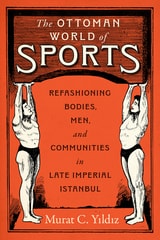
The Ottoman World of Sports
Refashioning Bodies, Men, and Communities in Late Imperial IstanbulMurat C. Yildiz
University of Texas Press, 2025
2026 co-winner of the Ottoman and Turkish Studies Association Book Prize
A revision of the history of modern sports in late Ottoman Istanbul, showing how Muslims, Christians, and Jews created a shared sports culture that was simultaneously global, imperial, and local.
The history of sports in Turkey is deeply contested. Over the decades, journalists, pundits, non-professional historians, sports scholars, and everyday people have offered competing narratives about the origins of modern sports in the late Ottoman Empire.
The Ottoman World of Sports tells the story of how Istanbul’s Muslims, Christians, and Jews—gymnastics teachers, football coaches, weightlifters, journalists, athletes, and fans—created a gendered and class-stratified civic project that promoted athletics as a source of fun, beauty, and moral education. Influenced by the emerging global vogue for organized sports, all boys from the expanding middle class of the late nineteenth- and early twentieth-century imperial capital were expected to exercise and compete on the playing field in order to develop into moral men. Yet even as the embrace of modern athletics transcended ethnoreligious divisions, it did not erase them. Drawing on a wide range of archival research in multiple languages, historian Murat Cihan Yıldız shows that sportsmen created new communal boundaries in team affiliations, fandom, and sports media. Adeptly reconstructing Istanbul’s imperial culture as it was experienced more than a century ago, The Ottoman World of Sports recovers a lived imperial culture whose defining features were shaped by its multiethnic, multireligious, and multilingual sportsmen.
The Tree Stump
An Arabic Historical NovelSamiha Khrais
Michigan State University Press, 2017
Under Osman's Tree
The Ottoman Empire, Egypt, and Environmental HistoryAlan Mikhail
University of Chicago Press, 2017
The early modern Middle East was the world’s most crucial zone of connection and interaction. Accordingly, the Ottoman Empire’s many varied environments affected and were affected by global trade, climate, and disease. From down in the mud of Egypt’s canals to up in the treetops of Anatolia, Alan Mikhail tackles major aspects of the Middle East’s environmental history: natural resource management, climate, human and animal labor, energy, water control, disease, and politics. He also points to some of the ways in which the region’s dominant religious tradition, Islam, has understood and related to the natural world. Marrying environmental and Ottoman history, Under Osman’s Tree offers a bold new interpretation of the past five hundred years of Middle Eastern history.
War and Collapse
World War I and the Ottoman StateEdited by M. Hakan Yavuz with Feroz Ahmad
University of Utah Press, 2015
War in Syria and the Middle East
A Political and Economic HistoryFederico Manfredi Firmian
University of Texas Press, 2025
A wide-ranging examination of the causes of war in Syria and the Middle East.
In War in Syria and the Middle East, Federico Manfredi Firmian uses historical, political, and economic lenses to examine how Syria’s civil war is part of a broad pattern of social breakdown increasingly prevalent across the Arab and Islamic worlds. This expansive book argues that many conflicts across the Middle East today are rooted in fundamental ideological divides that originated with European imperialism. In Syria, the iniquities of French rule gave way to the radicalism of the Arab Socialist Baʿth Party, which promised to dismantle imperial legacies and capitalist logics through nationalizations, land redistribution, and central planning.
Baʿthist Syria, however, ultimately failed to provide a viable alternative to capitalism. In fact, its failures, and the failures of other revolutionary regimes of socialist inspiration, provided an opening for armed Islamist movements to challenge both secular authoritarian rule and US foreign policies—ultimately leading to civil war. Combining a multidisciplinary approach with fieldwork, War in Syria and the Middle East argues for a global perspective on a pressing, ongoing conflict.