Results by title
6 books match the query 'Our Lady'
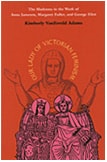
Our Lady Of Victorian Feminism
The Madonna in the Work of Anna Jameson, Margaret Fuller, and George EliotKimberly VanEsveld Adams
Ohio University Press, 2000
Our Lady of Victorian Feminism is about three nineteenth-century women, Protestants by background and feminists by conviction, who are curiously and crucially linked by their extensive use of the Madonna in arguments designed to empower women.
In the field of Victorian studies, few scholars have looked beyond the customary identification of the Christian Madonna with the Victorian feminine ideal—the domestic Madonna or the Angel in the House. Kimberly VanEsveld Adams shows, however, that these three Victorian writers made extensive use of the Madonna in feminist arguments. They were able to see this figure in new ways, freely appropriating the images of independent, powerful, and wise Virgin Mothers.
In addition to contributions in the fields of literary criticism, art history, and religious studies, Our Lady of Victorian Feminism places a needed emphasis on the connections between the intellectuals and the activists of the nineteenth-century women's movement. It also draws attention to an often neglected strain of feminist thought, essentialist feminism, which proclaimed sexual equality as well as difference, enabling the three writers to make one of their most radical arguments, that women and men are made in the image of the Virgin Mother and the Son, the two faces of the divine.
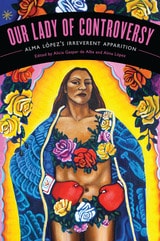
Our Lady of Controversy
Alma López's “Irreverent Apparition”Edited by Alicia Gaspar de Alba and Alma López
University of Texas Press, 2011
Months before Alma López's digital collage Our Lady was shown at the Museum of International Folk Art in 2001, the museum began receiving angry phone calls from community activists and Catholic leaders who demanded that the image not be displayed. Protest rallies, prayer vigils, and death threats ensued, but the provocative image of la Virgen de Guadalupe (hands on hips, clad only in roses, and exalted by a bare-breasted butterfly angel) remained on exhibition.
Highlighting many of the pivotal questions that have haunted the art world since the NEA debacle of 1988, the contributors to Our Lady of Controversy present diverse perspectives, ranging from definitions of art to the artist's intention, feminism, queer theory, colonialism, and Chicano nationalism. Contributors include the exhibition curator, Tey Marianna Nunn; award-winning novelist and Chicana historian Emma Pérez; and Deena González (recognized as one of the fifty most important living women historians in America).
Accompanied by a bonus DVD of Alma López's I Love Lupe video that looks at the Chicana artistic tradition of reimagining la Virgen de Guadalupe, featuring a historic conversation between Yolanda López, Ester Hernández, and Alma López, Our Lady of Controversy promises to ignite important new dialogues.
Our Lady of Guadalupe
Faith and Empowerment among Mexican-American WomenBy Jeanette Rodriguez
University of Texas Press, 1994
Our Lady of Guadalupe is the most important religious symbol of Mexico and one of the most powerful female icons of Mexican culture. In this study, based on research done among second-generation Mexican-American women, Rodriguez examines the role the symbol of Guadalupe has played in the development of these women. She goes beyond the thematic and religious implications of the symbol to delve into its relevance to their daily lives.
Rodriguez's study offers an important reinterpretation of one of the New World's most potent symbols. Her conclusions dispute the common perception that Guadalupe is a model of servility and suffering. Rather, she reinterprets the symbol of Guadalupe as a liberating and empowering catalyst for Mexican-American women.
Our Lady of Guadalupe
The Origins and Sources of a Mexican National Symbol, 1531–1797Stafford Poole
University of Arizona Press, 1995
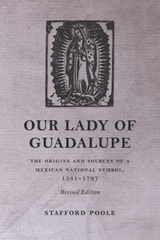
Our Lady of Guadalupe
The Origins and Sources of a Mexican National Symbol, 1531–1797Stafford Poole
University of Arizona Press, 2017

Our Lady of Thread
Patterson, Dayna
Signature Books, 2027
In Dayna Patterson’s third collection, she weaves together three threads: poems in the voice of God the Mother, prayer poems in the Catholic “Our Lady” tradition, and poems about mothering her own two kids through these fluctuating and anxious times. Our Lady of Thread pushes the boundaries of what a poetry collection can be—it includes embroidered collages, poembroideries (poem + embroidery), and a QR code that links readers to a stop-motion videopoem. In these inventive and experimental pieces, Patterson continues to wrestle with Mormon theology and history as she meditates on the feminine divine, motherhood, and the urgencies of our complex world.