Results by title
25 books match the query 'Pacific Northwest'

Atlas of the Pacific Northwest
Philip Jackson
Oregon State University Press, 1993
Atlas of the Pacific Northwest, 9th Ed
Philip Jackson
Oregon State University Press, 2003

Beyond the Rebel Girl
Women and the Industrial Workers of the World in the Pacific Northwest, 1905-1924Heather Mayer
Oregon State University Press, 2018
In Beyond the Rebel Girl, historian Heather Mayer questions the well-worn vision of Wobblies as young, single, male, itinerant workers. While such workers formed a large portion of the membership, they weren’t the whole picture. In small towns across the Northwest, and in the larger cities of Seattle, Portland, and Spokane, women played an integral role in Wobbly life. Single women, but also families—husband and wife Wobbly teams—played important roles in some of the biggest fights for justice. IWW halls in these Northwest cities often functioned as community centers, with family-friendly events and entertainment.
Women were drawn to the IWW for its radical vision, inclusionary policies, birth control advocacy, and emphasis on freedom of choice in marriage. The IWW also offered women an avenue for activism that wasn’t focused primarily on the fight for suffrage. Beyond the Rebel Girl deepens our understanding of how the IWW functioned and how the union supported women in their fight for birth control, sexual emancipation, and better labor conditions, all while facing persecution at the local, state, and federal levels.
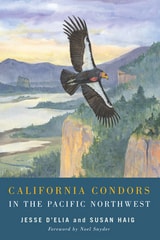
California Condors in the Pacific Northwest
Jesse D'Elia and Susan M. Haig
Oregon State University Press, 2013
Despite frequent depiction as a bird of California and the desert southwest, North America’s largest avian scavenger once graced the skies of the Pacific Northwest, from northern California to British Columbia. This important volume documents the condor’s history in the region, from prehistoric times to the early twentieth century, and explores the challenges of reintroduction.
Jesse D’Elia and Susan Haig investigate the paleontological and observational record as well as the cultural relationships between Native American tribes and condors, providing the most complete assessment to date of the condor’s occurrence in the Pacific Northwest. They evaluate the probable causes of regional extinction and the likelihood that condors once bred in the region, and they assess factors that must be considered in determining whether they could once again thrive in Northwest skies.
Incorporating the newest research and findings and more than eighty detailed historical accounts of human encounters with these birds of prey, California Condors in the Pacific Northwest sets a new standard for examining the historical record of a species prior to undertaking a reintroduction effort. It is a vital reference for academics, agency decision makers, conservation biologists, and readers interested in Northwest natural history. The volume is beautifully illustrated by Ram Papish and includes a number of previously unpublished photographs.
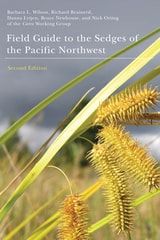
Field Guide to the Sedges of the Pacific Northwest
Second EditionBarbara J. Wilson, Richard Brainerd, Danny Lytjen, Bruce Newhouse, and Nick Otting of the Carex Working Group
Oregon State University Press, 2014
Sedges can be difficult to identify, with differences between species based on small, technical characters. This comprehensive guide contains identification keys, descriptions, more than 650 color photographs, and distribution maps for each species, providing users with helpful tools and tips for identifying the plants in this challenging group. Information about sedge ecology, habitat, management and restoration, ethnobotanical uses, and propagation enhances the guide’s utility.
Field Guide to the Sedges of the Pacific Northwest provides an invaluable resource for botanists, land managers, restoration ecologists, and plant enthusiasts. And, as the genus Carex becomes increasingly important amongst landscapers, nurseries, and gardeners, the guide will serve as a handy tool for choosing Northwest natives for the garden.
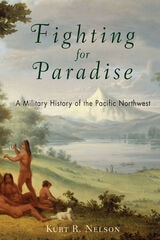
Fighting for Paradise
A Military History of the Pacific NorthwestKurt R. Nelson
Westholme Publishing, 2007
One of the Most Important Battlegrounds in the History of America
While it is in the eastern United States where most Americans identify our military history, the vast, resource-rich Pacific Northwest, stretching from Northern California through British Columbia, endured a series of battles and wars over the course of the nineteenth century that were of regional and national importance. It was here where Great Britain and the United States had their final confrontation in the Americas, where Chief Joseph attempted to secure independence for the Nez Perce, and where the Oregon Trail marked the first great migration to the West of settlers bent on carving out new lives in the wilderness. The Pacific Northwest also saw some of the only attacks on the mainland by Japan during World War II.
Beginning with the earliest known accounts of wars among the American Indians of the region, Fighting for Paradise: A Military History of the Pacific Northwest describes early European contact, including British trappers of the Hudson's Bay Company, the Lewis and Clark Expedition, Jedediah Smith, and John Jacob Astor's trading post. The competition over the lucrative fur trade led to the "Pig War," which almost resulted in another armed conflict between Great Britain and the United States, but it was the influx of settlers from the Oregon Trail that touched off the long bitter battles between whites and American Indians. Starting with the 1847 Whitman Massacre and the ensuing war it touched off, the book covers the next three decades of violence, ending with the Sheepeater's War in 1879. Kurt R. Nelson then relates the Pacific Northwest's contributions to the Spanish-American and Philippine-American Wars, the Mexican Punitive Expedition, World War I, and finally World War II, where the region fought Japanese submarine attacks and was harassed by balloon bombs. Throughout, the author provides current information about the state of preservation of various battle sites and other points of historical interest. Accompanied by maps and photographs, Fighting for Paradise provides insight into an area of American military history, rich in drama, that is not generally known.
Indian Shakers
A Messianic Cult of the Pacific NorthwestH. G. Barnett
Southern Illinois University Press, 1972
A thorough anthropological study of a distinct religious cult of the Indian tribes of the Pacific Northwest. The book traces the Shaker cult’s development, its ceremonies, ritual elements, faiths, and doctrine.
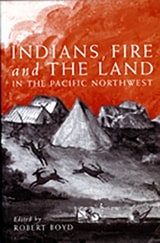
Indians, Fire, and the Land in the Pacific Northwest
Robert Boyd
Oregon State University Press, 1999
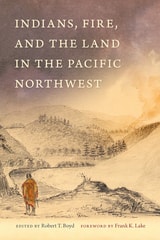
Indians, Fire, and the Land in the Pacific Northwest
Robert Boyd
Oregon State University Press, 2021
Instead of discovering a land blanketed by dense forests, early explorers of the Pacific Northwest encountered a varied landscape including open woods, meadows, and prairies. Far from a pristine wilderness, much of the Northwest was actively managed and shaped by the hands of its Native American inhabitants. Their primary tool was fire.
This volume takes an interdisciplinary approach to one of the most important issues concerning Native Americans and their relationship to the land. Over more than 10,000 years, Native Americans in the Northwest learned the intricacies of their local environments and how to use fire to create desired effects, mostly in the quest for food.
Drawing on historical journals, Native American informants, and ethnobotanical and forestry studies, this book’s contributors describe local patterns of fire use in eight ecoregions, representing all parts of the Native Northwest, from southwest Oregon to British Columbia and from Puget Sound to the Northern Rockies. Their essays provide glimpses into a unique understanding of the environment, one that draws on traditional ecological knowledge. Together, these writings also offer historical perspective on the contemporary debate over “prescribed burning” and management of public lands.
This updated edition includes a foreword by Frank K. Lake and a new epilogue by editor Robert T. Boyd. Contributors include Stephen Arno, Stephen Barrett, Theresa Ferguson, David French, Eugene Hunn, Leslie Johnson, Jeff LaLande, Estella Leopold, Henry Lewis, Helen H. Norton, Reg Pullen, William Robbins, John Ross, Nancy Turner, and Richard White.
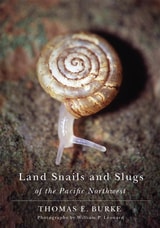
Land Snails and Slugs of the Pacific Northwest
Thomas E. Burke
Oregon State University Press, 2013
Primarily an identification guide, this richly illustrated volume offers complete information on the range of terrestrial mollusk shapes, sizes, and characteristics. It presents an overview of their habitat requirements as well as details of land snail and slug ecology, collection and preservation methods, and biogeography.
Land Snails and Slugs of the Pacific Northwest is an essential reference for biologists, horticulturalists, gardeners, and naturalists, and anyone wishing to identify species in the field.
• Identification keys and species accounts for most of the 245 taxa of terrestrial slugs and snails in the region
• 280 full-color photographs of 155 species and subspecies
• Range maps for most species
Living with Earthquakes in the Pacific Northwest
Robert S. Yeats
Oregon State University Press, 1998
Living with Earthquakes in the Pacific Northwest
A Survivor's Guide, Second Edition, Revised and ExpandedRobert S. Yeats
Oregon State University Press, 2004
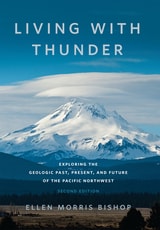
Living with Thunder
Exploring the Geologic Past, Present, and Future of the Pacific NorthwestEllen Morris Bishop
Oregon State University Press, 2025
“In geology, the present is the key to the past. And the past is also a touchstone of the future. We would do well to heed the stories the stones have to tell.” —from the Introduction
Updated throughout, this second edition of Living with Thunder provides readers with a robust introduction to the geological history of the Pacific Northwest—a landscape born of thunderous volcanic eruptions, earthquakes, and island-continent collisions. By combining engaging science writing with stunning color photographs, Ellen Morris Bishop presents an up-to-date geologic survey of Washington, Oregon, Northern California, and western Idaho. Whether examining new findings about the Yellowstone hotspot's rampage across Oregon, an updated history of Cascadia earthquakes, Mount Hood's 1793-1795 eruptions, the arrival of Indigenous peoples at least 18,000 years ago, or how Pacific Northwest eruptions and tectonics influenced past climate changes, Bishop’s gift as a scientist and storyteller engages general readers, geological nonspecialists, and students of the Earth sciences, alike.
Highlighting the Northwest’s exceptional record of past climate changes and the implications for our future, the book outlines new understandings about the climatic consequences of major geologic events and their dramatic influences on ecosystems and ancient life. It also examines the confluence of scientific findings with Native American experience, stories, and traditional knowledge of earthquakes, eruptions, and more. With new illustrations, enhanced maps, the latest geologic timescale, and an extensive list of updated references and recommended readings, Living with Thunder offers a key to understanding the Northwest’s unique, long-term geologic heritage by giving voice to the rocks and their histories.
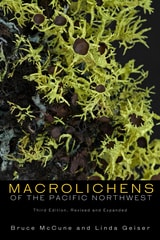
Macrolichens of the Pacific Northwest
Bruce McCune
Oregon State University Press, 2023
A key component in healthy ecosystems, lichens can be found in almost any natural habitat in the Pacific Northwest. This comprehensive guide to the region’s macrolichens is intended for use by beginners as well as specialists: weekend naturalists will be able to identify specimens and recognize the great diversity of lichens, while lichenologists and mycologists will gain greater knowledge of the distribution and abundance of various species.
This revised and expanded edition of Macrolichens of the Pacific Northwest includes includes keys to over 600 species —all the macrolichens known or expected to occur in Oregon and Washington. The keys also provide coverage for lichens of Idaho and Montana, inland to the Continental Divide. Almost all macrolichens known from northern California and southern British Columbia, and from coastal southeast Alaska, are included as well.
Color photographs and detailed descriptions are provided for more than 250 species, emphasizing lichens prevalent in forested ecosystems. The illustrated glossary and introductory material cover the terminology needed to identify macrolichens and provide information on collection and handling. The biology, ecology, and air-quality sensitivity of lichens are discussed. Macrolichens of the Pacific Northwest will prove invaluable to anyone seeking to identify lichens or to better understand these organisms and their vital role in the natural world.
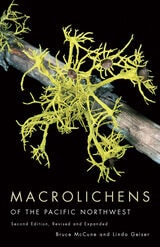
Macrolichens of the Pacific Northwest, Second Ed.
Bruce McCune
Oregon State University Press, 2009
A key component in healthy ecosystems, lichens can be found in almost any natural habitat in the Pacific Northwest. This comprehensive guide to the region’s macrolichens is intended for use by beginners as well as specialists: weekend naturalists will be able to identify specimens and recognize the great diversity of lichens, while lichenologists and mycologists will gain greater knowledge of the distribution and abundance of various species.
This revised and expanded edition of Macrolichens of the Pacific Northwest includes 116 new species and 176 additional illustrations and incorporates an understanding of macrolichens that has advanced tremendously in the past decade.
Macrolichens of the Pacific Northwest includes keys to 113 genera and 586 species of Oregon and Washington macrolichens—all the macrolichens known or expected to occur in the two states. The keys also provide reasonable coverage for lichens of Idaho and Montana, inland to the Continental Divide. Color photographs and detailed descriptions are provided for 246 species, emphasizing lichens prevalent in forested ecosystems.
The illustrated glossary and introductory material cover the terminology needed to identify macrolichens and provide information on collection and handling. The biology, ecology, and air-quality sensitivity of lichens are discussed; regional air-quality sensitivities are provided for 184 species.
Macrolichens of the Pacific Northwest will prove invaluable to anyone seeking to identify lichens or to better understand these organisms and their vital role in the natural world.
Mammals of the Pacific Northwest
From the Coast to the High CascadesChis Maser
Oregon State University Press, 1998
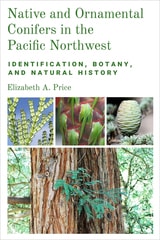
Native and Ornamental Conifers in the Pacific Northwest
Identification, Botany and Natural HistoryElizabeth A. Price
Oregon State University Press, 2022
Based on her experiences teaching workshops on conifer identification and cultivation, Elizabeth Price has developed Jargon-free photographic charts, which allow for side-by-side comparison of conifer features and guide the reader to species identification. The charts are detailed enough for specialists yet accessible to amateurs.
The book includes extensive material on the characteristics, botany, and natural history of conifer plant families, genera, and species, all illustrated with original photographs. Research across many disciplines is blended with direct observation and personal experience, creating a book that goes beyond identification and is both rigorous and engaging.
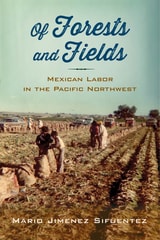
Of Forests and Fields
Mexican Labor in the Pacific NorthwestMario Jimenez Sifuentez
Rutgers University Press, 2016
Just looking at the Pacific Northwest’s many verdant forests and fields, it may be hard to imagine the intense work it took to transform the region into the agricultural powerhouse it is today. Much of this labor was provided by Mexican guest workers, Tejano migrants, and undocumented immigrants, who converged on the region beginning in the mid-1940s. Of Forests and Fields tells the story of these workers, who toiled in the fields, canneries, packing sheds, and forests, turning the Pacific Northwest into one of the most productive agricultural regions in the country.
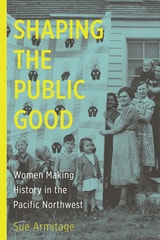
Shaping the Public Good
Women Making History in the Pacific NorthwestSue Armitage
Oregon State University Press, 2015
Using the story of She Who Watches as her guide, Armitage shows that even though women were barred from positions of public authority until recently, they have always worked quietly and informally to assure the stability and security of their families and communities. Women’s community-building and cooperative skills have been decisive in developing the societies of the Pacific Northwest—Washington, Oregon, Idaho, western Montana, and British Columbia. Like She Who Watches, women have never been mere observers, but watchful guardians and active shapers of the public good.
Drawing on her three decades of research and teaching and based on hundreds of secondary sources, Armitage’s account explores the varied ways in which, beginning in the earliest times and continuing to the present, women of all races and ethnicities have made the history of our region. An accessible introduction for general readers and scholars alike, Shaping the Public Good restores a missing piece of Pacific Northwest history by demonstrating the part that women—“the famous, the forgotten, and all the women in between”—have always played in establishing their families and building communities.
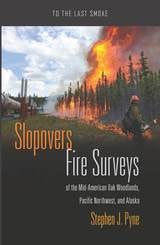
Slopovers
Fire Surveys of the Mid-American Oak Woodlands, Pacific Northwest, and AlaskaStephen J. Pyne
University of Arizona Press, 2019
The Mid-American oak woodlands were the scene of vigorous settlement in the late eighteenth and early nineteenth centuries and thus the scene of changing fire practices. The debate over the origin of the prairies—by climate or fire—foreshadowed the more recent debate about fire in oak and hickory hardwoods. In both cases, today’s thinking points to the critical role of fire.
The Pacific Northwest was the great pivot between laissez-faire logging and state-sponsored conservation and the fires that would accompany each. Then fire faded as an environmental issue. But it has returned over the past decade like an avenging angel, forcing the region to again consider the defining dialectic between axe and flame.
And Alaska—Alaska is different, as everyone says. It came late to wildland fire protection, then managed an extraordinary transfiguration into the most successful American region to restore something like the historic fire regime. But Alaska is also a petrostate, and climate change may be making it the vanguard of what the Anthropocene will mean for American fire overall.
Slopovers collates surveys of these three regions into the national narrative. With a unique mixture of journalism, history, and literary imagination, renowned fire expert Stephen J. Pyne shows how culture and nature, fire from nature and fire from people, interact to shape our world with three case studies in public policy and the challenging questions they pose about the future we will share with fire.
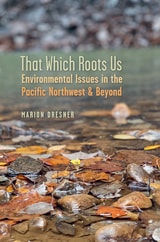
That Which Roots Us
Environmental Issues in the Pacific Northwest & BeyondMarion Dresner
University of Nevada Press, 2023
A work of natural and environmental history.
That Which Roots Us is a work of natural and environmental history that explores the origins of and resolutions to some of the United States’ environmental problems. Marion Dresner discusses the roots of Euro-American environmental exploitative action, starting with the environmental consequences of having treated Pacific Northwest forests as commodities. She shares her experiences visiting sites where animal-centered ice age culture changed to human-centered culture thousands of years ago with the advent of farming. The book explores the origins of the romantic philosophical movement, which arose out of the debilitating conditions of the industrial era. Those romantic attitudes toward nature inspired the twentieth-century preservation movement and America’s progressively modern conservation attitudes.
The book is centered around environmental issues in the Pacific Northwest, contrasting utilitarian views of nature with Native American practices of respect and reciprocity. The elements that make That Which Roots Us a truly unique and important contribution to environmental literature are the author’s personal recollections and interactions with the landscape. Ultimately, Dresner offers hope for a new stewardship of the land and a focus on science literacy and direct experience in the natural world as the most grounded way of knowing the planet.
The Unforgiving Coast
Maritime Disasters of the Pacific NorthwestDavid Grover
Oregon State University Press, 2002
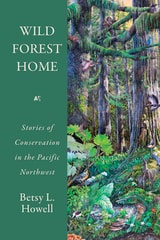
Wild Forest Home
Stories of Conservation in the Pacific NorthwestBetsy L. Howell
University of Utah Press, 2024
The twenty-five essays in Wild Forest Home chronicle Howell’s career and personal experiences studying the wildlife of the Pacific Northwest during the litigious listing of the northern spotted owl and marbled murrelet under the Endangered Species Act and the Clinton administration’s adoption of the seminal 1994 Northwest Forest Plan. Meanwhile, Howell toiled on fire crews, searched for rare species, helped to monitor fishers reintroduced to the Olympic Peninsula, tested amphibians for deadly diseases, became a writer, and mourned the deaths of her parents. This captivating memoir seamlessly blends story and science to reveal a unique portrait of the struggles and joys of one wildlife biologist.
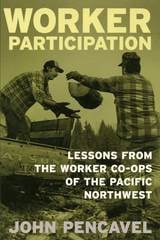
Worker Participation
Lessons from Worker Co-ops of the Pacific NorthwestJohn Pencavel
Russell Sage Foundation, 2001
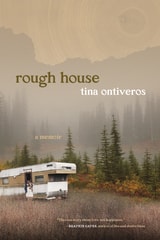
rough house
a memoirTina Ontiveros
Oregon State University Press, 2020
Tina Ontiveros was born into timber on both sides of the family. Her mother spent summers driving logging trucks for her family’s operation, and her father was the son of an itinerant logger, raised in a variety of lumber towns, as Tina herself would be.
A story of growing up in turmoil, rough house recounts a childhood divided between a charming, mercurial, abusive father in the forests of the Pacific Northwest and a mother struggling with small-town poverty. It is also a story of generational trauma, especially for the women—a story of violent men and societal restrictions, of children not always chosen and frequently raised alone.
Ontiveros’s father, Loyd, looms large. Reflecting on his death and long absence from her life, she writes, “I had this ridiculous hope that I would get to enjoy a functional relationship with my father, on my own terms, now that I was an adult.” In searingly honest, straightforward prose, rough house is her attempt to carve out this relationship, to understand her father and her family from an adult perspective.
While some elements of Ontiveros’s story are universal, others are indelibly grounded in the logging camps of the Pacific Northwest at the end of the twentieth century, as the lumber industry shifted and contracted. Tracing her childhood through the working-class towns and forests of Washington and Oregon, Ontiveros explores themes of love and loss, parents and children, and her own journey to a different kind of adulthood.