Results by title
14 books match the query 'Pacifists'
A Life of Her Own
A Countrywoman in Twentieth-Century FranceCarles, Émilie
Rutgers University Press, 1991
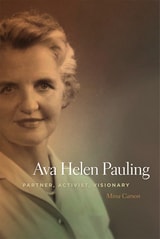
Ava Helen Pauling
Partner, Activist, VisionaryMina Carson
Oregon State University Press, 2013
Though she began her public career in the shadow of her spouse, Ava Helen soon found herself tugged between her ardor to support Linus in his career and her desire that he embrace the social and political causes she felt passionate about. She believed it was her destiny to accept duties as a mother and homemaker, but neither of those roles was fully satisfying. Her more complete identity emerged over decades, as she evolved as an influential activist.
Ava Helen Pauling’s story is significant because so many aspects of it were shared with countless American women of her generation and the generations surrounding her. They had new educational opportunities but were expected to conform to the same limited social roles dictated by the gender ideology of the nineteenth century. When second wave feminism erupted in the 1960s, its force did not come solely from the young women rebelling against their elders’ rules and limitations, but also from the frustrated dreams of those elders themselves.
Ava Helen did not experience overt oppression by her husband or community; she even asserted some very non-feminist positions as a young woman. This, combined with a structural lack of opportunity, contributed to the strength and persistence of role expectations in her life. At the same time, she was feisty and willful. Her personality both created her marital loyalty and eventually took her down an openly feminist path.
Ava Helen Pauling: Partner, Activist, Visionary is an important complement to writings about Linus Pauling and a welcome addition to the literature on women’s and family history. It will also appeal to students and scholars of peace and reform movements and the social history of science.
Blessed Are the Peacemakers
Small Histories during World War II, Letter Writing, and Family History MethodologySuzanne Kesler Rumsey
University of Alabama Press, 2021
Where family letters become history, and ordinary lives reveal the untold story of World War II.
In the summer of 2013, Suzanne Kesler Rumsey discovered hundreds of letters exchanged between her late grandparents, Miriam and Benjamin Kesler. The letters, written between 1941 and 1946, were filled with typical wartime sentiments: love and longing, anguish at being apart, uncertainty about the war and the country’s future, and attempts at humor to keep their spirits up. What is unusual about their story is that Ben Kesler was not writing from a theater of war. Instead, Ben, a member of the Dunkard Brethren Church, was a conscientious objector. He, along with about 12,000 other men, opted to join the Civilian Public Service (CPS) and contribute to “work of national importance” at one of the 218 CPS camps around the country.
In Blessed Are the Peacemakers: Small Histories during World War II, Letter Writing, and Family History Methodology, Rumsey has mined not only her grandparents’ letters but also archival research on CPS camps and historical data from several Mennonite and Brethren archives to recapture the narrative of Ben’s service at two different camps and of Miriam’s struggle to support herself and her husband financially at the young age of seventeen. Ben and Miriam’s life during the war was extraordinarily ordinary, spanning six years of unrecognized and humble work for their country. Ben was not compensated for his work in the camps, and Miriam stayed home and worked as a day laborer, as a live-in maid, as a farmhand, and in the family butcher shop in order to earn enough money to support them both. Small histories like that of her grandparents, Rumsey argues, provide a unique perspective on significant political and historical moments.
Blessed Are the Peacemakers also explores the rhetorical functions of letter writing as well as the methodology of family history writing. Ben and Miriam’s letters provide an apt backdrop to examine the genre, a relatively understudied mode of literacy. Rumsey situates the young couple’s correspondence within ars dictaminis, the art of letter writing, granting new insights into the genre and how personal accounts shape our understanding of historical events.
Catholic Pacifist
The Long and Lonely Quest of Gordon ZahnBenjamin Peters
Catholic University of America Press, 2026

Direct Action
Radical Pacifism from the Union Eight to the Chicago SevenJames Tracy
University of Chicago Press, 1996
Taking us through the Vietnam war protests, this detailed treatment of radical pacifism reveals the strengths and limitations of American individualism in the modern era.
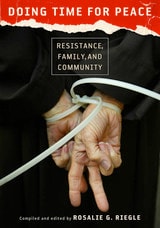
Doing Time for Peace
Resistance, Family, and CommunityRosalie G. Riegle
Vanderbilt University Press, 2013
In their own words, the narrators describe their motivations and their preparations for acts of resistance, the actions themselves, and their trials and subsequent jail time. We hear from those who do their time by caring for their families and managing communities while their partners are imprisoned. Spouses and children talk frankly of the strains on family ties that a life of working for peace in the world can cause.
The voices range from a World War II conscientious objector to those protesting the recent war in Iraq. The book includes sections on resister families, the Berrigans and Jonah House, the Plowshares Communities, the Syracuse Peace Council, and Catholic Worker houses and communities.
The introduction by Dan McKanan situates these activists in the long tradition of resistance to war and witness to peace.
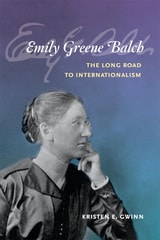
Emily Greene Balch
The Long Road to InternationalismKristen E. Gwinn
University of Illinois Press, 2010
Freedom and Despair
Notes from the South Hebron HillsDavid Shulman
University of Chicago Press, 2018
David Shulman knows intimately what it takes to live your beliefs, to return, day after day, to the struggle, despite knowing you are often more likely to lose than win. Interweaving powerful stories and deep meditations, Freedom and Despair offers vivid firsthand reports from the occupied West Bank in Palestine as seen through the eyes of an experienced Israeli peace activist who has seen the Israeli occupation close up as it impacts on the lives of all Palestinian civilians.
Alongside a handful of beautifully written and often shocking tales from the field, Shulman meditates deeply on how to understand the evils around him, what it means to persevere as an activist decade after decade, and what it truly means to be free. The violent realities of the occupation are on full display. We get to know and understand the Palestinian shepherds and farmers and Israeli volunteers who face this situation head-on with nonviolent resistance. Shulman does not hold back on acknowledging the daily struggles that often leave him and his fellow activists full of despair. Inspired by these committed individuals who are not prepared to be silent or passive, Shulman suggests a model for ordinary people everywhere. Anyone prepared to take a risk and fight their oppressive political systems, he argues, can make a difference—if they strive to act with compassion and to keep hope alive.
This is the moving story of a man who continues to fight for good in the midst of despair. An indispensable book in our era of reactionary politics and refugee crises, political violence and ecological devastation, Freedom and Despair is a gripping memoir of struggle, activism, and hope for peace.
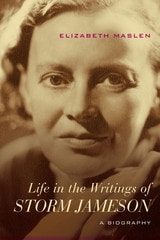
Life in the Writings of Storm Jameson
A BiographyElizabeth Maslen
Northwestern University Press, 2014
Margaret Storm Jameson (1891–1986) is primarily known as a compelling essayist; her stature as a novelist and champion of the dispossessed is largely forgotten. In Life in the Writings of Storm Jameson, Elizabeth Maslen reveals a figure who held her own beside fellow British women writers, including Virginia Woolf; anticipated the Angry Young Women, such as Doris Lessing; and was an early champion of such European writers as Arthur Koestler and Czesław Miłosz. Jameson was a complex character whose politics were grounded in social justice; she was passionately antifascist—her novel In the Second Year (1936) raised the alarm about Nazism—but always wary of communism. An eloquent polemicist, Jameson was, as president of the British P.E.N. during the 1930s and 1940s, of invaluable assistance to refugee writers. Elizabeth Maslen’s biography introduces a true twentieth century hedgehog, whose essays and subtly experimental fiction were admired in Europe and the States.
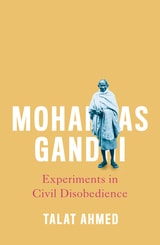
Mohandas Gandhi
Experiments in Civil DisobedienceTalat Ahmed
Pluto Press, 2016
This biography examines his campaigns from South Africa to India to evaluate the successes and failures of non-violent resistance. Seventy years after his death, his legacy remains contested: was he a saint, revolutionary, class conciliator, or self-obsessed spiritual zealot?
The contradictions of Gandhi’s politics are unpicked through an analysis of the social forces at play in the mass movement around him. Entrusted to liberate the oppressed of India, his key support base were industrialists, landlords and the rich peasantry. Gandhi’s moral imperatives often clashed with these vested material interests, as well as with more radical currents to his left.
Today, our world is scarred by permanent wars, racism and violence, environmental destruction and economic crisis. Can non-violent resistance win against state and corporate power? This book explores Gandhi’s experiments in civil disobedience to assess their relevance for struggles today.

Our Way to Fight
Peace-Work Under Siege in Israel-PalestineMichael Riordon
Pluto Press, 2011
Michael Riordon takes us to thousand year-old olive groves, besieged villages, refugee camps, checkpoints and barracks. In the face of deepening conflict, Our Way to Fight offers courageous grassroots action on both sides of the wall, and points the way to a liveable future.
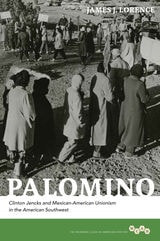
Palomino
Clinton Jencks and Mexican-American Unionism in the American SouthwestJames J. Lorence
University of Illinois Press, 2013

Progressive Women in Conservative Times
Racial Justice, Peace, and FeminismSusan Lynn
Rutgers University Press, 1992
Susan Lynn explores women's progressive social reform efforts in the 1940s and 1950s, an era when women activists promoted a postwar vision of a society based on an expanded welfare state, a powerful labor movement, a strong tradition of civil liberties, racial equality, and a peaceful international order. Lynn focuses on two organizations, the YWCA and the American Friends Service Committee, to explore this agenda.
Realism, Utopia, and the Mushroom Cloud
Four Activist Intellectuals and their Strategies for Peace, 1945-1989--Louise Weiss (France), Leo Szilard (USA), E. P. Thompson (England), Danilo Dolci (Italy)Michael Bess
University of Chicago Press, 1993
Nagasaki, and continued preparations for nuclear war illustrate the modern
world's propensity for mass destruction. . . . Yet there have been
important signs of resistance to this trend. These have included not only
the emergence of mass-based peace and disarmament movements but activist
intellectuals grappling with the growing problem posed by mass violence
among nation-states. . . . Bess examines the lives and ideas of four of
these intellectuals: Leo Szilard of Hungary and (later) the United States,
E. P. Thompson of England, Danilo Dolci of Italy, and Louise Weiss of
France. . . . Realism, Utopia, and the Mushroom Cloud is a powerful,
important scholarly work, casting new light upon some of the great issues
of modern times. Readers will learn much from it."—Lawrence S.
Wittner, Peace and Change
"Bess seeks to understand the way in which the creation of the atomic bomb
has changed the social and political situation of humankind. Are we to be
held hostage by military forces or can we transform our situation? He
describes the lives of four very different activists, each with different
views on what causes conflict and how best to address conflict. . . .
Overall, this book offers an interesting perspective on life after the
atomic bomb. . . . In asking ourselves what the possibilities of our future
are, we can turn to these lives for some guidance. . . . This book is
informative, provocative, and encourages one to consider carefully how s/he
chooses to live."—Erin McKenna, Utopian Studies
"These four lives, researched and skillfully presented by historian Michael
Bess, make fascinating stories in themselves. They also serve as useful
vehicles for examining major cross-currents of Cold War resistance. . . .
From Weiss the cynical pragmatist to Szilard the high-level fixer to
hompson the social reformer to Dolce the spiritual street organizer,
Michael Bess has woven an illuminating tapestry of human efforts to cope
with life under the mushroom cloud."—Samuel H. Day Jr., The
Progressive