Results by title
33 books match the query 'Pain'
Agony for Others
On Literature and PainJessica Colangelo
University of Michigan Press, 2026
Agony for Others investigates the phenomenological, rhetorical, and political challenges of representing pain in literature. Pain cries vary between cultural and linguistic groups, and pain expression (such as grimacing or crying) can likewise vary in quality and intensity from person to person, affected by disability, temperament, and past experiences with pain, as well as the experiencer’s own understanding of what that pain is and what it means. Jessica Colangelo explores pain's role as a subjective indication of objective damage; that, contrary to claims of its subjective privacy, the feeling of pain is always felt in terms of an objectively existing entity (one’s physical body) which is perceivable by others. Thus, pain enters into intersubjectivity through the physical body—one's expressions, words, actions, presence—which then mediates between the self and the other.
Drawing on disability studies, phenomenology, philosophy, and literary studies, Colangelo examines works by Virginia Woolf, James Baldwin, Sarah Kane, Elie Wiesel, and Margaret Edson to argue that the belief that pain is incommunicable and thought-destroying obscures its central role in relationships and community formation. Agony for Others demonstrates that pain is not excluded from, but rather constitutive of, intersubjectivity, and argues that the aesthetic dimension of interpretation is essential to understanding the ethical and political role of pain.

Assessment of Chronic Pain Patients with the MMPI-2
Laura S. Keller
University of Minnesota Press, 1991
Beautiful Work
A Meditation on PainSharon Cameron
Duke University Press, 2000
In order to understand the nature of pain, Anna undertakes a meditation practice. We tend to think of pain as self-absorbing and exclusively our own ("my pain," "I am in pain"). In distinction, Sharon Cameron’s Anna comes to explore pain as common property, and as the basis for a radically reconceived selfhood. Resisting the limitations of memoir, Beautiful Work speaks from experience and simultaneously releases it from the closed shell of personal ownership. Outside of the not quite inevitable stories we tell about it, experience is less protected, less compromised, and more vivid than could be supposed.
Beautiful Work brings to bear the same interest in consciousness and intersubjectivity that characterizes Cameron’s other work.
Ecce Homo
The Male-Body-in-Pain as Redemptive FigureKent L. Brintnall
University of Chicago Press, 2011
Acknowledging that representations of men confronting violence and pain can reinforce ideas of manly tenacity, Kent L. Brintnall also argues that they reveal the vulnerability of men’s bodies and open them up to eroticization. Locating the roots of our cultural fascination with male pain in the crucifixion, he analyzes the way narratives of Christ’s death and resurrection both support and subvert cultural fantasies of masculine power and privilege. Through stimulating readings of works by Georges Bataille, Kaja Silverman, and more, Brintnall delineates the redemptive power of representations of male suffering and violence.
Eco Soma
Pain and Joy in Speculative Performance EncountersPetra Kuppers
University of Minnesota Press, 2022
Modeling a disability culture perspective on performance practice toward socially just futures
In Eco Soma, Petra Kuppers asks readers to be alert to their own embodied responses to art practice and to pay attention to themselves as active participants in a shared sociocultural world. Reading contemporary performance encounters and artful engagements, this book models a disability culture sensitivity to living in a shared world, oriented toward more socially just futures.
Eco soma methods mix and merge realities on the edges of lived experience and site-specific performance. Kuppers invites us to become moths, sprout gills, listen to our heart’s drum, and take starships into crip time. And fantasy is central to these engagements: feeling/sensing monsters, catastrophes, golden lines, heartbeats, injured sharks, dotted salamanders, kissing mammoths, and more. Kuppers illuminates ecopoetic disability culture perspectives, contending that disabled people and their co-conspirators make art to live in a changing world, in contact with feminist, queer, trans, racialized, and Indigenous art projects. By offering new ways to think, frame, and feel “environments,” Kuppers focuses on art-based methods of envisioning change and argues that disability can offer imaginative ways toward living well and with agency in change, unrest, and challenge.
Traditional somatics teach us how to fine-tune our introspective senses and to open up the world of our own bodies, while eco soma methods extend that attention toward the creative possibilities of the reach between self, others, and the land. Eco Soma proposes an art/life method of sensory tuning to the inside and the outside simultaneously, a method that allows for a wider opening toward ethical cohabitation with human and more-than-human others.
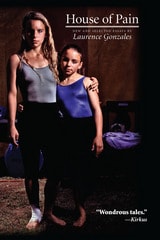
House of Pain
New and Selected EssaysLaurence Gonzales
University of Arkansas Press, 2013
Laurence Gonzales began his successful publishing career in 1989 with the publication of The Still Point and later The Hero’s Apprentice (1994), both with the University of Arkansas Press. From these collections of essays he went on to write for renowned magazines in addition to publishing several books, including the best selling Deep Survival. His journalism garnered two National Magazine Awards, and his latest nonfiction book, Surviving Survival, was named by Kirkus as one of the best books of 2012.
This new collection of essays shows us the sometimes hair-raising, sometimes heart-wrenching writing that Gonzales has become known for. This “compelling and trustworthy guide” (Booklist) takes us from a maximum-security prison to a cancer ward, from a mental institution to the World Trade Center. Among the essays included is “Marion Prison,” a National Magazine Award finalist, with its intimate view inside the most maximum security prison in America. “House of Pain” takes the reader into the life of a brain surgeon at Chicago’s Cook County Hospital, a grim world that few ever see. “Rites of Spring,” another National Magazine Award finalist, follows Gonzales and his wife on their journey through cancer, not once, but twice.
Other stories venture above the Arctic Circle, flying deep into the Alaskan wilderness among grizzly bears and trumpeter swans; explore aerobatics in high-performance aircraft; and eulogize Memphis and Miami as American cities that mourn their fates in uniquely different ways.
In the Eyes of God
A Study on the Culture of SufferingBy Fernando Escalante Gonzalbo
University of Texas Press, 2006
"Every culture needs to appropriate the universal truth of human suffering," says Fernando Escalante, ". . . to give its own meaning to this suffering, so that human existence is bearable." Originally published in Spanish as La mirada de Dios: Estudios sobre la cultura del sufrimiento, this book is a remarkable study of the evolution of the culture of suffering and the different elements that constitute it, beginning with a reading of Rousseau and ending with the appearance of the Shoah in the Western consciousness—"The memory endures, and this constitutes a fundamental transition for the Western conscience: we have witnessed."
Drawing on writings from the Greeks to Cervantes, Voltaire to Nietzsche, and Freud to William James, Escalante combines his considerable knowledge of politics and political theory with a vast array of literary examples to arrive at an intellectual understanding of the history and meaning of suffering. His investigation encompasses the rise of popular politics, the role of messianism in modern nationalism, and the contemporary implications of the Shoah.
This book will appeal to a wide audience: students of political theory, humanism, and philosophy, as well as the general reader interested in a glimpse into the mind of a highly original Latin American thinker.
Incarnation, Pain, Theology
A Phenomenology of the BodyEspen Dahl
Northwestern University Press, 2024
While the phenomenological tradition has carefully treated both the objective and the lived body, Espen Dahl explores a dimension of the body that does not fall neatly into either category, suggesting that philosophers should take account of the inner density of our organic, material body. By integrating the dimension of “flesh-and-blood” into the phenomenological notion of the body, Dahl argues that it is possible to reach a more adequate notion of human incarnation. The author explores the body in its subjectivity and its resistance, in activity founded on passivity, and in the ambiguous limits of its skin. The phenomenon of pain is given particular attention in this investigation, since pain is, as Dahl argues, what makes the body inescapably manifest in its otherwise hidden dimensions, including its ambiguity and vulnerability. Related to this focus, Dahl also engages with the Christian theological concerns of incarnation, pain, and hope. Phenomenologists have long drawn on this religious inheritance, particularly in what has been dubbed the French “theological turn.” In a similar manner, Incarnation, Pain, Theology: A Phenomenology of the Body draws on these theological sources while firmly holding to its philosophical commitments in methodological approach and analytic aims.
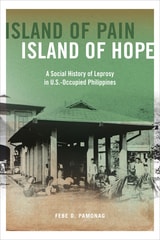
Island of Pain, Island of Hope
A Social History of Leprosy in U.S.-Occupied PhilippinesFebe D. Pamonag
University of Illinois Press, 2026
As Pamonag shows, Filipinos responded in many ways to the Segregation Law. Some resisted arrest and confinement. Others negotiated or complied because of family needs, fear, gender, class, and economic pressure. Rare archival documents reconstruct life inside Culion’s communities, where people fought for better food and living conditions, and used the courts to challenge their confinement and assert their rights. Pamonag also highlights previously untapped accounts that reveal how women navigated the stigma of the disease and the gendered restrictions imposed on them.
A new chapter in the history of public health, Island of Pain, Island of Hope shows the courageous and creative ways Filipinos coped with life under colonial rule.
Knowing the Suffering of Others
Legal Perspectives on Pain and Its MeaningsAustin Sarat
University of Alabama Press, 2014
From fetal imaging to end-of-life decisions, torts to international human rights, domestic violence to torture, and the law of war to victim impact statements, the law is awash in epistemological and ethical problems associated with knowing and imagining suffering. In each of these domains we might ask: How well do legal actors perceive and understand suffering in such varied domains of legal life? What problems of representation and interpretation bedevil efforts to grasp the suffering of others? What historical, political, literary, cultural, and/or theological resources can legal actors and citizens draw on to understand the suffering of others?
In Knowing the Suffering of Others, Austin Sarat presents legal scholarship that explores these questions and puts the problem of suffering at the center of thinking about law. The contributors to this volume do not regard pain and suffering as objective facts of a universe remote from law; rather they examine how both are discursively constructed in and by law. They examine how pain and suffering help construct and give meaning to the law as we know it. The authors attend to the various ways suffering appears in law as well as the different forms of suffering that require the law’s attention.
Throughout this book law is regarded as a domain in which the meanings of pain and suffering are contested, and constituted, as well as an instrument for inflicting suffering or for providing or refusing its relief. It challenges scholars, lawyers, students, and policymakers to ask how various legal actors and audiences understand the suffering of others.
Contributors
Montré D. Carodine / Cathy Caruth / Alan L. Durham / Bryan K.Fair / Steven H. Hobbs / Gregory C. Keating
/ Linda Ross Meyer / Meredith M. Render / Jeannie Suk / John Fabian Witt
Meaning in Suffering
Caring Practices in the Health ProfessionsEdited by Nancy Johnston and Alwilda Scholler-Jaquish
University of Wisconsin Press, 2007
Nowhere Near the Line
Pain and Possibility in Teaching and WritingElizabeth H. Boquet
Utah State University Press, 2016
In this short work, Elizabeth Boquet explores the line Lawrence Schall describes above, tracing the overlaps and intersections of a lifelong education around guns and violence, as a student, a teacher, a feminist, a daughter, a wife, a citizen and across the dislocations and relocations that are part of a life lived in and around school. Weaving narratives of family, the university classroom and administration, her husband’s work as a police officer, and her work with students and the Poetry for Peace effort that her writing center sponsors in the local schools, she recounts her efforts to respond to moments of violence with a pedagogy of peace. “Can we not acknowledge that our experiences with pain anywhere should render us more, not less, capable of responding to it everywhere?” she asks. “Compassion, it seems to me, is an infinitely renewable resource.”
On Suffering
Pathways to Healing and HealthBeverley M. Clarke
Dartmouth College Press, 2011
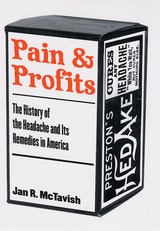
Pain and Profits
The History of the Headache and Its Remedies in AmericaMcTavish, Jan R.
Rutgers University Press, 2004
Pain and Profits tells the story of how a common ailment—the headache—became the center of a multibillion dollar pharmaceutical industry in the United States. Despite the increasing authority of the medical profession in the twentieth century, treatment of this condition has remained largely in the hands of the public. Using the headache as a case study, and advertising as a significant source of information, Jan McTavish traces the beginnings of the modern over-the-counter industry.
The American pharmaceutical industry developed from nineteenth-century suppliers of plant-derived drugs for both professional and home care. Two branches of the industry evolved over time—the ethical branch, which sold products only with prescriptions, and the nostrum branch, which was noted for its energetic marketing techniques. At the end of the century, they were joined by German companies that combined a strong commitment to science with aggressive salesmanship. Since German drugs were both highly effective in treating headaches and commonly available, sufferers wanting quick relief could easily obtain them. The result was a new kind of “legitimate” pharmaceutical industry that targeted consumers directly.
Historians of medicine as well as more general readers interested in the history of the headache will enjoy this fascinating account of the creation of the modern pharmaceutical industry.
Pain and Shock in America
Politics, Advocacy, and the Controversial Treatment of People with DisabilitiesJan Nisbet
Brandeis University Press, 2021
For more than forty years, professionals in the field of disability studies have engaged in debates over the use of aversive interventions (such as electric shock) like the ones used at the Judge Rotenberg Center. Advocates and lawyers have filed complaints and lawsuits to both use them and ban them, scientists have written hundreds of articles for and against them, and people with disabilities have lost their lives and, some would say, lived their lives because of them. There are families who believe deeply in the need to use aversives to control their children’s behavior. There are others who believe the techniques used are torture. All of these families have children who have been excluded from numerous educational and treatment programs because of their behaviors. For most of the families, placement at the Judge Rotenberg Center is the last resort.
This book is a historical case study of the Judge Rotenberg Center, named after the judge who ruled in favor of keeping its doors open to use aversive interventions. It chronicles and analyzes the events and people involved for over forty years that contributed to the inability of the state of Massachusetts to stop the use of electric shock, and other severe forms of punishment on children and adults with disabilities. It is a long story, sad and tragic, complex, filled with intrigue and questions about society and its ability to protect and support its most vulnerable citizens.
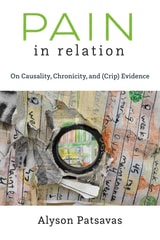
Pain in Relation
On Causality, Chronicity, and (Crip) EvidenceAlyson Patsavas
University of Michigan Press, 2026
Pain in Relation: On Causality, Chronicity, and (Crip) Evidence argues that the dominant stories circulating within contemporary US culture are marked by seemingly contradictory certainties: pain is at once subjective yet universal; that pain makes life unlivable and can be overcome with perseverance. These certainties graft onto pained people as impossible imperatives: the imperatives to live “despite” our pain and to defend the value of lives imagined to be compromised “because of” it. Alyson Patsavas outlines the harm these imperatives cause and draws on feminist, queer, and disability theory to offer alternative frameworks for making sense of and relating to pain.
The study fleshes out “crip autotheory” and experiments with evidencing practices, using anecdotes, journal entries, personal reflections, list-making, and photography to map “cripistemologies of pain,” or critical, disability-informed experiential ways of knowing pain. Equal parts cultural critique, intimate portrait of pained life, and commentary, Pain in Relation invites readers to challenge what they think they know about pain and explore new ways of relating to pain, pained life, and the futures we imagine for pained people.
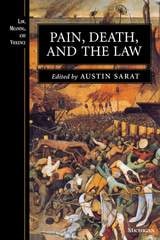
Pain, Death, and the Law
Austin Sarat, Editor
University of Michigan Press, 2001
Pain, Pleasure, and the Greater Good
From the Panopticon to the Skinner Box and BeyondCathy Gere
University of Chicago Press, 2017
These are questions that have bedeviled scientists, doctors, and ethicists for decades, and in Pain, Pleasure, and the Greater Good, Cathy Gere presents the gripping story of how we have addressed them over time. Today, we are horrified at the idea that a medical experiment could be performed on someone without consent. But, as Gere shows, that represents a relatively recent shift: for more than two centuries, from the birth of utilitarianism in the eighteenth century, the doctrine of the greater good held sway. If a researcher believed his work would benefit humanity, then inflicting pain, or even death, on unwitting or captive subjects was considered ethically acceptable. It was only in the wake of World War II, and the revelations of Nazi medical atrocities, that public and medical opinion began to change, culminating in the National Research Act of 1974, which mandated informed consent. Showing that utilitarianism is based in the idea that humans are motivated only by pain and pleasure, Gere cautions that that greater good thinking is on the upswing again today and that the lesson of history is in imminent danger of being lost.
Rooted in the experiences of real people, and with major consequences for how we think about ourselves and our rights, Pain, Pleasure, and the Greater Good is a dazzling, ambitious history.
Pleasure and Pain in US Public Culture
edited by Christopher J. Gilbert and John Louis Lucaites
University of Alabama Press, 2025
A critical examination of how pleasure and pain are constructed, represented, and contested within American public culture.
Mainstream news and social media often highlight presentations of pain that invite a voyeuristic, pleasurable experience, whether the result of war, disasters, crime, accidents, or other catastrophes. This collection of essays explores pleasurable pains and painful pleasures, showing how they pervade contemporary western public culture.
Deploying methodologies drawn from psychoanalysis, rhetoric and communication, political theory, and visual culture, Pleasure and Pain in US Public Culture offers insightful criticisms and theories about how pleasure and pain function in public discourse, media, and everyday communication practices.
The contributors provide a sample of fascinating range of news reportage, television, film and cinema, stage drama, comic performances, street art, and other forms of popular culture. The media cited and analyzed include Spike Lee’s films, Afrofuturism, autoethnography, and the #MeToo movement.
The collection takes up engrossing topics such as the cathartic allure of pain, ethical dilemmas surrounding public displays of suffering, and the transformative power of narratives that confront trauma. The essays also draw connections between theory and real-world outcomes, explore the implications of enjoying traumatic comedy, and link the natural world to otherwise mundane instances of interspecies violence. Brett Kavanaugh's Supreme Court nomination hearings and what they suggest about witnessing trauma is also discussed.
Pleasure and Pain in US Public Culture will change how a reader sees the world. It imparts a startling vision of western culture permeated by pain and pleasure.
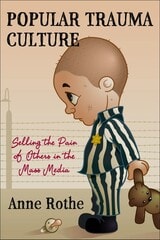
Popular Trauma Culture
Selling the Pain of Others in the Mass MediaRothe, Anne
Rutgers University Press, 2011
In Popular Trauma Culture, Anne Rothe argues that American Holocaust discourse has a particular plot structure—characterized by a melodramatic conflict between good and evil and embodied in the core characters of victim/survivor and perpetrator—and that it provides the paradigm for representing personal experiences of pain and suffering in the mass media. The book begins with an analysis of Holocaust clichés, including its political appropriation, the notion of vicarious victimhood, the so-called victim talk rhetoric, and the infusion of the composite survivor figure with Social Darwinism. Readers then explore the embodiment of popular trauma culture in two core mass media genres: daytime TV talk shows and misery memoirs.
Rothe conveys how victimhood and suffering are cast as trauma kitsch on talk shows like Oprah and as trauma camp on modern-day freak shows like Springer. The discussion also encompasses the first scholarly analysis of misery memoirs, the popular literary genre that has been widely critiqued in journalism as pornographic depictions of extreme violence. Currently considered the largest growth sector in book publishing worldwide, many of these works are also fabricated. And since forgeries reflect the cultural entities that are most revered, the book concludes with an examination of fake misery memoirs.
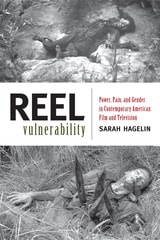
Reel Vulnerability
Power, Pain, and Gender in Contemporary American Film and TelevisionHagelin, Sarah
Rutgers University Press, 2013
The book examines the shifting constructions of vulnerability in the wake of the cultural upheavals of World War II, the Cold War, and 9/11, placing defenseless male bodies onscreen alongside representations of the female body in the military, in the interrogation room, and on the margins. Sarah Hagelin challenges the ways film theory and cultural studies confuse vulnerability and femaleness. Such films as G.I. Jane and Saving Private Ryan, as well as such post-9/11 television shows as Battlestar Galactica and Deadwood, present vulnerable men who demand our sympathy, abused women who don’t want our pity, and images of the body in pain that do not portray weakness.
Hagelin’s intent is to help scholarship catch up to the new iconographies emerging in theaters and in living rooms—images that offer viewers reactions to the suffering body beyond pity, identification with the bleeding body beyond masochism, and feminist images of the female body where we least expect to find them.
Seven Ways of Looking at Pointless Suffering
What Philosophy Can Tell Us about the Hardest Mystery of AllScott Samuelson
University of Chicago Press, 2018
It’s right there in the Book of Job: “Man is born unto trouble as the sparks fly upward.” Suffering is an inescapable part of the human condition—which leads to a question that has proved just as inescapable throughout the centuries: Why? Why do we suffer? Why do people die young? Is there any point to our pain, physical or emotional? Do horrors like hurricanes have meaning?
In Seven Ways of Looking at Pointless Suffering, Scott Samuelson tackles that hardest question of all. To do so, he travels through the history of philosophy and religion, but he also attends closely to the real world we live in. While always taking the question of suffering seriously, Samuelson is just as likely to draw lessons from Bugs Bunny as from Confucius, from his time teaching philosophy to prisoners as from Hannah Arendt’s attempts to come to terms with the Holocaust. He guides us through the arguments people have offered to answer this fundamental question, explores the many ways that we have tried to minimize or eliminate suffering, and examines people’s attempts to find ways to live with pointless suffering. Ultimately, Samuelson shows, to be fully human means to acknowledge a mysterious paradox: we must simultaneously accept suffering and oppose it. And understanding that is itself a step towards acceptance.
Wholly accessible, and thoroughly thought-provoking, Seven Ways of Looking at Pointless Suffering is a masterpiece of philosophy, returning the field to its roots—helping us see new ways to understand, explain, and live in our world, fully alive to both its light and its darkness.
Steel Chair to the Head
The Pleasure and Pain of Professional WrestlingNicholas Sammond, ed.
Duke University Press, 2005
The essayists include scholars in anthropology, psychology, film studies, communication studies, and sociology, one of whom used to wrestle professionally. Classic studies of wrestling by Roland Barthes, Carlos Monsiváis, Sharon Mazer, and Henry Jenkins appear alongside original essays. Whether exploring how pro wrestling inflects race, masculinity, and ideas of reality and authenticity; how female fans express their enthusiasm for male wrestlers; or how lucha libre provides insights into Mexican social and political life, Steel Chair to the Head gives due respect to pro wrestling by treating it with the same thorough attention usually reserved for more conventional forms of cultural expression.
Contributors. Roland Barthes, Douglas L. Battema, Susan Clerc, Laurence de Garis, Henry Jenkins III, Henry Jenkins IV, Heather Levi, Sharon Mazer, Carlos Monsiváis, Lucia Rahilly, Catherine Salmon, Nicholas Sammond, Phillip Serrat, Philip Sewell
The Fibromyalgia Story
Medical Authority And Women'S Worlds Of PainKristin K. Barker
Temple University Press, 2005
The Life Worth Living
Disability, Pain, and MoralityJoel Michael Reynolds
University of Minnesota Press, 2022
A philosophical challenge to the ableist conflation of disability and pain
More than 2,000 years ago, Aristotle said: “let there be a law that no deformed child shall live.” This idea is alive and well today. During the past century, Supreme Court Justice Oliver Wendell Holmes Jr. argued that the United States can forcibly sterilize intellectually disabled women and philosopher Peter Singer argued for the right of parents to euthanize certain cognitively disabled infants. The Life Worth Living explores how and why such arguments persist by investigating the exclusion of and discrimination against disabled people across the history of Western moral philosophy.
Joel Michael Reynolds argues that this history demonstrates a fundamental mischaracterization of the meaning of disability, thanks to the conflation of lived experiences of disability with those of pain and suffering. Building on decades of activism and scholarship in the field, Reynolds shows how longstanding views of disability are misguided and unjust, and he lays out a vision of what an anti-ableist moral future requires.
The Life Worth Living is the first sustained examination of disability through the lens of the history of moral philosophy and phenomenology, and it demonstrates how lived experiences of disability demand a far richer account of human flourishing, embodiment, community, and politics in philosophical inquiry and beyond.
Accessibility features: Retail e-book files for this title are screen-reader friendly with images accompanied by short alt text and/or extended descriptions.
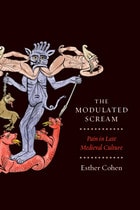
The Modulated Scream
Pain in Late Medieval CultureEsther Cohen
University of Chicago Press, 2010
In the late medieval era, pain could be a symbol of holiness, disease, sin, or truth. It could be encouragement to lead a moral life, a punishment for wrong doing, or a method of healing. Exploring the varied depictions and descriptions of pain—from martyrdom narratives to practices of torture and surgery—The Modulated Scream attempts to decode this culture of suffering in the Middle Ages.
Esther Cohen brings to life the cacophony of howls emerging from the written record of physicians, torturers, theologians, and mystics. In considering how people understood suffering, explained it, and meted it out, Cohen discovers that pain was imbued with multiple meanings. While interpreting pain was the province only of the rarified elite, harnessing pain for religious, moral, legal, and social purposes was a practice that pervaded all classes of Medieval life. In the overlap of these contradicting attitudes about what pain was for—how it was to be understood and who should use it—Cohen reveals the distinct and often conflicting cultural traditions and practices of late medieval Europeans. Ambitious and wide-ranging, The Modulated Scream is intellectual history at its most acute.
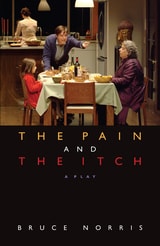
The Pain and the Itch
A PlayBruce Norris
Northwestern University Press, 2008
In this brief but staggering two-act, playwright Norris demonstrates his skill at drawing out the dark truth that lurks beneath the surface of the “perfect” family. His crackling satire takes dead aim at the self-satisfied, left-leaning American upper-middle class and its many self-delusions.
On a winter afternoon, Kelly and Clay—an attractive, prosperous, seemingly happy couple with a four-year-old daughter and a newborn baby—must explain to a visitor the events of the previous Thanksgiving, on which, so it seems, someone or something had been gnawing at the avocados on their kitchen table. In the course of this holiday gathering—attended by Clay’s mother, a well-meaning but clueless first-grade teacher who spouts pointless liberal bromides; his brother, a plastic surgeon with a nihilistic streak and a taste for martinis; and his brother's girlfriend, a sexy Balkan immigrant with a love for all things American (racism included)—the recent past is unearthed along with revelations of failed marriages, fraternal hatred, infidelity and venereal disease, in the form of their daughter’s nasty genital infection. And it’s a comedy. As the story is gradually unfolded to their visitor, a Muslim cab driver, his relationship to the events becomes increasingly clear, as does the emptiness of the family’s supposed benevolence and sensitivity.
With its crashing emotion and cutting humor, this vicious dissection of the comfortable progressive life lays bare the lies that people use to feel righteous even as they veer off a genuinely ethical path.
The Phenomenology of Pain
Saulius Geniusas
Ohio University Press, 2020
The Phenomenology of Pain is the first book-length investigation of its topic to appear in English. Groundbreaking, systematic, and illuminating, it opens a dialogue between phenomenology and such disciplines as cognitive science and cultural anthropology to argue that science alone cannot clarify the nature of pain experience without incorporating a phenomenological approach. Building on this premise, Saulius Geniusas develops a novel conception of pain grounded in phenomenological principles: pain is an aversive bodily feeling with a distinct experiential quality, which can only be given in original first-hand experience, either as a feeling-sensation or as an emotion.
Geniusas crystallizes the fundamental methodological principles that underlie phenomenological research. On the basis of those principles, he offers a phenomenological clarification of the fundamental structures of pain experience and contests the common conflation of phenomenology with introspectionism. Geniusas analyzes numerous pain dissociation syndromes, brings into focus the de-personalizing and re-personalizing nature of chronic pain experience, and demonstrates what role somatization and psychologization play in pain experience. In the process, he advances Husserlian phenomenology in a direction that is not explicitly worked out in Husserl’s own writings.
The Politics of Pain Medicine
A Rhetorical-Ontological InquiryS. Scott Graham
University of Chicago Press, 2015
In The Politics of Pain Medicine: A Rhetorical-Ontological Inquiry, S. Scott Graham offers a rich and detailed exploration of the medical rhetoric surrounding pain medicine. Graham chronicles the work of interdisciplinary pain management specialists to found a new science of pain and a new approach to pain medicine grounded in a more comprehensive biospychosocial model. His insightful analysis demonstrates how these materials ultimately shape the healthcare community’s understanding of what pain medicine is, how the medicine should be practiced and regulated, and how practitioner-patient relationships are best managed. It is a fascinating, novel examination of one of the most vexing issues in contemporary medicine.
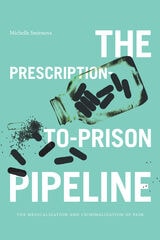
The Prescription-to-Prison Pipeline
The Medicalization and Criminalization of PainMichelle Smirnova
Duke University Press, 2023
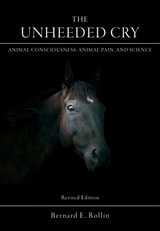
The Unheeded Cry
Animal Consciousness, Animal Pain, and ScienceBernard Rollin
University of Missouri Press, 2017
Bernard Rollin offers welcome insight into questions like this in his ground-breaking account of the difficult and controversial issues surrounding the use of animals. He demonstrates that the denial of animal consciousness and animal suffering is not an essential feature of a scientific approach, but rather a contingent, historical aberration that can and must be changed if science is to be both coherent and morally responsible. Widely hailed by advocates of animal welfare and scientists alike on its first appearance, the book now includes an epilogue by the author describing what has changed, and what hasn’t, in this use of animals in scientific research and food production.
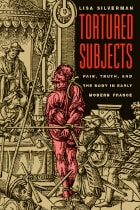
Tortured Subjects
Pain, Truth, and the Body in Early Modern FranceLisa Silverman
University of Chicago Press, 2001
Looking closely at the theory and practice of judicial torture in France from 1600 to 1788, the year in which it was formally abolished, Silverman revisits dossiers compiled in criminal cases, including transcripts of interrogations conducted under torture, as well as the writings of physicians and surgeons concerned with the problem of pain, records of religious confraternities, diaries and letters of witnesses to public executions, and the writings of torture's abolitionists and apologists. She contends that torture was at the center of an epistemological crisis that forced French jurists and intellectuals to reconsider the relationship between coercion and sincerity, or between free will and evidence. As the philosophical consensus on which torture rested broke down, and definitions of truth and pain shifted, so too did the foundation of torture, until by the eighteenth century, it became an indefensible practice.
When Pain Strikes
Bill Burns, Cathy Busby, and Kim Sawchuk, Editors
University of Minnesota Press, 1998
When Pain Strikes was first published in 1998. Minnesota Archive Editions uses digital technology to make long-unavailable books once again accessible, and are published unaltered from the original University of Minnesota Press editions.
When pain strikes, do you raid the medicine cabinet? Read a self-help manual? Hit the roof? How we in North America respond to pain-what we think about it, what we say, and what we do-is the subject of this collection of writings and images.
The book's five sections contain a myriad of complex reactions to the occurrence of pain: "Measure It" discusses biomedical responses; "Scream and Yell" explores therapeutic solutions; "Cut It Open" takes up surgical interventions; "Take a Pill" looks at pharmacology; and "Intensify It" examines positions that embrace pain. Each section comprises original artwork, scholarly analyses, poetic and literary texts, and discussions by activists. Hailing from the university, the gallery, and the community organization, the authors—as TV watchers, recreational drug users, recipients of medical attention, caregivers, midwives, or the HIV positive—inhabit and reconfigure our contemporary painscape, offering a new approach to the puzzle of pain.
Contributors: Charles R. Acland; Barbara McGill Balfour; Isabelle Brabant; Stephen Busby; Millie Chen; Michael Fernandes; Bob Flanagan; Thyrza Nichols Goodeve; Marie-Paule Macdonald; Ronald Melzack; Margaret Morse; Celeste Olalquiaga; John O'Neill; Gerard Päs; Elsie Petch; D. L. Pughe; Julia Scher; Cathy Sisler; Johanne Sloan; Jana Sterbak; Fred Tomaselli; Patrick D. Wall; Theodore Wan; Gregory Whitehead; Fred Wilson.
When Pain Strikes is published in collaboration with the Banff Centre for the Arts.