Results by title
10 books match the query 'Painting, French'
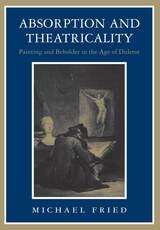
Absorption and Theatricality
Painting and Beholder in the Age of DiderotMichael Fried
University of Chicago Press, 1988
"A reinterpretation supported by immense learning and by a series of brilliantly perceptive readings of paintings and criticism alike. . . . An exhilarating book."—John Barrell, London Review of Books
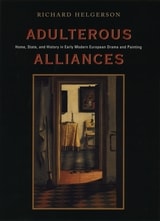
Adulterous Alliances
Home, State, and History in Early Modern European Drama and PaintingRichard Helgerson
University of Chicago Press, 2000
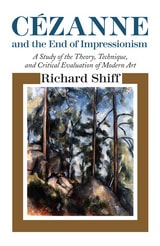
Cezanne and the End of Impressionism
A Study of the Theory, Technique, and Critical Evaluation of Modern ArtRichard Shiff
University of Chicago Press, 1984
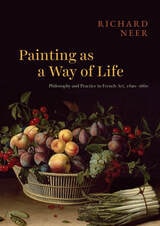
Painting as a Way of Life
Philosophy and Practice in French Art, 1620–1660Richard Neer
University of Chicago Press, 2025
In this wide-ranging study, Richard Neer shows how French painters of the seventeenth century developed radically new ways to connect art, perception, and ethics. Cutting across traditional boundaries of classicism and realism, Neer addresses four case studies: Nicolas Poussin, renowned for marrying ancient philosophy and narrative painting; Louise Moillon, who pioneered French still life in the 1630s; Georges de La Tour, a painter of intense and introspective nocturnes; and the Brothers Le Nain, specialists in genre and portraiture who inspired Courbet, Manet, and other painters of modern life. Setting these artists in dialogue with Montaigne, Descartes, Pascal, and others, ranging from the studios of Rome to the streets of Paris, this book provides fresh accounts of essential artworks—some well-known, others neglected—and new ways to approach the relation of art, theory, and daily life.

Pissarro, Neo-Impressionism, and the Spaces of the Avant-Garde
Martha Ward
University of Chicago Press, 1996
Paying particular attention to the participation of Camille Pissarro, the only older artist to join the otherwise youthful movement, Ward sets the neo-impressionists' individual achievements in the context of a generational struggle to redefine the purposes of painting. She describes the conditions of display, distribution, and interpretation that the neo-impressionists challenged, and explains how these artists sought to circulate their own work outside of the prevailing system. Paintings, Ward argues, often anticipate and respond to their own conditions of display and use, and in the case of the neo-impressionists, the artists' relations to market forces and exhibition spaces had a decisive impact on their art.
Ward details the changes in art dealing, and chronicles how these and new freedoms for the press made artistic vanguardism possible while at the same time affecting the content of painting. She also provides a nuanced account of the neo-impressionists' engagements with anarchism, and traces the gradual undermining of any strong correlation between artistic allegiance and political direction in the art world of the 1890s.
Throughout, there are sensitive discussions of such artists as Georges Seurat and Paul Signac, as well as Pissarro. Yet the touchstone of the book is Pissarro's intricate relationship to the various factions of the Paris art world.
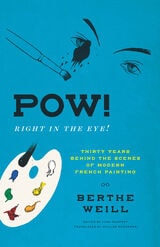
Pow! Right in the Eye!
Thirty Years behind the Scenes of Modern French PaintingBerthe Weill
University of Chicago Press, 2022
Berthe Weill, a formidable Parisian dealer, was born into a Jewish family of very modest means. One of the first female gallerists in the business, she first opened the Galerie B. Weill in the heart of Paris’s art gallery district in 1901, holding innumerable exhibitions over nearly forty years. Written out of art history for decades, Weill has only recently regained the recognition she deserves.
Under five feet tall and bespectacled, Weill was beloved by the artists she supported, and she rejected the exploitative business practices common among art dealers. Despite being a self-proclaimed “terrible businesswoman,” Weill kept her gallery open for four decades, defying the rising tide of antisemitism before Germany’s occupation of France. By the time of her death in 1951, Weill had promoted more than three hundred artists—including Henri Matisse, Pablo Picasso, Amedeo Modigliani, Diego Rivera, and Suzanne Valadon—many of whom were women and nearly all young and unknown when she first exhibited them.
Pow! Right in the Eye! makes Weill’s provocative 1933 memoir finally available to English readers, offering rare insights into the Parisian avant-garde and a lively inside account of the development of the modern art market.
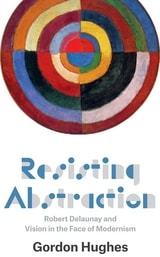
Resisting Abstraction
Robert Delaunay and Vision in the Face of ModernismGordon Hughes
University of Chicago Press, 2014
With Resisting Abstraction, the first English-language study of Delaunay in more than thirty years, Gordon Hughes mounts a powerful argument that Delaunay was not only one of the earliest artists to tackle abstraction, but the only artist to present his abstraction as a response to new scientific theories of vision. The colorful, optically driven canvases that Delaunay produced, Hughes shows, set him apart from the more ethereal abstraction of contemporaries like Kandinsky, Mondrian, Kazimir Malevich, and František Kupka. In fact, Delaunay emphatically rejected the spiritual motivations and idealism of that group, rooting his work instead in contemporary science and optics. Thus he set the stage not only for the modern artists who would follow, but for the critics who celebrated them as well.
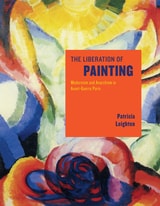
The Liberation of Painting
Modernism and Anarchism in Avant-Guerre ParisPatricia Leighten
University of Chicago Press, 2013
Leighten examines the circle of artists—Pablo Picasso, Juan Gris, František Kupka, Maurice de Vlaminck, Kees Van Dongen, and others—for whom anarchist politics drove the idea of avant-garde art, exploring how their aesthetic choices negotiated the myriad artistic languages operating in the decade before World War I. Whether they worked on large-scale salon paintings, political cartoons, or avant-garde abstractions, these artists, she shows, were preoccupied with social criticism. Each sought an appropriate subject, medium, style, and audience based on different conceptions of how art influences society—and their choices constantly shifted as they responded to the dilemmas posed by contradictory anarchist ideas. According to anarchist theorists, art should expose the follies and iniquities of the present to the masses, but it should also be the untrammeled expression of the emancipated individual and open a path to a new social order. Revealing how these ideas generated some of modernism’s most telling contradictions among the prewar Parisian avant-garde, The Liberation of Painting restores revolutionary activism to the broader history of modern art.
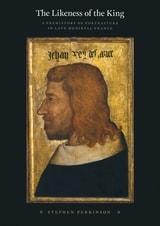
The Likeness of the King
A Prehistory of Portraiture in Late Medieval FranceStephen Perkinson
University of Chicago Press, 2009
Anyone who has strolled through the halls of a museum knows that portraits occupy a central place in the history of art. But did portraits, as such, exist in the medieval era? Stephen Perkinson’s The Likeness of the King challenges the canonical account of the invention of modern portrait practices, offering a case against the tendency of recent scholarship to identify likenesses of historical personages as “the first modern portraits.”
Unwilling to accept the anachronistic nature of these claims, Perkinson both resists and complicates grand narratives of portraiture art that ignore historical context. Focusing on the Valois court of France, he argues that local practice prompted shifts in the late medieval understanding of how images could represent individuals and prompted artists and patrons to deploy likeness in a variety of ways. Through an examination of well-known images of the fourteenth- and early fifteenth-century kings of France, as well as largely overlooked objects such as wax votive figures and royal seals, Perkinson demonstrates that the changes evident in these images do not constitute a revolutionary break with the past, but instead were continuous with late medieval representational traditions.
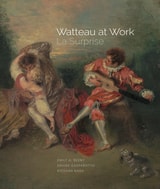
Watteau at Work
La SurpriseEmily A. Beeny
J. Paul Getty Trust, The, 2022
The painting La Surprise by Jean Antoine Watteau (1684–1721) belongs to a new genre of painting invented by the artist himself—the fête galante. These works, which show graceful open-air gatherings filled with scenes of courtship, music and dance, strolling lovers, and actors, do not so much tell a story as set a mood: one of playful, wistful, nostalgic reverie. Esteemed by collectors in Watteau’s day as a work that showed the artist at the height of his skill and success, La Surprise vanished from public view in 1848, not to reemerge for more than a century and a half. Acquired by the Getty Museum in 2017, it has never before been the subject of a dedicated publication. Marking the three hundredth anniversary of Watteau’s death, this book considers La Surprise within the context of the artist’s oeuvre and discusses the surprising history of collecting Watteau in Los Angeles.
This volume is published to accompany an exhibition on view at the J. Paul Getty Museum at the Getty Center from November 23, 2021, to February 20, 2022.