Results by title
25 books match the query 'Pakistan'

Boys Will Be Boys
A Daughter's ElegySara Suleri Goodyear
University of Chicago Press, 2003
Taking its title from that jokingly chosen by her father for his unwritten autobiography, Boys Will Be Boys dips in and out of Suleri Goodyear's upbringing in Pakistan and her life in the United States, moving between public and private history and addressing questions of loss and cultural displacement through a resolutely comic lens. In this rich portrait, Pip emerges as a prodigious figure: an ardent agitator against British rule in the 1930s and 1940s, a founder of the Times of Karachi and the Evening Times, on-and-off editor of the Pakistan Times, for a brief time director of the Pakistan military intelligence service, and a frequently jailed antagonist of successive Pakistani leaders. To the author, though, he was also "preposterous . . . counting himself king of infinite space," a man who imposed outrageously on his children. As Suleri Goodyear chronicles, Pip demanded their loyalty yet banished them easily from his favor; contrary and absurdly unfair, he read their diaries, interfered in their relationships, and believed in a father's inalienable right to oppress his children.
Suleri Goodyear invites the reader into an intimacy shaped equally by history and intensely personal detail, creating an elegant elegy for a man of force and contradiction. And perhaps Pip was not so preposterous after all: "On Judgment Day," he told his daughter, "I will say to God, 'Be merciful, for I have already been judged by my child.'"
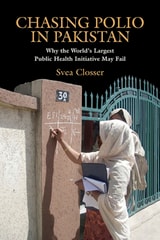
Chasing Polio in Pakistan
Why the World's Largest Public Health Initiative May FailSvea Closser
Vanderbilt University Press, 2010
Complex Rivalry
The Dynamics of India-Pakistan ConflictSurinder Mohan
University of Michigan Press, 2022
While a substantial body of research explains how the conflict between India and Pakistan originated and developed over time, a systematic and multivariate inquiry cutting across different IR paradigms to understand this rivalry is rare or limited. Surinder Mohan contributes to the understanding of India and Pakistan’s rivalry by presenting a new type of framework, also known as complex rivalry model. This comprehensive model, by not limiting its theoretical tool-kit to any single paradigm, is unique in its approach and better positioned to debate and answer baffling questions that the single-paradigm-based studies address rather inadequately and in isolation.
This book, through an examination of fifty-seven militarized disputes between 1947 and 2021, explains the life cycle of India-Pakistan rivalry in four phases: initiation; development; maintenance; and a possible transformation/termination. Mohan delineates five specific conditions that evolved the subcontinental conflict into a complex rivalry: first, its survival in spite of the Bangladesh War and the end of the Cold War; second, its linkage with other rivalries; third, the inclusion of nuclear factor; fourth, the dyadic stability in the militarized disputes and hostility level despite changes in the regime type; and fifth, the dyad’s involvement in a multilayered conflict pattern. To break this deadlock and mitigate their longstanding differences, Mohan proposes that India and Pakistan must reframe their national priorities and political goals so that the new situation or combinations of conditions would assist their peace strategists to downgrade the dyadic hostility and implement risky policies to make headway to a promising transformation.
Dispatches from Pakistan
Madiha R. Tahir
University of Minnesota Press, 2014
Since 9/11, Pakistan has loomed large in the geopolitical imagination of the West. A key ally in the global war on terror, it is also the country in which Osama bin Laden was finally found and killed—and the one that has borne the brunt of much of the ongoing conflict’s collateral damage. Despite its prominence on the front lines and on the front pages, Pakistan has been depicted by Western observers simplistically in terms of its corruption, its fundamentalist Islamic beliefs, and its propensity for violence. Dispatches from Pakistan, in contrast, reveals the complexities, the challenges, and the joys of daily life in the country, from the poetry of Gilgit to the graffiti of Gwadar, from an army barrack in Punjab to the urban politics of Karachi.
This timely book brings together journalists, activists, academics, and artists to provide a rich, in-depth, and intriguing portrait of contemporary Pakistani society. Straddling a variety of boundaries—geographic, linguistic, and narrative—Dispatches from Pakistan is a vital attempt to speak for the multitude of Pakistanis who, in the face of seemingly unimaginable hardships, from drone strikes to crushing poverty, remain defiantly optimistic about their future. While engaging in conversations on issues that make the headlines in the West, the contributors also introduce less familiar dimensions of Pakistani life, highlighting the voices of urban poets, rural laborers, industrial workers, and religious-feminist activists—and recovering Pakistani society’s inquilabi (revolutionary) undercurrents and its hopeful overtones.
Contributors: Mahvish Ahmad; Nosheen Ali, U of California, Berkeley; Shafqat Hussain, Trinity College; Humeira Iqtidar, King’s College London; Amina Jamal, Ryerson U; Hafeez Jamali, U of Texas at Austin; Iqbak Khattak; Zahra Malkani; Raza Mir; Hammad Nasar; Junaid Rana, U of Illinois at Urbana–Champaign; Maliha Safri, Drew U; Aasim Sajjad Akhtar, Lahore U of Management Sciences; Ayesha Siddiqa; Sultan-i-Rome, Government Jahanzeb Postgraduate College, Swat, Pakistan; Saadia Toor, Staten Island College.
Intimate Connections
Love and Marriage in Pakistan’s High MountainsAnna-Maria Walter
Rutgers University Press, 2022
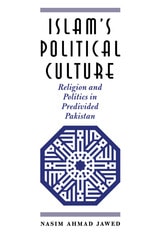
Islam's Political Culture
Religion and Politics in Predivided PakistanBy Nasim Ahmad Jawed
University of Texas Press, 1999
This book examines the political dimension of Islam in predivided Pakistan (1947-1971), one of the first new Muslim nations to commit itself to an Islamic political order and one in which the national debate on Islamic, political, and ideological issues has been the most persistent, focused, and rich of any dialogues in the contemporary Muslim world.
Nasim Jawed draws on the findings of a survey he conducted among two influential social groups—the ulama (traditional religious leaders) and the modern professionals—as well as on the writings of Muslim intellectuals. He probes the major Islamic positions on critical issues concerning national identity, the purpose of the state, the form of government, and free, socialist, and mixed economies.
This study contributes to an enhanced understanding of Islam's political culture worldwide, since the issues, positions, and arguments are often similar across the Muslim world. The empirical findings of the study not only outline the ideological backdrop of contemporary Islamic reassertion, but also reveal diversity as well as tensions within it.
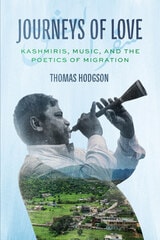
Journeys of Love
Kashmiris, Music, and the Poetics of MigrationThomas Hodgson
University of Chicago Press, 2025
In Journeys of Love, ethnomusicologist Thomas Hodgson offers a sensitive corrective to harmful portrayals of immigrants—specifically, Pakistanis living in England—as a self-segregating group prohibited from making music, a stereotype that has often resulted in violent Islamophobia. He argues that, in practice, these migrants—many of whom come from the Mirpur area of Azad Kashmir—occupy rich musical worlds, full of poetic metaphors, that are central to surviving migration and its attendant losses.
Hodgson shows how Mirpuris in England, as well as those who remain in Pakistan, carry on traditions of reciting a collection of poetry by the nineteenth-century Sufi saint Mian Muhammad Bakhsh, translated by Hodgson here as Journeys of Love. With its themes of remaining true to one’s home, the oppressed being saved, having patience, and keeping faith in God, this work has become the story of movement and displacement in its narrative arc, as well as through the way it provides spiritual and ethical frameworks for settling in new lands. These hidden poetics of migration transform across generations as young Mirpuris develop new expressions of the connections across continents. These poetics reveal the connections between Kashmir’s rural village life and urban centers abroad, offering a sensitive and illuminating portrait of migration and multiculturalism in Britain and beyond.
Learning to Live with the Past
Krishna Kumar
Seagull Books, 2023
How does education shape political rivalry and hostility? The Partition of the Indian subcontinent in 1947—the violence that followed it, and its living legacy of rival nationalisms—has made a deep and pervasive impact on education in both India and Pakistan. In Learning to Live with the Past, educationist Krishna Kumar dwells on the complex terrain every history teacher has to navigate: how to make the past come alive without running the risk of creating a desire to lose this “pastness.”
Substantiating this question with a wealth of experiences gained from his extensive research on history textbooks, as well as his interactions with students and teachers in both countries, Kumar explores the integral function the discipline of history plays in the project of nation-building. To help children learn to live with the past, Kumar amplifies the need for spaces that create possibilities for inquiries into a “longer” common heritage shared by South Asia without necessarily denying a national narrative or encouraging an urge to undo the past.
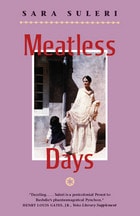
Meatless Days
Sara Suleri Goodyear
University of Chicago Press, 1989
"Nine autobiographical tales that move easily back and forth among Pakistan, Britain, and the United States. . . . She forays lightly into Pakistani history, and deeply
into the history of her family and friends. . . . The Suleri women at home in Pakistan make this book sing."—Daniel Wolfe, New York Times Book Review
"A jewel of insight and beauty. . . . Suleri's voice has the same authority when she speaks about Pakistani politics as it does in her literary interludes."—Rone Tempest, Los Angeles Times Book Review
"The author has a gift for rendering her family with a few, deft strokes, turning them out as whole and complete as eggs."—Anita Desai, Washington Post Book World
"Meatless Days takes the reader through a Third World that will surprise and confound him even as it records the author's similar perplexities while coming to terms with the West. Those voyages Suleri narrates in great strings of words and images so rich that they left this reader . . . hungering for more."—Ron Grossman, Chicago Tribune
"Dazzling. . . . Suleri is a postcolonial Proust to Rushdie's phantasmagorical Pynchon."—Henry Louise Gates, Jr., Voice Literary Supplement
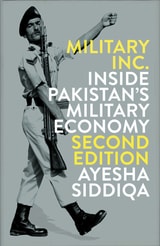
Military, Inc.
Inside Pakistan's Military EconomyAyesha Siddiqa
Pluto Press, 2016
This book offers a close look at what the rise of the military has meant for Pakistani society. Ayesha Siddiqa shows how entrenched the military has become, not just in day-to-day governance, but in the Pakistani corporate sector as well. What are the consequences of this unprecedented merging of the military and corporate sectors? What does it mean for Pakistan’s economic development—let alone for hopes of an eventual return to democracy and de-militarization? This new edition brings Siddiqa’s account fully up to date with a new preface and conclusion that emphasize the changing role of the media.
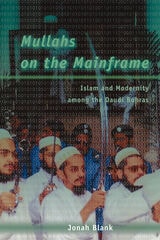
Mullahs on the Mainframe
Islam and Modernity among the Daudi BohrasJonah Blank
University of Chicago Press, 2001
Muslim Becoming
Aspiration and Skepticism in PakistanNaveeda Khan
Duke University Press, 2012
Pakistan Desires
Queer Futures ElsewhereOmar Kasmani, editor
Duke University Press, 2023
Contributors. Ahmed Afzal, Asad Alvi, Anjali Arondekar, Vanja Hamzić, Omar Kasmani, Pasha M. Khan, Gwendolyn S. Kirk, Syeda Momina Masood, Nida Mehboob, Claire Pamment, Geeta Patel, Nael Quraishi, Abdullah Qureshi, Shayan Rajani, Jeffrey A. Redding, Gayatri Reddy, Syma Tariq
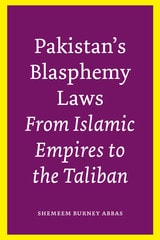
Pakistan’s Blasphemy Laws
From Islamic Empires to the TalibanBy Shemeem Burney Abbas
University of Texas Press, 2013
Under the guise of Islamic law, the prophet Muhammad’s Islam, and the Qur’an, states such as Pakistan, Afghanistan, Egypt, Saudi Arabia, and Bangladesh are using blasphemy laws to suppress freedom of speech. Yet the Prophet never tried or executed anyone for blasphemy, nor does the Qur’an authorize the practice. Asserting that blasphemy laws are neither Islamic nor Qur‘anic, Shemeem Burney Abbas traces the evolution of these laws from the Islamic empires that followed the death of the Prophet Muhammad to the present-day Taliban. Her pathfinding study on the shari’a and gender demonstrates that Pakistan’s blasphemy laws are the inventions of a military state that manipulates discourse in the name of Islam to exclude minorities, women, free thinkers, and even children from the rights of citizenship.
Abbas herself was persecuted under Pakistan’s blasphemy laws, so she writes from both personal experience and years of scholarly study. Her analysis exposes the questionable motives behind Pakistan’s blasphemy laws, which were resurrected during General Zia-ul-Haq’s regime of 1977–1988—motives that encompassed gaining geopolitical control of the region, including Afghanistan, in order to weaken the Soviet Union. Abbas argues that these laws created a state-sponsored “infidel” ideology that now affects global security as militant groups such as the Taliban justify violence against all “infidels” who do not subscribe to their interpretation of Islam. She builds a strong case for the suspension of Pakistan’s blasphemy laws and for a return to the Prophet’s peaceful vision of social justice.

Partitioning Bazaar Art
Popular Visual Culture of India and Pakistan around 1947Yousuf Saeed
Seagull Books, 2023
How did inexpensive posters influence nationalism in the decades leading up to and succeeding the Partition of the Indian subcontinent in 1947? If mechanically reproduced images that occupy public spaces reflect the aesthetics of the “masses,” what can a critical interpretation of subcontinental popular visual culture in the mid-twentieth century reveal about the formation of communal identities?
In this essay, Yousuf Saeed studies the selective deification of leaders fighting for Indian independence. He highlights the biased representation within the domain of “patriotic” posters of the time and the evolving portrayal of religious minority communities in India’s popular print culture over subsequent decades. Also charts the turn popular print culture took in post-Partition Pakistan, Saeed focuses on the country’s thriving industry of Sufi-saint posters. Partitioning Bazaar Art is a timely exploration of how nationalism can be defined through popular imagery.
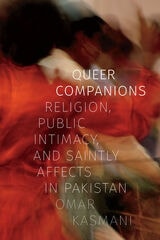
Queer Companions
Religion, Public Intimacy, and Saintly Affects in PakistanOmar Kasmani
Duke University Press, 2022

Quest for Kim
In Search of Kipling's Great GamePeter Hopkirk
University of Michigan Press, 1999
"This is a fascinating, brilliantly written book, as interesting in its description of the author's journeys as it is in its investigation of the reality that lies behind 'the finest novel in the English language with an Indian theme,'" as Kim has been described by Nirad Chaudhuri." --T. J. Binyon, Times Literary Supplement
"In an original combination of autobiography, travel writing, and literary detective work, Hopkirk manages accessibly to tell the story of Kim and his own obsession with it. Hopkirk illustrates how creatively and thoroughly the reading of a work of fiction can shape a whole life's experience." -- John R. Bradley, Independent on Sunday
". . . a reminder of just how absorbing was the world Kipling knew, and how fabulous was his transformation of it into literature." --Richard Bernstein, New York Times
Peter Hopkirk has traveled widely over many years in the regions where his books are set--Central Asia, Russia, China, India, Pakistan, and the Middle East. His nearly twenty years with The Times included work as an Asian affairs specialist. His previous books include The Great Game, Foreign Devils on the Silk Road, Trespassers on the Roof of the World, Setting the East Ablaze, and Our Secret Service East of Constantinople. His works have been translated into twelve languages.
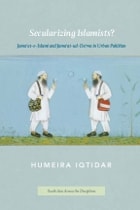
Secularizing Islamists?
Jama'at-e-Islami and Jama'at-ud-Da'wa in Urban PakistanHumeira Iqtidar
University of Chicago Press, 2011
Secularizing Islamists? provides an in-depth analysis of two Islamist parties in Pakistan, the highly influential Jama‘at-e-Islami and the more militant Jama‘at-ud-Da‘wa, widely blamed for the November 2008 terrorist attack in Mumbai, India. Basing her findings on thirteen months of ethnographic work with the two parties in Lahore, Humeira Iqtidar proposes that these Islamists are involuntarily facilitating secularization within Muslim societies, even as they vehemently oppose secularism.
This book offers a fine-grained account of the workings of both parties that challenges received ideas about the relationship between the ideology of secularism and the processes of secularization. Iqtidar particularly illuminates the impact of women on Pakistani Islamism, while arguing that these Islamist groups are inadvertently supporting secularization by forcing a critical engagement with the place of religion in public and private life. She highlights the role that competition among Islamists and the focus on the state as the center of their activity plays in assisting secularization. The result is a significant contribution to our understanding of emerging trends in Muslim politics.
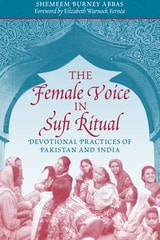
The Female Voice in Sufi Ritual
Devotional Practices of Pakistan and IndiaBy Shemeem Burney Abbas
University of Texas Press, 2002
The female voice plays a more central role in Sufi ritual, especially in the singing of devotional poetry, than in almost any other area of Muslim culture. Female singers perform sufiana-kalam, or mystical poetry, at Sufi shrines and in concerts, folk festivals, and domestic life, while male singers assume the female voice when singing the myths of heroines in qawwali and sufiana-kalam. Yet, despite the centrality of the female voice in Sufi practice throughout South Asia and the Middle East, it has received little scholarly attention and is largely unknown in the West.
This book presents the first in-depth study of the female voice in Sufi practice in the subcontinent of Pakistan and India. Shemeem Burney Abbas investigates the rituals at the Sufi shrines and looks at women's participation in them, as well as male performers' use of the female voice. The strengths of the book are her use of interviews with both prominent and grassroots female and male musicians and her transliteration of audio- and videotaped performances. Through them, she draws vital connections between oral culture and the written Sufi poetry that the musicians sing for their audiences. This research clarifies why the female voice is so important in Sufi practice and underscores the many contributions of women to Sufism and its rituals.
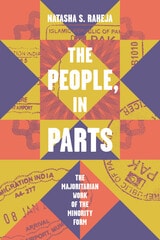
The People, in Parts
The Majoritarian Work of the Minority FormNatasha S. Raheja
University of Chicago Press, 2027
Offers a new theory of the minority as a political form and shows how majoritarian projects are built through its appropriation.
Around the world, national majorities are telling themselves a potent story: that they are the ones in danger. In the United States and Serbia, Christian and white nationalists warn of “replacement.” In Turkey and Pakistan, Muslim nationalists cast religious “others” as existential threats. In India, Hindu nationalists claim that Hindus are becoming minorities in “their own” land. These movements, and the migration and citizenship policies that accompany them, are not aberrations, but rather expressions of a logic embedded in the modern nation-state—a logic that turns people into numbers, numbers into votes, and difference into enmity.
In The People, in Parts, anthropologist Natasha S. Raheja homes in on a paradox visible along the India-Pakistan border. When Hindus cross into India from Pakistan seeking refuge, they are admitted as minorities in need of protection. Yet in India, their welcome into the putative majority is selective and conditional. How does majority-minority status shift by crossing a border? Drawing on long-term research in the Thar Desert region, across Sindh and Rajasthan, Raheja traces how caste and religion shape people's encounters with the state and argues that this bureaucratic confusion is political machinery. Where liberal democracy treats the minority as a shifting, procedural category, nation-state governance fixes it as a substantive identity. The suffering of minoritized populations becomes raw material for majoritarian projects, converted into demographic justification, electoral arithmetic, and nationalist grievance. The minority form, in other words, does majoritarian work.
The People, in Parts offers not only a searing diagnosis of minority-majority politics and the governance of migration but a reframing: the problem is not simply about who belongs and who does not, but how nationalist belonging crosses state borders, pointing to strains within liberal democracy and the nation-state order.

The State of Islam
Culture and Cold War Politics in PakistanSaadia Toor
Pluto Press, 2011
The State of Islam tells the story of Pakistan through the lens of the Cold War, and more recently the War on Terror, to shed light on the domestic and international processes behind the global rise of militant Islam.
Unlike existing scholarship on nationalism, Islam and the state in Pakistan, which tends to privilege events in a narrowly-defined ‘political’ realm, Saadia Toor highlights the significance of cultural politics in Pakistan from its origins to the contemporary period. This extra dimension allows Toor to explain how the struggle between Marxists and liberal nationalists was influenced and eventually engulfed by the agenda of the religious right.
Timely and unique, this book is a must for anyone who wants to understand the roots of modern Pakistan and the likely outcome of current power struggles in the country.
The Struggle for Hegemony in Pakistan
Fear, Desire and Revolutionary HorizonsAasim Sajjad-Akhtar
Pluto Press, 2022
The collapse of neoliberal hegemony in the western world following the financial crash of 2007-8 and subsequent rise of right-wing authoritarian personalities has been described as a crisis of 'the political' in western societies. But the crisis must be seen as global, rather than focusing on the west alone.
Pakistan is experiencing rapid financialization and rapacious capture of natural resources, overseen by the country's military establishment and state bureaucracy. Under their watch, trading and manufacturing interests, property developers and a plethora of mafias have monopolized the provision of basic needs like housing, water and food, whilst also feeding conspicuous consumption by a captive middle-class.
Aasim Sajjad-Akhtar explores neoliberal Pakistan, looking at digital technology in enhancing mass surveillance, commodification and atomization, as well as resistance to the state and capital. Presenting a new interpretation of our global political-economic moment, he argues for an emancipatory political horizon embodied by the 'classless' subject.
The Wild East
Criminal Political Economies in South AsiaEdited by Barbara Harriss-White and Lucia Michelutti
University College London, 2019

Untying the Afghan Knot
Negotiating Soviet WithdrawalRiaz M. Khan
Duke University Press, 1991
Riaz M. Khan, a senior Pakistani diplomat, participated actively in all meetings on Afghanistan in the United Nations, the Non-Aligned Movement, and the Organization of the Islamic Conference, and in all of the Geneva negotiating rounds (1882–1988). Drawing upon his personal experience, official documents, scholarly literature, and press accounts, he provides a unique insider’s view of these precedent-setting negotiations, which were often shrouded in secrecy and misperceptions.
Khan examines the interests, positions, and behind-the-scenes maneuverings of the major players—Afghan governments and resistance groups, Pakistan, the Soviet Union, the United States, and UN mediators—and assesses the impact of military and political developments inside Afghanistan and elsewhere, including the advent of Mikhail Gorbachev. Khan’s authoritative account of these critical diplomatic initiatives sheds important light on the internal dynamics of the multilateral Afghanistan negotiations.
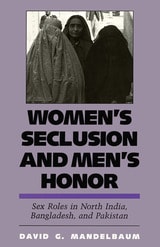
Women's Seclusion and Men's Honor
Sex Roles in North India, Bangladesh, and PakistanDavid G. Mandelbaum
University of Arizona Press, 1988