Results by title
28 books match the query 'Parent Participation'
American Sign Language and Early Literacy
A Model Parent-Child ProgramKristin Snoddon
Gallaudet University Press, 2012
The usual definition of the term “literacy” generally corresponds with mastering the reading and writing of a spoken language. This narrow scope often engenders unsubstantiated claims that print literacy alone leads to, among other so-called higher-order thinking skills, logical and rational thinking and the abstract use of language. Thus, the importance of literacy for deaf children in American Sign Language (ASL) is marginalized, asserts author Kristin Snoddon in her new book American Sign Language and Early Literacy: A Model Parent-Child Program. As a contrast, Snoddon describes conducting an ethnographic, action study of the ASL Parent-Child Mother Goose program, provided by a Deaf service agency in Ontario, Canada to teach ASL literacy to deaf children.
According to current scholarship, literacy is achieved through primary discourse shared with parents and other intimates, which establishes a child’s initial sense of identity, culture, and vernacular language. Secondary discourse derives from outside agents and interaction, such as expanding an individual’s literacy to other languages. Snoddon writes that the focus of the ASL Parent-Child Mother Goose program is on teaching ASL through rhymes and stories and some facets of the culture of Deaf ASL users. This focus enabled hearing parents to impart first-language acquisition and socialization to their deaf children in a more natural primary discourse as if the parents were Deaf themselves. At the same time, hearing parents experience secondary discourses through their exposure to ASL and Deaf culture.
Snoddon also comments on current infant hearing screening and early intervention and the gaps in these services. She discusses gatekeeper individuals and institutions that restrict access to ASL for young Deaf children and their families. Finally, she reports on public resources for supporting ASL literacy and the implications of her findings regarding the benefits of early ASL literacy programming for Deaf children and their families.
Back in School
How Student Parents Are Transforming College and FamilyA. Fiona Pearson
Rutgers University Press, 2019
Closing The Book On Homework
Enhancing Public EducationJohn Buell
Temple University Press, 2003
Distinguishing Disability
Parents, Privilege, and Special EducationColin Ong-Dean
University of Chicago Press, 2009
Students in special education programs can have widely divergent experiences. For some, special education amounts to a dumping ground where schools unload their problem students, while for others, it provides access to services and accommodations that drastically improve chances of succeeding in school and beyond. Distinguishing Disability argues that this inequity in treatment is directly linked to the disparity in resources possessed by the students’ parents.
Since the mid-1970s, federal law has empowered parents of public school children to intervene in virtually every aspect of the decision making involved in special education. However, Colin Ong-Dean reveals that this power is generally available only to those parents with the money, educational background, and confidence needed to make effective claims about their children’s disabilities and related needs. Ong-Dean documents this class divide by examining a wealth of evidence, including historic rates of learning disability diagnosis, court decisions, and advice literature for parents of disabled children. In an era of expanding special education enrollment, Distinguishing Disability is a timely analysis of the way this expansion has created new kinds of inequality.

Early Literacy Storytimes @ your library®
Partnering with Caregivers for SuccessSaroj Nadkarni Ghoting
American Library Association, 2006
Every Child Ready for School
Helping Adults Inspire Young Children to LearnDorothy Stoltz
American Library Association, 2013
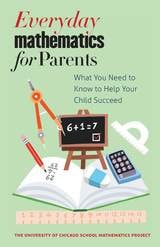
Everyday Mathematics for Parents
What You Need to Know to Help Your Child SucceedThe University of Chicago School Mathematics Project
University of Chicago Press, 2017
The Everyday Mathematics (EM) program was developed by the University of Chicago School Mathematics Project (UCSMP) and is now used in more than 185,000 classrooms by almost three million students. Its research-based learning delivers the kinds of results that all school districts aspire to. Yet despite that tremendous success, EMoften leaves parents perplexed. Learning is accomplished not through rote memorization, but by actually engaging in real-life math tasks. The curriculum isn’t linear, but rather spirals back and forth, weaving concepts in and out of lessons that build overall understanding and long-term retention. It’s no wonder that many parents have difficulty navigating this innovative mathematical and pedagogic terrain.
Now help is here. Inspired by UCSMP’s firsthand experiences with parents and teachers, Everyday Mathematics for Parents will equip parents with an understanding of EM and enable them to help their children with homework—the heart of the great parental adventure of ensuring that children become mathematically proficient.
Featuring accessible explanations of the research-based philosophy and design of the program, and insights into the strengths of EM, this little book provides the big-picture information that parents need. Clear descriptions of how and why this approach is different are paired with illustrative tables that underscore the unique attributes of EM. Detailed guidance for assisting students with homework includes explanations of the key EM concepts that underlie each assignment. Resources for helping students practice math more at home also provide an understanding of the long-term utility of EM. Easy to use, yet jam-packed with knowledge and helpful tips, Everyday Mathematics for Parents will become a pocket mentor to parents and teachers new to EM who are ready to step up and help children succeed. With this book in hand, you’ll finally understand that while this may not be the way that you learned math, it’s actually much better.Excellent Books for Early and Eager Readers
Kathleen T. Isaacs
American Library Association, 2016
Family Life and School Achievement
Why Poor Black Children Succeed or FailReginald M. Clark
University of Chicago Press, 1984
To support his contentions, Clark offers ten intimate portraits of Black families in Chicago. Visiting the homes of poor one- and two-parent families of high and low achievers, Clark made detailed observations on the quality of home life, noting how family habits and interactions affect school success and what characteristics of family life provide children with "school survival skills," a complex of behaviors, attitudes, and knowledge that are the essential elements in academic success.
Clark's conclusions lead to exciting implications for educational policy. If school achievement is not dependent on family structure or income, parents can learn to inculcate school survival skills in their children. Clark offers specific suggestions and strategies for use by teachers, parents, school administrators, and social service policy makers, but his work will also find an audience in urban anthropology, family studies, and Black studies.
Family Literacy Storytimes
Readymade Storytimes Suitable for the Whole FamilyAmerican Library Association, 2009
Family-Centered Library Handbook
American Library Association, 2007
Homeschooling
The History and Philosophy of a Controversial PracticeJames G. Dwyer and Shawn F. Peters
University of Chicago Press, 2019
Indigenous Motherhood in the Academy
Robin Zape-tah-hol-ah Minthorn
Rutgers University Press, 2022
Inheriting Possibility
Social Reproduction and Quantification in EducationEzekiel J. Dixon-Román
University of Minnesota Press, 2017
How has the dominant social scientific paradigm limited our understanding of the impact of inherited economic resources, social privilege, and sociocultural practices on multigenerational inequality? In what ways might multiple forces of social difference haunt quantitative measurements of ability such as the SAT? Building on new materialist philosophy, Inheriting Possibility rethinks methods of quantification and theories of social reproduction in education, demonstrating that test performance results and parenting practices convey the impact of materially and historically contingent patterns of differential possibility.
Ezekiel J. Dixon-Román explores the dualism of nature and culture that has undergirded theories of inheritance, social reproduction, and human learning and development. Research and debate on the reproduction of power relations have rested on a premise that nature is made up of fixed universals on which the creative, intellective, and discursive play of culture are based. Drawing on recent work in the physical and biological sciences, Dixon-Román argues that nature is culture. He contends that by assuming a rigid nature/culture binary, we ultimately limit our understanding of how power relations are reproduced.
Through innovative analyses of empirical data and cultural artifacts, Dixon-Román boldly reconsiders how we conceptualize the processes of inheritance and approach social inquiry in order to profoundly sharpen understanding and address the reproducing forces of inequality.
Kids Have All the Write Stuff
Revised and Updated for a Digital AgeRobert W. Maloy
University of Massachusetts Press, 2019
You'll discover:
· how to implement writing as a part of daily life with family and friends;
· processes and invitations fit for young writers;
· strategies for connecting writing to math and coding;
· writing materials and technologies; and
· creative and practical writing ideas, from fiction, nonfiction, and videos to blogs and emails.
In order to connect writing to today's digital revolution, veteran educators Sharon A. Edwards, Robert W. Maloy, and Torrey Trust reveal how digital tools can inspire children to write, and a helpful companion website brings together a range of resources and technologies. This essential book offers enjoyment and inspiration to young writers!
Literacy and Your Deaf Child
What Every Parent Should KnowDavid A. Stewart
Gallaudet University Press, 2003
In the modern world, success depends upon literacy, a fact especially true for deaf children who, if they read and write well, can take full advantage of e-mail, the Internet, and other communication innovations. Literacy and Your Deaf Child: What Every Parent Should Know provides parents with the means to ensure that their deaf or hard of hearing child becomes a proficient reader and writer. In nine chapters, parents will learn about the relationship of language to reading and writing, including the associated terminology, the challenges that deaf children face, and the role of schools. They’ll also learn activities that they can engage in at home that will strengthen their children’s reading and writing capabilities.
Literacy and Your Deaf Child begins by introducing some common concepts, among them the importance of parental involvement in a deaf child’s education. It outlines how children acquire language and describes the auditory and visual links to literacy. With this information, parents can make informed decisions regarding hearing aids, cochlear implants, speechreading, and sign communication, all of which can have a marked influence on their child’s language development. Parents will discover how to create environments at home and in their community for fostering their child’s literacy, especially in school by learning how to work closely with their child’s teachers. The book also refers throughout to the developmental link between American Sign Language and English literacy for children who use sign communication, making it the best guide available for all deaf children and their parents.
Messages From Home
The Parent-Child Home Program For Overcoming Educational DisadvantagePhyllis Levenstein and Susan Levenstein
Temple University Press, 2008
The Parent-Child Home Program, a pre-preschool home visiting program, has grown greatly since the first edition of Messages from Home was published in 1988. This expanded and updated edition shows the continued success of this program-spearheaded by the late Phyllis Levenstein-which prepares at-risk children for school success, overcoming educational disadvantage.
Since The Parent-Child Home Program was founded in the 1960s, it has enriched the cognitive, social, and emotional school readiness of tens of thousands of children. The Program's methods, its theoretical underpinnings, and its impressive results are presented in detail. The success stories of both parents and children make inspiring reading. The combination of lively writing and data-driven scientific rigor give it both broad appeal and academic relevance.
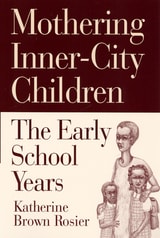
Mothering Inner-City Children
The Early School YearsKatherine Brown Rosier
Rutgers University Press, 2000
There are few groups more stereotyped and demonized than "welfare mothers," particularly low-income, African American women raising children in the inner city. But what are the day-to-day stories behind the stereotypes? How do African American mothers (both single women and those living with a partner) in poor families handle their roles as parents? What support networks do they rely on to help raise their children? How do their personal histories affect their parenting styles?
Sociologist Katherine Brown Rosier spent three years interviewing and observing Indianapolis mothers as their children made the transition from a Head Start program to kindergarten and through second grade, analyzing the families in their homes, schools, and other social settings. She brings forth the voices of the mothers, children, and their teachers, providing a multifaceted picture of how low-income African American families cope with the daily pressures and responsibilities of child rearing.
Rosier also examines how larger socio-economic factors influence these families' specific circumstances and histories. What child-rearing strategies do these mothers employ, she asks, to promote a smooth transition into school despite complex discontinuities among their homes, schools, and communities? How are these strategies viewed and supported or impeded by teachers, family, friends, and neighbors?
Until now, most research on poor African American families has focused so intently on the problems confronted by this seemingly homogenous group that the routine practices of every day life have been ignored. In this unique project, Rosier allows the families' individual experiences and thoughts to contribute to and complicate current research.
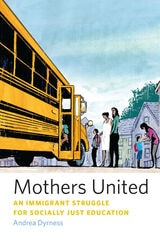
Mothers United
An Immigrant Struggle for Socially Just EducationAndrea Dyrness
University of Minnesota Press, 2010
In Mothers United, Andrea Dyrness chronicles the experiences of five Latina immigrant mothers in Oakland, California—one of the most troubled urban school districts in the country—as they become informed and engaged advocates for their children’s education. These women, who called themselves “Madres Unidas” (“Mothers United”), joined a neighborhood group of teachers and parents to plan a new, small, and autonomous neighborhood-based school to replace the overcrowded Whitman School. Collaborating with the author, among others, to conduct interviews and focus groups with teachers, parents, and students, these mothers moved from isolation and marginality to take on unfamiliar roles as researchers and community activists while facing resistance from within the local school district.
Mothers United illuminates the mothers’ journey to create their own space—centered around the kitchen table—that enhanced their capacity to improve their children’s lives. At the same time, Dyrness critiques how community organizers, teachers, and educational policy makers, despite their democratic rhetoric, repeatedly asserted their right as “experts,” reproducing the injustice they hoped to overcome. A powerful, inspiring story about self-learning, consciousness-raising, and empowerment, Mothers United offers important lessons for school reform movements everywhere.
Organizing for Educational Justice
The Campaign for Public School Reform in the South BronxMichael B. Fabricant
University of Minnesota Press, 2010
Parents and Schools
The 150-Year Struggle for Control in American EducationWilliam W. Cutler III
University of Chicago Press, 2000
Cutler shows how in the 1920s and 1930s schools expanded their responsibility for children's well-being outside the classroom. These efforts sowed the seeds for later conflict as schools came to be held accountable for solving society's problems. Finally, he brings the reader into recent decades, in which a breakdown of trust, racial tension, and "parents' rights" have taken the story full circle, with parents and schools once again at odds.
Cutler's book is an invaluable guide to understanding how parent-teacher cooperation, which is essential for our children's educational success, might be achieved.
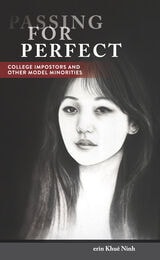
Passing for Perfect
College Impostors and Other Model Minoritieserin Khuê Ninh
Temple University Press, 2021
In her engaging study, Passing for Perfect,erin Khuê Ninh considers the factors that drove college imposters such as Azia Kim—who pretended to be a Stanford freshman—and Jennifer Pan—who hired a hitman to kill her parents before they found out she had never received her high school diploma—to extreme lengths to appear successful. Why would someone make such an illogical choice? And how do they stage these lies so convincingly, and for so long?
These outlier examples prompt Ninh to address the larger issue of the pressures and difficulties of striving to be model minority, where failure is too ruinous to admit. Passing for Perfect insists that being a “model minority” is not a “myth,” but coded into one’s programming as an identity—a set of convictions and aspirations, regardless of present socioeconomic status or future attainability—and that the true cost of turning children into high-achieving professionals may be higher than anyone can bear.
Ninh’s book codifies for readers the difference between imposters who are con artists or shysters and those who don’t know how to stop passing for perfect.
Public Schools, Private Governance
Education Reform and Democracy in New OrleansJ. Celeste Lay
Temple University Press, 2022
Two months after Hurricane Katrina, Louisiana took control of nearly all the public schools in New Orleans. Today, all of the city’s public schools are charter schools. Although many analyses mark the beginning of education reform in New Orleans with Katrina, in Public Schools, Private Governance, J. Celeste Layargues that the storm merely accelerated the timeline for reforms that had inched along incrementally over the previous decade. Both before and after Katrina, white reformers purposely excluded Black educators, community members, and parents.
Public Schools, Private Governance traces the slow, deliberate dismantling of New Orleans’ public schools, and the processes that have maintained the reforms made in Katrina’s immediate aftermath, showing how Black parents and residents were left without a voice and the officials charged with school governance, most of whom are white, with little accountability. Lay cogently explains how political minorities disrupted systems to create change and keep reforms in place, and the predictable political effects—exclusion, frustration, and resignation—on the part of those most directly affected.
School Choice and the Future of American Democracy
Scott Franklin Abernathy
University of Michigan Press, 2005
"Scott Abernathy takes up big questions and provides answers grounded in the complex reality of policy and politics. School Choice and the Future of American Democracy is a book written for those who understand that the world does not fit the simple explanations too often put forward."
--Clarence Stone, Professor Emeritus, University of Maryland, and Research Professor, George Washington University
"Will school choice revive or eviscerate democratic processes and institutions? Will it narrow or exacerbate the range of educational inequities? This book takes several differently angled slices into these questions and draws intriguing answers."
--Jeffrey R. Henig, Teachers College, Columbia University, and author of Rethinking School Choice: Limits of the Market Metaphor
"Through extensive research and refreshingly impartial analysis, Scott Abernathy probes how the use of market principles to reform public schools affects democratic citizenship. Treating citizens first and foremost as customers, he finds, threatens civic engagement and the well-being of schools, especially in the nation's neediest communities. This thoughtful and balanced appraisal is must-reading for those concerned about the future of American education and democracy."
--Suzanne Mettler, Alumni Associate Professor, Syracuse University, and author of Soldiers to Citizens: The G.I. Bill and the Making of the Greatest Generation
Scott Franklin Abernathy is Assistant Professor of Political Science, University of Minnesota
Storytimes for Everyone!
Developing Young Children's Language and LiteracySaroj Nadkarni Ghoting
American Library Association, 2013
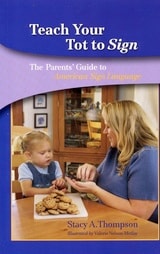
Teach Your Tot to Sign
The Parents' Guide to American Sign LanguageStacy A. Thompson
Gallaudet University Press, 2005
Research has shown that very young children can learn sign language before they learn to speak. Teach Your Tot to Sign: The Parents’ Guide to American Sign Language provides parents and teachers the opportunity to teach more than 500 basic American Sign Language (ASL) signs to their infants, toddlers, and young children. Hearing children, deaf children, and children with special needs can benefit from learning the elementary signs chosen for this handy pocket-size book. Young children who can communicate using simple signs become less frustrated and also bond in a special way with their parents. In teaching ASL to parents of toddlers and preschool teachers, author Stacy A. Thompson recognized the need for a book that could be used at home and in the classroom. Her book features fundamental signs of great appeal to young children and concise instructions on how to sign, including the critical importance of facial expression.
Teach Your Tot to Sign anticipates all of the common desires and interests of young children — food, pets, planes, trains, cars, and boats, games, holidays, vegetables, family — in short, nearly everything. Reflecting children’s endless curiosity, the vocabulary chosen ranges from signs for “baby,” “broken,” “clown,” “dinosaur,” “firefighter,” “gentle,” “hot,” “hurt,” “ketchup,” “pacifier,” “rooster,” “sad,” “spaghetti,” “wagon,” “water,” “wet,” to “you’re welcome,” and even “McDonalds.” This lively assortment of signs will help every child convey earlier in their development their thoughts, feelings, and desires to their parents and teachers.
The National PTA, Race, and Civic Engagement, 1897–1970
Christine Woyshner
The Ohio State University Press, 2009
When Middle-Class Parents Choose Urban Schools
Class, Race, and the Challenge of Equity in Public EducationLinn Posey-Maddox
University of Chicago Press, 2014
Drawing on in-depth research at an urban elementary school, Posey-Maddox examines parents’ efforts to support the school through their outreach, marketing, and volunteerism. She shows that when middle-class parents engage in urban school communities, they can bring a host of positive benefits, including new educational opportunities and greater diversity. But their involvement can also unintentionally marginalize less-affluent parents and diminish low-income students’ access to the improving schools. In response, Posey-Maddox argues that school reform efforts, which usually equate improvement with rising test scores and increased enrollment, need to have more equity-focused policies in place to ensure that low-income families also benefit from—and participate in—school change.