Results by title
23 books match the query 'Participation'
A Guide to Formation Advising for Seminary Faculty
Accompaniment, Participation, and EvaluationEdward J. McCormack
Catholic University of America Press, 2020
Beginning with an overview of the formation process, A Guide to Formation Advising for Seminarians/Seminary Faculty explains the role of the formation advisor and the skills required for that ministry. It describes the various ways the formation advisor accompanies a person through the formation process. McCormack also provides concrete suggestions for how to promote in seminarians’ active participation in the process. Formators will also find explanation of the evaluation process with a style sheet and examples of written evaluations. The handbook contains an annotated bibliography on all the major topics a formation advisor comes across.
Beyond Civil Society
Activism, Participation, and Protest in Latin AmericaSonia E. Alvarez, Jeffrey W. Rubin, Millie Thayer, Gianpaolo Baiocchi, and Agustín Laó-Montes, editors
Duke University Press, 2017
Contributors. Sonia E. Alvarez, Kiran Asher, Leonardo Avritzer, Gianpaolo Baiocchi, Andrea Cornwall, Graciela DiMarco, Arturo Escobar, Raphael Hoetmer, Benjamin Junge, Luis E. Lander, Agustín Laó-Montes, Margarita López Maya, José Antonio Lucero, Graciela Monteagudo, Amalia Pallares, Jeffrey W. Rubin, Ana Claudia Teixeira, Millie Thayer
Communication Convergence in Contemporary China
International Perspectives on Politics, Platforms, and ParticipationPatrick Shaou-Whea Dodge
Michigan State University Press, 2020
Humane Development
Participation and Change Among the Sadama of EthiopiaJohn H. Hamer
University of Alabama Press, 1987
Humane Development seeks to show that the Sadama are a people quite adaptable to change on their own terms. According to their narrative history and from what is know from documents in recent times, individuals have often taken risks that have sometimes favored and at other times gone against the enhancement of their lifestyle.
Certainly people can, as the experience of the Sadama shows, effectively participate in change at the local level. They bring a vast experience to the challenge of choosing, and also a knowledge of the relationship between their environment, tools, and organization that has enabled them to survive through the millennia. When people are permitted to draw upon their heritage in making choices, they approach the changing situation with confidence. Moreover, the opportunity to choose among alternatives, rather than being subjected to an externally made choice, maximizes the possibility for innovation.
Information, Participation, and Choice
An Economic Theory of Democracy in PerspectiveBernard Grofman, Editor
University of Michigan Press, 1993

Knowing by Heart
Loving as Participation and CritiqueAnthony J. Steinbock
Northwestern University Press, 2021
Knowing by Heart describes the movement of loving as a participation that bears on all beings. Eschewing the dichotomy of rationalism and sensibility that has dominated discussions of love and emotion, Steinbock understands the heart as a vast schema ranging from the deepest loving to affects and felt conditions. The book brings into focus the importance of a full‑bodied relational account of a normative critique based in emotion. From a phenomenological description of diverse feelings to the normativity of loving as the discernment of the heart, this work evaluates hating’s relation to loving. At the basis of all this is a phenomenological and philosophical anthropology in response to the basic question: In reality, who and what are we?
Mapping Crisis
Participation, Datafication and Humanitarianism in the Age of Digital MappingEdited by Doug Specht
University of London Press, 2020
Mobilizing Science
Movements, Participation, and the Remaking of KnowledgeSabrina McCormick
Temple University Press, 2009
Mobilizing Science theoretically and empirically explores the rise of a new kind of social movement—one that attempts to empower citizens through the use of expert scientific research. Sabrina Mccormick advances theories of social movements, development, and science and technology studies by examining how these fields intersect in cases around the globe.
Mccormick grounds her argument in two very different case studies: the anti-dam movement in Brazil and the environmental breast cancer prevention movement in the U.S. These, and many other cases, show that the scientization of society, where expert knowledge is inculcated in multiple institutions and lay people are marginalized, give rise to these new types of movements. While activists who consequently engage in science often instigate new methods that result in new findings and scientific tools, these movements still often fail due to superficial participatory institutions and tightly knit corporate/government relationships.
Music as Social Life
The Politics of ParticipationThomas Turino
University of Chicago Press, 2008
Turino begins by developing tools to think about the special properties of music and dance that make them fundamental resources for connecting with our own lives, our communities, and the environment. These concepts are then put into practice as he analyzes various musical examples among indigenous Peruvians, rural and urban Zimbabweans, and American old-time musicians and dancers. To examine the divergent ways that music can fuel social and political movements, Turino looks at its use by the Nazi Party and by the American civil rights movement. Wide-ranging, accessible to anyone with an interest in music’s role in society, and accompanied by a compact disc, Music as Social Life is an illuminating initiation into the power of music.
Participation and Political Equality
A Seven-Nation ComparisonSidney Verba
University of Chicago Press, 1987
Participation in America
Political Democracy and Social EqualitySidney Verba and Norman H. Nie
University of Chicago Press, 1987

Perfecting Human Actions
St. Thomas Aquinas on Human Participation in Eternal LawJohn Rziha
Catholic University of America Press, 2009
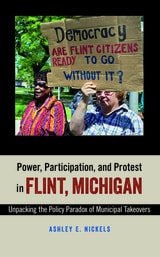
Power, Participation, and Protest in Flint, Michigan
Unpacking the Policy Paradox of Municipal TakeoversAshley E. Nickels
Temple University Press, 2019
When the 2011 municipal takeover in Flint, Michigan placed the city under state control, some supported the intervention while others saw it as an affront to democracy. Still others were ambivalent about what was supposed to be a temporary disruption. However, the city’s fiscal emergency soon became a public health emergency—the Flint Water Crisis—that captured international attention.
But how did Flint’s municipal takeovers, which suspended local representational government, alter the local political system? In Power, Participation, and Protest in Flint, Michigan, Ashley Nickels addresses the ways residents, groups, and organizations were able to participate politically—or not—during the city’s municipal takeovers in 2002 and 2011. She explains how new politics were created as organizations developed, new coalitions emerged and evolved, and people’s understanding of municipal takeovers changed.
Inwalking readers through the policy history of, implementation of, and reaction to Flint’s two municipal takeovers, Nickels highlights how the ostensibly apolitical policy is, in fact, highly political.
Science by the People
Participation, Power, and the Politics of Environmental KnowledgeAya H. Kimura
Rutgers University Press, 2019
Citizen science—research involving nonprofessionals in the research process—has attracted both strong enthusiasts and detractors. Many environmental professionals, activists, and scholars consider citizen science part of their toolkit for addressing environmental challenges. Critics, however, contend that it represents a corporate takeover of scientific priorities. In this timely book, two sociologists move beyond this binary debate by analyzing the tensions and dilemmas that citizen science projects commonly face. Key lessons are drawn from case studies where citizen scientists have investigated the impact of shale oil and gas, nuclear power, and genetically engineered crops. These studies show that diverse citizen science projects face shared dilemmas relating to austerity pressures, presumed boundaries between science and activism, and difficulties moving between scales of environmental problems. By unpacking the politics of citizen science, this book aims to help people negotiate a complex political landscape and choose paths moving toward social change and environmental sustainability.

Sustainability, Participation and Culture in Communication
Edited by Jan Servaes
Intellect Books, 2013
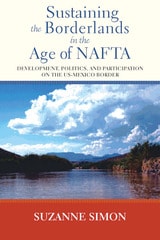
Sustaining the Borderlands in the Age of NAFTA
Development, Politics, and Participation on the US-Mexico BorderSuzanne Simon
Vanderbilt University Press, 2014
Although the key to the side accords' anticipated success lay in their ostensibly generous encouragement of a participatory politics and sustainable development opportunities, Sustaining the Borderlands reveals that the Mexican border populations for which they were largely created are effectively excluded from participating due to the ongoing online, territorial, class, and cultural barriers that shape the borderlands. Rather than experiencing the side accords and their companion institutions as transparent and accessible, residents experienced them as opaque and indecipherable. Simon concludes that the side accords have failed to deliver on their promise of bringing democracy to Mexico because practical mechanisms that would ensure their effective implementation were never put in place.
NAFTA took effect at a time when Mexico was undergoing a democratic transition. The treaty was supposed to encourage this transition and improve environmental and labor conditions on the US-Mexico border. This book demonstrates that, twenty years later, the promises of NAFTA have not come to pass.

The Metaphysical Foundations of Love
Aquinas on Participation, Unity, and UnionAnthony T. Flood
Catholic University of America Press, 2018
The Participant
A Century of Participation in Four StoriesChristopher M. Kelty
University of Chicago Press, 2019
In this book, Christopher M. Kelty traces four stories of participation across the twentieth century, showing how they are part of a much longer-term problem in relation to the individual and collective experience of representative democracy. Kelty argues that in the last century or so, the power of participation has dwindled; over time, it has been formatted in ways that cramp and dwarf it, even as the drive to participate has spread to nearly every kind of human endeavor, all around the world. The Participant is a historical ethnography of the concept of participation, investigating how the concept has evolved into the form it takes today. It is a book that asks, “Why do we participate?” And sometimes, “Why do we refuse?”
The Participatory Condition in the Digital Age
Darin Barney
University of Minnesota Press, 2016
Just what is the “participatory condition”? It is the situation in which taking part in something with others has become both environmental and normative. The fact that we have always participated does not mean we have always lived under the participatory condition. What is distinctive about the present is the extent to which the everyday social, economic, cultural, and political activities that comprise simply being in the world have been thematized and organized around the priority of participation.
Structured along four axes investigating the relations between participation and politics, surveillance, openness, and aesthetics, The Participatory Condition in the Digital Age comprises fifteen essays that explore the promises, possibilities, and failures of contemporary participatory media practices as related to power, Occupy Wall Street, the Arab Spring uprisings, worker-owned cooperatives for the post-Internet age; paradoxes of participation, media activism, open source projects; participatory civic life; commercial surveillance; contemporary art and design; and education.
This book represents the most comprehensive and transdisciplinary endeavor to date to examine the nature, place, and value of participation in the digital age. Just as in 1979, when Jean-François Lyotard proposed that “the postmodern condition” was characterized by the questioning of historical grand narratives, The Participatory Condition in the Digital Age investigates how participation has become a central preoccupation of our time.
Contributors: Mark Andrejevic, Pomona College; Bart Cammaerts, London School of Economics and Political Science (LSE); Nico Carpentier, Vrije Universiteit Brussel (VUB – Free University of Brussels) and Charles University in Prague; Julie E. Cohen, Georgetown University; Kate Crawford, MIT; Alessandro Delfanti, University of Toronto; Christina Dunbar-Hester, University of Southern California; Rudolf Frieling, California College of Arts and the San Francisco Art Institute; Salvatore Iaconesi, La Sapienza University of Rome and ISIA Design Florence; Jason Edward Lewis, Concordia University; Rafael Lozano-Hemmer; Graham Pullin, University of Dundee; Trebor Scholz, The New School in New York City; Cayley Sorochan, McGill University; Bernard Stiegler, Institute for Research and Innovation in Paris; Krzysztof Wodiczko, Harvard Graduate School of Design; Jillian C. York.

The Progressive City
Planning and Participation, 1969-1984Clavel, Pierre
Rutgers University Press, 1986
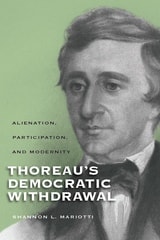
Thoreau’s Democratic Withdrawal
Alienation, Participation, and ModernityShannon L. Mariotti
University of Wisconsin Press, 2009
Separated by time, space, and context, Thoreau and Adorno share a common belief that critical inquiry is essential to democracy but threatened by modern society. While walking, huckleberrying, and picking wild apples, Thoreau tries to recover the capacities for independent perception and thought that are blunted by “Main Street,” conventional society, and the rapidly industrializing world that surrounded him. Adorno’s thoughts on particularity and the microscopic gaze he employs to work against the alienated experience of modernity help us better understand the value of Thoreau’s excursions into nature. Reading Thoreau with Adorno, we see how periodic withdrawals from public spaces are not necessarily apolitical or apathetic but can revitalize our capacity for the critical thought that truly defines democracy.
In graceful, readable prose, Mariotti reintroduces us to a celebrated American thinker, offers new insights on Adorno, and highlights the striking common ground they share. Their provocative and challenging ideas, she shows, still hold lessons on how we can be responsible citizens in a society that often discourages original, critical analysis of public issues.
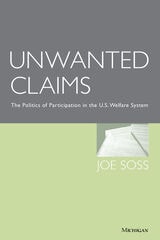
Unwanted Claims
The Politics of Participation in the U.S. Welfare SystemJoe Soss
University of Michigan Press, 2002
Unwanted Claims is a work of political sociology that provides an illuminating account of political life in the U.S. welfare system that should be of interest to scholars, students, policy practitioners, and the general public. Written in a style that minimizes technical jargon, avoids complex statistical presentations, and makes extensive use of clients' own descriptions of their experiences, beliefs, and actions, it offers an accessible and humanizing portrait of welfare participation that challenges conventional wisdom and raises important questions about poverty, welfare, and democracy in America.
Joe Soss is Assistant Professor of Government, The American University.
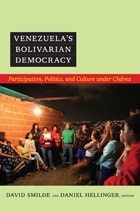
Venezuela's Bolivarian Democracy
Participation, Politics, and Culture under ChávezDavid Smilde and Daniel Hellinger, eds.
Duke University Press, 2011
Contributors
Carolina Acosta-Alzuru
Julia Buxton
Luis Duno Gottberg
Sujatha Fernandes
María Pilar García-Guadilla
Kirk A. Hawkins
Daniel Hellinger
Michael E. Johnson
Luis E. Lander
Margarita López-Maya
Elizabeth Gackstetter Nichols
Coraly Pagan
Guillermo Rosas
Naomi Schiller
David Smilde
Alejandro Velasco