Results by title
14 books match the query 'Participation, Female'
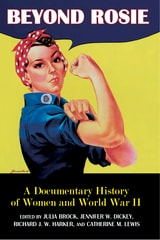
Beyond Rosie
A Documentary History of Women and World War IIJulia Brock
University of Arkansas Press, 2015
Beyond Rosie offers readers an opportunity to see the numerous contributions they made to the fight against the Axis powers and how American women’s roles changed during the war. The primary documents (newspapers, propaganda posters, cartoons, excerpts from oral histories and memoirs, speeches, photographs, and editorials) collected here represent cultural, political, economic, and social perspectives on the diverse roles women played during World War II.
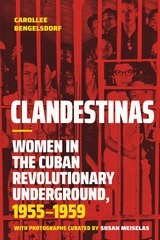
Clandestinas
Women in the Cuban Revolutionary Underground, 1955–1959Carollee Bengelsdorf. With Photographs Curated by Susan Meiselas.
Duke University Press, 2025
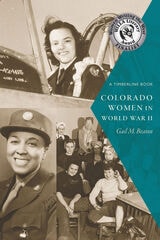
Colorado Women in World War II
Gail M. Beaton
University Press of Colorado, 2023
Four months before the attack on Pearl Harbor on December 7, 1941, Mildred McClellan Melville, a member of the Denver Woman’s Press Club, predicted that war would come for the United States and that its long arm would reach into the lives of all Americans. And reach it did. Colorado women from every corner of the state enlisted in the military, joined the workforce, and volunteered on the home front. As military women, they served as nurses and in hundreds of noncombat positions. In defense plants they riveted steel, made bullets, inspected bombs, operated cranes, and stored projectiles. They hosted USO canteens, nursed in civilian hospitals, donated blood, drove Red Cross vehicles, and led scrap drives; and they processed hundreds of thousands of forms and reports. Whether or not they worked outside the home, they wholeheartedly participated in a kaleidoscope of activities to support the war effort.
In Colorado Women in World War II Gail M. Beaton interweaves nearly eighty oral histories—including interviews, historical studies, newspaper accounts, and organizational records—and historical photographs (many from the interviewees themselves) to shed light on women’s participation in the war, exploring the dangers and triumphs they felt, the nature of their work, and the lasting ways in which the war influenced their lives. Beaton offers a new perspective on World War II—views from field hospitals, small steel companies, ammunition plants, college classrooms, and sugar beet fields—giving a rare look at how the war profoundly transformed the women of this state and will be a compelling new resource for readers, scholars, and students interested in Colorado history and women’s roles in World War II.
Gender Is a Weapon
Liberalism, Difference, and US CounterinsurgencyElizabeth Mesok
University of Michigan Press, 2026
Following the end of the draft in 1973, the US military increasingly offered women the opportunity to transform their lives—to obtain an education, receive healthcare, provide for their families, and prove their worth to the nation. By the time the US invaded Iraq and Afghanistan at the turn of the twenty-first century, the labor of women—and Black women in particular—was critical to the military’s ability to simultaneously wage two wars. Within the context of counterinsurgencies fought amid civilian populations, the US military discovered the value of women’s gender difference as a weapon of war.
Through ethnographic and archival research with women soldiers and Marines, as well as military and government officials, Gender Is a Weapon contextualizes women’s service in Iraq and Afghanistan against the promises of liberal inclusion unfolding throughout the late twentieth and early twenty-first century. Centered on narratives of Black and Indigenous women, women of color, immigrant women, and queer women, the book analyzes the transformations of martial citizenship; the racialized language of cultural difference in the US’s revitalized counterinsurgency doctrine; the gendered performances of women in combat and civilian engagement missions; and ultimately, the irreparable injuries of body and mind with which these women returned home. The epilogue discusses the recent dismantling of DEI in the military and US government more broadly, reflecting on what we can learn from the violent history of military liberal inclusion to help us better understand our contemporary moment. By carefully attending to both the discursive construction and performative enactment of gender in militarized and securitized contexts, the book advances theoretical frames for studying gender in state militaries, militarism, and late liberalism.
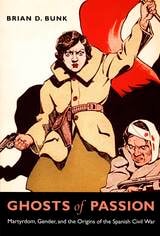
Ghosts of Passion
Martyrdom, Gender, and the Origins of the Spanish Civil WarBrian D. Bunk
Duke University Press, 2007
In commemorating the uprising, revolutionaries and conservatives used the same methods to promote radically different political agendas: they deployed religious imagery to characterize the political situation as a battle between good and evil, with the fate of the nation hanging in the balance, and exploited traditional gender stereotypes to portray themselves as the defenders of social order against chaos. The resulting atmosphere of polarization combined with increasing political violence to plunge the country into civil war.
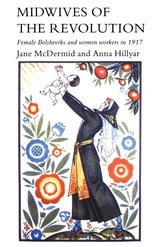
Midwives of the Revolution
Female Bolsheviks and Women Workers in 1917Jane McDermid
Ohio University Press, 1999
The Bolshevik seizure of power in 1917 and the ensuing communist regime have often been portrayed as a man’s revolution, with women as bystanders or even victims. Midwives of the Revolution examines the powerful contribution made by women to the overthrow of tsarism in 1917 and their importance in the formative years of communism in Russia.
Focusing on the masses as well as the high-ranking intelligentsia, Midwives of the Revolution is the first sustained analysis of female involvement in the revolutionary era of Russian history. The authors investigate the role of Bolshevik women and the various forms their participation took. Drawing on the experiences of representative individuals, the authors discuss the important relationship between Bolshevik women and the workers in the turbulent months of 1917.
The authors demonstrate that women were an integral part of the revolutionary process and challenge assumptions that they served merely to ignite an essentially masculine revolt. By placing women center stage, without exaggerating their roles, this study enriches our understanding of a momentous event in twentieth-century history.
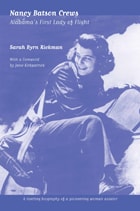
Nancy Batson Crews
Alabama's First Lady of FlightSarah Byrn Rickman
University of Alabama Press, 2009
This is the story of an uncommon woman--high school cheerleader, campus queen, airplane pilot, wife, mother, politician, business-woman--who epitomizes the struggles and freedoms of women in 20th-century America, as they first began to believe they could live full lives and demanded to do so. World War II offered women the opportunity to contribute to the work of the country, and Nancy Batson Crews was one woman who made the most of her privileged beginnings and youthful talents and opportunities.
In love with flying from the time she first saw Charles Lindbergh in Birmingham, (October 1927), Crews began her aviation career in 1939 as one of only five young women chosen for Civilian Pilot Training at the University of Alabama. Later, Crews became the 20th woman of 28 to qualify as an "Original" Women's Auxiliary Ferrying Squadron (WAFS) pilot, employed during World War II shuttling P-38, P-47, and P-51 high-performance aircrafts from factory to staging areas and to and from maintenance and training sites. Before the war was over, 1,102 American women would qualify to fly Army airplanes. Many of these female pilots were forced out of aviation after the war as males returning from combat theater assignments took over their roles. But Crews continued to fly, from gliders to turbojets to J-3 Cubs, in a postwar career that began in California and then resumed in Alabama.
The author was a freelance journalist looking to write about the WASP (Women Airforce Service Pilots) when she met an elderly, but still vital, Nancy Batson Crews. The former aviatrix held a reunion of the surviving nine WAFS for an interview with them and Crews, recording hours of her own testimony and remembrance before Crews's death from cancer in 2001. After helping lead the fight in the '70s for WASP to win veteran status, it was fitting that Nancy Batson Crews was buried with full military honors.
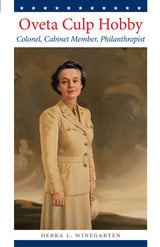
Oveta Culp Hobby
Colonel, Cabinet Member, PhilanthropistBy Debra L. Winegarten
University of Texas Press, 2014
This young adult biography introduces middle school readers to a remarkable woman who founded the Women’s Army Corps, served as Secretary of Health, Education, and Welfare, and ran a media empire that included the Houston Post newspaper and radio and TV stations.
Winner, Gold Medal for Biography, Military Writers Society of America, 2015
Oveta Culp Hobby (1905–1995) had a lifetime of stellar achievement. During World War II, she was asked to build a women’s army from scratch—and did. Hobby became Director of the Women’s Army Corps and the first Army woman to earn the rank of colonel. President Eisenhower chose her as Secretary of Health, Education, and Welfare, making her the second woman in history to be appointed to a president’s cabinet. When she wasn’t serving in the government, Hobby worked with her husband, former Texas governor William P. Hobby, to lead a media empire that included the Houston Post newspaper and radio and TV stations. She also supported the Houston community in many ways, from advocating for civil rights for African Americans to donating generously to the Houston Symphony and the Museum of Fine Arts.
Oveta Culp Hobby is the first biography of this important woman. Written for middle school readers, it traces her life from her childhood in Killeen to her remarkable achievements in Washington, DC, and Houston. Debra Winegarten provides the background to help young adult readers understand the times in which Hobby lived and the challenges she faced as a woman in nontraditional jobs. She shows how Hobby opened doors for women to serve in the military and in other professions that still benefit women today. Most of all, Oveta Culp Hobby will inspire young adults to follow their own dreams and turn them into tangible reality.
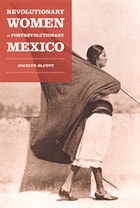
Revolutionary Women in Postrevolutionary Mexico
Jocelyn Olcott
Duke University Press, 2005
Olcott demonstrates an extraordinary grasp of the complexity of postrevolutionary Mexican politics, exploring the goals and outcomes of women’s organizing in Mexico City and the port city of Acapulco as well as in three rural locations: the southeastern state of Yucatán, the central state of Michoacán, and the northern region of the Comarca Lagunera. Combining the strengths of national and regional approaches, this comparative perspective sets in relief the specificities of citizenship as a lived experience.
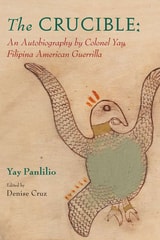
The Crucible
An Autobiography by Colonel Yay, Filipina American GuerrillaCruz, Denise
Rutgers University Press, 2010
On December 8, 1941, as the Pacific War reached the Philippines, Yay Panlilio, a Filipina-Irish American, faced a question with no easy answer: How could she contribute to the war?
In this 1950 memoir, The Crucible: An Autobiography by Colonel Yay, Filipina American Guerrilla, Panlilio narrates her experience as a journalist, triple agent, leader in the Philippine resistance against the Japanese, and lover of the guerrilla general Marcos V. Augustin. From the war-torn streets of Japanese-occupied Manila, to battlegrounds in the countryside, and the rural farmlands of central California, Panlilio blends wry commentary, rigorous journalistic detail, and popular romance.
Weaving together appearances by Douglas MacArthur and Carlos Romulo with dangerous espionage networks, this work provides an insightful perspective on the war. The Crucible invites readers to see new intersections in Filipina/o, Asian American, and American literature studies, and Denise Cruz's introduction imparts key biographical, historical, and cultural contexts to that purpose.
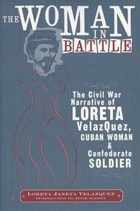
The Woman in Battle
The Civil War Narrative of Loreta Janeta Velazquez, Cuban Woman and Confederate SoldierLoreta Janeta Velazquez
University of Wisconsin Press, 2003
Originally published in 1876 as The Woman in Battle, this Civil War narrative offers Velazquez’s seemingly impossible autobiographical account, as well as a new critical introduction and glossary by Jesse Alemán. Scholars are divided between those who read the book as a generally honest autobiography and those who read it as mostly fiction. According to Alemán’s critical introduction, the book also reads as pulp fiction, spy memoir, seduction narrative, travel literature, and historical account, while it mirrors the literary conventions of other first-person female accounts of cross-dressing published in the United States during wartime, dating back to the Revolutionary War. Whatever the facts are, this is an authentic Civil War narrative, Alemán concludes, that recounts how war disrupts normal gender roles, redefines national borders, and challenges the definition of identity.
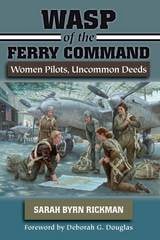
WASP of the Ferry Command
Women Pilots, Uncommon DeedsSarah Byrn Rickman
University of North Texas Press, 2016
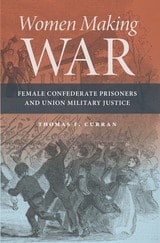
Women Making War
Female Confederate Prisoners and Union Military JusticeThomas F. Curran
Southern Illinois University Press, 2020
During the American Civil War, more than four hundred women were arrested and imprisoned by the Union Army in the St. Louis area. The majority of these women were fully aware of the political nature of their actions and had made conscious decisions to assist Confederate soldiers in armed rebellion against the U.S. government. Their crimes included offering aid to Confederate soldiers, smuggling, spying, sabotaging, and, rarely, serving in the Confederate army. Historian Thomas F. Curran’s extensive research highlights for the first time the female Confederate prisoners in the St. Louis area, and his thoughtful analysis shows how their activities affected Federal military policy.
Early in the war, Union officials felt reluctant to arrest women and waited to do so until their conduct could no longer be tolerated. The war progressed, the women’s disloyal activities escalated, and Federal response grew stronger. Some Confederate partisan women were banished to the South, while others were held at Alton Military Prison and other sites. The guerilla war in Missouri resulted in more arrests of women, and the task of incarcerating them became more complicated.
The women’s offenses were seen as treasonous by the Federal government. By determining that women—who were excluded from the politics of the male public sphere—were capable of treason, Federal authorities implicitly acknowledged that women acted in ways that had serious political meaning. Nearly six decades before U.S. women had the right to vote, Federal officials who dealt with Confederate partisan women routinely referred to them as citizens. Federal officials created a policy that conferred on female citizens the same obligations male citizens had during time of war and rebellion, and they prosecuted disloyal women in the same way they did disloyal men.
The women arrested in the St. Louis area are only a fraction of the total number of female southern partisans who found ways to advance the Confederate military cause. More significant than their numbers, however, is what the fragmentary records of these women reveal about the activities that led to their arrests, the reactions women partisans evoked from the Federal authorities who confronted them, the impact that women’s partisan activities had on Federal military policy and military prisons, and how these women’s experiences were subsumed to comport with a Lost Cause myth—the need for valorous men to safeguard the homes of defenseless women.
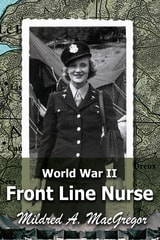
World War II Front Line Nurse
Mildred A. MacGregor
University of Michigan Press, 2008
In late 1942, along with so many others who signed up to support the war effort, thirty-year-old Mildred Radawiec left a comfortable position as a nurse at the University of Michigan Hospital and postponed her marriage to a soon-to-be doctor to volunteer as a surgical nurse in the major battle theaters of the war. Radawiec was one of thirty volunteers from the hospital surgical staff that comprised the University of Michigan Unit, the 298th General Hospital, as the University of Michigan Hospital was called.
Radawiec's first-person history recounts her wartime experience with sharp detail and grace and sets the stage for a you-are-there experience---from the thrill of signing up and shipping out; to the harrowing ocean crossing and the arduous trip through the Sahara; to dangerous air raids and moving at a moment's notice, often at night with the lights off to avoid attacks. Radawiec was near Omaha Beach in France soon after D-Day, June 6, 1944, and details stories of marathon stints assisting the injured on the front lines as they poured in by the hundreds. Radawiec also traveled to Belgium and Germany and set up in the area near Aachen in the fall of 1944. In Germany she experienced Buzz Bombs---pilotless flying bombs---and even witnessed the death of a fellow nurse in a bombing attack in which medics brought in wounded soldiers by the truckload. Radawiec also leavens her story with uplifting tales of heroism and courage and intersperses the narrative with poignant letters from her family and fiancé.
This stirring personal account of war will mesmerize anyone interested in World War II history and women's too-often-overlooked role in it.