Results by title
34 books match the query 'Patriarchy'
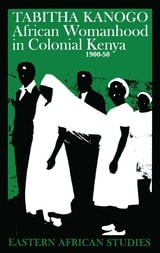
African Womanhood in Colonial Kenya, 1900–1950
1900-1950Tabitha Kanogo
Ohio University Press, 2000
This book explores the history of African womanhood in colonial Kenya. By focussing on key sociocultural institutions and practices around which the lives of women were organized, and on the protracted debates that surrounded these institutions and practices during the colonial period, it investigates the nature of indigenous, mission, and colonial control of African women.
The pertinent institutions and practices include the legal and cultural status of women, clitoridectomy, dowry, marriage, maternity and motherhood, and formal education. By following the effects of the all-pervasive ideological shifts that colonialism produced in the lives of women, the study investigates the diverse ways in which a woman’s personhood was enhanced, diminished, or placed in ambiguous predicaments by the consequences, intended and unintended, of colonial rule as administered by both the colonizers and the colonized. The study thus tries to historicize the reworkings of women’s lives under colonial rule. The transformations that resulted from these reworkings involved the negotiation and redefinition of the meaning of individual liberties and of women’s agency, along with the reconceptualization of kinship relations and of community.
These changes resulted in—and often resulted from—increased mobility for Kenyan women, who were enabled to cross physical, cultural, economic, social, and psychological frontiers that had been closed to them prior to colonial rule. The conclusion to which the experiences of women in colonial Kenya points again and again is that for these women, the exercise of individual agency, whether it was newly acquired or repeatedly thwarted, depended in large measure on the unleashing of forces over which no one involved had control. Over and over, women found opportunities to act amid the conflicting policies, unintended consequences, and inconsistent compromises that characterized colonial rule.
Chinese Marriages in Transition
From Patriarchy to New FamilismXiaoling Shu
Rutgers University Press, 2023
This book is freely available in an open access edition thanks to TOME (Toward an Open Monograph Ecosystem)— a collaboration of the Association of American Universities, the Association of University Presses, and the Association of Research Libraries—and the generous support of the University of California, Davis. Learn more at the TOME website, available at: openmonographs.org.
Download the open access book here.
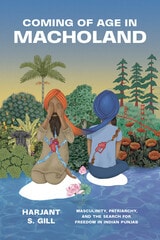
Coming of Age in Macholand
Masculinity, Patriarchy, and the Search for Freedom in Indian PunjabHarjant S. Gill
University of Chicago Press, 2026
Through Punjabi men’s struggles to marry, migrate, love, and escape, Coming of Age in Macholand reveals what patriarchy costs the men it promises to empower.
In 2019, Sandeep, a twenty-seven-year-old from a Punjabi family, killed five relatives and himself after a date was set for his wedding. His suicide note described feeling trapped by social expectations and condemned to a life he had not chosen. Harjant S. Gill recognized something unsettling in his story. Gill grew up in Punjab as the eldest grandson of a Sikh patriarch before immigrating to California as a teenager. Although he built an openly gay life in Washington, DC, he returned to the closet for safety while researching in India, even as his grandfather sought a “suitable” bride for him. Gill could refuse marriage and return to America, but many men he met had no easy exit. What happens when patriarchy promises men power while denying them the freedom to choose who they will become?
Coming of Age in Macholand explores how young men respond to patriarchy—submitting, rebelling, escaping, and sometimes coming undone. Drawing on research spanning a decade, Gill enters the worlds of Punjabi boys learning to become men, where masculinity is shaped through violence yet sustained by emotional bonds. Amid political upheaval, a faltering agrarian economy, and migration hollowing out Punjab’s villages, this book portrays men struggling for power while losing intimacy and control over their lives. Blending memoir, ethnography, and social investigation, Gill exposes a system that brutalizes women and queer people while constricting the men it claims to serve. At a moment when men feel angry, lonely, and adrift, this book asks what they must relinquish—and reclaim—to become truly free.
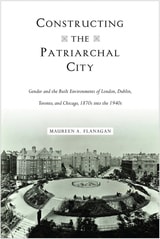
Constructing the Patriarchal City
Gender and the Built Environments of London, Dublin, Toronto, and Chicago, 1870s into the 1940sMaureen A. Flanagan
Temple University Press, 2018
In the Anglo-Atlantic world of the late nineteenth century, groups of urban residents struggled to reconstruct their cities in the wake of industrialization and to create the modern city. New professional men wanted an orderly city that functioned for economic development. Women’s vision challenged the men’s right to reconstruct the city and resisted the prevailing male idea that women in public caused the city’s disorder.
Constructing the Patriarchal City compares the ideas and activities of men and women in four English-speaking cities that shared similar ideological, professional, and political contexts. Historian Maureen Flanagan investigates how ideas about gender shaped the patriarchal city as men used their expertise in architecture, engineering, and planning to fashion a built environment for male economic enterprise and to confine women in the private home. Women consistently challenged men to produce a more equitable social infrastructure that included housing that would keep people inside the city, public toilets for women as well as men, housing for single, working women, and public spaces that were open and safe for all residents.

Dangerous Exits
Escaping Abusive Relationships in Rural AmericaDeKeseredy, Walter
Rutgers University Press, 2009
Strikingly, scant attention has focused on the victimization of women who want to leave their hostile partners. This groundbreaking work challenges the perception that rural communities are safe havens from the brutality of urban living. Identifying hidden crimes of economic blackmail and psychological mistreatment, and the complex relationship between patriarchy and abuse, Walter S. DeKeseredy and Martin D. Schwartz propose concrete and effective solutions, giving voice to women who have often suffered in silence.
Desert Patriarchy
Mormon and Mennonite Communities in the Chihuahua ValleyJanet Bennion
University of Arizona Press, 2004
Janet Bennion has lived and worked among these people, and in this book she introduces a new paradigm—"desert patriarchy"—to explain their way of life. This perspective sheds light not only on these particular communities but also on the role of the desert environment in the development and maintenance of fundamentalist ideology in other parts of the United States and around the globe.
Making new connections between the arid environment, opposition to technology, and gender ideology, Bennion shows that it is the interplay of the desert and the unique social traditions and gender dynamics embedded in Anglo patriarchal fundamentalism that accounts for the successful longevity of the Mexican colonies. Her model defines the process by which male supremacy, female autonomous networking, and religious fundamentalism all facilitate successful adaptation to the environment.
More than a theoretical analysis, Desert Patriarchy provides an intimate glimpse into the daily lives of these people, showing how they have taken refuge in the desert to escape religious persecution, the forced secular education of their children, and economic and political marginalization. It particularly sheds light on the ironic autonomy of women within a patriarchal system, showing how fundamentalist women in Chihuahua are finding numerous creative ways to access power and satisfaction in a society structured to subordinate and even degrade them.
Desert Patriarchy richly expands the literature on nontraditional religious movements as it enhances our understanding of how environment can shape society. It offers unique insights into women's status in patriarchal communities and provides a new way of looking at similar communities worldwide.

Family Fantasies and Community Space
Aitken, Stuart C
Rutgers University Press, 1998
Family forms are changing rapidly in Western society, and with them, the microenvironments within which men, women, and children live together. Stuart Aitken argues that, whether environment is taken as physical space or as a metaphor for the social, economic, and psychological basis of families, there remains a tendency to keep defining the meaning of families and communities in terms of older, traditional, "imagined," and idealized structures of politics, gender, and geography.
Using the stories of several families in San Diego, Aitken describes geographies of everyday life that contest definitions of cities and communities as mosaics reflecting patterns of social relations. He begins inside the family circle, looking at patriarchal power and the subordination of women, men, and children. Moving beyond the household, he then stresses the importance of place in defining the social and political character of communities and families' interplay within them--whether "communities" are viewed as neighborhoods, towns, or organizations that provide space for fellowship and common purpose. In turn, he shows that as the individual child reaches beyond family life to find a place in these communities, political cultures are reproduced through the child.
Aitken suggests ways in which individual and family identities are complexly intertwined with the cultural politics of communities, cities, and regions. He concludes that family and community spaces reproduce and reconstruct themselves daily according to divisions of race, class, gender, and differential access to housing, work, and child-care.

Fantasizing the Feminine in Indonesia
Laurie J. Sears, ed.
Duke University Press, 1996
The contributors examine the ways in which Indonesian women and men are enmeshed in networks of power and then pursue the stories of those who, sometimes at great political risk, challenge these powers. In this juxtaposition of voices and stories, we see how indigenous patriarchal fantasies of feminine behavior merged with Dutch colonial notions of proper wives and mothers to produce the Indonesian government’s present approach to controlling the images and actions of women. Facing the theoretical challenge of building a truly cross-cultural feminist analysis, Fantasizing the Feminine takes us into an ongoing conversation that reveals the contradictions of postcolonial positionings and the fragility of postmodern identities.
This book will be welcomed by readers with interests in contemporary Indonesian politics and society as well as historians, anthropologists, and other scholars concerned with literature, gender, and cultural studies.
Contributors. Benedict R. O’G. Anderson, Sita Aripurnami, Jane Monnig Atkinson, Nancy K. Florida, Daniel S. Lev, Dédé Oetomo, Laurie J. Sears, Ann Laura Stoler, Saraswati Sunindyo, Julia I. Suryakusuma, Jean Gelman Taylor, Sylvia Tiwon, Anna Lowenhaupt Tsing, Diane L. Wolf
Gender Knot Revised Ed
Unraveling Our Patriarchal LegacyAllan Johnson
Temple University Press, 2005
* the core characteristics of patriarchy and its power as a social system
* the relationship between individuals and social systems
* "men's movement" assessments of patriarchy and gender inequality
* key—and controversial—terms such as sexism, privilege, and political correctness
Gender, Indian, Nation
The Contradictions of Making Ecuador, 1830–1925Erin O'Connor
University of Arizona Press, 2007
O’Connor begins her investigations by examining the multilayered links between gender and Indian-state relations in nineteenth-century Ecuador. Disentangling issues of class and culture from issues of gender, she uncovers overlapping, conflicting, and ever-evolving patriarchies within both indigenous communities and the nation’s governing bodies. She finds that gender influenced sociopolitical behavior in a variety of ways, mediating interethnic struggles and negotiations that ultimately created the modern nation. Her deep research into primary sources—including congressional debates, ministerial reports, court cases, and hacienda records—allows a richer, more complex, and better informed national history to emerge.
Examining gender during Ecuadorian state building from “above” and “below,” O’Connor uncovers significant processes of interaction and agency during a critical period in the nation’s history. On a larger scale, her work suggests the importance of gender as a shaping force in the formation of nation-states in general while it questions recountings of historical events that fail to demonstrate an awareness of the centrality of gender in the unfolding of those events.
Gender, Law, and Resistance in India
Erin P. Moore
University of Arizona Press, 1988

Goddesses and Monsters
Women, Myth, Power, and Popular CultureJane Caputi
University of Wisconsin Press, 2004
The essays in Goddesses and Monsters recognize popular culture as a primary repository of ancient mythic energies, images, narratives, personalities, icons, and archetypes. Together, they take on the patriarchal myth, where serial killers are heroes, where goddesses—in the form of great white sharks, femmes fatales, and aliens—are ritually slaughtered, and where pornography is the core story underlying militarism, environmental devastation, and racism. They also point to an alternative imagination of female power that still can be found behind the cult devotion given to Princess Diana and animating all the goddesses disguised as popular monsters, queen bitches, mammies, vamps, cyborgs, and sex bombs.

Informatics of Domination
Zach Blas, Melody Jue, and Jennifer Rhee, editors
Duke University Press, 2025
Contributors. Dalida María Benfield, Zach Blas, Ama Josephine Budge Johnstone, micha cárdenas, Amy Sara Carroll, Shu Lea Cheang, Jian Neo Chen, Heather Dewey-Hagborg, Ranjodh Singh Dhaliwal, Stephanie Dinkins, Ricardo Dominguez, Ashley Ferro-Murray, Matthew Fuller, Jacob Gaboury, Jennifer Gabrys, Alexander R. Galloway, Jennifer Mae Hamilton, Donna J. Haraway, Eva Hayward, Stefan Helmreich, Kathy High, Leon J. Hilton, Ho Rui An, Hi'ilei Julia Kawehipuaakahaopulani Hobart, Tung-Hui Hu, Caroline A. Jones, Melody Jue, Homay King, Larissa Lai, Lawrence Lek, Esther Leslie, Alexis Lothian, Isadora Neves Marques, Radha May (Elisa Giardina-Papa, Nupur Mathur, and Bathsheba Okwenje), Shaka McGlotten, Mahan Moalemi, madison moore, Astrida Neimanis, Bahar Noorizadeh, Luciana Parisi, Thao Phan, Ana Teixeira Pinto, Luiza Prado de O. Martins, Rita Raley, Patricia Reed, Jennifer Rhee, Bassem Saad, Ashkan Sepahvand, Justin Talplacido Shoulder, Lucy Suchman, Ollie Zhang

Insufferable Tools
Feminism Against Big TechSarah Sharma
Duke University Press, 2026
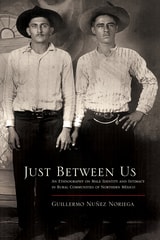
Just Between Us
An Ethnography of Male Identity and Intimacy in Rural Communities of Northern MexicoGuillermo Núñez Noriega
University of Arizona Press, 2014
Using fieldwork from rural Sonora, Mexico, Guillermo Núñez Noriega posits that men accept this intimacy outside gender categories and stereotypes, despite the traditional patriarchal society. This work contests homophobia and the heterosexual ideal of men and attempts to break down the barriers between genders.
The photograph Núñez Noriega uses to explore the shifting attitudes and perceptions of sexuality and gender provokes more questions than answers. Recognizing the societal regulations at play, the author demonstrates the existence in contemporary Mexico of an invisible regime of power that constructs and regulates the field of possibilities for men’s social actions, especially acts of friendship, affection, and eroticism with other men. The work investigates “modes of speaking” about being a man, on being gay, on the implicit meanings of the words homosexual, masculine, trade, fairy, and others—words that construct possibilities for intimacy, particularly affective and erotic intimacy among men.
Multiple variants of homoeroticism fall outside the dominant model, Núñez Noriega argues, a finding that offers many lessons on men and masculine identities. This book challenges patriarchal definitions of sex, gender, and identity; it promotes the unlearning of dominant conventions of masculinity to allow new ways of being.

Medieval Misogyny and the Invention of Western Romantic Love
R. Howard Bloch
University of Chicago Press, 1991
Through analyses of a broad range of patristic and medieval texts, Bloch explores the Christian construction of gender in which the flesh is feminized, the feminine is aestheticized, and aesthetics are condemned in theological terms. Tracing the underlying theme of virginity from the Church Fathers to the courtly poets, Bloch establishes the continuity between early Christian antifeminism and the idealization of woman that emerged in the twelfth and thirteenth centuries. In conclusion he explains the likely social, economic, and legal causes for the seeming inversion of the terms of misogyny into those of an idealizing tradition of love that exists alongside its earlier avatar until the current era.
This startling study will be of great value to students of medieval literature as well as to historians of culture and gender.
My Three Dads
Patriarchy on the Great PlainsJessa Crispin
University of Chicago Press, 2022
For many Americans, Kansas represents a vision of Midwestern life that is good and wholesome and evokes the American ideals of god, home, and country. But for those like Jessa Crispin who have grown up in Kansas, the realities are much harsher. She argues that the Midwestern values we cling to cover up a long history of oppression and control over Native Americans, women, and the economically disadvantaged.
Blending personal narrative with social commentary, Crispin meditates on why the American Midwest still enjoys an esteemed position in our country's mythic self-image. Ranging from The Wizard of Oz to race, from chastity to rape, from radical militias and recent terrorist plots to Utopian communities, My Three Dads opens on a comic scene in a Kansas rent house the author shares with a (masculine) ghost. This prompts Crispin to think about her intellectual fathers, her spiritual fathers, and her literal fathers. She is curious to understand what she has learned from them and what she needs to unlearn about how a person should be in a family, as a citizen, and as a child of god—ideals, Crispin argues, that have been established and reproduced in service to hierarchy, oppression, and wealth.
Written in Crispin’s well-honed voice—smart, assured, comfortable with darkness—My Three Dads offers a kind of bleak redemption, the insight that no matter where you go, no matter how far from home you roam, the place you came from is always with you, “like it or not.”
Myths of Modernity
Peonage and Patriarchy in NicaraguaElizabeth Dore
Duke University Press, 2006
Dore seamlessly combines archival research, oral history, and an innovative theoretical approach that unites political economy with social history. She recovers the bygone voices of peons, planters, and local officials within documents such as labor contracts, court records, and official correspondence. She juxtaposes these historical perspectives with those of contemporary peasants, landowners, activists, and politicians who share memories passed down to the present. The reconceptualization of the coffee economy that Dore elaborates has far-reaching implications. The Sandinistas mistakenly believed, she contends, that Nicaraguan capitalism was mature and ripe for socialist revolution, and after their victory in 1979 that belief led them to alienate many peasants by ignoring their demands for land. Thus, the Sandinistas’ myths of modernity contributed to their downfall.

No Less a Man
Masculist Art in a Feminist AgeDoug Robinson
University of Wisconsin Press, 1994

Paternal Tyranny
Arcangela Tarabotti
University of Chicago Press, 2004
Paternal Tyranny, the first of these works, is a fiery but carefully argued manifesto against the oppression of women by the Venetian patriarchy. Denouncing key misogynist texts of the era, Tarabotti shows how despicable it was for Venice, a republic that prided itself on its political liberties, to deprive its women of rights accorded even to foreigners. She accuses parents of treating convents as dumping grounds for disabled, illegitimate, or otherwise unwanted daughters. Finally, through compelling feminist readings of the Bible and other religious works, Tarabotti demonstrates that women are clearly men's equals in God's eyes.
An avenging angel who dared to speak out for the rights of women nearly four centuries ago, Arcangela Tarabotti can now finally be heard.

Patriarchy on the Line
Labor, Gender, and Ideology in the Mexican Maquila IndustrySusan Tiano
Temple University Press, 1994
Recreating Motherhood
Rothman, Barbara Katz
Rutgers University Press, 2000
Selling “genetically gifted” human eggs on the free market for a hefty price. In vitro fertilization. Fetal rights. Prenatal diagnosis. Surrogacy. All are instances of biomedical and social “advancements” with which we have become familiar in recent years. Yet these issues are often regarded as distinct or only loosely related under the rubric of reproduction.
Barbara Katz Rothman demonstrates how they form a complex whole that demands of us in response a woman-centered, class-sensitive way of understanding motherhood. We need a social policy for dealing with mothers and motherhood that is consistent with feminist politics and feminist theory. Her book show how we as a society must first recognize that the real needs of mother, father, and children have been swept aside in an attempt to reduce the complex process of human reproduction to a clinical event that can be controlled by medical technology. Rothman suggests ways to accomplish social and legal change that would allow technological advances to affirm motherhood and the mother-child relationship without cost to women’s identity.
This new edition of Recreating Motherhood contains exciting updates. Rothman shows how this material is key in understanding the family, not just motherhood. And a new chapter, “Reflections on a Decade,” explores how new reproductive technologies combine with new marketing and new genetics to pose troubling social questions.

Rethinking Pastoralism In Africa
Gender, Culture, and the Myth of the Patriarchal PastoralistDorothy L. Hodgson
Ohio University Press, 2001
The dominant trend in pastoralist studies has long assumed that pastoralism and pastoral gender relations are inherently patriarchal. The contributors to this collection, in contrast, use diverse analytic approaches to demonstrate that pastoralist gender relations are dynamic, relational, historical, and produced through complex local-translocal interactions. Combining theoretically sophisticated analysis with detailed case studies, this collection will appeal to those doing research and teaching in African studies, gender studies, anthropology, and history. Among the topics discussed are pastoralism, patriarchy, and history among Maasai in Tanganyika; women’s roles in peacemaking in Somali society; the fertility of houses and herds; gender, aging, and postchildbearing experience in a Tuareg community; and milk selling among Fulani women in Northern Burkina Faso.
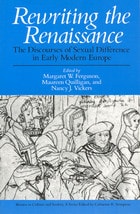
Rewriting the Renaissance
The Discourses of Sexual Difference in Early Modern EuropeEdited by Margaret W. Ferguson, Maureen Quilligan, and Nancy Vickers
University of Chicago Press, 1986
Throughout, the essays focus on the structures of Renaissance patriarchy that organized power relations both in the state and in the family. They explore the major conequences of patriarchy for women—their marginalization and lack of identity and power—and the ways in which individual women or groups of women broke, or in some cases deliberately circumvented, the rules that defined them as a secondary sex. Topics covered include representations of women in literature and art, the actual work done by women both inside and outside of the home, and the writings of women themselves. In analyzing the rhetorical strategies that "marginalized" historical and fictional women, these essays counter scholarly and critical traditions that continue to exhibit patriarchal biases.
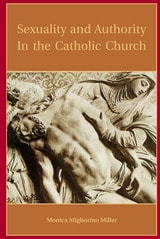
Sexuality and Authority in the Catholic Church
Monica Migliorino Miller
University of Scranton Press, 1995
If authority is derived from Eucharistic worship, then authority is fundamentally the authority of a covenant. This book shows that this covenant is spoken according to a primordial sexual language rooted in creation itself.

Starring Women
Celebrity, Patriarchy, and American Theater, 1790-1850Sara E. Lampert
University of Illinois Press, 2020
A revealing foray into a lost time, Starring Women returns a generation of performers to their central place in the early history of American theater.
The Bajío Revolution
Remaking Capitalism, Community, and Patriarchy in Mexico, North America, and the WorldJohn Tutino
Duke University Press, 2025
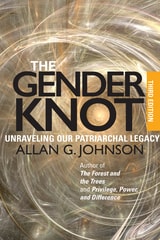
The Gender Knot
Unraveling Our Patriarchal LegacyAllan Johnson
Temple University Press, 2014
The Gender Knot, Allan Johnson's response to the pain and confusion that men and women experience by living with gender inequality, explains what patriarchy is and isn't, how it works, and what gets in the way of understanding and doing something about it. Johnson's simple yet powerful approach avoids the paralyzing trap of guilt, blame, anger, and defensive denial that often results from conversations about gender.
This edition features:
• Updated references, data, resources, and examples, especially in relation to issues of sexual orientation and gender identity (e.g., gay marriage, transgender/cisgender)
• A glossary of terms
• A new chapter, "What Changes and What Does Not: Manhood and Violence," that provides an extended analysis of the causes of men's violence as a patriarchal phenomenon
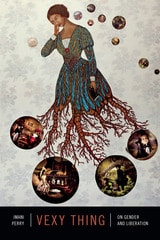
Vexy Thing
On Gender and LiberationImani Perry
Duke University Press, 2018

When Time Warps
The Lived Experience of Gender, Race, and Sexual ViolenceMegan Burke
University of Minnesota Press, 2019
An inquiry into the phenomenology of “woman” based in the relationship between lived time and sexual violence
Feminist phenomenologists have long understood a woman’s life as inhibited, confined, and constrained by sexual violence. In this important inquiry, author Megan Burke both builds and expands on this legacy by examining the production of normative womanhood through racist tropes and colonial domination. Ultimately, Burke charts a new feminist phenomenology based in the relationship between lived time and sexual violence.
By focusing on time instead of space, When Time Warps places sexualized racism at the center of the way “woman” is lived. Burke transports questions of time and gender outside the realm of the historical, making provocative new insights into how gendered individuals live time, and how their temporal existence is changed through particular experiences.
Providing a potent reexamination of the theory of Simone de Beauvoir—while also bringing to the fore important women of color theorists and engaging in the temporal aspects of #MeToo—When Time Warps makes a necessary, lasting contribution to our understanding of gender, race, and sexual violence.
Why Women are Oppressed
Anne Jonasdottir
Temple University Press, 1994
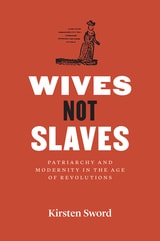
Wives Not Slaves
Patriarchy and Modernity in the Age of RevolutionsKirsten Sword
University of Chicago Press, 2021
Kirsten Sword’s richly researched history reconstructs the stories of wives who fled their husbands between the mid-seventeenth and early nineteenth centuries, comparing their plight with that of other runaway dependents. Wives not Slaves explores the links between local justice, the emerging press, and transatlantic political debates about marriage, slavery and imperial power. Sword traces the relationship between the distress of ordinary households, domestic unrest, and political unrest, shedding new light on the social changes imagined by eighteenth-century revolutionaries, and on the politics that determined which patriarchal forms and customs the new American nation would—and would not—abolish.
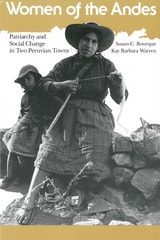
Women of the Andes
Patriarchy and Social Change in Two Peruvian TownsSusan C. Bourque and Kay Barbara Warren
University of Michigan Press, 1981
Pilar is a capable, energetic merchant in the small, Peruvian highland settlement of Chiuchin. Genovena, an unmarried day laborer in the same town, faces an impoverished old age without children to support her. Carmen is the wife of a prosperous farmer in the agricultural community of Mayobamba, eleven thousand feet above Chiuchin in the Andean sierra. Mariana, a madre soltera—single mother—without a husband or communal land of her own, also resides in Mayobamba.
These lives form part of an interlocking network that the authors carefully examine in Women of the Andes. In doing so, they explore the riddle of women’s structural subordination by analyzing the social, political, and economic realities of life in Peru. They examine theoretical explanations of sexual hierarchies against the backdrop of life histories. The result is a study that pinpoints the mechanisms perpetuating sexual repression and traces the impact of social change and national policy on women’s lives.
Women, Production, and Patriarchy in Late Medieval Cities
Martha C. Howell
University of Chicago Press, 1986