Results by title
4 books match the query 'Pecos River Valley (N.M. and Tex.)'

Life on the Periphery
Economic Change in Late Prehistoric Southeastern New MexicoEdited by John D. Speth
University of Michigan Press, 2004

Living and Dying on the Periphery
The Archaeology and Human Remains from Two 13th-15th Century AD Villages in Southeastern New MexicoJamie L. Clark and John D. Speth
University of Utah Press, 2022
Summarizing results from eight seasons of research, Clark and Speth document human burials and associated grave offerings from the two sites. They discuss evidence for pathologies and trauma, raising questions about the nature and causes of violence that led to the demise of Henderson and Bloom Mound, and the abandonment of many other farming-hunting communities in the surrounding region.

My Darling Boys
A Family at War, 1941-1947Fred H. Allison
University of North Texas Press, 2023
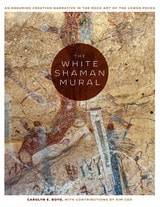
The White Shaman Mural
An Enduring Creation Narrative in the Rock Art of the Lower PecosBy Carolyn E. Boyd, with contributions by Kim Cox
University of Texas Press, 2016
Winner, Society for American Archaeology Book Award, 2017
San Antonio Conservation Society Publication Award, 2019
The prehistoric hunter-gatherers of the Lower Pecos Canyonlands of Texas and Coahuila, Mexico, created some of the most spectacularly complex, colorful, extensive, and enduring rock art of the ancient world. Perhaps the greatest of these masterpieces is the White Shaman mural, an intricate painting that spans some twenty-six feet in length and thirteen feet in height on the wall of a shallow cave overlooking the Pecos River. In The White Shaman Mural, Carolyn E. Boyd takes us on a journey of discovery as she builds a convincing case that the mural tells a story of the birth of the sun and the beginning of time—making it possibly the oldest pictorial creation narrative in North America.
Unlike previous scholars who have viewed Pecos rock art as random and indecipherable, Boyd demonstrates that the White Shaman mural was intentionally composed as a visual narrative, using a graphic vocabulary of images to communicate multiple levels of meaning and function. Drawing on twenty-five years of archaeological research and analysis, as well as insights from ethnohistory and art history, Boyd identifies patterns in the imagery that equate, in stunning detail, to the mythologies of Uto-Aztecan-speaking peoples, including the ancient Aztec and the present-day Huichol. This paradigm-shifting identification of core Mesoamerican beliefs in the Pecos rock art reveals that a shared ideological universe was already firmly established among foragers living in the Lower Pecos region as long as four thousand years ago.